You’ve heard about Watson, the IBM supercomputer that shredded the best human players in a three-day “Jeopardy” challenge. The machine finished the TV game show with $77,147. Ken Jennings, who won 74 contests in a row in the 2004-05 season, finished with $24,000. Brad Rutter, who notched $3.3 million in previous appearances, ended with just $21,600.
Watson demonstrated engineers’ immense progress in making machines that can understand language and answer complicated questions. Or in the case of “Jeopardy,” provide questions to complicated answers.
But we’re still miffed about one question Watson got wrong.
The machine is loaded with 200 million pages of content, including encyclopedias, books and movie scripts. It is wicked fast: 80 trillion operations a second. But it bungled a simple one under the category of “U.S. cities.”
The “Jeopardy” answer: “Its largest airport is named for a World War II hero; its second-largest for a World War II battle.”
Watson’s question: What is Toronto?
Toronto! Missed it by a full country!
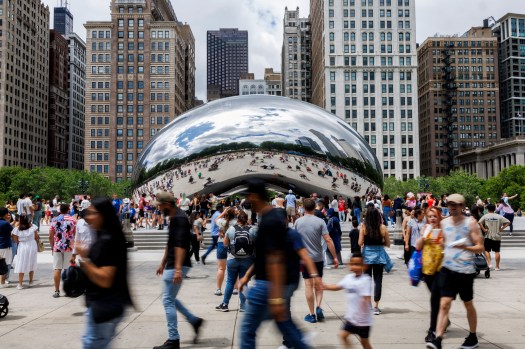
Every Chicagoan over the age of 8 knows the right question: What is Chicago?
Chicago, the home of O’Hare International Airport and Midway Airport.
Team Watson leader David Ferrucci offered some possible explanations for the computer’s glitch. Watson probably downgraded the importance of the category because the answers don’t always suggest the expected answer. The question itself didn’t ask for a U.S. city, so that might have bewildered Watson. Adding to the confusion, there are cities named Toronto in the U.S.
Whatever. Watson would probably put ketchup on a hot dog, too. If a computer could do that.