
I first met the couple in 2006.
They lived with their six children in an eastern Lake County community, but spent most of their time together at a restaurant in Hobart, where they worked, played, met with relatives, did their homework and took naps in empty booths.
The family paid their taxes and Social Security deductions, attended school functions, supported local merchants, practiced Catholicism, and abided by the law in every way except for one: They were living here illegally after entering the U.S. country from Mexico.
I shadowed the family for several months for a series of stories I wrote about people living in the U.S. illegally and its ripple effect in Northwest Indiana. My stories were met with an angry backlash of emotions by many readers who were convinced about their stance on this combative issue.
I don’t know where they are today, or if they have become citizens.
I also felt strongly about this issue – illegal is illegal, right? – until I got to know this family in a very personal way. Their hopes, fears, joys, struggles and daily challenges. Mostly their fears, though, of being deported back to Mexico.
My relationship with them altered my viewpoint on a topic that is again back on the front burner in our country. It didn’t compel me to entirely change my mind about such a complex and multi-layered problem facing our country. It did, however, compel me to change my viewpoint from the abstract to the personal.
This kind of realization is key with this topic, similar to other highly divisive subjects such as abortion, gay rights, race relations or stem cell research.
With this in mind, I have a question for you: Do you personally know a person living in the U.S. illegally, be it a friend, co-worker or loved one?
I believe your answer to this question plays a determining factor in your stance on the latest sweeping set of orders issued Tuesday by the Department of Homeland Security. As you likely know, President Donald Trump’s promised plan to increase immigration enforcement has been put into action, potentially placing millions of people at risk of deportation.
Once again, our new president is forcing us to reconsider or redefine our argument toward another conflict-ridden topic facing us. This week, it’s those living here illegally. Not only in this country, but in this area.
On Tuesday, I began hearing from readers who feel strongly about the issue. That same day, my social media readers began dividing themselves roughly in half on whether the Department of Homeland Security’s new orders have stepped over the line.
My readers reflect a reignited national debate, again separating us into two ideological camps regarding who we are as a country. On one side are Americans who feel the very principles that make our country great are under siege – acceptance, tolerance, inclusion. The banner “Refugees Welcome” draped symbolically underneath the Statue of Liberty on Tuesday morning (before it was taken down) aptly sums up their beliefs.
In the other camp are Americans who’ve had enough of those liberal-minded buzzwords and, what they believe, have to led disastrous, dangerous consequences. As one reader asked me over the phone, “I don’t understand why so many level-headed, God-loving Americans are so eager to keep undocumented, illegal people in our country?”
That’s a fair question. Illegal is illegal, right?
That is, until you fully understand what a complicated issue this has become, potentially affecting an estimated 11 million people and their families. And, again, prompting us to redefine who we are as a country.
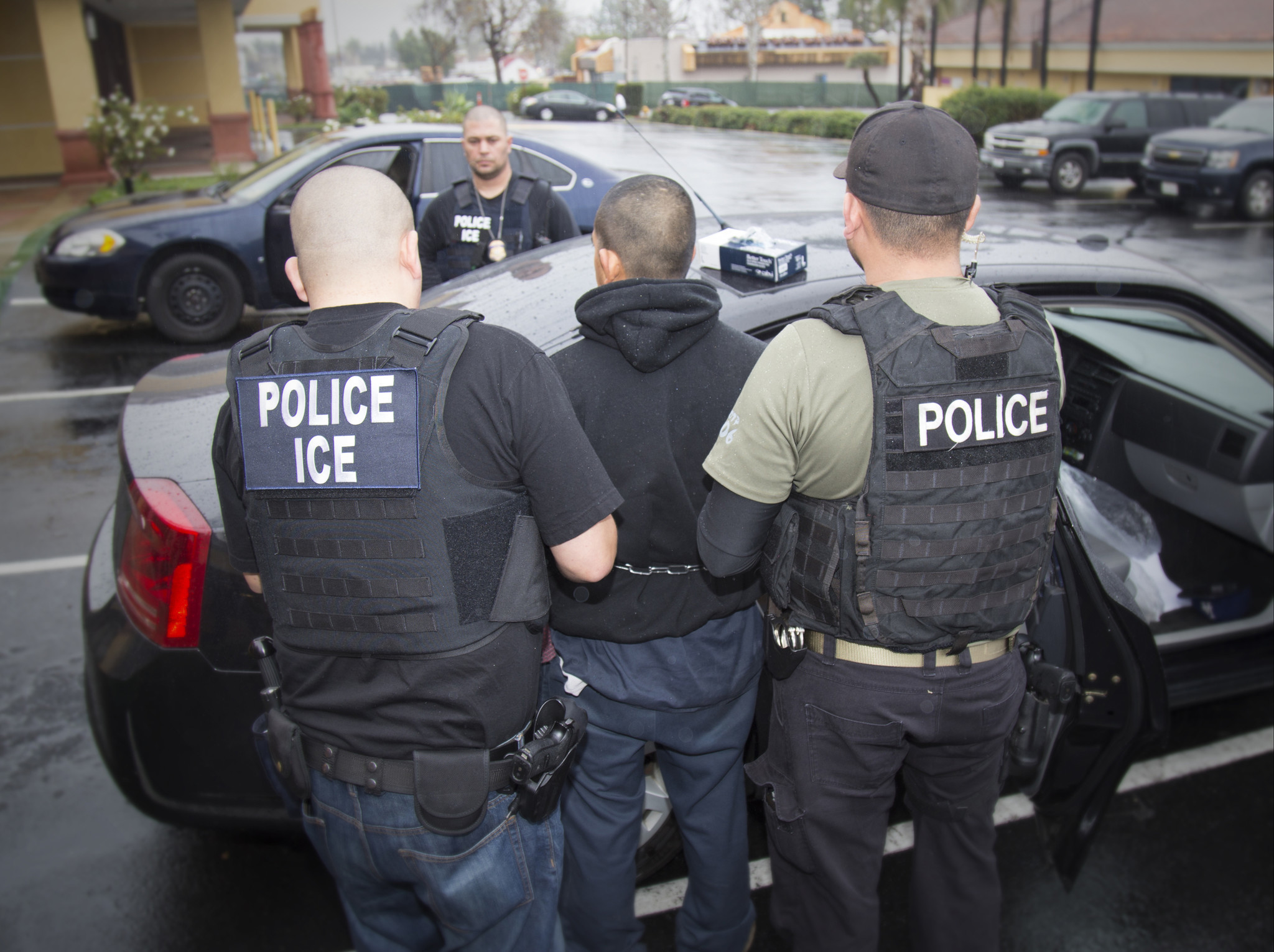
According to the two memoranda issued by Secretary John Kelly, agents are instructed to target people who are here illegally who’ve been convicted of a crime as the highest priority for enforcement operations. This sounds acceptable and echoes what previous presidents attempted to do.
The devil, however, is in the details.
Immigration agents can now focus on picking up and detaining anyone charged with, or convicted of, any criminal offense, including minor ones. And Immigration and Customs Enforcement agents should also arrest and initiate deportation proceedings against any person living in the U.S. illegally that they encounter.
The government “no longer will exempt classes or categories of removable aliens from potential enforcement,” according to the new directives. Does this mean that foreign-born American families can be ripped apart over a minor criminal offense or a traffic violation? We shall see.
“Jerry, go to Mexico illegally and commit a crime. If you come back, you can write about your experience,” quipped Bill Aiken, a reader who supports the new directives.
I see his point, and appreciate his humor, but should we compare our country’s values to Mexico or any other nation? Do we want to be more like Mexico or more like America, an ideal in progress?
Although this proposed crackdown will take months, if not years, to roll out, and it targets only a certain demographic of “criminals” already here illegally, the idea itself is already reigniting heated arguments. It’s also creating hypothetical situations that may become a reality in our corner of the state.
For instance, I’m wondering how many churches in Northwest Indiana will become a sanctuary safe place for people living here illegally and facing deportation. Does God’s law ever trump U.S. law? Should we obey Jesus’ teachings or punishable legalities? Which do we value more?
I’m curious which churches step up to protect undocumented immigrants, citing biblical scripture, and which churches stay out of this contentious issue. I’m intrigued by the human dilemma behind this decision.
What is first needed, I believe, is a broader, formal conversation on immigration reform, possibly with town hall forums to collect public opinion and educate citizens. Too many of us are woefully uneducated or wrongly misinformed to grasp this issue’s complexities, often portrayed by a local family caught in the national crossfire.
Twitter@jdavich