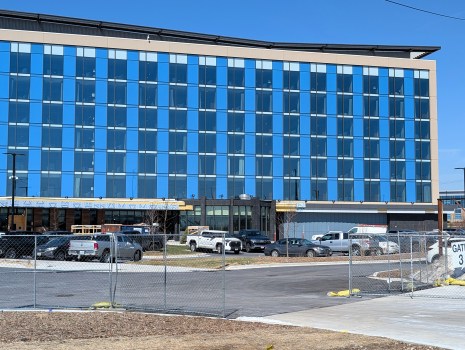


The city of Aurora has taken the beginning steps toward possibly developing a tax increment financing district on the old Copley Hospital site.
In a TIF district, assessed value is frozen for the purposes of taxation at the time of the formation of the district. As redevelopment occurs and assessed value of the property increases, the difference between the frozen value and the increased value goes into a fund, known as the increment.
That money can be spent on redevelopment in the TIF area, particularly on public infrastructure that goes with the development.
Aldermen on the City Council’s Finance Committee have recommended a resolution showing an interest in a possible TIF on the old campus property, or part of it, to reimburse costs and to induce development interest on the property.

“This does not bind the council to develop a TIF,” said Martin Lyons, Aurora’s chief financial officer.
But it does get the city ready if it decides a TIF district might be a way to contribute to the development phase of the old Copley campus, being done by a local partnership named Fox Valley Developers.
The ultimate goal of the developers is to turn the once-dilapidated old Copley Hospital on Lincoln Avenue on the near East Side into a campus that would include medical facilities, housing for functionally challenged adults and senior housing facilities. While the developers are finishing the cleanup of the site right now, when that is finished, they intend to go ahead with a second phase that involves bringing users into the about 300,000 square feet of space in the various historic Copley campus buildings.
The cleanup is almost complete. Fox Valley Developers has invited guests to celebrate completion of the cleanup on Aug. 22.
So far, the city committed a $3 million contribution to the developers for the cleanup phase, which cost the developers about $12 million.
The city also is committed to a $1.5 million incentive toward one of the facilities to be developed there – a 30,000-square-foot administration center for East Aurora School District. The city would contribute about $1 million in in-kind work on the project, and another $500,000 in cash to the school district. The agreement currently says the city would pay the money to the district at a rate of $25,000 a year.
The second phase calls for renovation of the former hospital buildings into a residence and care facility for seniors and individuals with special needs. One area would include 60 apartments for young adults with cognitive and developmental disabilities. They are functional people who need a bit of support and could share the apartments with parents who help them.
While the city is not committed to a contribution in the second phase, officials have been preparing for the possibility. Putting a TIF district on the property, or even on part of the property, could be a way to contribute. In a recent report Lyons gave the City Council on the city’s debt, he included an estimated $12 million the city could put toward the second phase, to be paid back by the TIF district.
Lyons told aldermen the city has had a policy with all its economic development incentives to keep payments away from property taxes, or anything used for general city operations.
“A TIF is a good way to do that, because it’s nobody’s value to begin with,” he said.
If the city takes part in the second phase of the development, it would have to negotiate a redevelopment agreement with the developers.
slord@tribpub.com