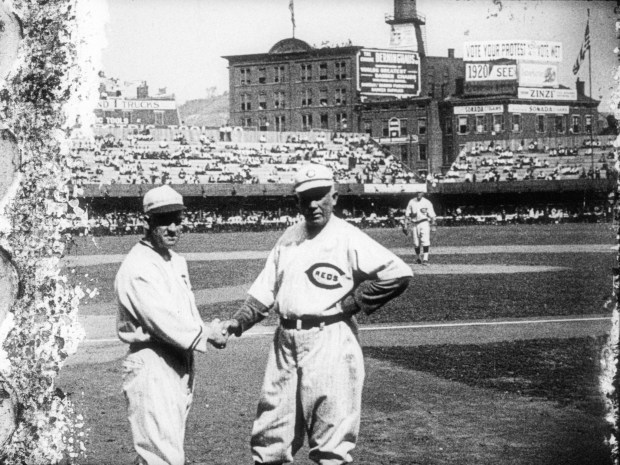
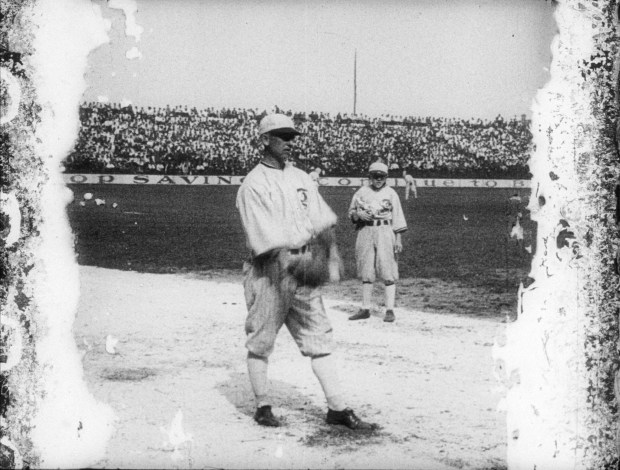



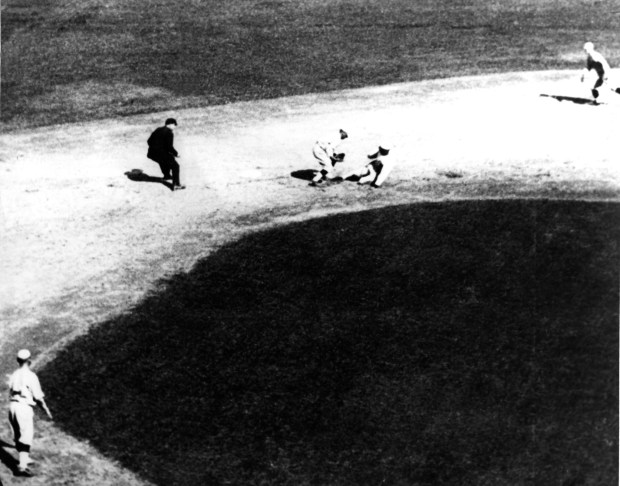
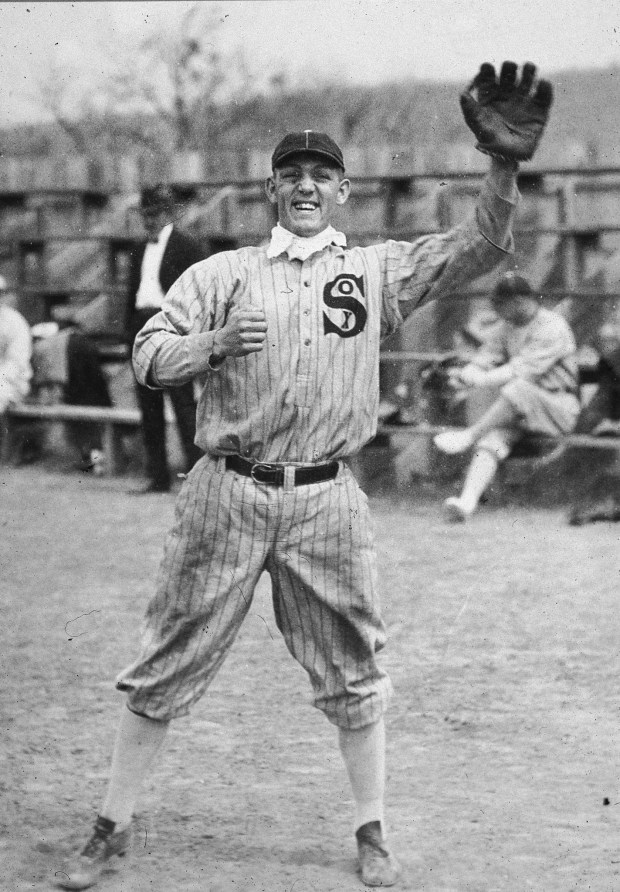

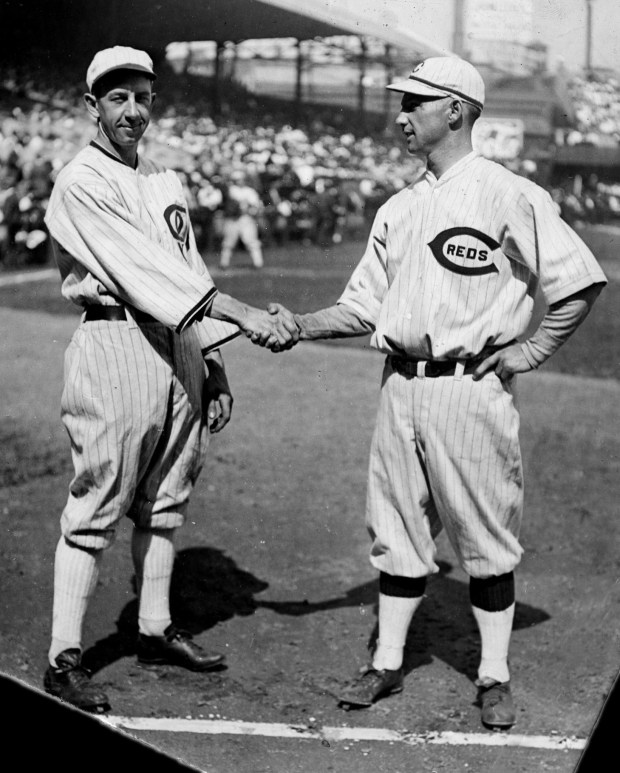
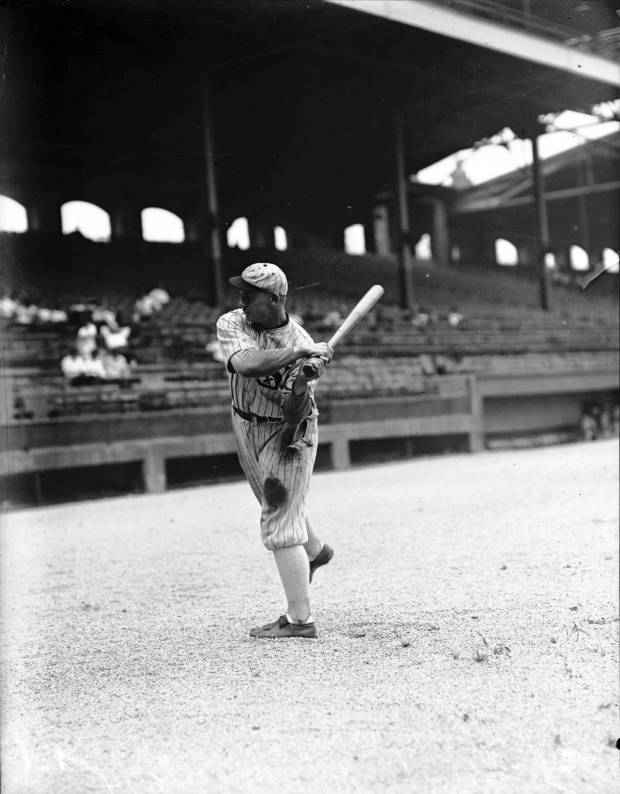
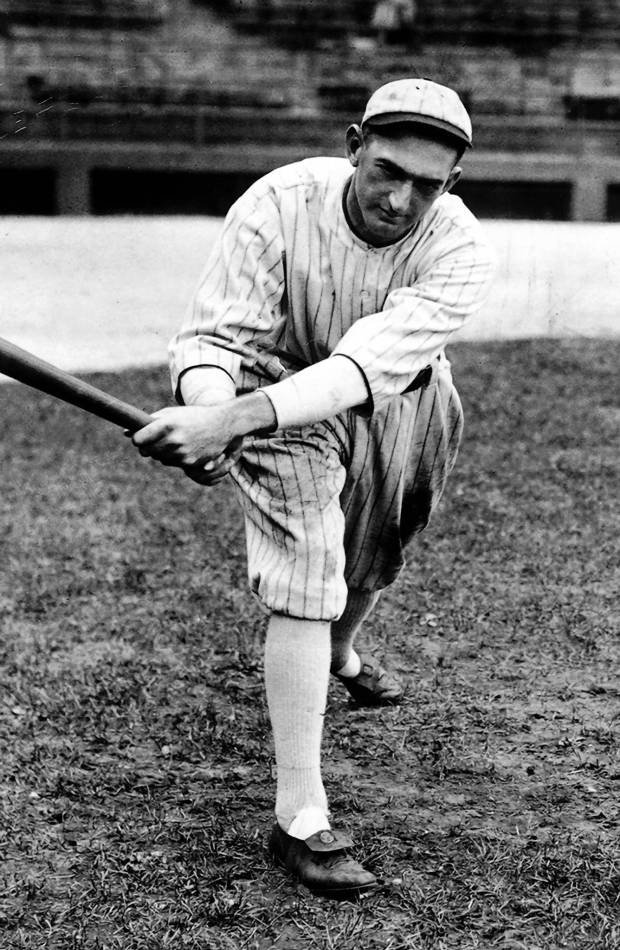

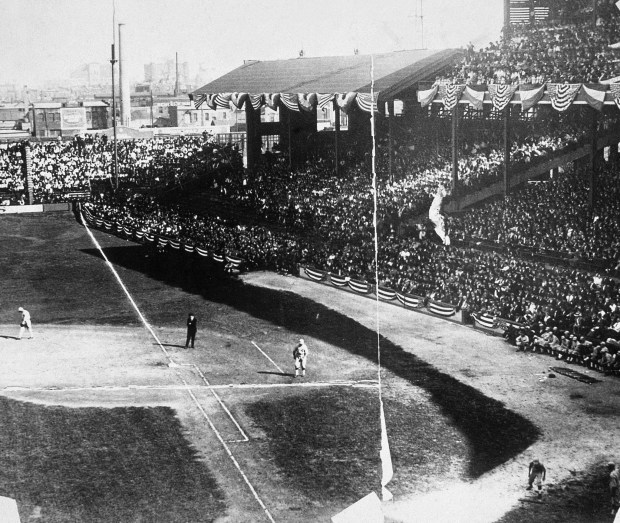


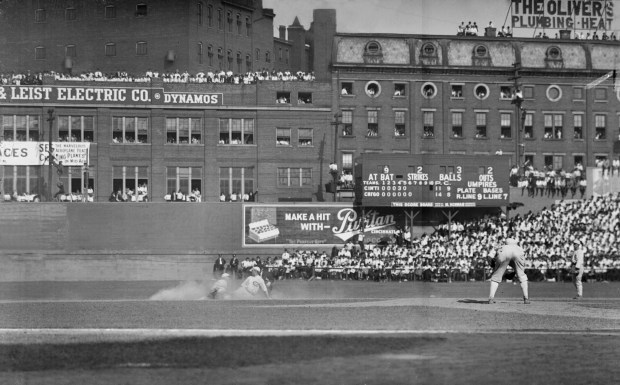


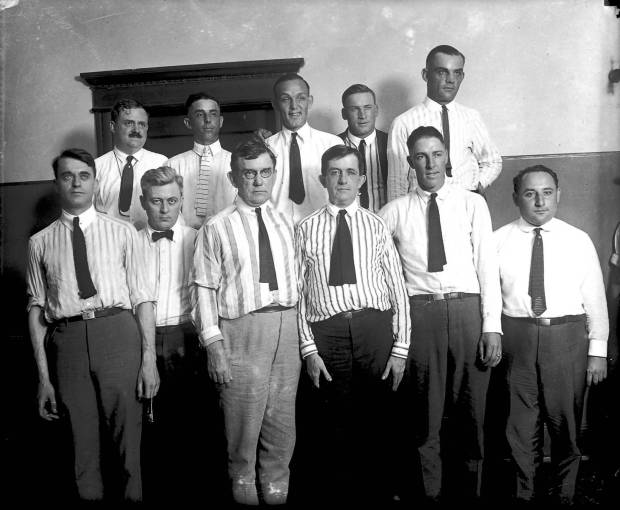
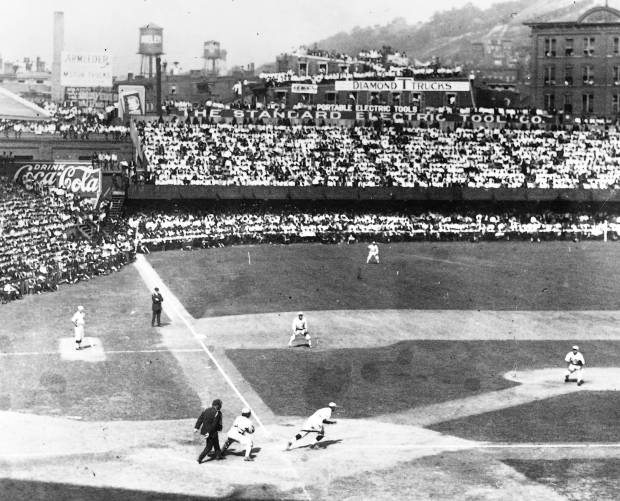
The 1919 White Sox — considered by some baseball historians as one of the greatest teams ever to take the field — were heavy favorites to beat the Reds in the World Series.
But in the best-of-nine series (Major League Baseball decided to expand from the best-of-seven format due to postwar demand), the Reds dominated.
There had been rumors and reports that the fix was in, and indeed the Sox’s performance was suspect.
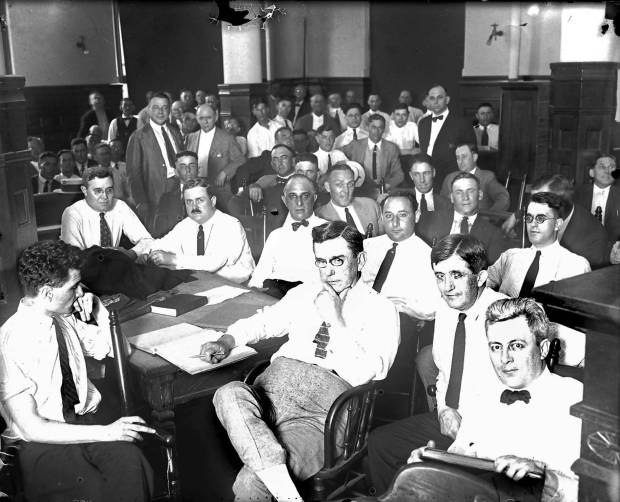
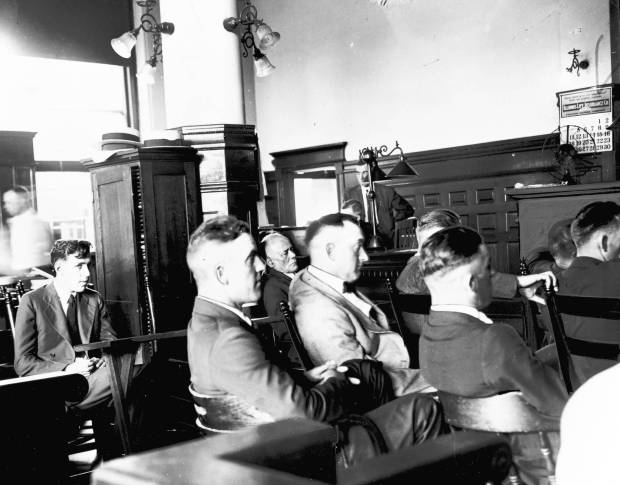
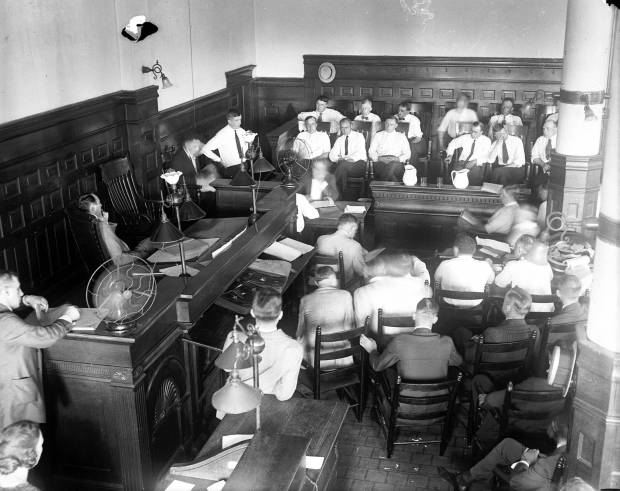
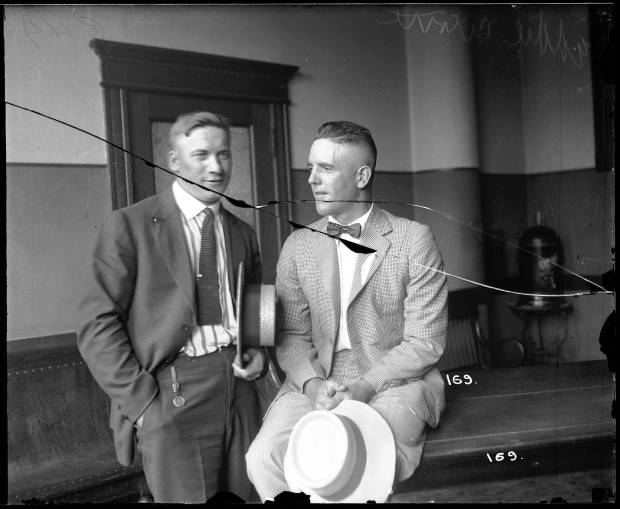
A year later, eight White Sox players were charged with throwing the World Series.
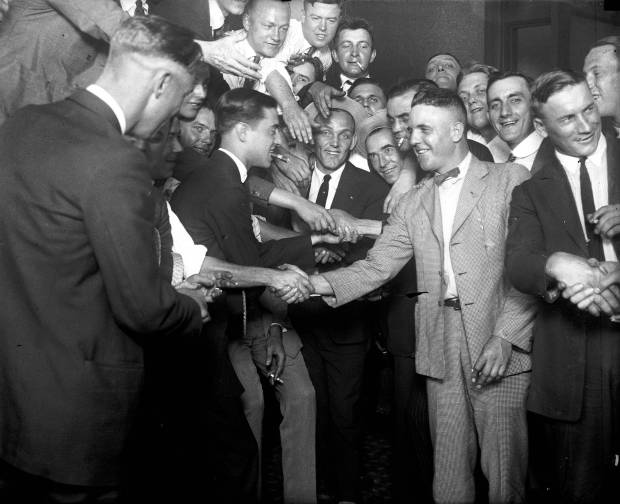
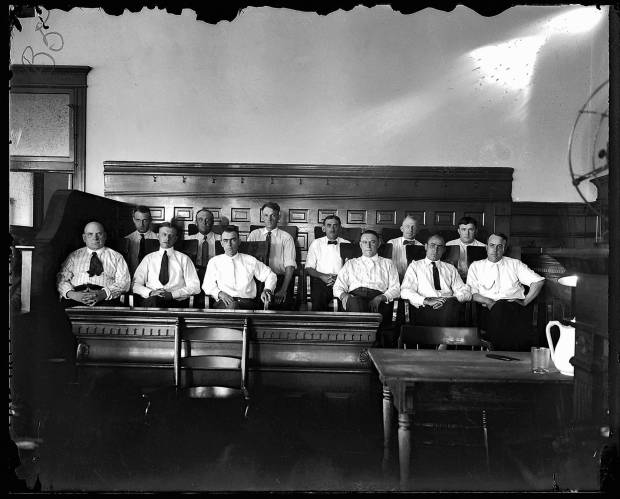
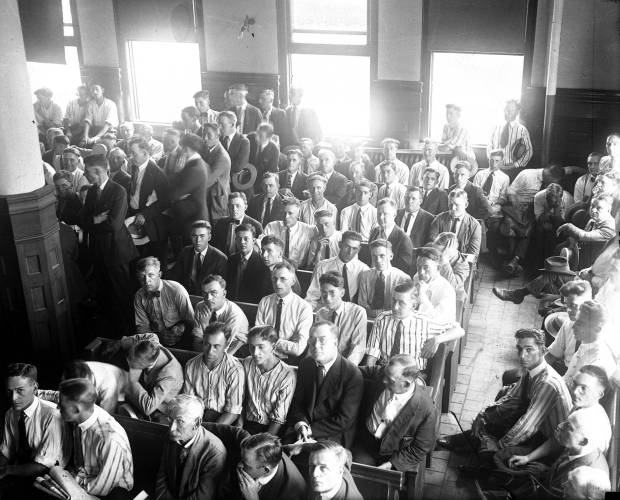
In 1921, all were acquitted by a jury that deliberated just 2 hours, 47 minutes.
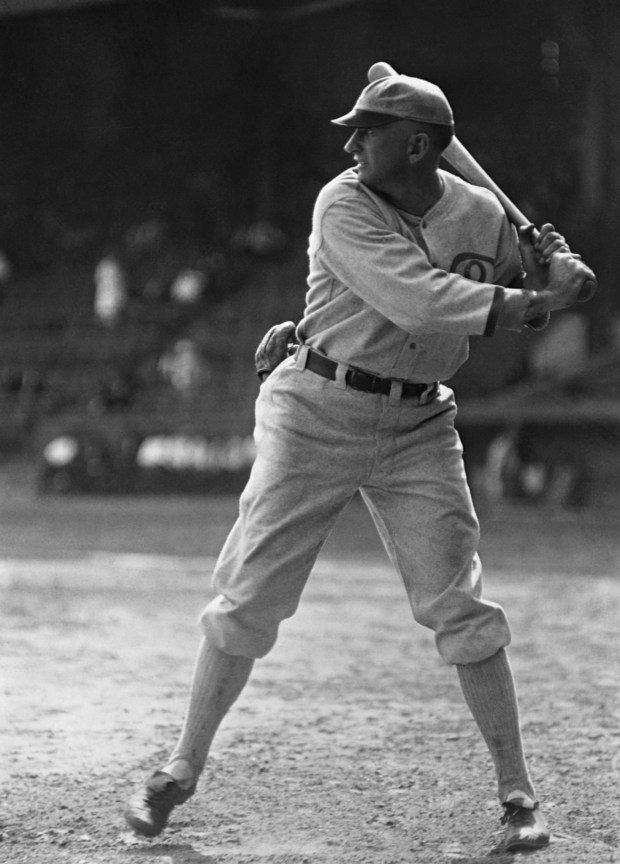
A day after their acquittal, however, baseball Commissioner Kenesaw Mountain Landis ruled the players allegedly involved — Joe Jackson, Eddie Cicotte, Oscar Emil “Happy” Felsch, Chick Gandil, Frederick William McMullin, Swede Risberg, Buck Weaver and Lefty Williams — would be banned for life from organized baseball.
How the Tribune covered the 1919 World Series
GAME 1 (Oct. 1, 1919)

Location: Redland Field (Cincinnati)
Attendance: 30,511
With the second pitch of the 1919 World Series, Eddie Cicotte — who had won 29 games that season with a stingy 1.82 earned-run average — hit Reds batter Morrie Rath in the left arm. To White Sox fans, it was a bad start. To some bettors it was reportedly a signal that the fix was in.
Rath went on to score. The Sox countered with a run in the top of the second.
The Reds scored five runs in the fourth inning.
“After the fatal fourth there was nothing for the Sox to do, of course, but try to knock the pill out of the lot, for only by a big inning could they hope to offset what had happened to Cicotte,” Tribune reporter I.E. Sanborn wrote. “The big inning never came.”
First baseman Chick Gandil, who dropped a throw to first in the seventh that would have been the first out of the inning, had the White Sox’s only official error. The Reds scored two more in that frame.
The Sox managed only six hits, all singles.
Final score: Reds 9, White Sox 1

Quote of the game: “When an 8 to 5 favorite in a world’s series is beaten by a score of 9 to 1 in the first game, it looks as if all the dope has been upset and all the wise experts are cuckoos.” — James Crusinberry, Tribune reporter
GAME 2 (Oct. 2, 1919)

Location: Redland Field
Attendance: 29,690
In Game 2, the White Sox outhit the Reds 10-4, but pitcher Lefty Williams’ lack of control derailed the South Siders.
“Almost criminal wild pitching by Lefty Williams and highway robbery that was ultra-sensational by the Reds beat Chicago’s White Sox today,” Tribune reporter I.E. Sanborn wrote from Redland Field in Cincinnati. “Although the Gleasons (a reference to White Sox manager William J. “Kid” Gleason’s players) outbattled their antagonists more than two to one, they could not tie up the series because of a flock of bases on balls gave the Reds three runs in the fourth inning.”
The highway robbery that Sanborn referred to was the Reds’ defense, including a grab by center fielder Edd Roush of Emil “Happy” Felsch’s long drive in the sixth, with Weaver on third.
“It was one of the greatest catches every made in a World’s Series,” Gleason said.
As in Game 1, the Reds broke it open in the bottom of the fourth. Williams walked three that inning and also yielded a single and a two-run scoring triple. He walked six in the nine innings he pitched.
“The Reds did not hit Williams hard,” the Tribune’s Harvey Wooduff reported. “Instead they waited him out, hoping to kill any fast one he offered. His control lacked just enough so that the count often — far too often — went to three and two. If the next was a bad one the Reds walked. If it was a good one they hit it. It was a game the Sox could have won, but didn’t and that is the hard part of it.”
Final score: Reds 4, White Sox 2

Quote of the game: “This team isn’t beaten at all. It’s too good a ball team to be licked until the Reds have won the fifth game, and they’ll never win the fifth one unless they continue to have that phenomenal luck.” — Kid Gleason, White Sox manager
GAME 3 (Oct. 3, 1919)

Location: Comiskey Park
Attendance: 29,126
The White Sox turned to rookie Dickey Kerr to stop the Reds in Game 3 at Comiskey Park. He pitched a gem. Kerr struck out four, walked one and scattered three hits in his complete game win.
“With a curve that stood that left handed Red swatsmen on their heads and a fast one that tricked them into hitting it high in the air, Kerr breezed through the nine innings as if it were an exhibition game and seldom asked for help from his backers,” the Tribune’s I.E. Sanborn wrote.
The White Sox scored twice in the second off a Chick Gandil two-run single (bringing home Jackson and Felsch). They scored again in the fourth with a Ray Schalk bunt single that scored Swede Risberg.
“It’s spirit like that that makes a ball team win,” Gleason said. “The gang has that spirit now, and they’re going to win sure. I’m intending to send Eddie Cicotte right back at them in the next game. He wants to get even for that beating in the first battle and he is fit to make good, too. … He never was a better pitcher in his life than he is right now, and he won’t make any mistakes this time.”
Final score: White Sox 3, Reds 0

Quote of the game: “Poor Fisher tried the spit ball, the shine ball, the push ball, a wild ball — every kind of a ball except baseball.” — Jack Lait, Tribune’s “In the Wake of the News” columnist
GAME 4 (Oct. 4, 1919)

Location: Comiskey Park
Attendance: 34,363
As White Sox manager Kid Gleason predicted, Eddie Cicotte pitched better in Game 4 than he had in his miserable Game 1 outing.
But his fielding failed the team.
“Eddie gave the lie to all the rumors that have had him relegated to the bushes because his arm was gone by pitching a sterling game which would have gone into extra innings if he had not gummed up the works himself by a pair of misplays in the fifth inning,” Tribune’s I.E. Sanborn reported from the game at Comiskey Park. “Instead of being gone, his arm was too good, for he made a two base wild throw that paved the way to his own defeat, and followed it with a disastrous attempt to cut into a long throw to the plate” with the ball bouncing off his glove, allowing the Reds runner to score.
Reds pitcher Jimmy Ring allowed only three hits (to Joe Jackson, Happy Felsch and Chick Gandil) for the 2-0 win.
Cicotte allowed five hits, striking out two and walking nobody.
“The problem with Cicotte was that he was too keen and alert, not that he had a sore arm and was all in. They got five hits off him all told, and none of them were worth anything. However, we didn’t get many hits off Ring, even if we should have knocked the ball out of the lot.”
Final score: Reds 2, White Sox 0

Quote of the game: “While every one is blaming Eddie Cicotte for losing the game because of his errors in the fifth inning, it is fitting to call attention to the fact Cicotte’s pals could not have copped a victory in a thousand years the way they weren’t hitting (Cincinnati Reds pitcher Jimmy) Ring.” — I.E. Sanborn, Tribune
GAME 5 (Oct. 6, 1919)

Location: Comiskey Park
Attendance: 34,379
Just before Game 5 at Comiskey Park, Reds starting pitcher Hod Eller slipped on a piece of chewing gum outside the Sherman Hotel and bumped the elbow of his pitching arm.
“The blow caused a swelling which required heroic efforting by the club’s trainer to reduce it in time to let Hod humble the pride of the South Side,” the Tribune reported.
And humble them he did, scattering three hits (two by Buck Weaver and one by Ray Schalk) in a 5-0 complete game win, giving the Reds their fourth victory of the series.
Normally that would have clinched the World Series, but Major League Baseball had decided to make the 1919 version a best of nine. That continued through the 1921 season, before returning to the best-of-five format in 1922.
Lefty Williams held the Reds scoreless through five, but the sixth was his undoing, when he allowed four runs.
He walked one and gave up three hits, the big blow a triple by Edd Roush that scored two.
The Reds added a run in the top of the ninth.
“I don’t know what’s the matter,” Sox manager Kid Gleason told the Tribune. “But I do know that something is wrong with my gang. The bunch I had fighting in August for the pennant would have trimmed this Cincinnati bunch without a struggle. The bunch I have now couldn’t beat a high school team.”
“We have hit and run the bases and fielded and played baseball in every way far above what the White Sox have shown,” Reds manager Pat Moran said. “I want to say that I have a great team in the Reds, one of the greatest of all time. … We need only one game now.”
Final score: Reds 5, White Sox 0

Quote of the game: “I don’t know what’s the matter, but I do know that something is wrong with my gang. The bunch I had fighting in August for the pennant would have trimmed this Cincinnati bunch without a struggle. The bunch I have now couldn’t beat a high school team.” — Kid Gleason, White Sox manager
GAME 6 (Oct. 7, 1919)

Location: Redland Field
Attendance: 32,006
After four innings at Redland Field in Cincinnati, it looked bleak for the White Sox.
The Reds were up 4-0 and their pitcher Dutch Ruether was rolling, giving up only two hits and a walk.
With a victory, the Reds would be World Series champions.
“The fans in the grand stand started the celebration right then and there.”
In the top of the fifth, White Sox shortstop Swede Risberg scored on a Eddie Collins sacrifice flyball, making it 4-1.
In the sixth, the Sox scored three more, thanks to hits by Joe Jackson, Happy Felsch and Ray Schalk. Game tied.
Jimmy Ring replaced Ruether.
“Then the packed Cincinnati stands became quiet,” the Tribune’s James Crusinberry wrote. “They were quiet the rest of the afternoon.”
The game remained tied until the top of the 10th. Buck Weaver led off the inning with a double, Jackson then bunted for a single advancing Weaver to third. Weaver then scored on Chick Gandil’s single. Sox up 5-4.
Dickey Kerr retired the Reds in order in the bottom of the 10th and the Sox won, cutting the series deficit to 4 games to 2.
“What did happen to the Sox?” Crusinberry wrote. “It was noticed that Boss Gleason never once was on the coaching lines. He sat on the bench from start fo finish. He never took his eyes off the man at bat when the Sox were making an attack. … Gleason knew the trouble with his men was their feeble work with the stick. He made sure that no man made a feeble attempt today.”
“I never took my eyes off the batter,” Gleason said. “I knew I had to make the fellows hit. … I didn’t mind it when a fellow failed just as long as I was satisfied that fellow gave his best effort. … They gave their best effort today and they knocked Ruether off the slab.”
Final score: White Sox 5, Reds 4 (10 innings)

Quote of the game: “Their work in this battle silenced all the dangerous gossip that had been circulated by disgruntled gamblers, and convinced even their enemies that as a team the White Sox take off their lids to no one when it comes to gameness.” — I.E. Sanborn, Tribune
GAME 7 (Oct. 8, 1919)

Location: Redland Field
Attendance: 13,923
Eddie Cicotte, who hit the first batter he faced in Game 1, which was reportedly a signal to bettors that the fix was in, and then went on to lose that game as well as Game 4, took the mound again for the White Sox in another must-win for the White Sox.
Cicotte pitched a complete game at Redland Field in Cincinnati, scattering seven hits, giving up one run. He walked three and struck out four.
“Fighting again like bulldogs at bay, Chicago’s White Sox licked the Reds today in the seventh game of the world’s greatest world’s series and gave Eddie Cicotte a chance to regain his laurels brilliantly,” the Tribune’s I.E. Sanborn wrote.
The Sox took the lead in the top of the first, on a Joe Jackson single that scored Shano Collins.
Jackson drove in another in the third. And Happy Felsch singled in the fifth to score Eddie Collins and Buck Weaver. The Sox were up 4-0.
The Reds’ lone run came in the bottom of the sixth, when Pat Duncan singled to score Heinie Groh.
“The Reds never had a chance and I can’t see where they’ll have a chance in the next two games with that bunch of mine fighting,” Gleason said. “They are licked for sure. I don’t see a chance for the Reds to win another game. I feel absolutely certain we an take the next two and then it will be over.”
Final score: White Sox 4, Reds 1

Quote of the game: “I don’t see a chance for the Reds to win another game. I feel absolutely certain we can take the next two and then it will be over.” — Kid Gleason, White Sox manager
GAME 8 (Oct. 9, 1919)

Location: Comiskey Park
Attendance: 32,930
The Reds came out swinging.
After the game’s first batter Morrie Rath popped out, the next two Reds singled and the following two doubled and suddenly it was 3-0, hushing the Comiskey Park crowd.
Sox manager Kid Gleason pulled starter Lefty Williams and replaced him with Bill James, who gave up one more run and the Reds were up 4-0 after the first half inning.
In the bottom of the third, Joe Jackson hit the only homer of the entire series, a solo shot, scoring the Sox’s first run.
But the Reds scored another in the fifth, three in the sixth and one in the eighth to go up 10-1.
The Sox, however, had one last gasp.
Behind doubles by Buck Weaver and Joe Jackson and a Chick Gandil triple, they scored four, cutting the deficit to 10-5.
And that is how it ended.
Hod Eller, the winner of Game 5, got the complete game victory, allowing 10 hits and five runs. Williams took the loss for the Sox.
“It was significant that they burned up the White Sox by a score of 10 to 5 on the anniversary of the day Mrs. O’Leary’s cow burned up nine-tenths of Chicago forty-eight years ago,” the Tribune’s I.E. Sanborn wrote.
“The Reds beat the greatest ball team that every went into a world series,” Sox manager Kid Gleason said after the game. “But it wasn’t the real White Sox. They played baseball for me only a couple or three of the eight days.”
Final score: Reds 10, White Sox 5

Quote of the game: “Ha, ha. Cincinnati has a championship now and nobody in town to see it.” — Jack Lait, “In the Wake of the News”
Sources: Chicago Tribune archive photos, stories and pages; Baseball-almanac.com, Baseball-reference.com
Want more vintage Chicago?
Subscribe to the free Vintage Chicago Tribune newsletter, follow Today in Chicago History, join our Chicagoland history Facebook group and follow us on Instagram for more from Chicago’s past.
Have an idea for Vintage Chicago Tribune? Share it with Kori Rumore and Marianne Mather at krumore@chicagotribune.com and mmather@chicagotribune.com