The meeting between the developers of a snazzy West Loop condo tower and a team of downtown tax lawyers was hardly unusual at first glance.
In an obviously polished pitch, a seasoned attorney ran the potential clients through all the advantages of hiring their firm to reduce property taxes. Then, he articulated perfectly what everyone in the room already seemed to know: The game can be rigged.
“In a perfect world, everybody gets the same amount of time to argue their case, gets to access the guy who can say yay or nay,” said Vincent “Bud” Getzendanner in the July 2017 meeting. “We have the ability to access the decision-maker … So we have a very good track record in terms of final outcome.”

But in this meeting, perhaps the most important thing was what wasn’t said. Getzendanner’s partner at the other end of the table, the quieter one with the keen gaze, was Michael J. Madigan, the speaker of the Illinois House and probably the most powerful elected official in the state.
Video of that meeting, which was secretly recorded for the FBI by then-Ald. Daniel Solis, was one of dozens of undercover recordings seen and heard by the jury last week at Madigan’s corruption trial.
It’s up to the jury to decide whether or not Madigan stepped over the line and committed a crime. The bar to prove a criminally corrupt exchange — as opposed to just insider political back-scratching — is high. But regardless of the final outcome, the trial has offered an eye-opening, fly-on-the-wall opportunity for the public to see how the levers of power are pulled in private.
What Solis’ camera captured, both in Madigan’s case and the parallel investigation of then-Ald. Edward Burke, was the Chicago way at work, where the lines blur between public office and private gain, and the playing field isn’t just tilted but obliterated.
Nowhere is that advantage more stark than in the business of reducing property taxes, an insider’s game where Madigan and Burke, licensed attorneys who doubled as powerful Democratic politicians, vied for contracts from the same deep-pocketed developers. In most cases, those developers depended on government — be it a zoning change, a land transfer, issues with water pipes or train tracks or even something as mundane as a pole sign — to see their projects through.
With Burke, it was hardly subtle. Solis’ undercover videos captured the City Council dean and Finance Committee chairman whipping out his oversized law firm business cards touting his work reducing taxes for Trump Tower, infamously comparing a contract with the mega-developer of the Old Post Office to landing “the tuna,” and telling Solis they “could go (expletive) themselves” after they failed to hire his law firm.
Madigan, meanwhile, has come across as far more tactful, often offering a simple quick pitch for his firm’s ability to save clients money before throwing it over to his partner.
“So you’re gonna do your project and, and, and we’d like to talk to you about the real estate taxes. This law firm represents buildings like that on real estate taxes,” he told the West Loop developers in that 2017. “And at that point I bow out and he takes over.”
Toward the end of the meeting, the developers of the flashy project called Union West told their suitors they couldn’t make any final decisions without running it past their financial backers. But they were certainly interested.
“We obviously are gonna need somebody in the city of Chicago to do this for us,” developer Andrew Cretal said.
“And reputation matters,” his colleague Rick Vogel said.
“Yeah, reputation matters,” Cretal said.
Madigan, 82, of Chicago, who served for decades as speaker of the Illinois House before stepping down in 2021, faces racketeering charges alleging he ran his state and political operations like a criminal enterprise.
He is charged alongside Michael McClain, 77, a former ComEd contract lobbyist from downstate Quincy, who for years was one of Madigan’s closest confidants. Both men have pleaded not guilty and denied wrongdoing.
‘Being with the Speaker’
Crucial to the trial’s insider view of the incestuous pitch process is Solis, who as head of the City Council’s zoning committee had immense power to determine which real estate developments could proceed.
He also was the alderman of the 25th Ward, which at the time contained the rapidly gentrifying South Loop and Pilsen neighborhoods as well as the West Loop, a now-ritzy section of the city that used to belong to meatpackers and warehouses.
In a Chicago tradition known as “aldermanic privilege,” the 50 members of the City Council have generally been given significant freedom to approve or deny new projects in their wards. In short: If developers wanted to put cranes up – particularly in the 25th Ward – they needed Solis’ blessing.
And Madigan knew it. More than once, Solis has testified, the speaker called him to ask about a new real estate project and would sometimes request Solis make an introduction to the developers.
That’s what happened in 2014, when Madigan asked Solis to set up a meeting with developers hoping to build a $6 million Best Western hotel on South Archer Avenue in Chinatown.

Solis testified he agreed to arrange the sit-down, even though he got no money from the referral and his responsibilities as alderman had nothing to do with the project’s real estate taxes.
So why did he agree to set up the meeting? prosecutors asked.
“I wanted to curry political favor from Mr. Madigan,” Solis testified.
Solis finished his direct testimony Wednesday, wrapping up about 16 hours on the stand over four days. His cross-examination is expected to be lengthy, grueling and potentially personally embarrassing for Solis.
He started cooperating extensively with the government after agents had gathered significant evidence of his own wrongdoing, and got an unprecedented sweetheart deal in return — one that will leave him without a criminal conviction and could mean he keeps his city pension.
That leaves defense attorneys primed to attack his credibility and motivation. They also could remind jurors of the most sordid parts of Solis’ direct examination, when he admitted to, among other things, an affair with his Chinese translator and an arrangement for free Viagra and erotic massages.
But as every good defense attorney knows, you can dirty up a witness as much as you like, but you can’t cross-examine a videotape. Madigan and McClain were on plenty of those.
The meeting about the Archer Avenue hotel proceeded in August 2014 at Madigan’s law office, and was surreptitiously video-recorded by developer See Wong, who was acting as a point of contact for the Chinese developer who wanted to build the hotel. Wong was also secretly cooperating with the government in hopes of leniency on his own fraud case.
The pitch proceeded in a way that would become familiar to jurors: Madigan made some small talk, changed the subject to property taxes, then turned it over to Getzendanner for a detailed explanation of the minutiae.
When the conversation turned to fees, Madigan brought it in for the close.
“We’re not interested in a quick killing here. We’re interested in a long-term relationship,” he said. “And, um, in terms of the quality of the representation that you get from this law firm, we don’t take a second seat to anybody.”
When the meeting concluded, Solis and Wong spoke separately. The developer would be fine with hiring Madigan’s firm, Wong said.
“But you know, like without your support, that hotel, you know, zoning change is very critical,” he told Solis. “You know, like, if you have to go through zoning change—”
Solis interrupted.
“If he works with the speaker, he will get anything he needs for that hotel,” Solis said. “… He’s gonna benefit from being with the speaker.”
That precise moment, according to Madigan’s attorneys, was what got federal agents interested in Madigan in the first place. And it’s a topic they are sure to home in on during Solis’ cross-examination.
“That’s the lie Solis told See Wong and caused suspicion on Michael Madigan,” defense attorney Tom Breen told jurors in October during opening statements. “Cause you’re not gonna get anything you want just because you’re hiring Madigan’s firm.”
Federal authorities began tapping Solis’ phone after that meeting, and in June 2016 successfully flipped him to cooperate with the FBI. His secret recordings, including videotaped meetings and wiretapped phone calls, became the basis for charges that Burke and Madigan leveraged their governmental power to get business for their private firms.
Solis testified Madigan had reached out to him about real estate developments at least three times before his cooperation began. One instance resulted in the meeting See Wong recorded. In another case, Solis said he contacted a developer about arranging a meeting with Madigan but did not attend the meeting. And at another point, Madigan called Solis to ask if he knew an attorney for a certain development, Solis testified.
‘Let me see what I can do to get you an introduction’
Solis’ first year as an FBI mole focused hard on Burke, who seemed to be near-constantly fishing for business for his tax law firm, Klafter & Burke.
The recordings Solis made captured Burke speaking bluntly and leaving very little doubt about what he expected from developers who might need his help cutting through governmental red tape.
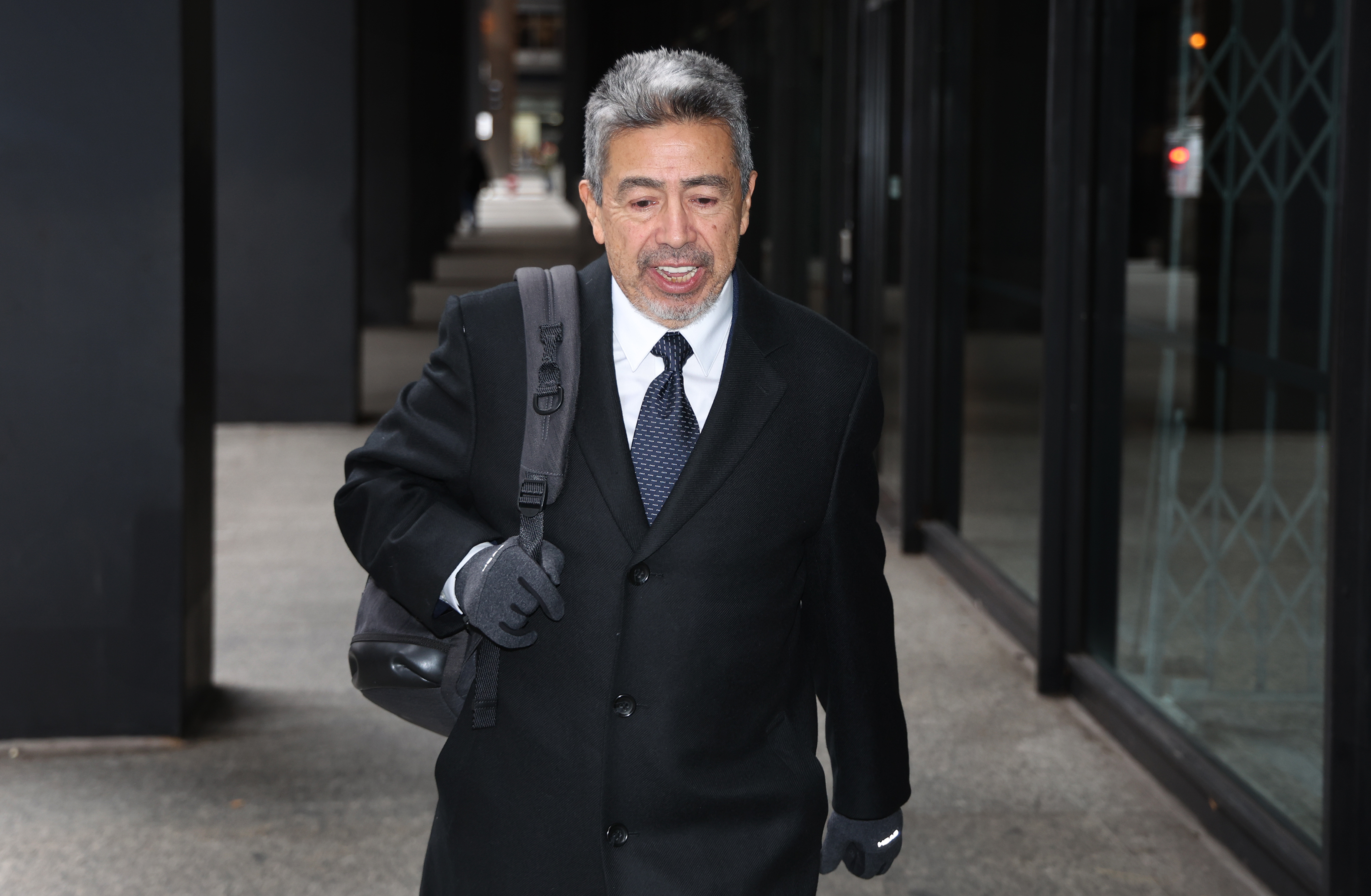

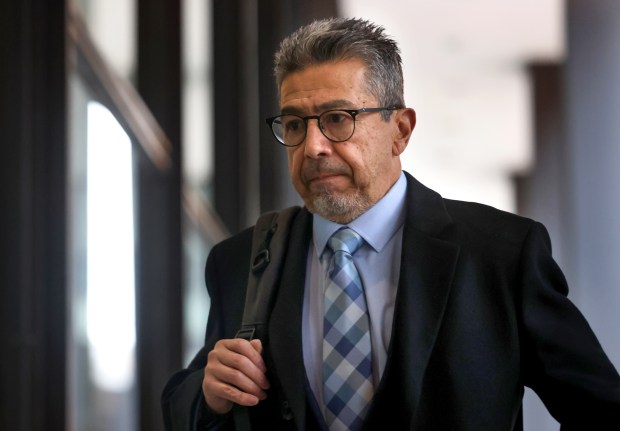


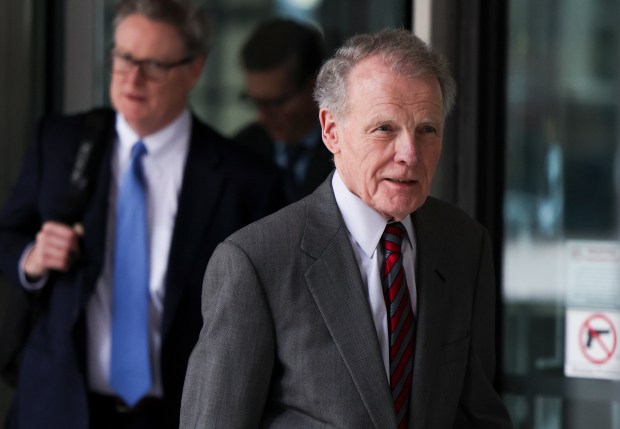
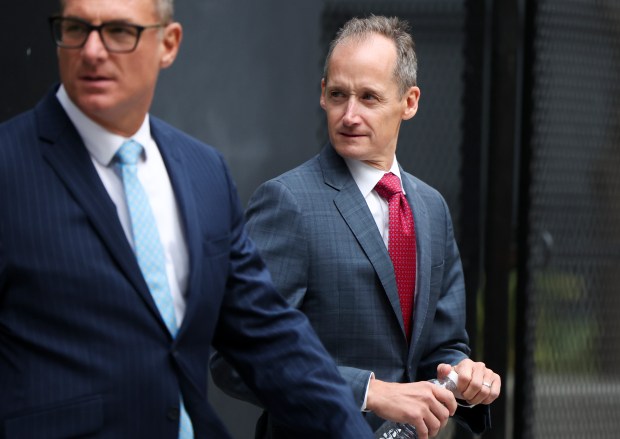


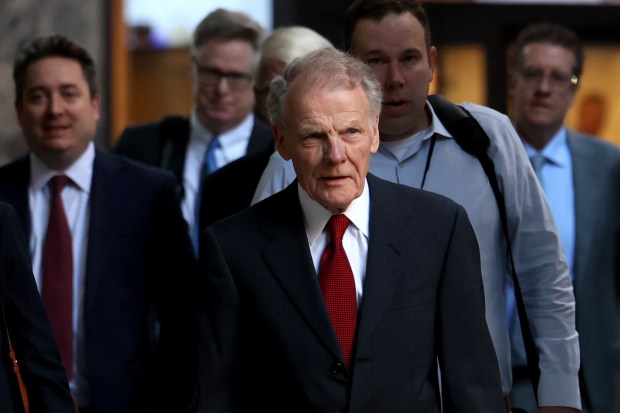
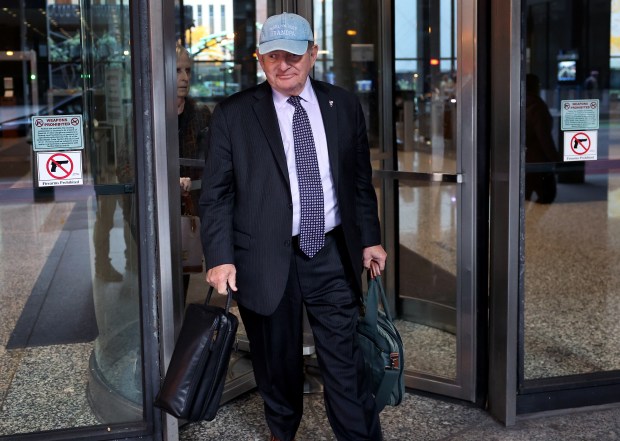






Solis’ hidden camera caught Burke smirking as he said he wasn’t motivated to do much to help the developers of the Old Post Office because “the cash register has not rung yet.” Burke even allegedly offered to reward Solis for making the connection to developers, telling him, “If we land the tuna, there certainly will be a day of accounting … you can count on that.”
Burke was convicted of racketeering late last year and is currently serving a two-year sentence in a federal prison west of Chicago.
About a year into Solis’ cooperation, the scope of the investigation expanded significantly.
That’s because in June 2017, Madigan called Solis out of the blue and left an intriguing voicemail.
“Danny, it’s Mike Madigan,” he said, and asked Solis to call him back.
When Solis did, Madigan mentioned the West Loop development going up in Solis’ ward, and said he’d like to get to know the developers.
“All right, well, let me see what I can do to get you an introduction,” Solis said.
That sparked a long series of overlapping alleged schemes involving the West Loop tower, a Chinatown parking lot, the Old Post Office redevelopment, and more. At the FBI’s direction, Solis would dangle the possibility of new law firm business for Madigan, and near-simultaneously mention that he wanted Madigan’s assistance with things like a cushy appointment to a state board, or Springfield’s help with a land-transfer bill.
All of it was laid out for jurors in an extraordinary blitz of phone calls and hidden-camera videos.
But compared with Burke, Madigan was significantly more circumspect in his reactions to Solis’ requests.
At one point, he pulled Solis aside and told him not to use the phrase “quid pro quo.”
“Over the phone, you made a comment that there was a quid pro quo,” Madigan said on the recording played for the jurors. “You shouldn’t be talking like that. You’re just recommending our law firm because if they don’t get a good result on their real estate taxes, the whole project will be in trouble.”
“Absolutely, absolutely,” Solis said, “Yeah.”
With Solis agreeing, Madigan went on: “Which is not good for your ward … So you want high-quality representation.”
“Right. Right,” Solis said.
In contrast to explicit Burke-esque quips, Madigan at times responded to Solis’ comments about tax work and favors with mild-sounding agreement.
“Yeah, OK, sure,” he told Solis after Solis said Madigan would have the tax work on a Chinatown development project if Madigan helped get the land transferred from state to city ownership.
In opening statements, Madigan’s defense attorneys described that kind of response as little more than a vocal tic to keep the conversation moving.
“A tic where he disagrees (and says) ‘yeah, uh-huh, OK,” Breen said. “He’s not aggressive, he’s not confrontational.”
At times, prosecutors have apparently tried to convince jurors that a lack of reaction or surprise to Solis’ suggestions amounts to a tacit approval, hoping the jury sees enough to infer a corrupt quid pro quo even if Madigan shunned the phrase.
“When you made the comment to Mr. McClain about steering past work to Mike, did Mr. McClain express to you, visually or audibly, any confusion?” Assistant U.S. Attorney Diane MacArthur asked Solis after jurors viewed a conversation between Solis and McClain about the Chinatown matter.
No, Solis responded. On the December 2017 video, McClain — whom Madigan tasked with helping to get the land transfer bill through Springfield — responded by simply continuing to talk about political strategy.
On a May 2018 phone call, however, McClain was recorded telling a Madigan staffer that the speaker had an interest in the outcome of the development, and said he wanted to make sure Madigan would vote “present” on the matter if it came to a vote.
“This fanaticism”
There were also many lighthearted moments in the recordings played so far, and others that offer insight into Madigan’s personality, which largely remained hidden from the public during his record reign as speaker.
As Madigan grew more comfortable talking with Solis, he appeared to open up, telling the alderman about his relationships with his children, laughing about the yuppies of University Village and his aversion to the city’s North Side, and repeatedly plugging both his alma mater, St. Ignatius College Prep, and one of his favorite Italian restaurants, Bruna’s Ristorante at 24th and Oakley.
At a meeting at Madigan & Getzendanner on Aug. 2, 2018, Madigan told Solis he’d recently dined at Bruna’s with the then-president of St. Ignatius. He also told an elaborate story of trying to make reservations at Bruna’s a week earlier only to discover that the rather old-school owners had problems with their landline.
“So, I called like 20 times. It wouldn’t go through. So, I just went there. I said, ‘Your phones aren’t working.'” Madigan recalled. “And so, two days later I’m back and, uh, his wife is there and they had set up the calls going to her cellphone. They can’t get the landline going.”
Madigan explained that he wound up “making a call to one of the lobbyists for AT&T” to get someone out to the restaurant and fix the problem.
The speaker also told Solis the restaurant was “geographically convenient” because his daughter lived on the North Side, where he doesn’t like to set foot.
“I tell ‘em, I’ll take you to dinner. I’ll buy the dinner, but you gotta go to Bruna’s, because I don’t want to go to the North Side,” Madigan said, laughing. “I don’t want to go north of Madison Street.”
Solis also heard many factoids about Madigan from McClain, a devotee of the speaker’s who had a penchant for referring to Madigan as “Himself” and once wrote a letter saying he was standing guard for Madigan “at the bridge with my musket.”
In a 2018 wiretapped phone call played for the jury last week, McClain told Solis that his relationship with Madigan went back to their days in the legislature together in the 1970s.
“I know all of his kids, we go to concerts together and stuff,” McClain said.
When Solis asked about their sports loyalties, McClain said that as a downstater, he’s more of a St. Louis Cardinals fan than a White Sox fan like the speaker. He also warned Solis about watching Notre Dame football with Madigan.
“He’s yelling and screaming,” McClain said. “You don’t want to sit in the living room with him and watch a Notre Dame game. He gets pretty passionate about it.”
jmeisner@chicagotribune.com
mcrepeau@chicagotribune.com