
Amid a $734 million budget deficit and with a little less than a month before it needs to be filled, Chicago Public Schools announced reduced services for the 2025-26 school year, including hot meals for students and custodial operations.
The reductions come as CPS has held multiple community meetings and Board of Education discussions attempting to find solutions to the budget shortfall. The budget is required by law to be balanced by Aug. 28. The school year begins Aug. 18. Come the first day of school, students are likely to see reductions in areas beyond the classroom.
CPS will operate with changes in reduced lunch staffing, likely to result in simplified menus, fewer hot meal options, or cold meals being served on certain days, according to an update sent out to parents from CPS Chief Operating Officer Charles Mayfield.
The district’s current after-school meal program, which offers free meals at select schools, will no longer offer hot dinners and instead provide packaged snacks. However, it will continue to offer its free breakfast and lunch program, which provides meals that it said meet federal nutritional standards. CPS provides over 260,000 free meals to students yearly. The after-school supper program varies each year depending on available partnerships and offerings and provided around 430 schools with dinners last year, the district told the Tribune in an email Tuesday.
While the school year will begin with snacks instead of suppers, the district will reassess whether it can provide hot suppers later in the year, the email said.
Custodial staffing and cleaning schedules will also change. A reduction in staff means a shift in how the district will respond to requests they determine as “non-emergency maintenance,” though it is unclear what the process will look like, according to the email. Instead, custodial staff will focus on “essential repairs and maintenance” to create healthy learning environments, Mayfield wrote.
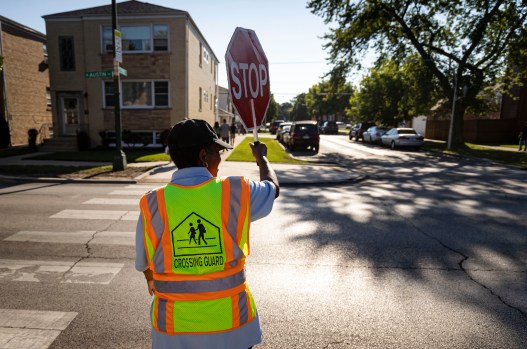
Students might also see fewer crossing guards at school after cuts. Given the deficit, the district recently eliminated 102 positions, with 33 of those guards primarily serving private non-CPS schools, according to the email. However, each CPS school will have a crossing guard program.
Ald. Matt O’Shea, 19th, said he learned from residents last week that his ward had lost 11 crossing guard positions. CPS leaders made the decision without communicating with him and other elected officials, he said.
“The fact that they did this at all is incredibly reckless,” he said. “I still don’t have answers to basic questions.”
O’Shea estimated the savings were only around $2 million. The focus on cuts in his ward made him wonder if the administration only cares about “certain children,” he said.
“My question to the mayor of the city of, is the cost savings of a couple million dollars worth risking the safety and security of thousands of children,” he said. “I want an answer to that. I’ve been waiting on one for a week.”
The district did not respond to whether Mayfield’s operational changes will save money or help close the budget deficit. CPS has previously stated that it identified over $165 million in potential savings in central office and staffing cuts, reductions to contracts, and limiting operational spending.
Twenty-two district schools will also implement new start and end times to allow more buses to run multiple routes in the morning and afternoon. However, transportation to and from some schools could see setbacks despite the bell time changes.
New transportation options to and from some schools will start in December, the second half of the school year, despite the bell changes.
The district plans to wait to use the Hub Stop transportation system until later in the year, which creates centralized pick-up and drop-off locations at CPS schools, allowing students to meet a bus and be taken to and from school. The system also began last year in the winter.
CPS interim Superintendent and CEO Macquline King said she is happy the program is continuing this year, and students eligible for the service will be contacted later this year at last week’s board meeting.
“Hub Stops are CPS schools that are selected based on a number of factors, including their bell times, their capacity to support the program and the CPS Opportunity Index,” King said. “Consistent with previous practice, we will add eligible students in phases, beginning with those students who are most in need.”
Eligible students and families can expect to hear about Hub Stop services the week of Nov. 24 and the service is planned to start Dec. 8, according to a CPS update.
In the email to the Tribune, CPS wrote that the district does not have an estimate for how many students will use transportation this year. The district transported over 15,790 students last year, accounting for 92% of eligible riders.
Within some schools, reduced funding and staffing might mean students are unable to receive school-based vaccines and physical exams. According to its website, there are currently 32 CPS school-based health centers offering services throughout the district, with 15 open to all community members, 15 open to students enrolled at that school, one open to CPS students and family members, and one open to CPS students only.
The budget deficit and the need for cost reduction will also affect the technology used across the district. Repairs on network infrastructure may be delayed, Mayfield wrote, and CPS schools might have to use their funding to buy replacement devices.
“We recognize that these changes may create challenges for students and families, and we will work hand-in-hand with our school communities to make the adjustments as smooth as possible,” Mayfield wrote. “In the coming days, schools will provide more detailed updates and offer support to help navigate these transitions.”
In the email, a CPS spokesperson wrote in a statement that the district is taking a student-centered approach to reduce spending.
“These are difficult but necessary decisions,” the spokesperson said. “No cut to public education is ever made lightly. Every dollar we save centrally helps protect students, teachers, and classrooms from deeper disruption.”
Chicago Tribune’s Jake Sheridan contributed.