For months, we at ComEd have been telling customers that their electric bills will rise this summer. Not just because heat, humidity and weather events lead to more air conditioning usage, but also because market conditions across the country are driving up the costs of power capacity.
In June and July, customers saw those increased costs in their own bills. They’re upset — and I don’t blame them. They deserve a candid explanation.
As the Tribune Editorial Board explained on July 24 (“Soaring ComEd bills have us on edge. Springfield must confront our electricity woes head-on”), customer bill rates are affected by auctions staged by regional transmission organizations, like PJM, which manages power resources for northern Illinois and the mid-Atlantic.
Over the last two years, the balance between supply and demand has been disrupted by a combination of power plant retirements, extreme weather and growth in the electricity load — the total amount of power being used by customers. This summer’s utility bills are a function of last summer’s energy auction, where wholesale energy costs saw record increases of more than 900%.
To be clear, ComEd does not profit from increases in supply costs; rather, the company simply passes those costs through.
ComEd is working alongside Gov. JB Pritzker and other state policymakers to deploy more energy storage, expand energy efficiency programs and build more transmission lines. While PJM is making progress expediting the interconnection of power to the grid, more can be done to bring additional supply online and bring down prices for customers.
And as energy demands continue to rise from large load projects — such as data centers — we’re putting forward policy proposals to better forecast the power needs for our future, which will help us protect reliability and affordability for our customers.
Finally, we recognize that bill increases are especially painful for households that are already struggling financially. ComEd has a wide range of bill assistance options available to qualified customers, in addition to energy management resources for bill reduction that are available to all customers. In July, we launched a $10 million relief fund, funded by charitable contributions from our parent company Exelon, to help customers make ends meet. This program will award grants in the coming weeks.
ComEd employees don’t just work in northern Illinois; we also live here. Be assured that we will continue to look for every opportunity to bring down the costs of electricity across this region.
— Gil Quiniones, president and CEO, ComEd
Safer storage of guns
As a retired pediatrician, now with more time to advocate for the health of children, I wanted to thank Gov. JB Pritzker for his recent signing of two gun control efforts for the protection of Illinois children.
On April 21, I joined pediatricians from the Illinois chapter of the American Academy of Pediatrics and other children’s advocates in Springfield to meet with our legislators and champion these small efforts to protect children from avoidable injuries caused by firearms. Pediatricians know that gun violence is the No. 1 killer of children and teens in the U.S. In states that have enacted safe storage laws, these injuries and deaths are lower.
Safe storage in homes where children up to age 18 reside and earlier reporting of lost guns may seem like small steps, but they may help save your child or grandchild.
Thank you to those legislators who value the life of every child. We must continue to enact commonsense laws to stop the “duck and cover” action plan U.S. children live with every day.
— Dr. Sara Guerrero-Duby, Long Grove
Their hands are tied?
I just read the op-ed by Gov. JB Pritzker, the state Senate president and the Illinois House speaker about State Farm rate hikes and how other states have a board that regulates insurance rates — except for the state of Illinois (“Homeowners deserve transparency from State Farm, not unexplained rate hikes,” July 30).
They are the ones who can change that. They make the laws. It’s ridiculous that they would actually write an op-ed like that in a world-class newspaper like the Tribune.
People are not stupid. They realize the political nonsense. These leaders make the rules, and they can change the rules.
No wonder people are leaving at a fast clip out of the city, county and state.
— Thomas Lally, Chicago
State Farm experience
State Farm’s homeowners’ insurance rates are not its only ones that call for scrutiny.
My cars have been insured by State Farm for about four decades. On July 21, the payment due date for my insurance premium, I traded my 2009 car (Honda Fit base model), which had been driven 198,137 miles, for a 2012 model with the same trim level, with 46,750 miles driven.
The six-month premium that I had just paid was $249. I was told that my revised premium would be $536. Had I bought a new car, I would have expected a jump in the premium, but this was trading a 16-year-old car for a very similar 13-year-old car, albeit a lower-mileage one. What changed to justify that?
What did not change from when I had been billed, just days earlier, for coverage for the older car were my age, my squeaky-clean driving record, the ZIP Code where the car resides or State Farm’s liability for injury or damage in an accident.
Most increases in the costs of components of my new coverage make some sort of sense, like the increased premium for collision coverage for a car that is in better condition than was its predecessor. The component of the premium that, puzzlingly, accounted for most of the increase was liability coverage.
On July 21, I was paying $132.65 for liability coverage for six months. Three days later, the same dollar-amount benefit for the newer, nearly identical car cost $338.45. This makes no obvious sense. How am I likely to cost State Farm more money when I acquire a car that is in better condition and, therefore, is almost certainly safer than what it replaced?
State Farm has more than a little explaining to do, already.
— Curt Fredrikson, Mokena, Illinois
O’Hare failed me
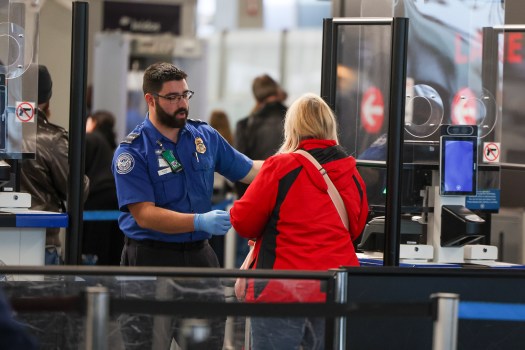
July 23 was our 20th anniversary. My husband and I went on a trip to Arkansas, and the stop in the middle was Chicago’s O’Hare International Airport. I told the Syracuse airport to call Chicago’s, as I am totally disabled and use a cane and I needed a wheelchair. Walking or standing is excruciating.
A wheelchair attendant at O’Hare left me while I was in the bathroom. I had to limp to my gate. Thank God it was close.
When we left Arkansas and made our second stop at O’Hare, it provided no wheelchair attendant. I had to walk very painfully to our gate. The gate attendant was updating us on our plane, as it was an hour late. She promised a wheelchair, and it never came. I read on the screen that our No. 2 gate was changed and was about to board. Still no wheelchair. I had to power-walk to get there on time.
My husband found a wheelchair, and I was small enough to fit. Finally, when the plane boarded, I was pushed to the plane door. This was horrible. There was another disabled person on our flight who was not assisted.
The Syracuse Hancock International Airport in New York and the Clinton National Airport in Arkansas were very accommodating and had the wheelchair and assistant right there to help.
July was National Disability Pride Month. I am totally disabled and, unfortunately, need assistance like many others. O’Hare needs a lesson in pride and caring for the disabled.
— Mary C. Charest, Lebanon, New York
Submit a letter, of no more than 400 words, to the editor here or email letters@chicagotribune.com.