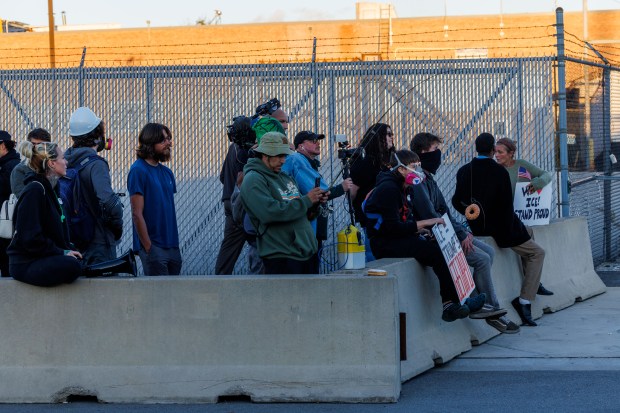
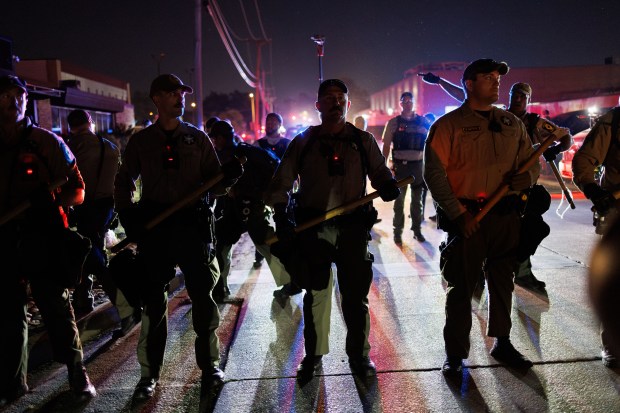
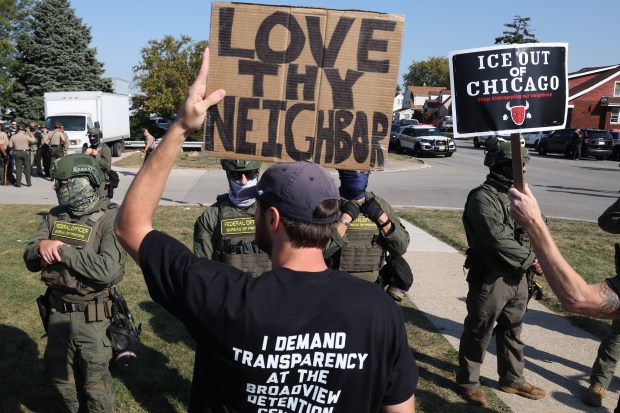
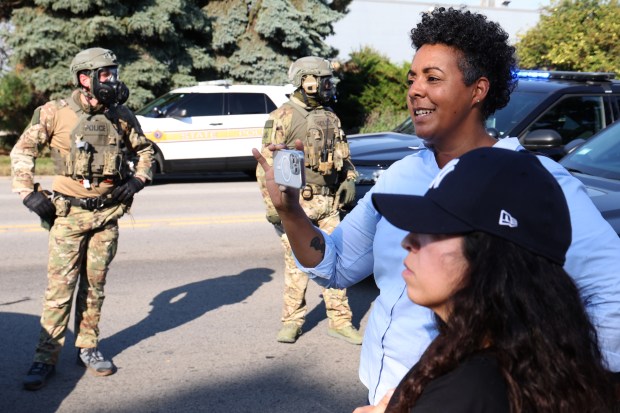
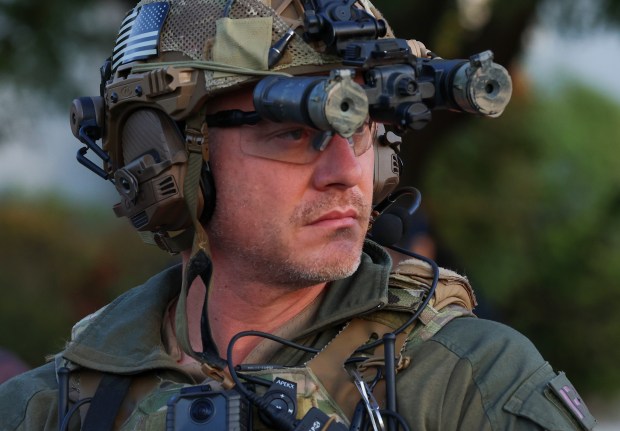
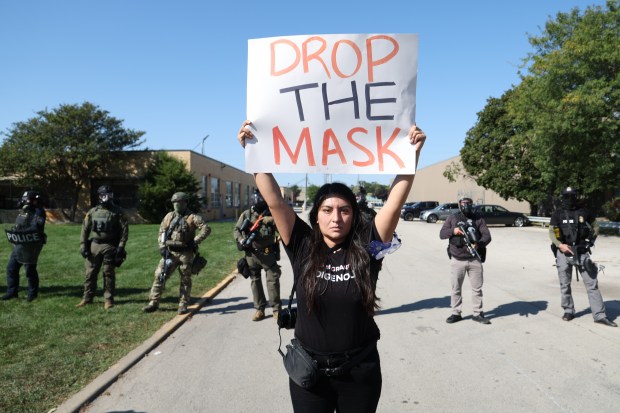
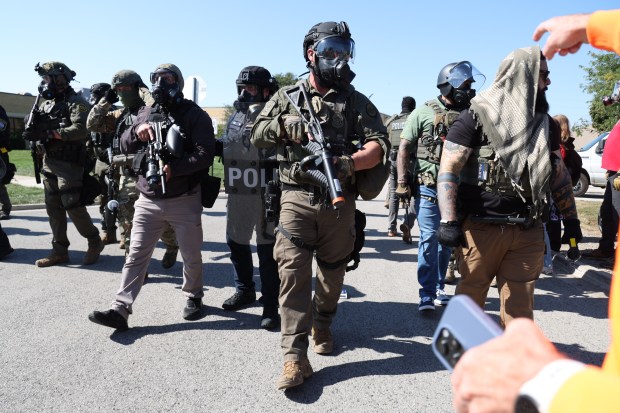
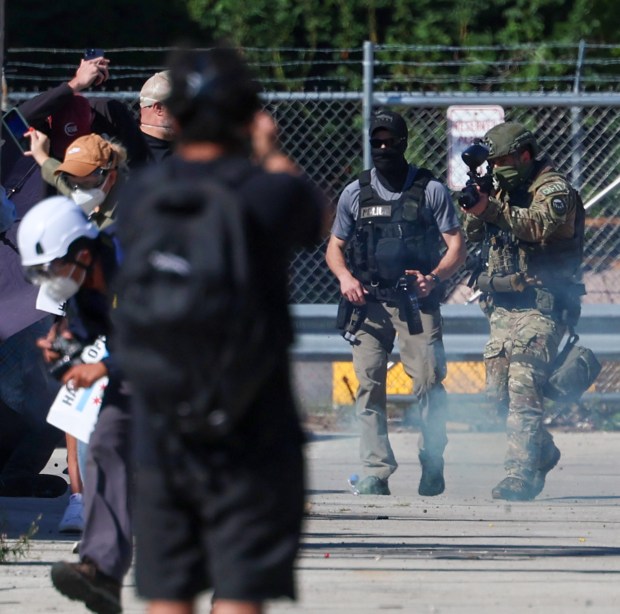
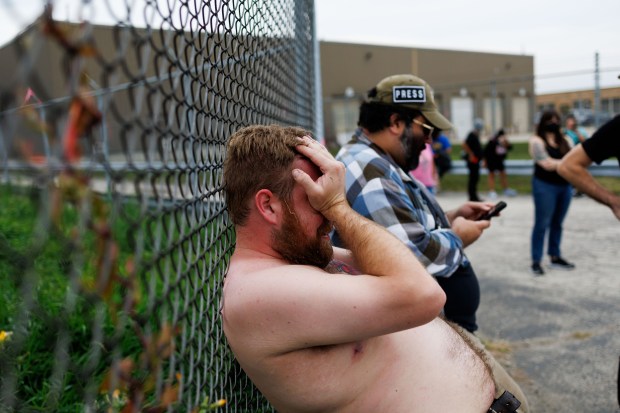
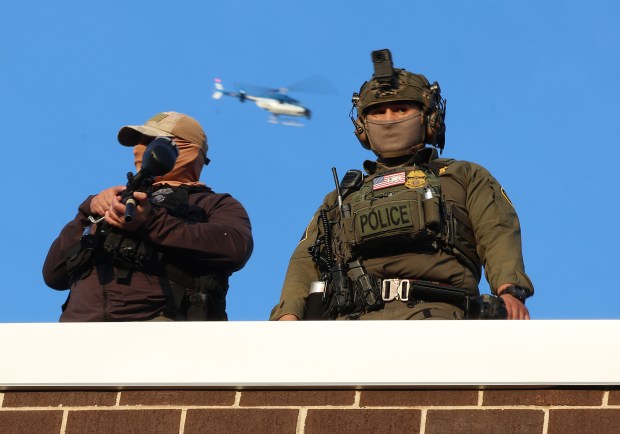
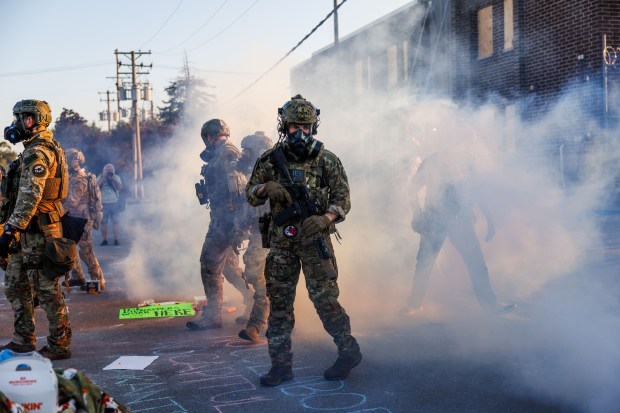
Immigration and Customs Enforcement officers stand near concrete barriers where fences were taken down outside an ICE holding facility in Broadview late on Oct. 14, 2025. (Chris Sweda/Chicago Tribune)
Bowing to a court-ordered deadline, crews tore down the controversial security fence constructed around the U.S. Immigration and Customs Enforcement detention facility in Broadview Tuesday night.
The clock had been ticking for the government to take down the fence after a federal judge last week ordered the Trump administration to remove the barrier by 11:59 p.m. Tuesday. The Tribune observed that the fence had been taken down as of 11 p.m.
Federal officials erected the fence three weeks ago. In turn, Broadview officials immediately pushed back, saying it was “illegally built,” and demanded that the Department of Homeland Security take it down.
In a letter to DHS, acting Broadview Fire Chief Matthew Martin said the fence was built without a permit along the public street outside the Beach Street facility and blocked Fire Department access to the road.
Hours before the removal deadline, the unified command — a law enforcement task force consisting of the Cook County sheriff’s office, Illinois State Police, state and county emergency management and Broadview police — released an updated map outlining designated protest and media areas solely along Beach Street near Lexington Street.
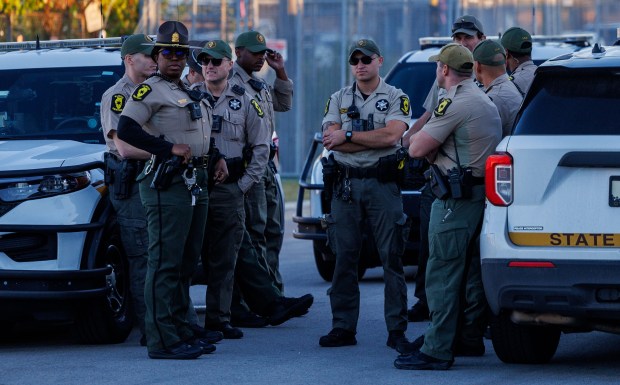
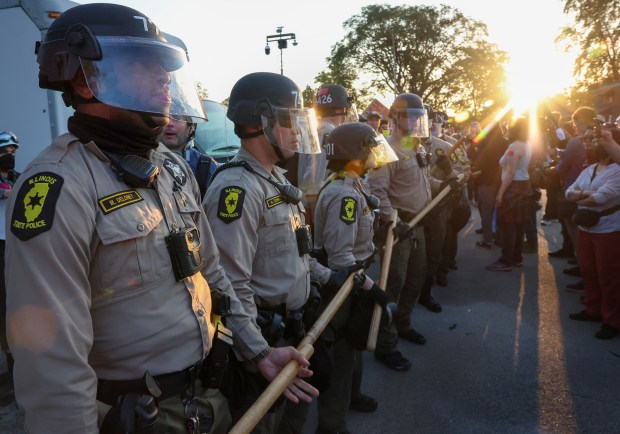
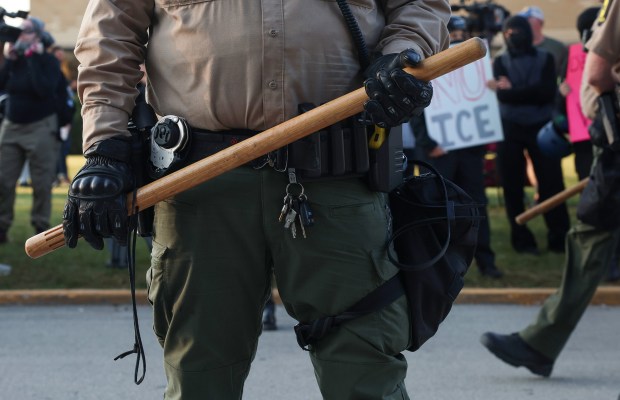
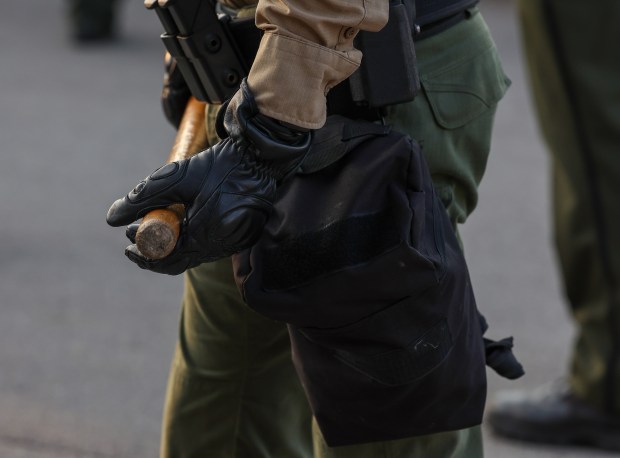
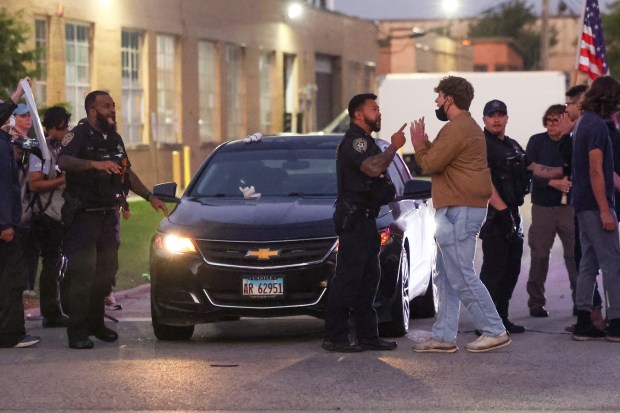
Illinois State Police troopers outside the U.S. Immigration and Customs Enforcement holding facility in Broadview on Oct. 14, 2025. (Eileen T. Meslar/Chicago Tribune)
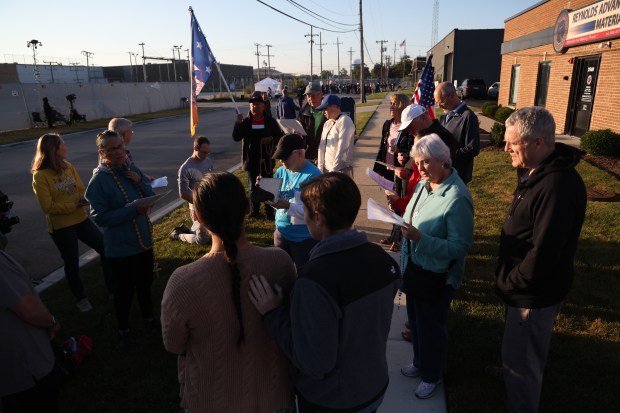
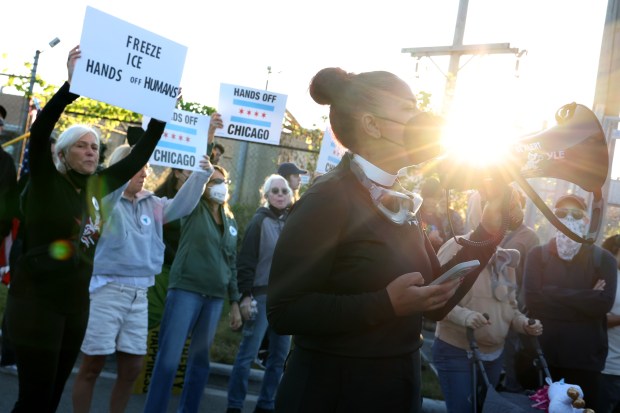
A protester walks toward the protest zone outside the U.S. Immigration and Customs Enforcement holding facility in Broadview on Oct. 14, 2025. (Eileen T. Meslar/Chicago Tribune)
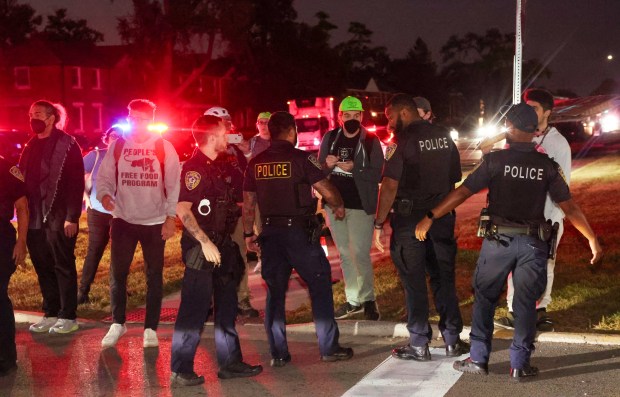
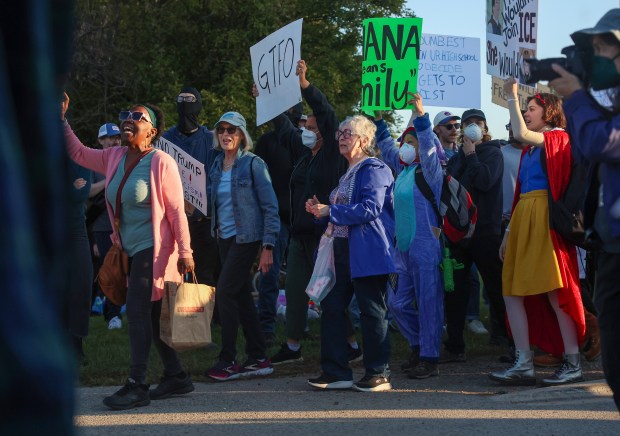
Protesters stand at the corner of Lexington and Beach streets near the U.S. Immigration and Customs Enforcement holding facility in Broadview on Oct. 14, 2025. (Eileen T. Meslar/Chicago Tribune)
A fence that a federal court has ordered the Trump administration to remove stands outside the U.S. Immigration and Customs Enforcement holding facility Oct. 13, 2025, in Broadview. (Armando L. Sanchez/Chicago Tribune)
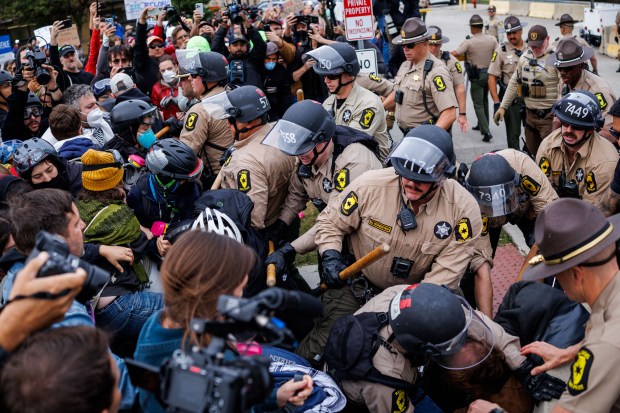
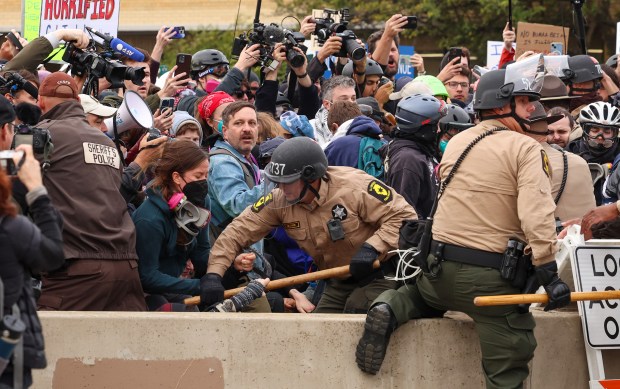
Illinois State Police troopers and Cook County sheriff's deputies push protesters from the road near a U.S. Immigration and Customs Enforcement holding facility on Oct. 10, 2025, in Broadview. (Armando L. Sanchez/Chicago Tribune)
Illinois State Police and Cook County sheriff’s deputies tussle with protesters in the designated protest zone a block from the U.S. Immigration and Customs Enforcement holding facility on Oct. 10, 2025. (Stacey Wescott/Chicago Tribune)
Protesters raise a "No Troops in Our Streets" sign at the U.S. Immigration and Customs Enforcement facility in Broadview on Oct. 9, 2025. (E. Jason Wambsgans/Chicago Tribune)
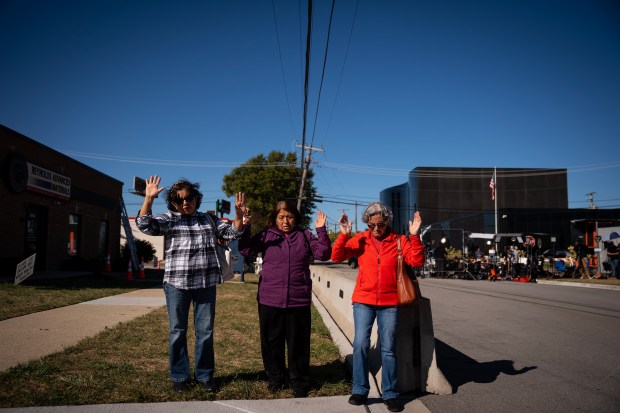
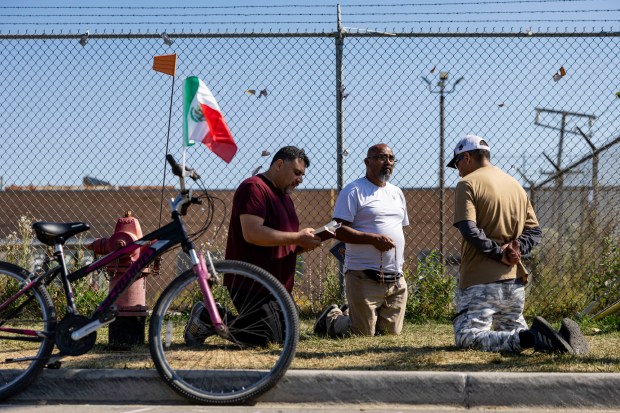
Protesters recite the rosary outside the U.S. Immigration and Customs Enforcement facility in Broadview on Oct. 9, 2025. (E. Jason Wambsgans/Chicago Tribune)
Zully Sotelo, from left, Eileen Alvarez, Kate Madrigal and Yohanna Sotelo protest outside of the U.S. Immigration and Customs Enforcement holding facility in Broadview on Oct. 9, 2025. (Stacey Wescott/Chicago Tribune)
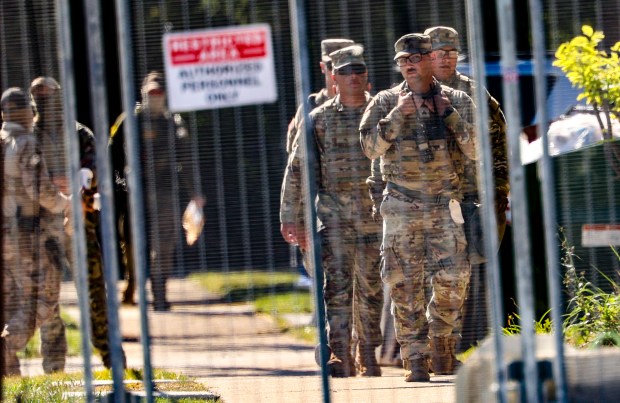
Texas National Guard members walk outside of the U.S. Immigration and Customs Enforcement holding facility in Broadview on Oct. 9, 2025. (Stacey Wescott/Chicago Tribune)
Protesters and journalists wait at the U.S. Immigration and Customs Enforcement facility in Broadview, Oct. 9, 2025. (E. Jason Wambsgans/Chicago Tribune)
A Broadview police officer moves protesters away from the U.S. Immigration and Customs Enforcement holding facility, Oct. 8, 2025, in Broadview. (Armando L. Sanchez/Chicago Tribune)
Protesters gather outside the U.S. Immigration and Customs Enforcement holding facility, Oct. 8, 2025, in Broadview. (Armando L. Sanchez/Chicago Tribune)
Protesters gather outside the U.S. Immigration and Customs Enforcement holding facility on Oct. 8, 2025, in Broadview. (Armando L. Sanchez/Chicago Tribune)
State police troopers stand outside the U.S. Immigration and Customs Enforcement holding facility, Oct. 8, 2025, in Broadview. (Armando L. Sanchez/Chicago Tribune)
A large bus arrives at the U.S. Immigration and Customs Enforcement holding facility, Oct. 8, 2025, in Broadview. (Armando L. Sanchez/Chicago Tribune)
U.S. Customs and Border Protection officers join Cook County Sheriff’s deputies to monitor an entrance, Oct. 6, 2025, outside the U.S. Immigration and Customs Enforcement holding facility in Broadview. (Brian Cassella/Chicago Tribune)
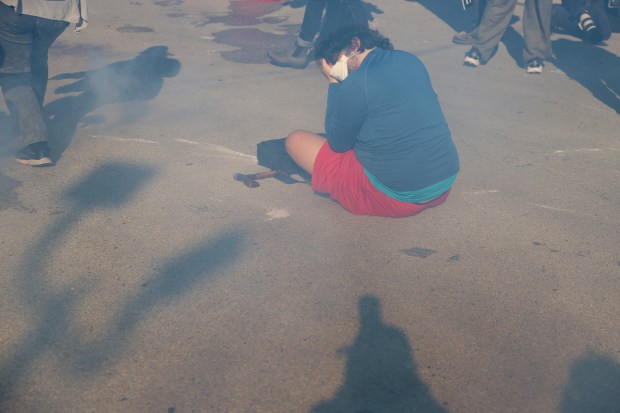
A protester sits outside, Oct. 6, 2025, at the U.S. Immigration and Customs Enforcement holding facility in Broadview. (Brian Cassella/Chicago Tribune)
Illinois State Police move protesters back near the U.S. Immigration and Customs Enforcement facility in Broadview on Oct. 4, 2025. (Armando L. Sanchez/Chicago Tribune)
Illinois State Police move protesters off the road near the U.S. Immigration and Customs Enforcement holding facility, Oct. 4, 2025, in Broadview. (Armando L. Sanchez/Chicago Tribune)
U.S. Immigration and Customs Enforcement holding facility
Activists yell at the U.S. Immigration and Customs Enforcement holding facility on Oct. 4, 2025, in Broadview. (Armando L. Sanchez/Chicago Tribune)
Illinois State Police hold a line near the U.S. Immigration and Customs Enforcement holding facility in Broadview on Oct. 4, 2025. (Armando L. Sanchez/Chicago Tribune)
Illinois State Police move protesters off the road while they protest recent immigration enforcement actions near the U.S. Immigration and Customs Enforcement holding facility in Broadview on Oct. 4, 2025. (Armando L. Sanchez/Chicago Tribune)
Protesters embrace near the U.S Immigration and Customs Enforcement facility in Broadview, Oct. 3, 2025. (E. Jason Wambsgans/Chicago Tribune)
Illinois State Police move protesters off the road near the U.S. Immigration and Customs Enforcement facility, Oct. 4, 2025, in Broadview. (Armando L. Sanchez/Chicago Tribune)
Illinois State Police and Cook County Sheriffs keep protesters from 25th Avenue near the U.S Immigration and Customs Enforcement facility in Broadview, Friday, Oct. 3, 2025. (E. Jason Wambsgans/Chicago Tribune)
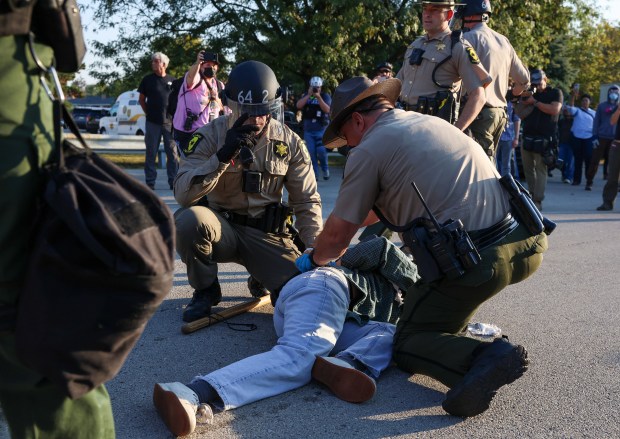
Illinois State Police troopers detain a protester who refused to back up as a vehicle passed along Harvard Street near the U.S. Immigration and Customs Enforcement holding facility in Broadview on Oct. 3, 2025. (Stacey Wescott/Chicago Tribune)
Illinois State Police troopers detain a protester who refused to back up along Harvard near the U.S. Immigration and Customs Enforcement holding facility in Broadview on Oct. 3, 2025. (Stacey Wescott/Chicago Tribune)
Illinois State Police troopers detain a protester who refused to back up near the U.S. Immigration and Customs Enforcement holding facility in Broadview on Oct. 3, 2025. (Stacey Wescott/Chicago Tribune)
Protesters confront Illinois State Police troopers outside the U.S. Immigration and Customs Enforcement holding facility in Broadview on Oct. 3, 2025. (Stacey Wescott/Chicago Tribune)
Federal agents ride an armored vehicle as protesters clash with federal agents and Illinois State Police troopers near the U.S. Immigration and Customs Enforcement holding facility in Broadview on Oct. 3, 2025. (Antonio Perez/Chicago Tribune)
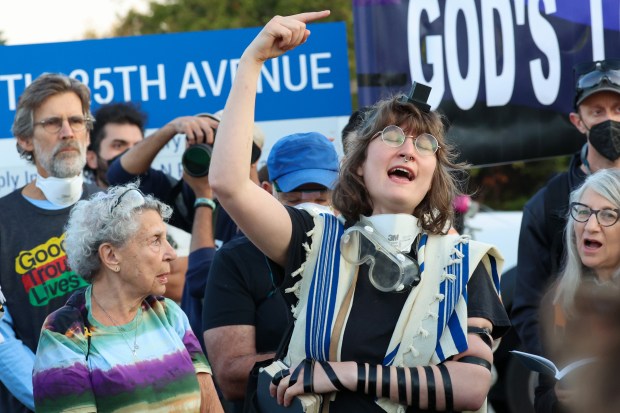
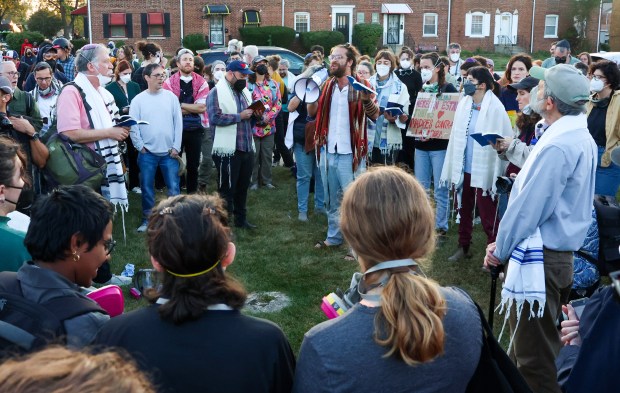
People sing and recite prayers during a Jewish prayer service near the U.S. Immigration and Customs Enforcement holding facility in Broadview on Oct. 3, 2025. (Stacey Wescott/Chicago Tribune)
Dozens participate in Jewish prayer service near the U.S. Immigration and Customs Enforcement holding facility in Broadview on Oct. 3, 2025. (Stacey Wescott/Chicago Tribune)
Protesters confront federal agents and Illinois State Police troopers near the U.S. Immigration and Customs Enforcement holding facility in Broadview on Oct. 3, 2025. (Antonio Perez/Chicago Tribune)
A protester is detained near the U.S. Immigration and Customs Enforcement holding facility in Broadview on Oct. 3, 2025. (Antonio Perez/Chicago Tribune)
Ald. Maria Hadden, 49th, records as protesters face off with federal agents and Illinois State Police troopers near the U.S. Immigration and Customs Enforcement holding facility in Broadview on Oct. 3, 2025. (Antonio Perez/Chicago Tribune)
U.S. Border Patrol chief Gregory Bovino, right, warns protesters near the U.S. Immigration and Customs Enforcement holding facility in Broadview on Oct. 3, 2025. (Antonio Perez/Chicago Tribune)
Protesters clash with federal agents and Illinois State Police troopers near the U.S. Immigration and Customs Enforcement holding facility in Broadview on Oct. 3, 2025. (Antonio Perez/Chicago Tribune)
A federal agent watches from an armored vehicle near the U.S. Immigration and Customs Enforcement holding facility in Broadview on Oct. 3, 2025. (Stacey Wescott/Chicago Tribune)
Illinois State Police troopers line up to prevent protesters from blocking traffic from the U.S. Immigration and Customs Enforcement holding facility in Broadview on Oct. 3, 2025. (Stacey Wescott/Chicago Tribune)
Illinois State Police troopers line up along Harvard Street and prevent protesters from standing on the street and blocking federal vehicles moving to and from from the U.S. Immigration and Customs Enforcement holding facility in Broadview on Oct. 3, 2025. (Stacey Wescott/Chicago Tribune)
Illinois State Police troopers line up along Harvard Street and prevent protesters from blocking federal vehicles moving to and from from the U.S. Immigration and Customs Enforcement holding facility in Broadview on Oct. 3, 2025. (Stacey Wescott/Chicago Tribune)
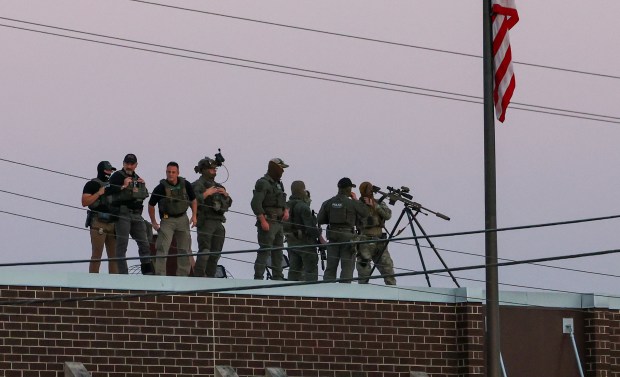
Federal agents stand on the roof of the U.S. Immigration and Customs Enforcement holding facility in Broadview on Oct. 3, 2025. (Stacey Wescott/Chicago Tribune)
Illinois State Police troopers line up along Harvard Street near the U.S. Immigration and Customs Enforcement holding facility in Broadview on Oct. 3, 2025. (Stacey Wescott/Chicago Tribune)
Illinois State Police troopers line up along Harvard Street and prevent protesters from standing on the street and blocking federal vehicles near the U.S. Immigration and Customs Enforcement holding facility in Broadview on Oct. 3, 2025. Some troopers were armed with additional clubs, rifles, and shielded helmets. (Stacey Wescott/Chicago Tribune)
Broadview police hold back protesters from stopping vehicles at Harvard Street and 25th Avenue near the U.S. Immigration and Customs Enforcement holding facility in Broadview on Oct. 3, 2025. (Stacey Wescott/Chicago Tribune)
A protester recovers after being sprayed in the face by a federal agent along the fence on Sept. 28, 2025, at the U.S. Immigration & Customs Enforcement facility in Broadview. (Brian Cassella/Chicago Tribune)
People pray on Sept. 28, 2025, near the U.S. Immigration & Customs Enforcement facility in Broadview. (Brian Cassella/Chicago Tribune)
Federal agents stand inside the fence on Sept. 28, 2025, at the U.S. Immigration & Customs Enforcement facility in Broadview. (Brian Cassella/Chicago Tribune)
Federal agents escort a detainee into the facility on Sept. 28, 2025, at the U.S. Immigration & Customs Enforcement facility in Broadview. (Brian Cassella/Chicago Tribune)
Protesters rally on Sept. 28, 2025, near the U.S. Immigration & Customs Enforcement facility in Broadview. (Brian Cassella/Chicago Tribune)
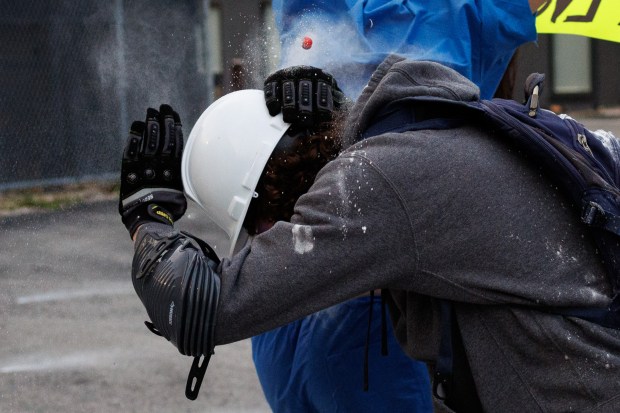
A protester wipes his eyes after being sprayed by a federal agent through a fence at the Immigration and Customs Enforcement facility in Broadview on Sept. 27, 2025. (Dominic Di Palermo/Chicago Tribune)
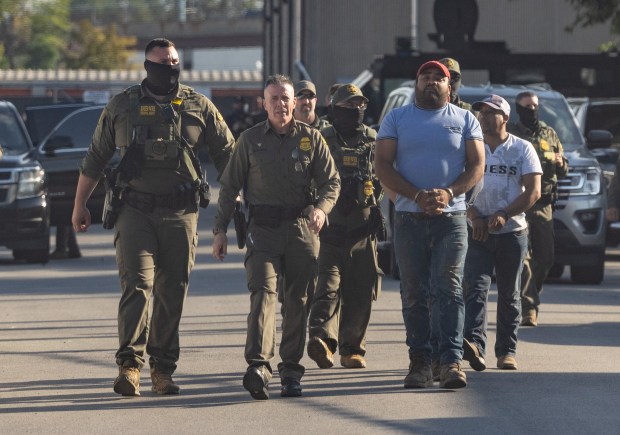
U.S. Border Patrol Chief Greg Bovino leads detainees into the ICE facility in Broadview on Sept. 27, 2025. (Dominic Di Palermo/Chicago Tribune)
A protester yells at a federal agent attempting to enter the ICE facility in Broadview on Sept. 27, 2025. (Dominic Di Palermo/Chicago Tribune)
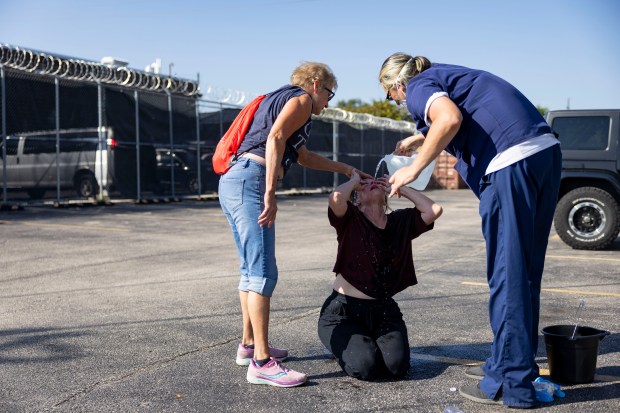
A protester gets treated after being sprayed by a federal agent through a fence at the ICE facility in Broadview on Sept. 27, 2025. (Dominic Di Palermo/Chicago Tribune)
A detainee is unloaded from a vehicle before being brought into the ICE facility in Broadview on Sept. 27, 2025. (Dominic Di Palermo/Chicago Tribune)
Logan Woodrum, of Pontiac, protests from the top of his car outside of the ICE facility in Broadview on Sept. 27, 2025. (Dominic Di Palermo/Chicago Tribune)
A protester and veteran who served in Iraq flies the American flag upside down during a protest at the ICE facility in Broadview on Sept. 27, 2025. (Dominic Di Palermo/Chicago Tribune)
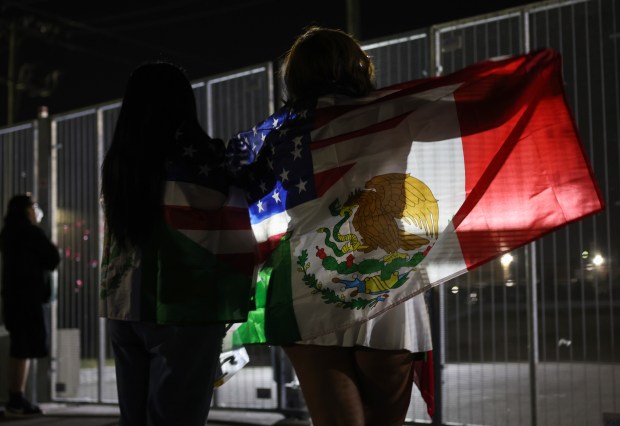
A demonstrator adjusts a flag draped over her back depicting a combined U.S. and Mexico flag while standing outside a fenced-in ICE facility on Sept. 26, 2025, in Broadview. (John J. Kim/Chicago Tribune)
A protester is detained by ICE agents outside the ICE facility in Broadview, Sept. 26, 2025. (E. Jason Wambsgans/Chicago Tribune)
Protesters clash with federal agents outside the ICE facility in Broadview, Sept. 26, 2025. (E. Jason Wambsgans/Chicago Tribune)
Protesters clash with ICE agents outside the U.S. Immigration and Customs Enforcement holding facility in Broadview, Sept. 26, 2025. (E. Jason Wambsgans/Chicago Tribune)
Protesters clash with ICE agents outside the U.S. Immigration and Customs Enforcement holding facility in Broadview, Sept. 26, 2025. (E. Jason Wambsgans/Chicago Tribune)
ICE agents move back into the U.S. Immigration and Customs Enforcement holding facility while facing off with protesters in Broadview, Sept. 26, 2025. (E. Jason Wambsgans/Chicago Tribune)
Federal agents escort a vehicle from the U.S. Immigration and Customs Enforcement holding facility in Broadview, Sept. 26, 2025. (E. Jason Wambsgans/Chicago Tribune)
A U.S. Immigration and Customs Enforcement agent fires rounds at protesters on 25th Avenue near the holding facility in Broadview, Sept. 26, 2025. (E. Jason Wambsgans/Chicago Tribune)
Protesters flinch as ICE agents fire rounds at them in traffic on 25th Avenue near the holding facility in Broadview, Sept. 26, 2025. (E. Jason Wambsgans/Chicago Tribune)
An ICE agent chases a protester into residential yard near the ICE holding facility in Broadview, Sept. 26, 2025. (E. Jason Wambsgans/Chicago Tribune)
ICE agents help an injured colleague after chasing a protester through traffic on 25th Avenue and into a residential yard near the ICE holding facility in Broadview, Sept. 26, 2025. (E. Jason Wambsgans/Chicago Tribune)
U.S. Immigration and Customs Enforcement agents help an injured colleague after chasing a protester through traffic on 25th Avenue and into a residential yard near the ICE holding facility in Broadview, Sept. 26, 2025. (E. Jason Wambsgans/Chicago Tribune)
A federal agent points his rifle of pepper balls at a protester near Harvard Street and 25th Avenue a block from the U.S. Immigration & Customs Enforcement facility on Sept. 26, 2025, in Broadview. (Stacey Wescott/Chicago Tribune)
Protesters chant as they walk across Harvard Street near the U.S. Immigration & Customs Enforcement holding facility on Sept. 26, 2025, in Broadview. (Stacey Wescott/Chicago Tribune)
A protester holds a sign as federal agents move toward demonstrators near the U.S. Immigration & Customs Enforcement facility in Broadview, Sept. 26, 2025. (Antonio Perez/Chicago Tribune)
Federal agents fire baton rounds at demonstrators near the U.S. Immigration & Customs Enforcement facility in Broadview, Sept. 26, 2025. (Antonio Perez/Chicago Tribune)
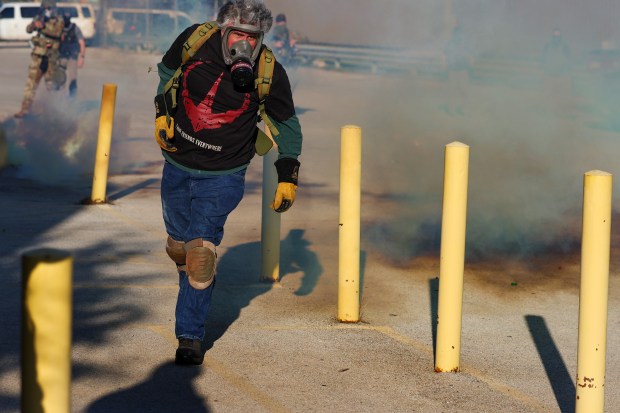
A protester runs away from federal agents firing chemical gas at him along Harvard Street near the U.S. Immigration & Customs Enforcement facility on Sept. 26, 2025, in Broadview. (Stacey Wescott/Chicago Tribune)
Baton rounds fired toward protesters outside the U.S. Immigration & Customs Enforcement facility in Broadview are seen Sept. 26, 2025. (Antonio Perez/Chicago Tribune)
A protester covers his face as chemical gas surrounds him along Harvard Street near the U.S. Immigration & Customs Enforcement facility on Sept. 26, 2025, in Broadview. (Stacey Wescott/Chicago Tribune)
Federal agents move toward protesters at 25th Street near the U.S. Immigration & Customs Enforcement facility in Broadview, Sept. 26, 2025. (Antonio Perez/Chicago Tribune)
Levi Rolles is seen with several bruises from baton shots outside the U.S. Immigration and Customs Enforcement holding facility in Broadview, Sept. 26, 2025. (Antonio Perez/Chicago Tribune)
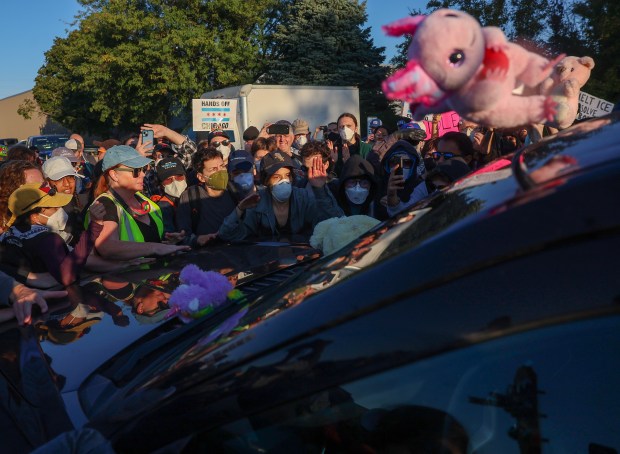
Protesters surround the SUV of a federal agent and try and prevent him from driving down Harvard Street to the U.S. Immigration & Customs Enforcement facility on Sept. 26, 2025, in Broadview. Protesters and federal agents faced off throughout the morning. Federal agents used several kinds of chemical gas, baton rounds, and arrested at least two people while protesters refused to clear the street. (Stacey Wescott/Chicago Tribune)
People pray outside the U.S. Immigration and Customs Enforcement holding facility in Broadview, Sept. 26, 2025. (Antonio Perez/Chicago Tribune)
A federal agent points his rifle full of pepper balls at protesters along Harvard Street near the U.S. Immigration & Customs Enforcement facility on Sept. 26, 2025, in Broadview. (Stacey Wescott/Chicago Tribune)
A protester holds up her phone and backs away from federal agents shooting chemical gas at protesters along Harvard Street near the U.S. Immigration & Customs Enforcement facility on Sept. 26, 2025, in Broadview. Federal agents used several kinds of chemical gas, baton rounds and arrested at least two people after protesters refused to clear the street. (Stacey Wescott/Chicago Tribune)
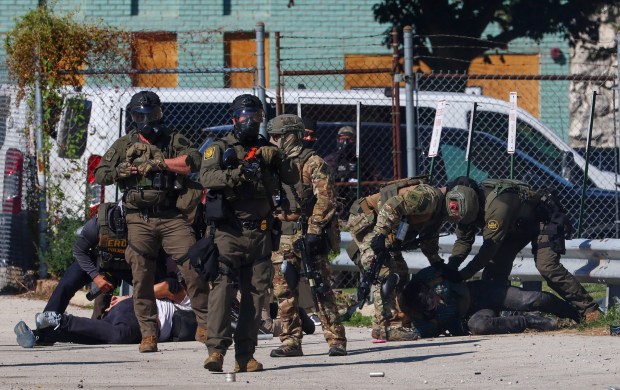
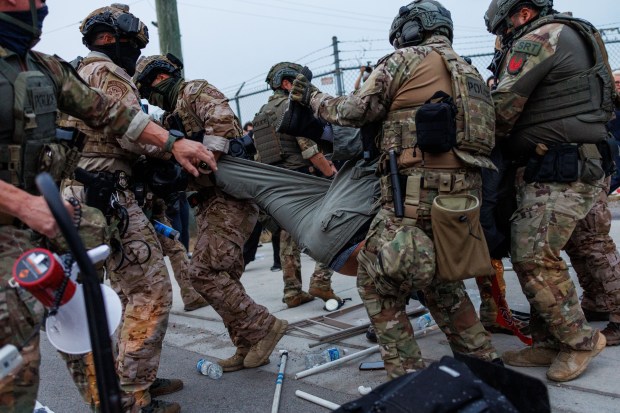
Federal agents surround and arrest two protesters along Harvard Street near the U.S. Immigration & Customs Enforcement facility on Sept. 26, 2025, in Broadview. (Stacey Wescott/Chicago Tribune)
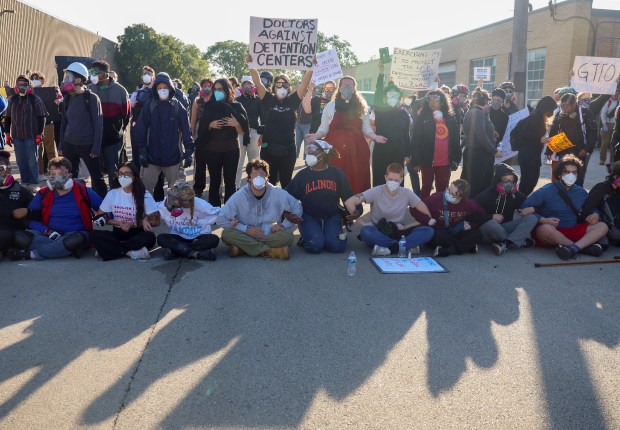
Protesters lock arms and block Harvard Street while federal agents stand guard at a gate leading to the U.S. Immigration & Customs Enforcement facility on Sept. 26, 2025, in Broadview. Protesters and federal agents faced off throughout the morning. (Stacey Wescott/Chicago Tribune)
Protesters gather outside the U.S. Immigration & Customs Enforcement facility in Broadview, Sept. 26, 2025. (Antonio Perez/Chicago Tribune)
Broadview police officers move protesters as they try and clear a path for federal agents to exit Harvard Street near the U.S. Immigration & Customs Enforcement facility on Sept. 26, 2025, in Broadview. (Stacey Wescott/Chicago Tribune)
A protester holds up a sign in the early hours of the morning before the start of confrontations with federal agents along Harvard Street near the U.S. Immigration & Customs Enforcement facility on Sept. 26, 2025, in Broadview. (Stacey Wescott/Chicago Tribune)
Curtis Evans, of Evanston, carries a U.S. flag through gas deployed by federal officers as they clear protesters from the entrance of the Immigration and Customs Enforcement facility in Broadview on Sept. 19, 2025. Evans said he was a Marine during President Ronald Reagan’s term. (Stacey Wescott/Chicago Tribune)
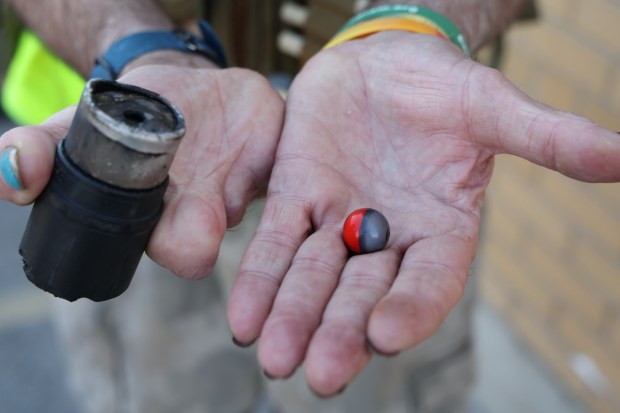
A chemical agent canister sits on the ground after being used on protesters outside the Immigration and Customs Enforcement building on Sept. 19, 2025, in Broadview. (Armando L. Sanchez/Chicago Tribune)
A protester is shot with a pepper ball outside the Immigration and Customs Enforcement building on Sept. 19, 2025, in Broadview. (Armando L. Sanchez/Chicago Tribune)
Federal law enforcement officers detain a protester outside the Immigration and Customs Enforcement building on Sept. 19, 2025, in Broadview. (Armando L. Sanchez/Chicago Tribune)
A protester who was shot with pepper balls while blocking a federal law enforcement vehicle leans against a fence outside the Immigration and Customs Enforcement building on Sept. 19, 2025, in Broadview. (Armando L. Sanchez/Chicago Tribune)
Federal agents stand on the roof of the Broadview Immigration and Customs Enforcement facility and watch protesters below on Sept. 19, 2025, in Broadview. (Stacey Wescott/Chicago Tribune)
Federal officers clear protesters from the entrance of the U.S. Immigration and Customs Enforcement holding facility in Broadview, Sept. 19, 2025. (Stacey Wescott/Chicago Tribune)
Federal agents attempt to clear protesters from the street to make way for vehicles and officers to enter an Immigration and Customs Enforcement facility, Sept. 12, 2025, in Broadview. (Armando L. Sanchez/Chicago Tribune)
1 of 96
Illinois State Police troopers outside the U.S. Immigration and Customs Enforcement holding facility in Broadview on Oct. 14, 2025. (Eileen T. Meslar/Chicago Tribune)
Reflecting Broadview Mayor Katrina Thompson’s order this week shrinking protest areas, state and local officials said sidewalks along the east and west sides of 25th Avenue between Fillmore and Lexington streets would be temporarily closed. Officials noted that roughly 2,500 protesters have demonstrated outside the detention facility over the past three weeks and that the vast majority of those gatherings have been peaceful, safe and lawful.
On Oct. 3, Broadview filed a federal lawsuit against DHS seeking a temporary restraining order and the immediate removal of the 8-foot-high fence. The suit accused DHS of constructing the fence “in the middle of the night without notice” and physically depriving the municipality of the right to control its own land.
Arguments in the case began last week, during which U.S. District Judge LaShonda Hunt warned both sides she didn’t want to get caught up in the politics of the moment.
The matter came to a head Thursday when the federal judge sided with the village and ordered the fence removed. Hunt said it was clear from the government’s own arguments that “there is no plan to take the fence down and that ‘Operation Midway Blitz‘ currently has no end in sight.”
Thompson hailed the ruling as “a decisive win for public safety.” Meanwhile, McLaughlin in a statement decried “activist judges” and local leaders she says are attempting to stop lawful immigration enforcement.
The fence’s removal comes a day after Thompson issued an executive order to shut down a previously authorized protest zone outside the holding facility along 25th Avenue at Harvard Street. Last week, with a separate executive order, Thompson limited protest hours at the facility from 9 a.m. to 6 p.m. daily.
Since the beginning of the month, state troopers have monitored protests at the facility as part of the unified command the agency temporarily formed alongside the sheriff’s office to address safety concerns outside the building.”
Chicago Tribune’s Jason Meisner, Dan Petrella and Angie Leventis Lourgos contributed.