
An unvaccinated Lake County child has the measles, the Lake County Health Department announced Friday.
The department did not release the child’s gender and age, but stated the child is under the care of healthcare professionals. The child is stable and recovering, according to a Lake County Health Department press release.
Lake County Health Department officials have been working to identify and notify those who may have been exposed, according to the release.
Measles is a highly contagious virus that can be spread through coughing, sneezing and close contact. Even after an infected person has left the area, the virus can linger in the air and on surfaces for up to two hours, according to the release.
It takes a week to two weeks before symptoms to appear. The symptoms include high fever, cough, runny nose, red eyes and a rash that usually begins on the face and spreads to the rest of the body, according to the release.
Children under 12 months are especially vulnerable to measles because they are not yet eligible for the first dose of the measles, mumps and rubella (MMR) vaccine, which is recommended at 12 months old, according to the release.
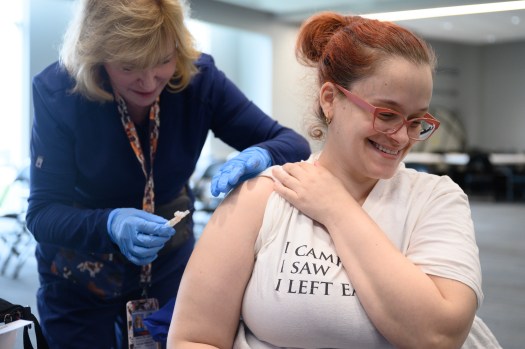
The MMR vaccine is safe, effective and protects against the measles, and community-wide immunity is important to protect those who cannot be vaccinated, like infants and people with weakened immune systems, according to the release.
“This case highlights the importance of community-wide protection through vaccination,” according to the release. “If you or your children are not vaccinated or are unsure of your status, contact your healthcare provider or the health department.”
Lake County Health Department Administrator Sheila Paul said the department offers the MMR vaccine to those who are eligible. For more information, or to schedule a vaccination appointment, contact the department at (219) 755-3658, Paul said.
The measles is preventable through vaccines, and has been considered eliminated from the U.S. since 2000, but dipping vaccination rates have led to its reemergence and it spreads quickly among unvaccinated individuals, according to the Associated Press. A mid-February outbreak in west Texas and New Mexico recorded more than 800 people contracting measles and an adult and two children died, all of whom were unvaccinated. Currently, South Carolina is experiencing an outbreak that has sickened 15 people.
Some of the virus’ more serious complications include ear infections that lead to deafness, blindness, pneumonia and brain swelling, Thomas Duszynski, epidemiology education director at Indiana University Indianapolis, previously said.
There is no treatment for someone who has the measles, Duszynski said. To be protected, children have typically received the measles vaccine, which became widely available in 1963, he said.
The MMR vaccine is given in two doses: the first dose is given to children between 12 and 15 months and the second dose is given between the age of 4 or 6 years old, Duszynski said.
Lake County’s MMR vaccine completion rate was about 45.1% in the final quarter of 2024, according to the most recent data on the IDOH dashboard, which is under the state average of 62.2%. Porter County, in contrast, was above the state average with 60.9% competition rate in the final quarter of 2024.
The virus has been making a comeback because the number of unvaccinated people has been increasing, Duszynski said. The best way to work through vaccine hesitancy, he said, is for people to talk to their healthcare providers and ask any and all questions.
“Ever since vaccines have been around, there has been vaccine hesitancy. People unsure about the safety or the efficacy of the vaccines,” Duszynski said. “One thing that we know, since the measles vaccine has been widely used since the 1960s, that the number of measles cases have dropped dramatically, the number of deaths have dropped dramatically, the number of hospitalizations have dropped dramatically.”
To achieve herd immunity — which protects members of the community who cannot get vaccines due to certain health conditions — vaccination rates should surpass 95%, according to the World Health Organization.
“The safety and the efficacy of the vaccine is really, really high. It’s probably one of the most efficacious vaccines we have, so much so, that if you get both doses of the vaccine it protects 97% of the population,” Duszynski said.