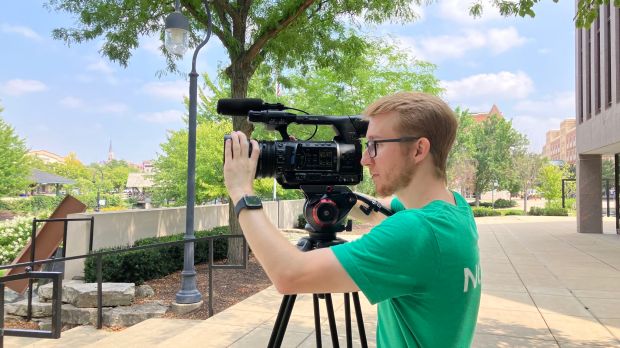

Naperville’s nonprofit community television station NCTV17 is poised to receive an additional $200,000 from the city next year, bringing its total city funding to $915,000 as the station fights to stay afloat.
City officials say the nonprofit station’s request comes at a time when Naperville is grappling to put together a balanced budget for 2026, forcing staff to find creative ways to fund community programs without cutting services. The city’s proposed general fund calls for $173.83 million in spending, and the overall budget is coming in at $685.13 million.
“To be clear, this was a more challenging budget year than we’ve seen in recent memory,” Naperville Finance Director Ray Munch told the Naperville City Council at a Tuesday budget review session.
Initially, city staff were staring down a $4 million budget shortfall but found ways to plug holes, Munch said. Had the city not implemented a local grocery tax to replace one assessed by the state, there would have been an additional $6.5 million deficit.
Still, this year’s spending plan does not include any new employee hires and fewer new programs and services than in years’ past, he said.
With limited general fund dollars, staff proposed covering NCTV17’s request by using money in the city’s Special Events and Community Arts (SECA) fund instead. To make that possible, the city will need to raise SECA’s total funding cap from $2.14 million to $2.51 million — a move that requires council approval.
This isn’t the first time NCTV17 has turned to the city for financial help. Executive Director Liz Spencer last year asked for extra support from the city, citing inflation and a shrinking revenue base. While NCTV17 in 2024 received a $250,000 state grant to be paid out over two years, it’s still working to establish a more consistent income stream, Spencer said.
“We are currently working very hard to stabilize our funding,” she said. “Certain revenue lines are declining, and one of them is a major source of funding for us, which is the PEG.”
PEG stands for public, educational and governmental access channel, or a channel set aside for noncommercial community programming. These channels, which serve local communities across the country, are enshrined in the 1984 Cable Communications Act.
In Naperville, cable companies pay the city a franchise fee of 5% of their annual gross revenue. In addition, they also pay a PEG fee of 1% of their annual gross revenue earmarked for NCTV17.
But as residents continue to cut the cord on cable TV, PEG revenue has fallen. Last year, the station received about $355,000 in PEG fees; this year it’s projected to bring in $309,000, and next year just $270,000. To help offset the decline last year, the council increased general fund support for the station.
Overall city funding is expected to make up about 63% of the news station’s revenue in 2026, with close to half of that funding including PEG fees and contracts NCTV17 has with the city to run Naperville’s government access television channel WCNC.
NCTV17’s total revenue next year is expected to be about $1.45 million, but its expenses are projected to be about $1.6 million. Cash the station received from an employee retention tax credit will be invested to grow the station for 2026 and cover some of the station’s shortfall, said Spencer, who is retiring at year’s end.
Munch said that were the city to provide new station funding through the general fund, $200,000 would have to be cut in other city services. Using money in the SECA fund would resolve that problem, he said, but it requires the fund cap to be increased.
If the cap is not raised and the money for NCTV17 still comes from SECA, there would be a 40% drop in the money available for other SECA grant recipients, he said.
Most council members were on board with escalating the cap and helping NCTV17 remain solvent.
“We have to think of new ways of supporting journalism, an unbiased source of journalism, which is so critical to any community,” Councilwoman Supna Jain said. “I can’t imagine living in a Naperville without NCTV17. So for me, supporting them through SECA and having to increase SECA cap as a way to address those needs seems (to be) the right approach.”
Mayor Scott Wehrli was supportive of including NCTV17’s request in SECA funding, but said he was hesitant to increase the SECA max to $2.51 million.
Opposition was voiced by Councilman Josh McBroom, who said that while he appreciated NCTV17’s service, he feared a scenario in which the news station becomes overly reliant on city funding, which could impact the station’s coverage of Naperville in the future.
Spencer said she understands those concerns but emphasized that the station values its independence.
“We know where that line is for us, and we’re very cognizant,” she said. “We feel we need to be independent. We have our own revenue sources right now — we’re just trying to increase them.”
If the $200,000 for NCTV17 is approved in the final budget adopted in December, the council will vote on an ordinance to increase the SECA cap after that, officials said. The next budget workshop is scheduled for Nov. 10.
cstein@chicagotribune.com