Chicago experiences higher temperatures longer than outlying suburbs due to the urban heat-island effect. Its location next to Lake Michigan’s warm waters explains why the city and nearby suburbs freeze later in the year than their farther-out counterparts.
Here’s a look back at when our area typically experiences its first freeze and first snowfall of fall.
- Chicago’s 10 largest snowfalls since 1886 — and how the Tribune covered them
- Chicago’s winter parking ban goes into effect Dec 1. Here’s what to know — snow or no snow.
- Thanksgiving weather in Chicago: The most extreme conditions since 1872
- Chicago’s Christmas weather: The warmest and coldest since 1872
- New Year’s Day in Chicago: The warmest, coldest, snowiest and wettest weather since 1872
- Valentine’s Day in Chicago: The warmest, coldest, snowiest and wettest weather since 1871
- Chicago’s craziest St. Patrick’s Day weather — and how the Tribune covered it
- Easter weather in Chicago: The warmest, coldest, wettest and snowiest days on record since 1871

First fall freeze
The earliest first freeze on record occurred Sept. 22, 1995, at O’Hare International airport. The latest was Nov. 24, 1931.
The first freeze in 2025 happened on Nov. 9. In 2024, it was Nov. 20. It happened on Oct. 31 in 2023.
“The first freeze, which is when the temperature drops at or below 32 degrees, typically occurs between Oct. 11 and Oct. 12 across the Chicago suburbs and Oct. 21 to Oct. 30 in the city and along the lakeshore,” Brett Borchardt, meteorologist for the National Weather Service’s Chicago office, told the Tribune.
Frost can develop on clear nights when the air temperature is in the mid-30s, but can be scattered. That’s why, former WGN-TV chief meteorologist Tom Skilling told the Tribune in 2018, the weather service “does not keep statistics regarding frost but instead uses the season’s first temperature of 32 (degrees) or lower to define the end of the growing season.”

First fall snow
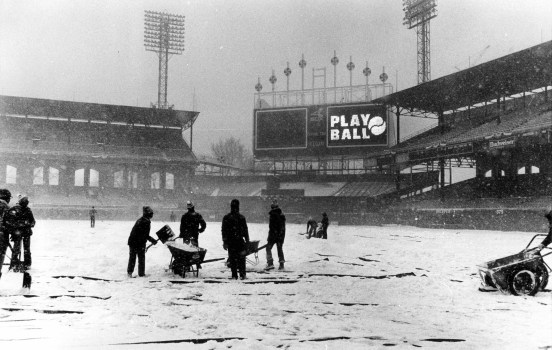
Fall’s first measurable snowfall — you know, the stuff that sticks — was a double whammy in 2025. The season’s first freezing temperature and first snowfall both arrived on Nov. 9. It was just the 11th time in local weather history the two milestones were achieved on the same calendar day, said Jake Petr, a meteorologist in the National Weather Service’s Chicago office.
Since more than a tenth of an inch accumulated, then that counted as “measurable.” If less than a tenth of an inch is observed at O’Hare then that counts as a “trace” amount — even if it doesn’t stick. Whether a trace amount of snow is a “first snow” is up for debate.
In 2023, the double whammy arrived on Halloween. At 3:51 a.m., the temperature was 30 degrees at O’Hare airport, the city’s official recording site. It was just the eighth time snow has fallen in Chicago on Halloween — and only the third time a measurable snowfall has been recorded on Oct. 31.
Sources: National Weather Service; Tribune reporting and archives
Subscribe to the free Vintage Chicago Tribune newsletter, join our Chicagoland history Facebook group and follow us on Instagram for more from Chicago’s past.