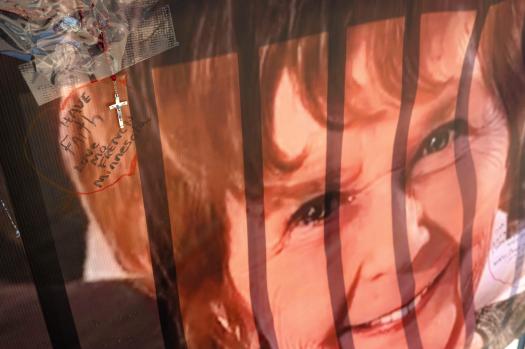
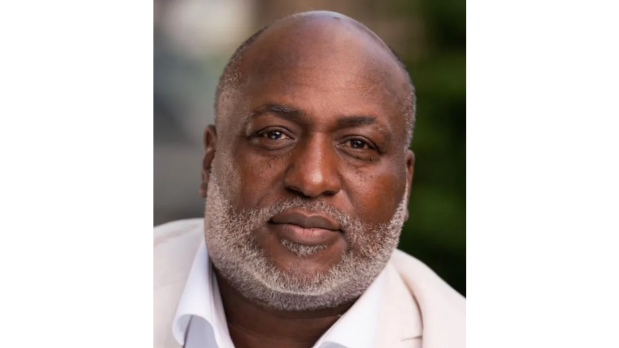
The Cook County Board has approved $10 million in settlements for two wrongly convicted men who spent 23 years in prison for a 1994 slaying.
Commissioners voted late last month to settle legal claims brought by Nevest Coleman and Derrell “Darryl” Fulton alleging wrongdoing by the Cook County state’s attorney’s office that led to their convictions. Each is to receive $5 million.
The two men are still suing Chicago over allegations that police coerced them into false confessions and framed them in the gruesome death of Antwinica Bridgeman.
“We are pleased that the county did the right thing to start to make amends,” said Russell Ainsworth, Coleman’s attorney. “Mr. Coleman is looking forward to trial against the city, where he will seek justice against the … detectives who caused him to spend 23 years wrongly incarcerated for a crime he did not commit.”
Fulton’s attorney, Kathleen Zellner, said the settlement “represents a significant step forward in recognizing prosecutorial liability for wrongful convictions.”
“Traditionally they have had impenetrable absolute immunity with rare exceptions and any settlements were minimal at best,” Zellner said.

The state’s attorney’s office declined to comment on the settlement.
Bridgeman disappeared in April 1994 after celebrating her 20th birthday and was found dead more than two weeks later. Coleman and Fulton were convicted in 1997 and freed after two decades when DNA testing did not find a match with either of them, or with Bridgeman’s boyfriend.
Instead, the DNA matched a man later identified as Clarence Neal, who pleaded guilty to sexually assaulting a woman in 2001 and has been “implicated in several other rapes,” according to court records.
In an August 2017 Cook County criminal court hearing, prosecutors acknowledged “serious issues have been raised in this case based on new DNA findings” that could merit “some form of relief” for Coleman and Fulton but argued that the presence of another man’s semen didn’t prove Coleman and Fulton hadn’t committed the crime.
The state’s attorney’s office, then led by Kim Foxx, sent investigators to interview Neal after the DNA testing, according to a federal judge’s opinion released this year.
“Initially, Neal told investigators that he had known A.B. for only about a month, had seen her only in passing, and never spoke to her,” the opinion states. “He denied having any sort of sexual relationship with her. However, he later said that ‘if anything happened,’ he had stuck his hand down (Bridgeman’s) pants or vice versa.”
Neal later changed his story to say he may have had a “quickie” with Bridgeman, according to the opinion. The opinion also cites a later deposition in which Neal said Bridgeman had “never removed her clothes during this encounter and had only performed oral sex on him.” Neal has not returned Tribune messages seeking comment.
The identity of the person who killed Bridgeman is a key issue in the lawsuits brought by Coleman and Fulton and would be a central point of contention if their case against the city proceeds to trial.
So will allegations of police misconduct.
On the night Bridgeman disappeared, she had gone to a friend’s home in the 900 block of West Garfield Boulevard to celebrate her 20th birthday. It was April 11, 1994, and she was wearing a Chicago Bulls jacket.
A small group of friends, including Coleman, toasted Bridgeman, who went by “Mikey.” As the party wound down, Bridgeman and Coleman walked a teenage girl home, then continued on their own.
At the time, Coleman worked for the White Sox’s groundskeeping crew. Coleman was also affiliated with the Gangster Disciples and couldn’t walk Bridgeman, who lived on 53rd Street, past the intersection of 55th and South Peoria streets because of an ongoing gang conflict.
In a 2017 interview, Coleman told the Tribune he watched as Bridgeman walked away alone. That was the last time anyone reported seeing her alive.
More than two weeks after the party, Coleman’s mother asked him to find the source of a stench at their greystone, also in the 900 block of West Garfield, records show.
Coleman and a friend went to check out the basement, which was in an abandoned part of the building known to attract squatters. They couldn’t open the door, so they looked through a window, records show.
“Oh my God, there is a body,” Coleman said, according to the friend’s statement to prosecutors.
Coleman told his mother, and she called police. In the basement, officers found Bridgeman partially disrobed and impaled with a pipe, though officials later determined she suffocated on a piece of concrete in her mouth.
Police focused on Coleman after they learned he had been with her on the night she disappeared. They narrowed in on Fulton after Bridgeman’s boyfriend at the time said Fulton and a cousin of Fulton’s had previously harassed her.
A group of Chicago police officers with a history of alleged misconduct obtained confessions from Coleman and Fulton that led to their convictions. The case reemerged after Fulton wrote to prosecutors years later seeking a review of the case and more testing, which eventually resulted in the men being released.