Officials said the Chicago Transit Authority was back on track as they approved a no-cuts budget Wednesday, just two weeks after state lawmakers passed a massive $1.5 billion package to prevent devastating cuts to the Chicago area’s public transit systems.
There will be no service cuts, layoffs or fare increases for the CTA next year — despite previous plans to hike fares by 25 cents per ride Feb. 1.
An influx of about $142 million in new revenue derived from the state’s mass transit funding bill, which lawmakers got over the finish line after 4 a.m. on Halloween, will prevent any cuts next year and allow for some modest improvements at the agency, transit leaders said.
But plans for more significant upgrades — such as running the Orange Line to Midway Airport 24 hours a day and adding bus routes to the Frequent Network — are in limbo as the agency waits for an allocation of additional funds held by its current oversight body, the Regional Transportation Authority, officials said.
Still, on Wednesday morning, transit leaders threw the word “marvelous” around the CTA boardroom when describing the agency’s financial situation.
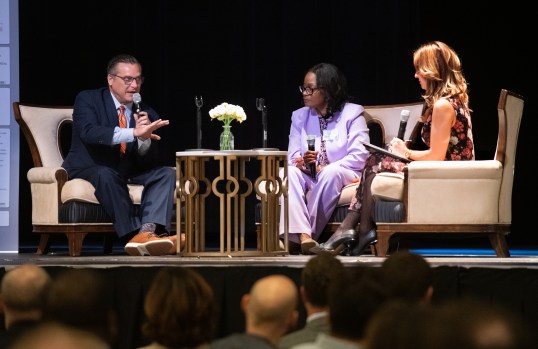
Acting CTA President Nora Leerhsen quoted the poet Mary Oliver in her remarks at Wednesday’s meeting.
Leerhsen referenced Oliver’s poem “Don’t Hesitate,” which includes the line, “Joy is not made to be a crumb.”
“We will celebrate this,” Leerhsen said. “Because this agency, its employees and its riders deserve that.”
“Being able to speak about expanding our Orange Line service to 24 hours, being able to speak about expanding our bus Frequent Network has us in a conversation on a national level as a transit agency that we were not before,” Leerhsen said. “The future is very bright.”
But leaders also reminded each other that transit riders are expecting significant improvements to transit service following the passage of the transit bill in Springfield two weeks ago. Those improvements, CTA leaders said, are reliant on receiving additional funds currently held by the RTA.
At Wednesday’s meeting, CTA board Chair Lester Barclay cautioned against counting too many chickens before they’re hatched.
“The public thinks that we got a lot of money to do a lot of these creative things,” Barclay said. “And I don’t think that’s quite the case. This is our wish list, this is what we hope will happen. But it’s subject to RTA.”
The oversight body — which will soon be scrapped and replaced by a new, more powerful body called the Northern Illinois Transit Authority, per the transit bill — said last week it is for now holding onto a projected $319 million in additional new revenue, which will later be distributed to the CTA, Metra and Pace.
The RTA said it was holding onto the funds “to ensure prudent financial management and compliance” with the new transit legislation, which overhauls the governing structure of regional mass transit and requires agencies to undertake numerous new initiatives.
Barclay asked the CTA’s Chief Financial Officer, Tom McKone, to come to the board’s meeting next month with an update on discussions with the RTA about distribution of the additional new revenue.
“I don’t think you can just get the money and then implement these plans,” Barclay said. “It takes quite a bit of time to plan and gear up and hire and do what you need to do.”
In an email Wednesday, RTA spokesperson Tina Fassett Smith said the agency did not yet have a more detailed timeline on when the funds would be available to the CTA. The RTA’s board is next scheduled to meet Nov. 20.

Transit leaders Wednesday also celebrated the staving off of fare hikes on the system next year. The CTA has not raised fares in years, and its initial budget proposal last month proposed a 25-cent-per-ride price increase.
Leerhsen has said the ticket price increase would have put between $30 million and $35 million back in the CTA’s coffers next year. The CTA, like Metra and Pace, proposed fare increases at the direction of the RTA.
But the transit funding legislation passed two weeks ago also put a moratorium on fare increases for the first year after its effective date, June 1.
Technically, that wouldn’t have prevented the CTA, Metra and Pace from going full steam ahead on their fare hikes slated to take effect Feb. 1. But key lawmakers made it clear they wanted the agencies to hit the brakes.
“I believe there is consensus from the Illinois General Assembly that fare increases should not be implemented until service is stabilized,” state Sen. Ram Villivalam, an architect of the legislation, told the Tribune.
Last week, the RTA cleared up some confusion when it confirmed it would not ask transit agencies to increase ticket prices next year.
The transit funding bill also overhauls the governing structure of Chicago-area mass transit, replacing the soon-to-be-defunct RTA with a new entity that is intended to act as a stronger governing body with the power to set fares and service standards across the region. Lawmakers suggested the new body should be given the power to make decisions about any future fare increases.