

After months of discussion — and some resident opposition — the Yorkville City Council has given a first green light to a roughly 1,000-acre data center campus proposed in the area.
The proposed data center project, called Project Cardinal, is being brought forward by Pioneer Development, LLC, along with the property owners, according to the city’s website.
The development site is just over 1,000 acres — a total of 20 parcels — in the northwest corner of Yorkville on the border with Sugar Grove, generally located northwest of Route 47 and Galena Road, south of Baseline Road and east of Ashe Road.
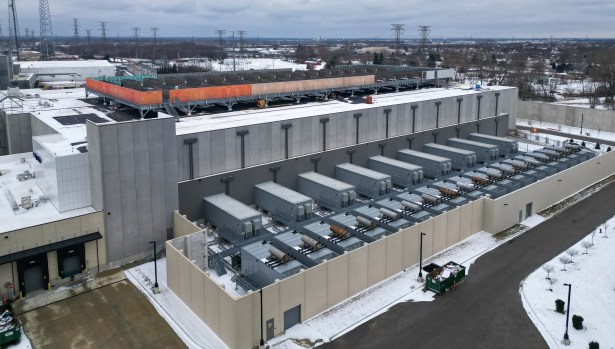
There would be a total of 14 data center buildings, along with two electrical substations, a utility switchyard and stormwater detention basins, according to the city.
After two public hearings over the summer, the rezoning of the land for the project and a Planned Unit Development, or PUD, and preliminary PUD plan were recommended for approval in July by the city’s Planning and Zoning Commission.
Since then, the Yorkville City Council has discussed the proposed project — along with another data center plan called Project Steel also seeking the green light from the city — at its meetings over the past several months.
On Oct. 28, first approvals of the Project Cardinal data center were slated to be voted on by the City Council, but the matter was ultimately tabled after a lengthy meeting, at which some residents spoke against the proposed project.
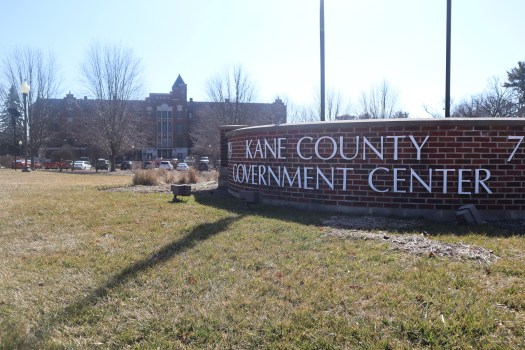
Then, the annexation agreement and Planned Unit Development agreement for the project came up again for a vote from the council on Nov. 10 and were approved unanimously, following around two hours of resident comments.
At Monday’s meeting before the council vote, Yorkville City Administrator Bart Olson summarized the data center project and addressed some of the questions raised by residents.
Olson pointed to growing investment in data center construction, and said Illinois is both “pretty well-situated” in terms of its future energy supply and investing in the proliferation of data centers in the state by way of tax incentives.
As for Yorkville specifically, Olson pointed to its ComEd electrical substation, and the presence of open land that data centers could be built on.
The data center campus would increase the value of the property it’s built on and therefore bring in additional property taxes to taxing bodies like the school district, while not contributing to an influx of new students in the way a residential development would, Olson explained.
He also claimed the data center could become the city’s second-largest employer.
Matt McCarron, a representative from Pioneer Development, LLC, the lead sponsor of the project, told The Beacon-News that the company expects the data center to generate between 750 and 1,000 jobs once it’s fully operational, not including those employed to build it.
Data centers also have their own security and are fenced off, Olson said, reducing the possibility of public safety issues there that local police would have to respond to. It also wouldn’t generate new roads the city has to plow or maintain, he explained.
Project Cardinal has changed in two significant ways since it was originally proposed to the city, Olson told The Beacon-News.
The first is the construction phasing, a concern which had been aired by some residents living on the west side of the planned development.
Originally, per the project plans, construction was set to start on the west side of the project area, and move to the southeast portion followed by the northeast part. Now, the plan is to construct the northeast portion of the campus first, followed by the west and then the southeast portions.
“The idea generally being we wanted to keep construction away from the most amount of residents as possible,” Olson said at Monday’s meeting.
Though the city has the final say on the construction phasing, according to Olson, ComEd has some guidance for it based on where electrical substations need to be located and infrastructure needs.
The other change, Olson noted, is that the planned buildings are set to be closer together than previously proposed, so as to be further away from residents on all sides.
The city is also requiring a 100-foot-wide landscape buffer around the campus, resulting in 4,900 new trees on the property, according to Olson. McCarron said the setbacks and plantings “go beyond what is typical for a development of this kind.”
McCarron said the resulting plan for the campus, which “incorporates restorative prairie style landscaping,” is “designed to strengthen Yorkville without redefining it.”
Olson also spoke about some of the questions raised by the community about the project and how construction would happen.
Water use, for example, is a major concern that has arisen as these sorts of projects are considered locally.
Olson said the developer is planning to use closed-loop air chillers for the project, and McCarron told The Beacon-News that the project will only be using municipal water for domestic use, like employee drinking water, sinks and restrooms, not for cooling equipment. Municipal water use would amount to around 170,000 gallons daily once the project is fully built, according to McCarron.
As for other concerns and questions, Olson said that nuclear energy generation on site would be prohibited, and that the developer can only build a data center — not a different type of development — on the site unless they come back to the City Council for approval. He also said the city is not providing tax incentives or exempting the developer from any taxes.
Olson also said a sound study has been conducted to evaluate expected noise levels from the data center, and that a traffic study will also be required. Construction for the project would also be limited between 7 p.m. and 7 a.m. every day and all day on Sunday. The city also has an ordinance regarding light pollution, and Olson noted that there will be a review of a photometric plan for the development to ensure the project adheres to city standards.
Additional information on Project Cardinal can be found at: https://www.yorkville.il.us/ArchiveCenter/ViewFile/Item/6497.
But the data center has remained contentious among some residents, some of whom voiced their opposition to the project at Monday’s meeting. Their concerns ranged from residents’ health to noise to energy usage and costs.
The two data centers being considered in Yorkville — Project Cardinal and Project Steel — were also the subject of an online petition opposing the projects that has garnered over 1,300 signatures.
And one nearby resident, John Bryan, who has been a critic of the project, recently filed a lawsuit against the city over the proposal, according to Kendall County court records.
In response to a request for comment, Bryan wrote that he is “confident that taking this action against a city ignoring its responsibilities to (its citizens) will ultimately hold them accountable.”
Olson declined to comment on behalf of the city about the pending litigation.
Some individuals spoke in favor of the project at Monday’s meeting, however, citing the potential economic benefits it could have for the city and the possibility of it providing jobs in the area.
And Ald. Arden Joe Plocher, shortly before the vote, pitched the project as one of the better options for developing the area were it to become a sort of industrial corridor.
“As far as industrial or commercial that could go into this spot, this is probably one of the least impactful things you could have,” Plocher said. “These are just, generally, large buildings that house computers.”
At the end of the more than three hour-meeting, the council unanimously approved the annexation agreement and Planned Unit Development agreement for the project, with Ald. Craig Soling absent.
As for what’s next, Olson emphasized that these approvals aren’t a green light for construction just yet. Rezoning and annexation ordinances still need to be approved, and negotiations about impact fees or contributions to governmental entities in the area as well as the developer paying upfront for water and sewer infrastructure upgrades are ongoing.
McCarron confirmed that no construction start date has been set at this point.
mmorrow@chicagotribune.com