Before winter closes in, do one last thing for all the trees, shrubs and other plants in your garden: Make sure they have a cozy layer of mulch over their roots.
“Spread it flat and even, like a blanket over the soil,” said Sharon Yiesla, plant knowledge specialist in the Plant Clinic at The Morton Arboretum in Lisle. You can purchase mulch or simply redistribute the fallen leaves that are free and abundant at this time of year.
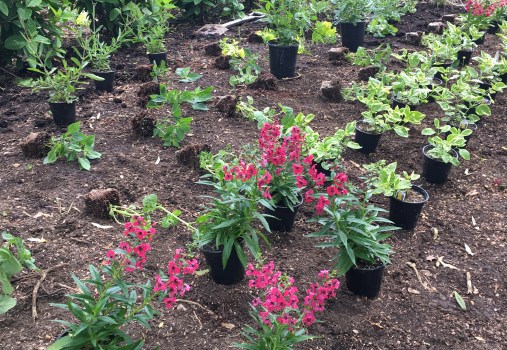
Make the mulch layer about 3 to 4 inches deep over the roots of trees and shrubs and 1 or 2 inches deep in perennial beds. If it’s too deep, mulch can block air and water from penetrating to the soil to reach plants’ roots.
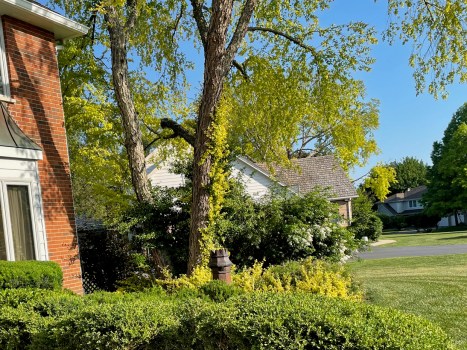
Around trees and shrubs, avoid heaping mulch up against the trunk or stems. “You’re spreading a blanket, not making a pile,” she said.
Mulch piled against bark can cause it to rot and encourage insects and diseases. It also can give cover to small bark-chewing animals such as voles. Protect the bark of trees and shrubs by keeping mulch at least 3 inches away.
Fall is a good time to spread mulch or fill in bare spots because winter insulation is one of its major benefits. A mulch layer shields plants’ roots from extreme cold, but just as importantly, it protects them against mid-winter warmups.
“Our winter weather is extremely variable and that creates risks for plants,” Yiesla said. “A good mulch layer helps even things out.”
In late winter, spells of 50- and 60-degree weather can endanger plants by warming the soil too soon. Warmer soil tricks plants into emerging prematurely from the safety of their winter dormant state. If they begin opening their buds or growing too early, their tender new tissue is vulnerable to freezing when the weather swings back to cold.
Mulch on the soil acts like the insulation in your freezer to keep the soil steadily cold, causing plants to stay dormant. They will wait to start growing until springtime has really arrived.
There are other benefits to maintaining a mulch layer in your garden all year long. In summer, it keeps moisture from evaporating from the soil. Over time, it slowly breaks down, feeding beneficial organisms in the soil and adding nutrients that plants need. Studies have shown that trees surrounded by a layer of mulch grow better and stay healthier.
Mulch around trees also creates a safety buffer, keeping away lawnmowers and string trimmers that can seriously harm trees by damaging their bark. “Make the area of mulch around a tree at least 3 feet wide, or as wide as you are comfortable with,” Yiesla said.
A garden’s mulch layer imitates the accumulation of leaves, dry stalks, dead branches and other debris that fall to the ground in nature. The roots of a forest’s trees or a prairie’s grasses and flowers always live under this healthy, protective, nourishing layer of dead, decaying organic matter.
Good mulch is always some kind of dead plant material. Mulch sold in bags is shredded wood. You can also use wood chips from tree work, straw, grass clippings, or leaves. At the Arboretum, trees and shrubs are mulched with partially composted wood chips and shredded leaves are used in perennial beds.
Small, thin pieces, such as straw or leaves, will decay more quickly than large, thick pieces such as wood chips. “The good thing about mulch that breaks down fast is that it’s adding more organic matter to the soil,” Yiesla said. “The tradeoff is that you need to replenish it more often.”
If your mulch has grown thin in spots, fall is a good time to fill it in. You can add more right over the top of old mulch. “Just make sure that the whole layer never gets more than 3 to 4 inches deep,” she said. “And don’t pile mulch against trees.”
For tree and plant advice, contact the Plant Clinic at The Morton Arboretum (630-719-2424, mortonarb.org/plant-clinic, or plantclinic@mortonarb.org). Beth Botts is a staff writer at the Arboretum.