
Content oversight provided by Studio 1847
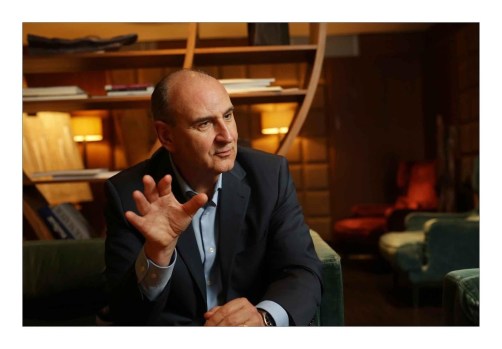
John Mattone often recalls his early years on the basketball courts of Europe, when he played during a college program. It was not the scores or the statistics that stayed with him. It was the sense of connection, the instant when competition became communication. He calls that moment his first lesson in presence. Decades later, as leaders confront the challenge of integrating artificial intelligence into every part of business, Mattone sees a similar test. The question, he says, is not whether we can build smarter systems but whether we can remain fully human while using them.
Mattone built his life around that question. A graduate of Babson College and the University of Central Florida, he went on to coach senior executives in more than 50 countries and developed a leadership model known as Intelligent Leadership. The framework focuses on the “inner core” of character and emotional maturity as the foundation for the “outer core” of leadership skills. For him, every technological revolution still depends on the moral and emotional readiness of the people leading it. “Technology will change what you do, but not who you must become,” he says.
The challenge of integrating AI and meaning
Recent data shows that U.S. organizations spent about $98 billion on training in 2024, a slight decline overall but with a 23% increase in spending on outside coaching and consulting. Companies are looking for guidance as they confront complexity. Many are experimenting with artificial intelligence in leadership development, performance management and culture building. Mattone warns that without clarity of purpose, these tools can quietly replace conscience with code. “Leaders who delegate decisions to a machine must still remind themselves of the question: ‘Why am I leading?’” he says.
His coaching work in 2025 reflected a pattern. Firms that introduced AI into human-resources systems often saw efficiency gains but a loss of trust and cohesion. Algorithms predicted potential leaders but could not explain why they mattered. He argues that the deeper task for 2026 is to reconnect data with dignity. Leadership, he believes, cannot be reduced to a dashboard. “A dashboard that tracks sentiment but ignores purpose is hollow,” he says.
Culture, talent and responsibility
Mattone’s view is that leadership development will only succeed when culture, talent and strategy move together. His own frameworks, such as the Stealth Cultural Transformation Model and the Value Proposition Model, were designed to link human growth to organizational outcomes. He has long maintained that when character and competence are aligned with purpose, an organization begins to move in unison. That principle has become increasingly urgent as businesses rely more on automation and remote work.
The United States Bureau of Labor Statistics projects an 11% rise in training and development roles through 2034, a sign that companies still depend on human judgment even as machines accelerate tasks. In that context, Mattone’s insistence on moral leadership feels less like philosophy and more like necessity. Leadership must remain a human discipline, not a mechanical one.
Lessons from a global stage
Mattone has worked extensively in the Middle East, where leadership development is a national priority. The region’s executive-education market is projected to reach roughly $9.4 billion by 2030. In Saudi Arabia and the United Arab Emirates, governments are investing in human-capability programs that mix technology with culture. Mattone often tells his clients there that effective leadership begins with listening. “To lead in new markets you must listen deeply, not just speak boldly,” he says. His advice carries both a cultural and ethical weight: the willingness to pause before acting, to seek understanding before innovation.
For him, the lesson is universal. Leaders in every part of the world are experimenting with AI-driven tools for decision support and coaching analytics. Yet the success of these systems depends on the integrity of the people who use them. Technology magnifies intent, whether good or bad. The question, he suggests, is whether intent can still be grounded in empathy.
A call to lead consciously
Mattone sees 2026 as a turning point. Artificial intelligence will expand further into executive coaching, making it possible to personalize development at scale. But he believes the next generation of leadership will be judged not by how well it adopts AI but by how wisely it integrates it. He advises leaders to pair algorithmic insight with human mentoring, using data to inform but not to decide. “You cannot ask the machine to coach you. You must ask the human to interpret the machine’s message,” he says.
Leadership, he argues, remains a moral act. It cannot be outsourced. Technology can extend reach and efficiency, but only character can create trust. As organizations prepare for 2026, his warning feels clear and simple: Progress without humanity is regression in disguise. “Technology can multiply your reach, but only your character can multiply your impact,” he says.
For John Mattone, that is the enduring message of Intelligent Leadership. As artificial intelligence grows more capable, the task of being human grows more difficult and more essential. The leaders who remember that will not just manage the future; they will define it.