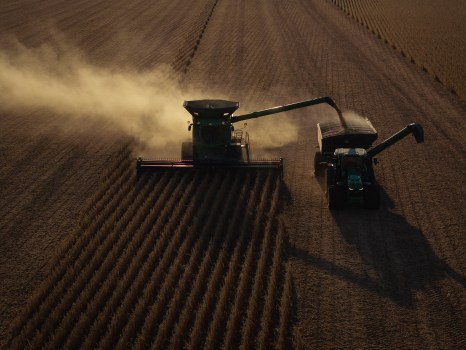

Farming is harder than it has been in decades. Since 2022, corn and soybean prices have dropped by as much as 30%, while input costs have only gone up. That squeeze is felt every day on family farms such as mine, which has operated for more than a century in Warren County. Next year, farm income could fall another 23% — a $40 billion decline, one of the steepest drops in the past 30 years. For corn farmers such as me, and thousands more across Illinois, the situation is especially dire: Corn income has fallen 45% since 2022, reaching its lowest level in 15 years.
Farmers are experts in navigating uncertainty. Weather, markets, pests — we plan for the unpredictable. But what’s harder to plan for is a government that can’t seem to function. Now that Congress is finally getting back to work, the first order of business should be passing an emergency relief package that gives farmers some stability, which must include a provision that would secure the future of the crop protection tools we depend on.
That need is growing more urgent. Threats to the future availability of essential crop protection tools such as glyphosate — the backbone of effective weed management and consistent yields — persist. As the nation’s leading producer of soybeans and second-largest producer of corn, Illinois farmers depend on crop protection products such as glyphosate to deliver consistent, reliable yields year after year. When so much is already unpredictable, this certainty when it comes to our tools matters.
Agriculture powers our state’s economy, especially outside Chicagoland: It contributes $51 billion annually and supports thousands of jobs. Losing access to proven tools would only deepen the uncertainty we’re already facing and force some farmers to rethink whether they can keep their operations alive.
This commonsense fix in the emergency relief package for farmers would reaffirm that pesticide labels are governed by science, not politics. The Environmental Protection Agency already sets strict, science-based standards for how these products can be used safely. Farmers follow those labels because they’re grounded in decades of research and practical experience and reinforced through rigorous state licensing that tests our understanding of environmental safety, proper use and compliance with complex label requirements. Without clear federal guidance, though, we risk a maze of conflicting government rules that make it nearly impossible to know what’s legal from one field to the next.
That kind of confusion helps no one. It would raise costs, disrupt production and drive food prices higher for families everywhere. Despite what some online activist groups might claim, the fix under discussion doesn’t weaken oversight — it simply ensures that the EPA’s science remains the national standard while still allowing states to regulate pesticides within their borders if they choose. That kind of science-based policy gives farmers the clarity we need to plan ahead and trust that the same rules apply from one season to the next.
I’ve farmed this ground for nearly 50 years. I’ve seen high and low prices, floods and droughts, and everything in between. What’s wearing us down now isn’t the weather — it’s Washington’s paralysis. Now that the government has reopened, Congress must act to protect the science-based tools that farmers depend on. It’s critical to us here in Illinois — and to growers across the country who are facing the same realities.
Farmers will keep doing our part to feed the country. We just need Washington to do its part, too.
Rob Elliott is a partner in Elliott Farms near Monmouth in Warren County, Illinois. His family has farmed in the area for more than a century. He also helps run Elliott Brothers Seed and has served on the boards of the Illinois Corn Growers Association and the National Corn Growers Association.
Submit a letter, of no more than 400 words, to the editor here or email letters@chicagotribune.com.