For years working for a newspaper in Clarksdale, Mississippi, I met with and reported on endless efforts to promote the Delta, bring tourists to the area and, with them, revenue.
It’s hard work, getting tourists to Mississippi. And boy, people work hard doing it. Say what you will about that state. Just about every little town on every little highway has some kind of historical marker. (First liquor store in the state? That’s a marker.) The thinking is, once tourists are in the state, give visitors reasons to stay. There’s a blues trail, a history trail and a writers trail, and that’s to say nothing of the Gulf Coast or the casinos — places tourists typically want to visit anyway. Because the thing is, if you want to attract all tourists, you’ve got to offer something for everybody.
So, it just makes sense that with a city as diverse as Chicago, the folks at Chicago’s tourist bureau, Choose Chicago, should have an Inclusive Tourism and Community Engagement department.
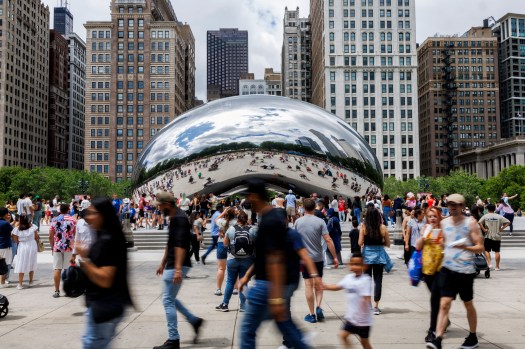
Nobody is going to forget about Navy Pier and the Magnificent Mile. Nobody is going to stop having conferences at McCormick Place. But given how popular Airbnb and other rental properties are, it is obvious visitors are willing to stay and visit all areas of the city, and it just makes sense to offer virtual tours, if not actual plaques and maps, for the less-hyped areas.
Now, it’s worth noting that tourism isn’t a panacea for depressed economies, be they whole states or little neighborhoods. Tourism is also very fickle and subject to slow periods, and downtowns and the service economy aren’t going to provide tons of well-paying jobs. But nobody in Clarksdale complains when, each April, the streets bulge with visitors for the blues festival. That festival is a small piece of a larger pie as those same tourists usually travel south and hit up New Orleans, or north to Memphis — but they stay in the area. I have talked to a fair number of visitors, and for a lot of them, that Mississippi stop is part of a much bigger, once-in-a-lifetime adventure.
And the thing is that some Chicago neighborhoods can at least offer that small-pie piece. Tourists are a diverse bunch, and it pays to pay attention to that diversity. There are visitors who come to Chicago for the food. There are visitors who come for the music. Lord knows they come for sports. There are people looking to see obscure sights and spend time off the beaten path. Those people have money.
This approach is a win for locals, too. Chicagoans have a lot of pride in their neighborhoods, and being part of a big, important story, being recognized for having the best of something or for history or architecture, it’s no small thing for neighborhoods. If we expect kids to respect the city and the place they’re from, to know their history and to honor the past, we should promote these things.
In a world-class destination city, visitors should be able to download an app and have a pretty good idea of where the best hot dogs are or where they can go to get a Rainbow Cone (a food trail would make sense) or where Muddy Waters is buried or where Roberts Temple is located (the site of the Emmett Till funeral) and on and on. One need only to look on the various Chicago forums on Reddit to understand that visitors are eager to explore the city and spend more time outside of downtown. We need to help them do that.
Editorial: Chicago tourism fundamentally is about downtown, not all 77 neighborhoods.
I once spent the better part of an afternoon and evening wandering down Devon Avenue eating Indian and Middle Eastern delights. If you like window shopping and international snacking, you could do a lot worse. After you fill up there, go a bit farther down Devon, and you’ll hit one of the cutest old Dairy Queen locations left in the area. It looks like a place out of time, ripped from a Life magazine photo essay on Midwest suburbia, and, if it’s a hot summer night, expect a line of families and teens out the door.
Of course, strictly speaking, that’s in Park Ridge, just across the street from Chicago, and, in any case, you’ll likely have to go through the Edison Park neighborhood to get there.
And everybody knows, according to the Tribune Editorial Board, tourists don’t bother with that neighborhood.
Jesse Wright is a freelance journalist and the former editor of the Clarksdale Press-Register in Mississippi. He is an avid explorer of lesser-known places and points of disinterest.
Submit a letter, of no more than 400 words, to the editor here or email letters@chicagotribune.com.