The Chicago Plan Commission approved a proposal Thursday by DePaul University to build a $42 million basketball practice facility in the heart of its Lincoln Park campus, a controversial plan that will require demolishing a row of century-old residential buildings.
University officials told commission members DePaul’s lack of modern practice courts makes it hard to compete for athletic talent with schools in the Big East Conference, decreasing DePaul’s national visibility and potential to attract other students.
“We are getting turned down because of our lack of facilities,” said DePaul University Athletic Director DeWayne Peevy. When Peevy joined DePaul five years ago, “we were last in the Big East Conference in almost every category,” he said.
The four-story facility will be on the northwest corner of Sheffield Avenue and Belden Avenue, and provide two basketball courts, one apiece for the men’s and women’s teams. The upper floor courts will feature floor-to-ceiling glass, while training and team meeting rooms, sports medicine facilities and locker rooms for other student athletes will occupy the lower floors.
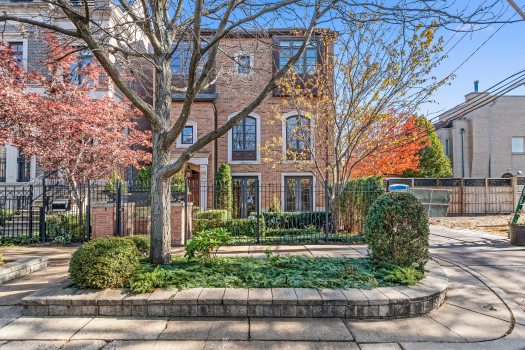
The university plans to demolish five DePaul-owned buildings, which are a mix of student housing and administrative offices, including several three-story walk-up townhouses. The plan still needs an approval from City Council.
The project won the support of Ald. Timmy Knudsen, 43rd, but many community members and historic preservationists say they would prefer DePaul use a Fullerton Avenue parking lot it owns one block north for a new basketball facility.
“We surveyed the neighborhood during the planning process, and once people learned of the options DePaul had, it didn’t make sense to them why DePaul would tear down these gorgeous homes,” said Brian Comer, president of the Sheffield Neighborhood Association, who challenged Knudsen for his Council seat in 2023, losing in a 52-48 vote. “We want the university to expand and be successful, we just disagree with how they’re going about it.”
Historic preservationists agreed DePaul University needs to grow, but said Lincoln Park has already lost too much of its history.
“We get it, it’s just that there are available sites that are ready and do not require the demolition of the neighborhood’s historic fabric,” said Ward Miller, executive director of Preservation Chicago. “What makes the DePaul campus special is how well it’s integrated into the community.”
Rich Wiltse, vice president for facility operations, said the school considered several sites, but the Belden Avenue location was the best fit. It’s in the university‘s dead center, an appropriate spot for a student-only building. The Fullerton Avenue lot is on the campus’ northern edge, so it makes more sense to use it for a more community-focused, marquee attraction, perhaps a hotel or convention center with first-floor retail.

Commission members asked DePaul officials whether they had done enough to win community support.
The school spent several years meeting with local community organizations, including the Sheffield Neighborhood Association, said Peter Coffey, DePaul’s associate vice president for community and government relations. The university agreed to include an increased setback from the property line, widening the sidewalks, and additional sustainability measures such as rooftop solar power and bird-friendly glass.
Other groups such as the Wrightwood Neighbors Association, which represents the neighborhood north of Fullerton Avenue, and Lincoln Park Chamber of Commerce backed the project, according to Coffey.
“I don’t know whether this association, Sheffield Neighborhood, is speaking for the broader community,” Coffey said.
Although two of the Sheffield Avenue buildings targeted for demolition are “orange-rated” by the city, or potentially historic, neither meets the threshold for landmark status, said Dijana Cuvalo, an architect with the Historic Preservation Division of the Chicago Department of Planning and Development.
The university did agree to support any city effort to landmark several historic buildings on campus, including Cortelyou Commons, a reception hall built in 1929 at 2324 N. Fremont St., and Peter V. Byrne Hall at 2219 N. Kenmore Ave. Cuvalo said the city could start that process early next year.
Comer said his association will continue to work with DePaul through the DePaul University Lincoln Park Neighborhood Advisory Council, founded in 1989 to manage relations between the school and surrounding neighborhoods.
“The university and the neighborhood have grown symbiotically with one another for more than 70 years,” Comer said. “But they’ve changed the way they go about development. If the university keeps expanding this way, eventually they’re going to cut our neighborhood in half.”