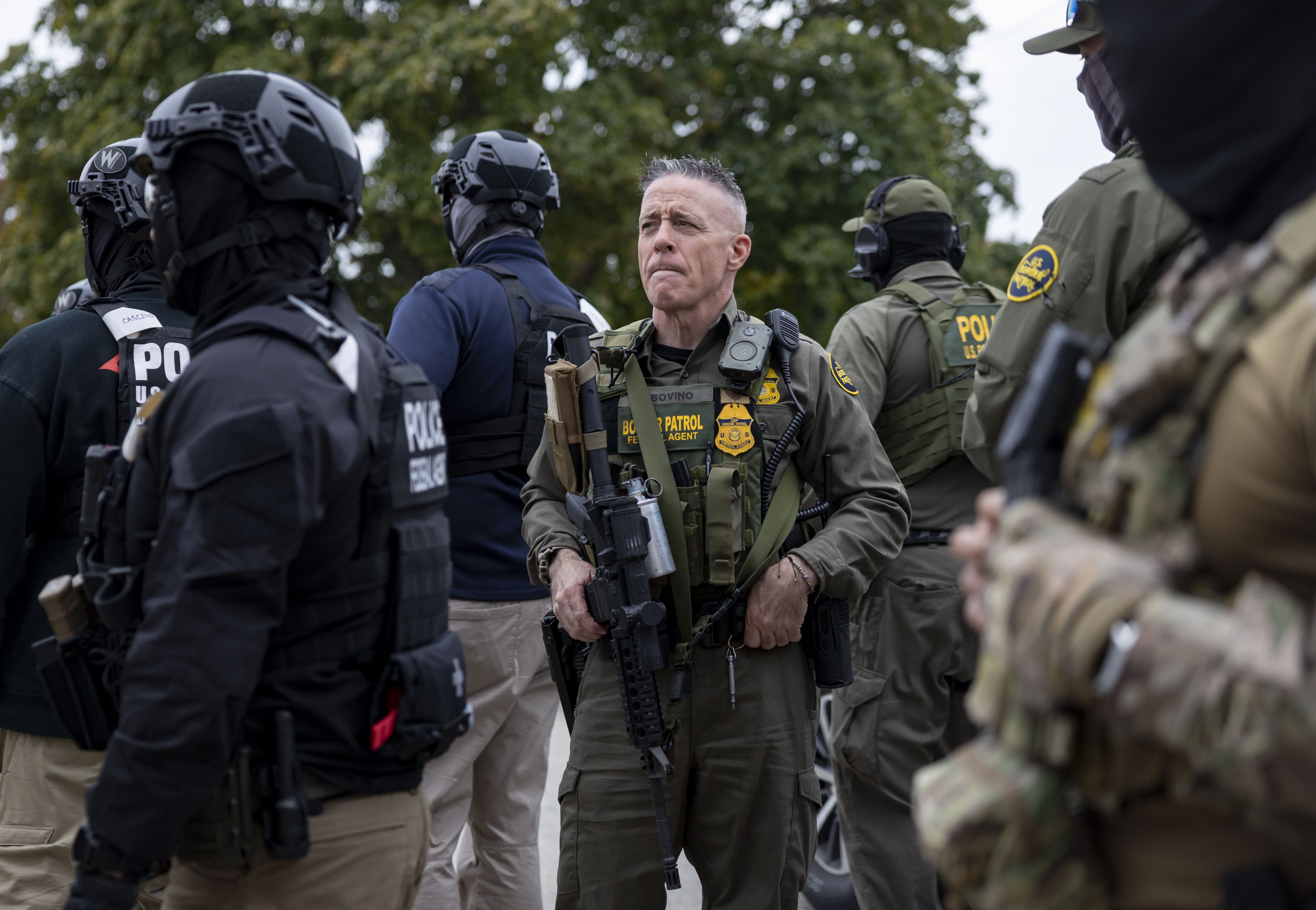
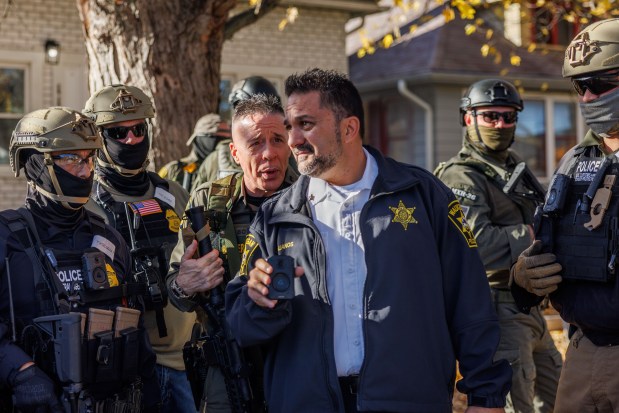
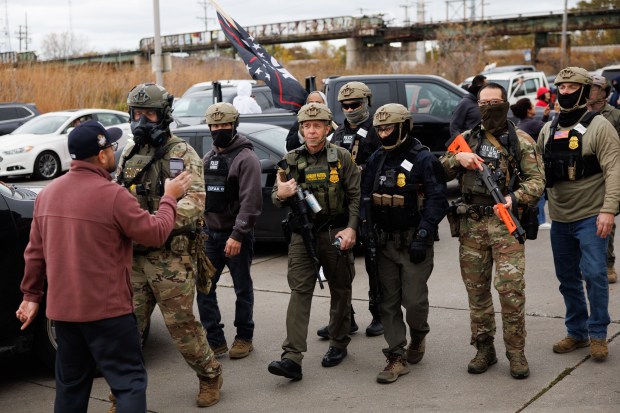


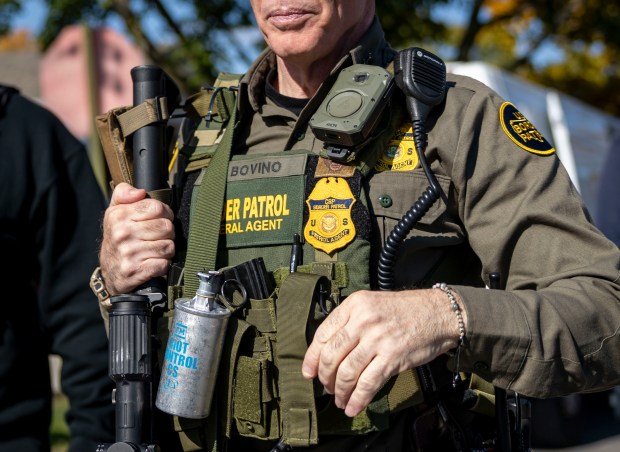
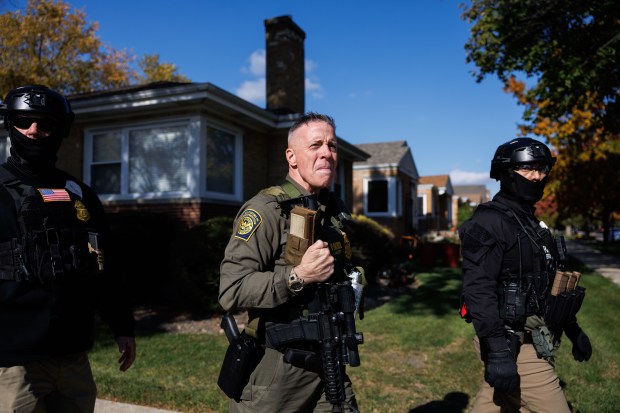
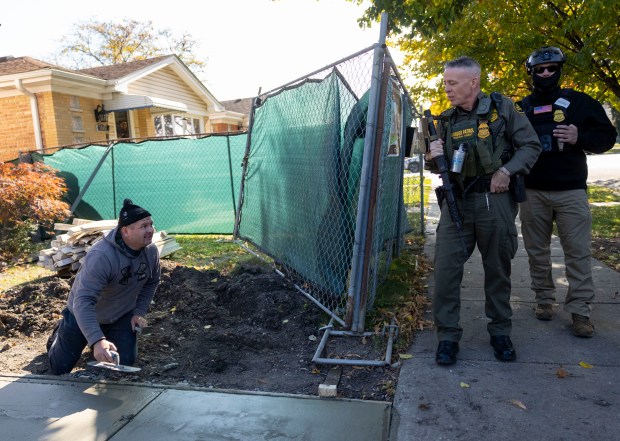
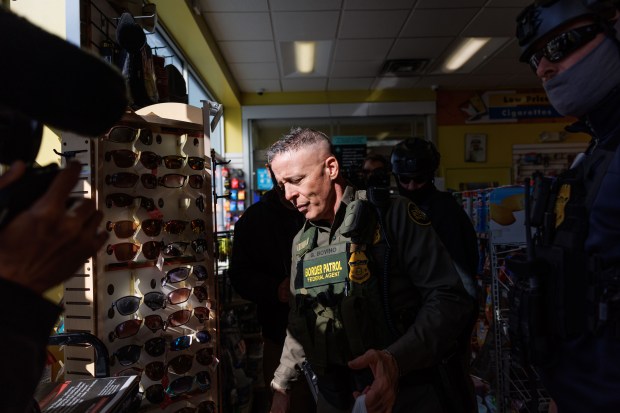
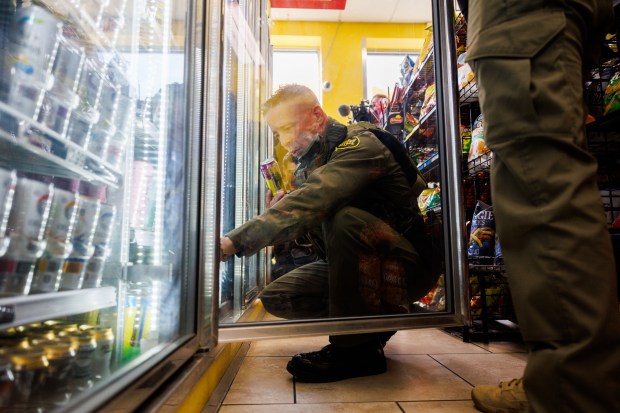
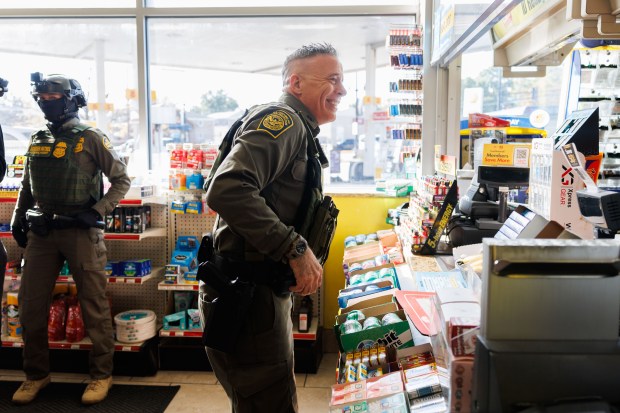

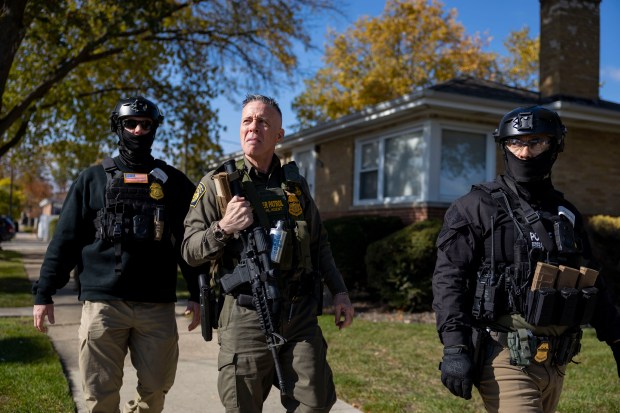
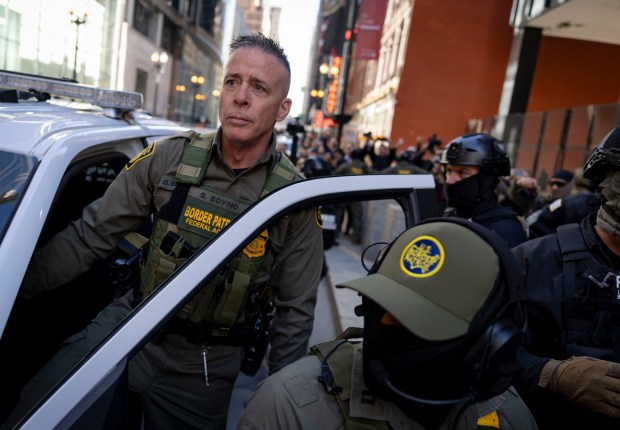

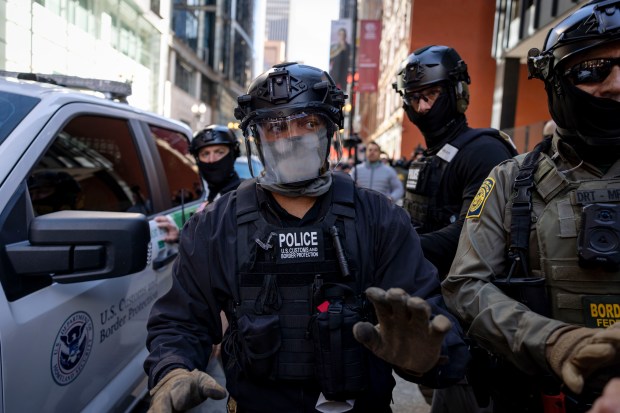
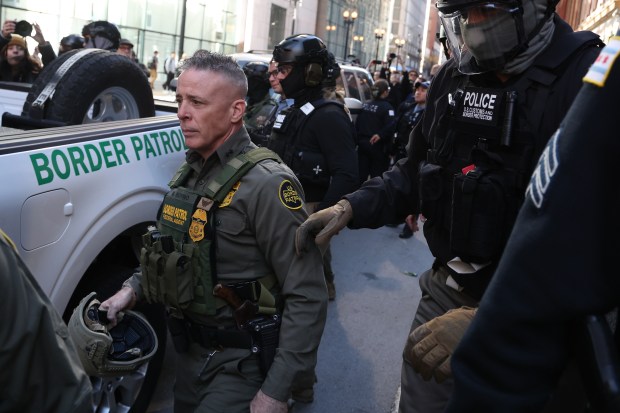
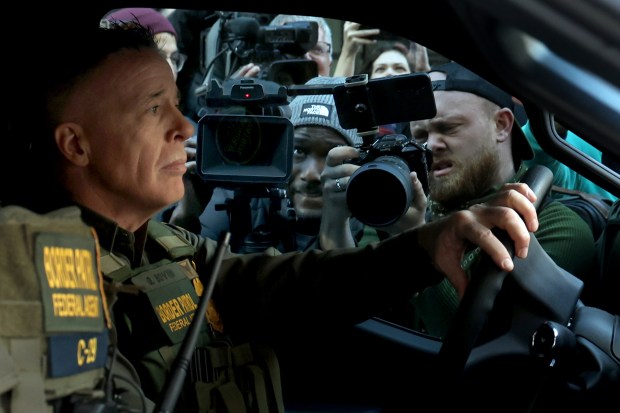
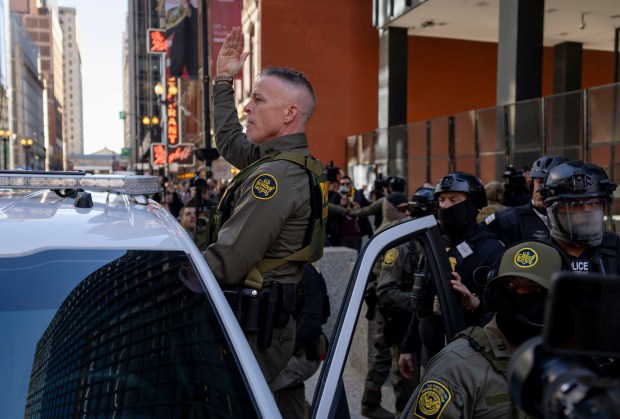


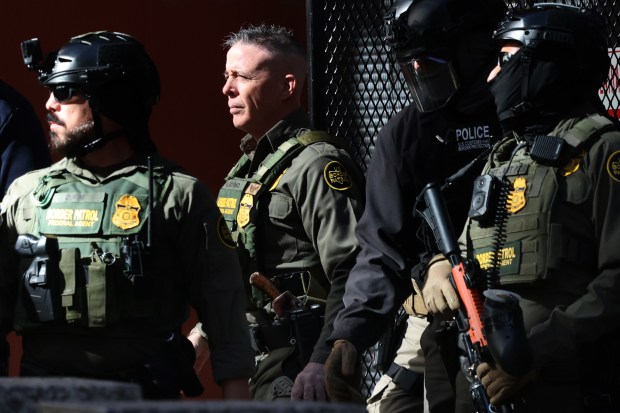
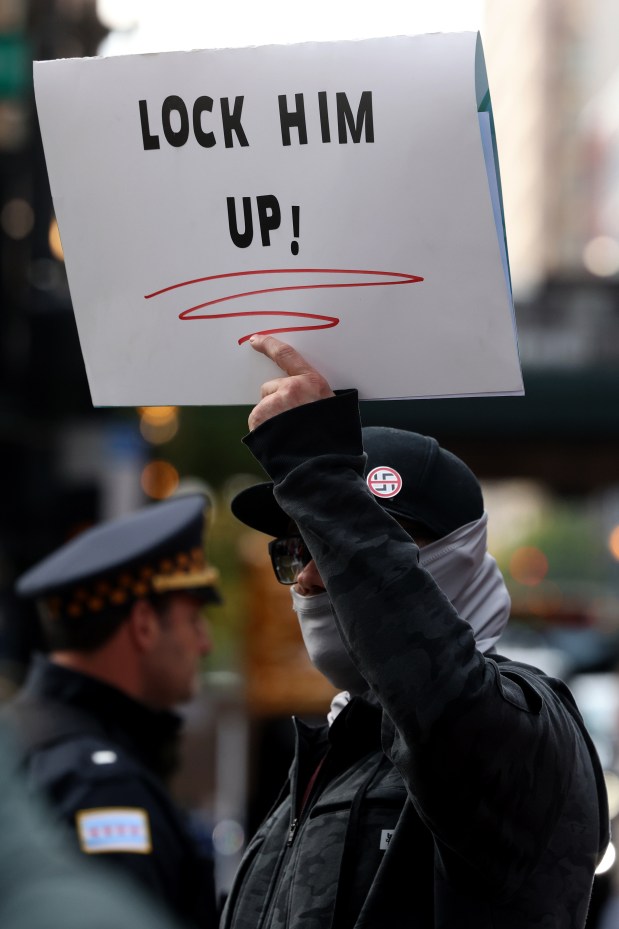
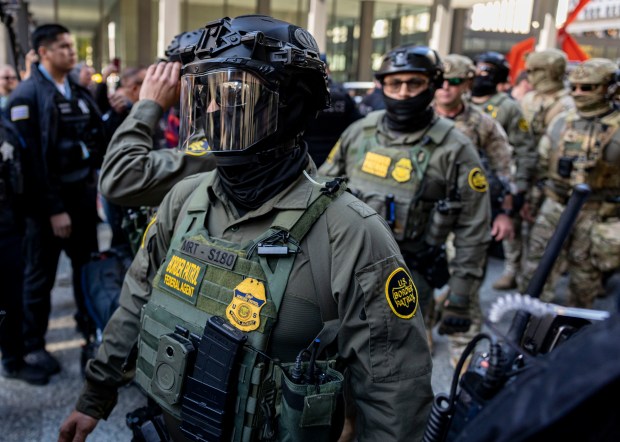
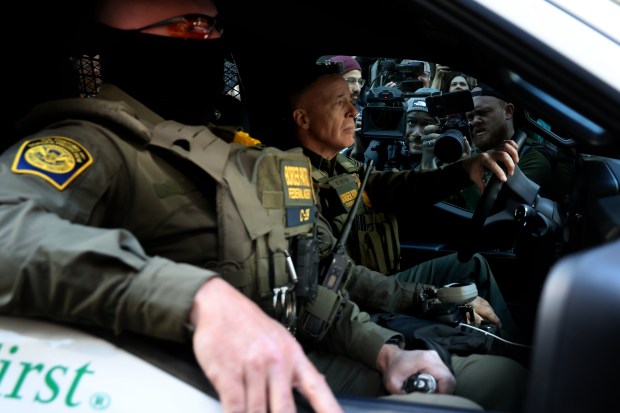






The recent deposition of Border Patrol Cmdr. Gregory Bovino about the use of force by his immigration agents during Operation Midway Blitz seemed to go off the rails the minute they said “hello.”
“You didn’t want to shake (Bovino’s) hand when he walked into the room,” Department of Justice attorney Sarmad Khojasteh told plaintiffs’ attorney Locke Bowman during an early break in the proceedings, according to a transcript made public late Monday. “That was noted … Treat him with respect. Treat me with respect. You’re a professional.”
Read the transcripts: Border Patrol Cmdr. Gregory Bovino deposition
What followed was nearly seven hours of terse and sometimes evasive answers from Bovino, punctuated by an occasional longer explanation about the allegedly violent mobs attacking and threatening immigration agents.
The questioning was almost constantly interrupted by bickering between the attorneys, mostly instigated by Khojasteh, who at one point called Bowman a “petulant old man.” Bowman, meanwhile, repeatedly accused Khojasteh of trying to hijack the proceedings with his drumbeat of objections and accusations, the transcript shows.
“Stop it. Just stop it,” an exasperated Bowman told Khojasteh at one point. “You don’t need to give speeches.”
The full transcript of Bovino’s deposition was made part of the court record as attorneys in an ongoing lawsuit accused immigration agents with Border Patrol and U.S. Immigration and Customs Enforcement of routinely violating a restraining order issued by U.S. District Judge Sara Ellis limiting the use of force against protesters and media.
Ellis blasted Bovino for his antics and answers during the three-day deposition, issuing a scathing 233-page ruling earlier this month that described the tough-talking field general as “evasive” and accused him of “either providing ‘cute’ responses” or “outright lying.”
Plaintiffs’ attorneys also accused Bovino of lying repeatedly in his sworn testimony, including a blatant misrepresentation about what happened during a high-profile incident in the Little Village neighborhood, where Bovino was seen leading an immigration action that targeted a laundromat and discount mall and sparked vehement protests on the streets.
Bovino was captured on video throwing tear gas above the heads of people in the crowd without warning. Other footage showed Bovino rolled a second canister of tear gas at people as they fled while another agent near Bovino fired a flash-bang grenade at the crowd.
He clearly wanted his actions noted for the record, correcting an attorney who suggested he had thrown a canister.
“You said canister. I threw two,” Bovino said. “That’s plural.”

Bovino initially claimed he had thrown the canisters after being hit in the head with a white rock, adding that it hurt but did not break the skin. But in a third session of questioning a few days later, he sought to change that statement.
“I was mistaken,” Bovino said, according to the transcript. “The white rock was thrown at me, but that was after I deployed less lethal means in chemical munitions. I was mixed up with several other objects in a very chaotic environment. And I confused that white rock with other objects that were thrown at me.”
Bowman showed Bovino an image taken just before he deployed gas canisters.
“You told us this is the violent mob of rioters that you saw in front of you seconds before you deployed the first two canisters, am I correct?” he asked.
“Well, this is, you know, I, can’t tell exactly what’s happening from, from a picture,” Bovino said, appearing to pause frequently. “This is, this, this, this picture here that you’ve given me is — this is a snapshot in time.”
At one point, as Bovino appeared to struggle to answer questions about images of the mob he described, Khojasteh accused Bowman, the plaintiffs’ attorney, of not being respectful.
“I’m not being respected,” Bowman shot back. “I don’t appreciate this.”
“My question is does that picture depict anything, any little tiny aspect of the mob of violent rioters around you, behind you, to the side of you, impeding you allegedly as you threw these canisters? Does it even depict a tiny bit of it?” Bowman pressed on.
“It depicts, it, it —” Bovino said.
“That’s a yes or no,” Bowman said. Does it or does it not?”
Jumping in, Khojasteh said: “No, no. Mr. Bowman. Mr. Bowman.”
Then when Bovino tried to answer again, his attorney said: “Stop answering his question. Stop answering.”
Bovino repeatedly dodged questions throughout the deposition.
When he was asked about video he reviewed ahead of questions, he said, “I can’t recall the details of that video that I looked at.”
Pressed for even general information, Bovino said, “There were figures in the video,” but then, “I can’t remember” when asked if he looked at footage from the ICE processing center in Broadview.

He repeated versions of that — from an incredulous “I’ve never heard of this allegation before” to “I don’t know anything about a situation or if it even occurred” — throughout his exchange with lawyers.
But he consistently stuck to themes that he was a lawman surrounded by criminals in the form of arrest targets and protesters.
Asked if he has ever been on the scene while agents responded to protesters at Broadview, Bovino said, “I’ve been at the Broadview facility and responded to violent rioters and assaultive subjects.”
Bowman asked Bovino at one point about the Irving Park neighborhood tear gas incident where federal agents under his command gassed the area just before a Halloween parade, one of the most publicized incidents of Operation Midway Blitz.
“I believe they were justified if that happened,” Bovino said.
Why did he believe that, Bowman asked.
“I’ve seen nothing to indicate a reason otherwise,” Bovino answered. But again he testified he did not review video, speak to the agents involved or remember reading any reports.
Bovino’s deposition came as allegations mounted that agents under his command were indiscriminately throwing tear gas in Chicago neighborhoods and using inappropriate force against residents and reporters during protests over the ongoing immigration enforcement push under the administration of President Donald Trump.
Ellis first issued a temporary restraining order in early October and then a preliminary injunction this month restricting the use of tear gas and other “nonlethal” munitions, and requiring agents to wear body cameras and “conspicuous” identification on their uniforms when interacting with the public. The injunction has since been stayed by an appeals court.

The deposition of Bovino, which Ellis used to make her ruling, ended about as well as it had begun. The attorneys were part of testy exchanges throughout.
“We’re going to Judge Ellis again. I’m not going to have this — and not — this is my last 90 minutes,” Bowman said at one point.
When Khojasteh then asked to go off the record, Bowman responded: “I’m not going to go off the record. I’m going to do your nonsense on the record.”
Khojasteh also said he wanted a record made. “You know, the record is going to reflect all of this, the lack of respect you have,” he said. “Indeed it will reflect everything, so you can just stand down and rest comfortable that this video will reflect everything.”
And at another point: “This is how you want to — you — honestly, this is how you want to proceed with a public servant, Mr. Bowman?” Khojasteh said of Bovino.
“Stop talking,” Bowman answered. “Stop talking.”
Tribune reporter Jake Sheridan contributed to this story.