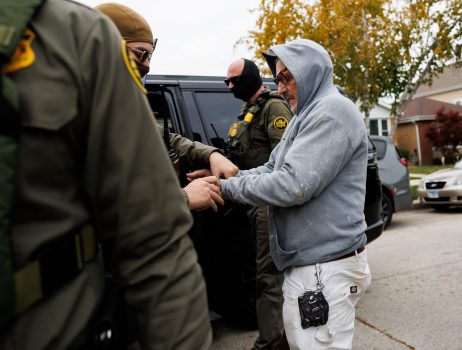
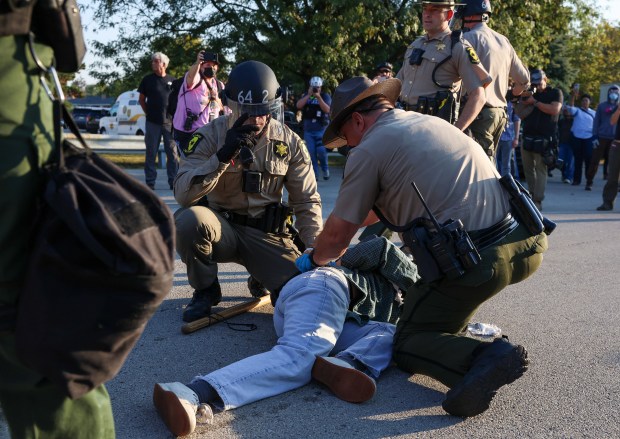
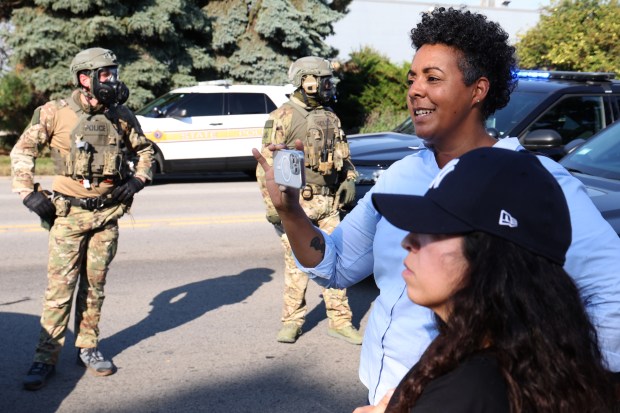
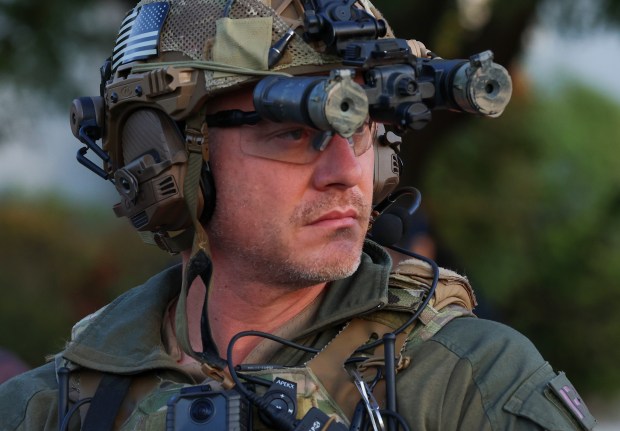
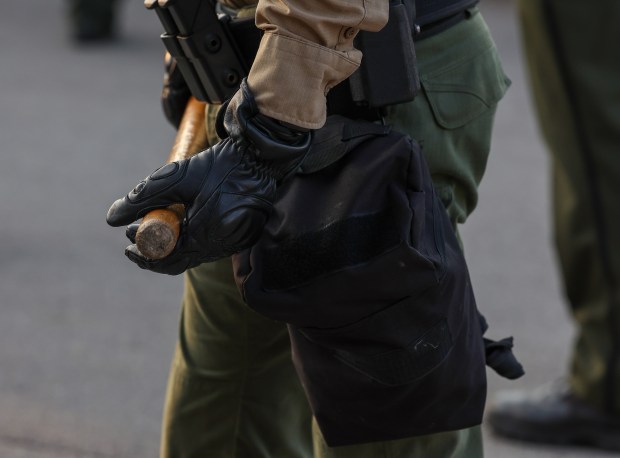
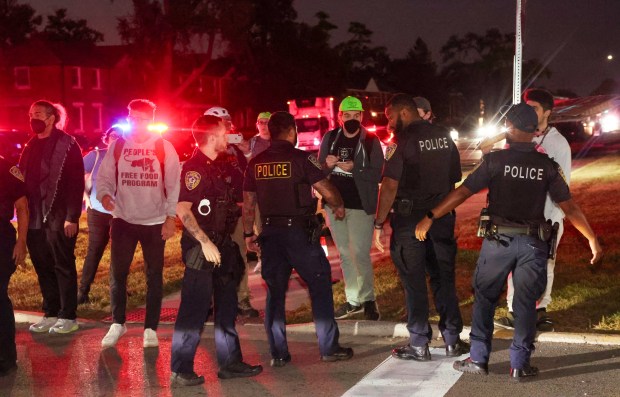
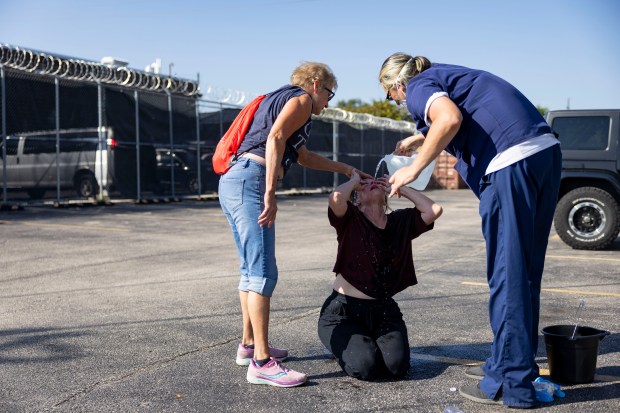
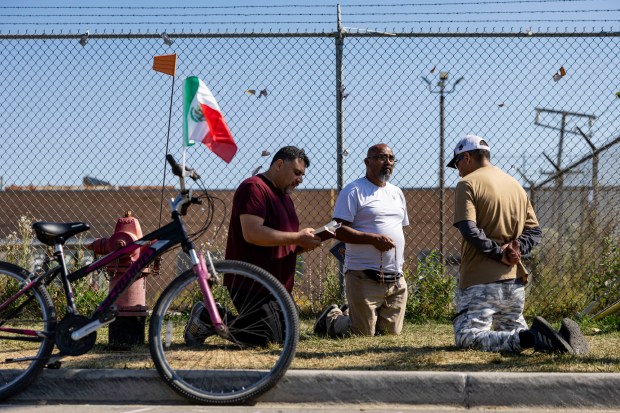
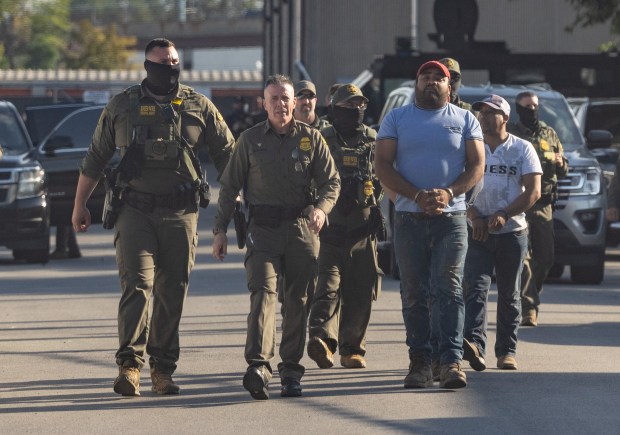
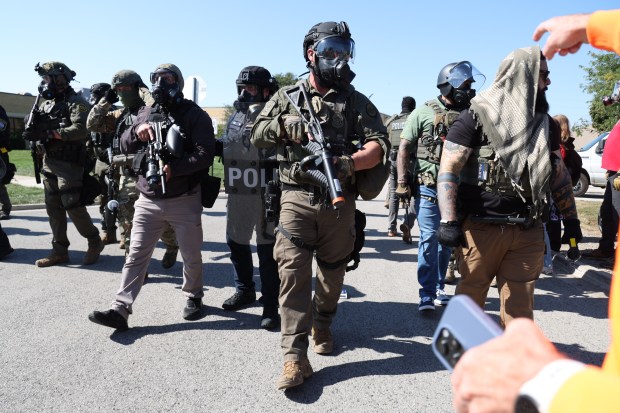
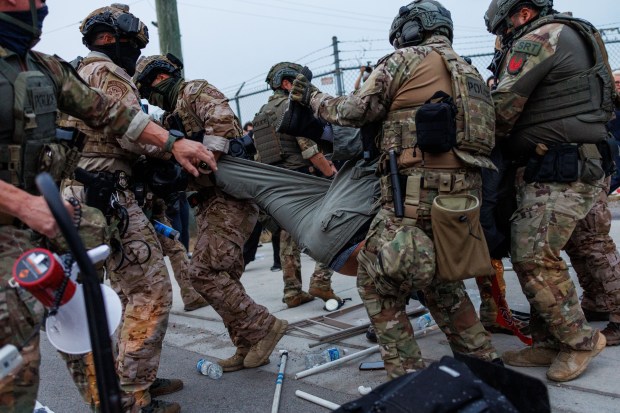
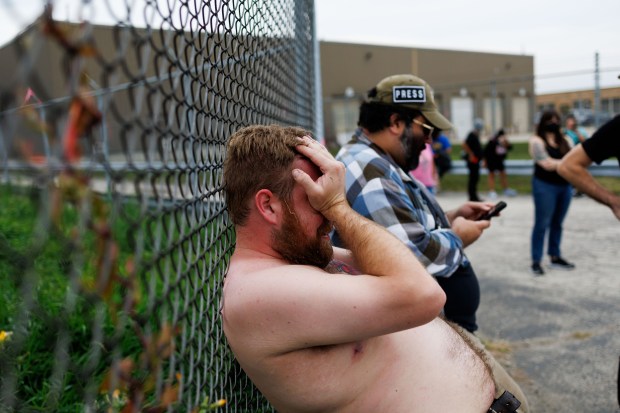
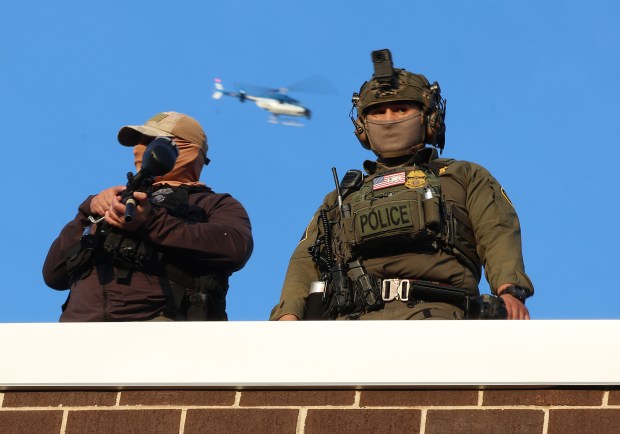
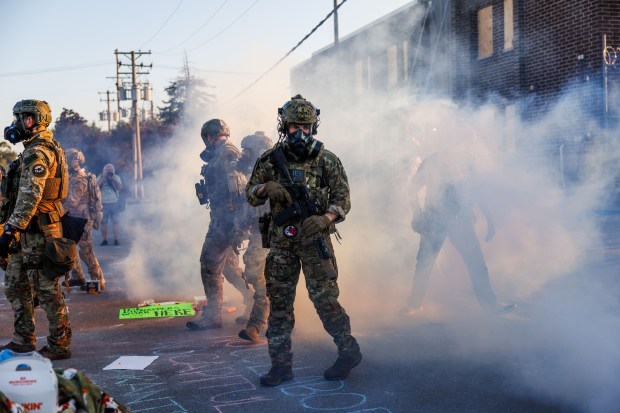
Border Patrol officers detain a man while conducting immigration enforcement actions in the Edison Park neighborhood of Chicago on Oct. 31, 2025. (Armando L. Sanchez/Chicago Tribune)
Newly released federal data shows that immigration agents booked in roughly 1,900 immigrants in the first half of Operation Midway Blitz — two-thirds of whom had no known criminal convictions or pending charges.
The latest data offers the first comprehensive look at the effects of the operation, and a Tribune analysis underscores the divide between the stated goal of the administration of President Donald Trump — to target “the worst of the worst” — with the reality of controversial roundups that typically snagged immigrants living in the the U.S. without permanent legal status even though they had no known rap sheets.
Of the 1,895 people detained by ICE, 1,271 lacked any criminal record. Another 343 people arrested had a pending criminal charge, while 281 had a criminal conviction. Of those with a criminal conviction, the vast majority of offenses were misdemeanors, traffic citations or nonviolent felonies. Only 28 arrestees —1.5% — had been convicted of a violent felony or sex crime.
The U.S. Department of Homeland Security, which ran the operation, did not dispute the analysis. In a statement Tuesday, it said that across the country most of those detained had criminal convictions or pending charges as it targets “the worst of the worst criminal illegal aliens — including murderers, rapists, and pedophiles.”
It previously has argued that the Trump administration, while targeting dangerous “illegal aliens,” welcomed the arrest of anyone in the United States without legal status, no matter how otherwise law-abiding they were.
The agency argued in a past news release that its efforts collectively helped lower crime as part of what it called “a historic win in the fight against violent criminal illegal alien crime.” The boast, however, ignored several consecutive years of decreases in Chicago’s violent crime.
The findings come from a Tribune analysis of updated U.S. Immigration and Customs Enforcement data obtained and shared Monday by the research group Deportation Data Project.
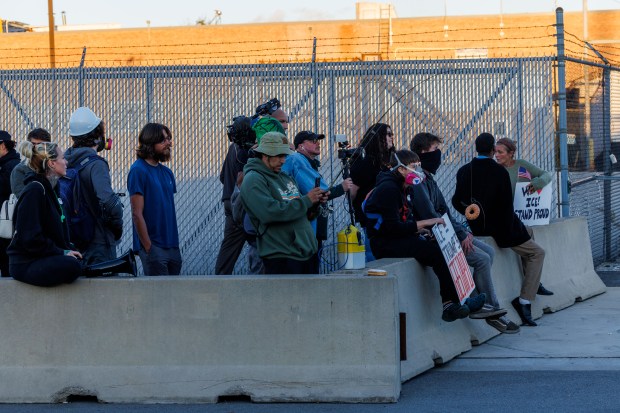
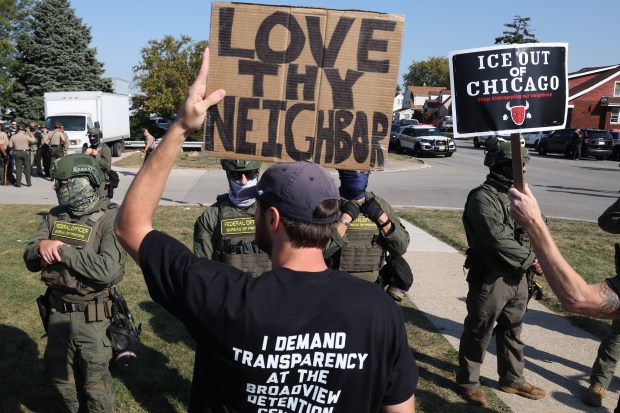
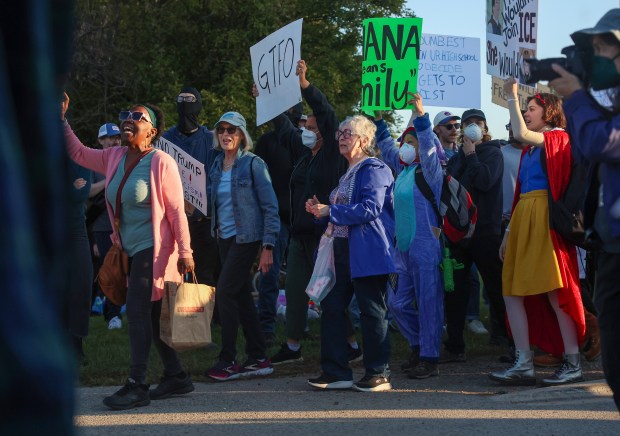
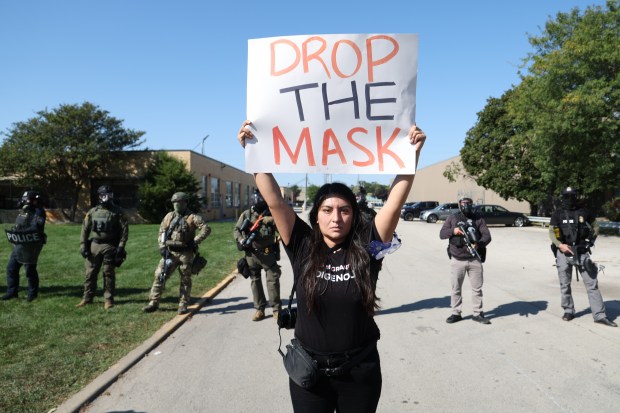
Law enforcement officers watch people protest outside the U.S. Immigration and Customs Enforcement holding facility in Broadview on Nov. 1, 2025. (Armando L. Sanchez/Chicago Tribune)
Fourteen mothers are arrested during morning prayers and protests outside the U.S Immigration and Customs Enforcement holding facility in Broadview on Nov. 7, 2025. (E. Jason Wambsgans/Chicago Tribune)
Megan Siegel wears a flag cape while holding the hand of her daughter, Matilda, while protesting outside the U.S. Immigration and Customs Enforcement holding facility in Broadview, Nov. 14, 2025. The Siegel family lives in Shabbona, near DeKalb. Siegel said she has been protesting outside the Broadview facility up to five times per week. (Chris Sweda/Chicago Tribune)
The U.S Immigration and Customs Enforcement holding facility in Broadview, Nov. 13, 2025. (E. Jason Wambsgans/Chicago Tribune)
A large crowd gathers for a rally organized by clergy leaders outside the U.S. Immigration and Customs Enforcement facility in Broadview, Nov. 7 2025. (E. Jason Wambsgans/Chicago Tribune)
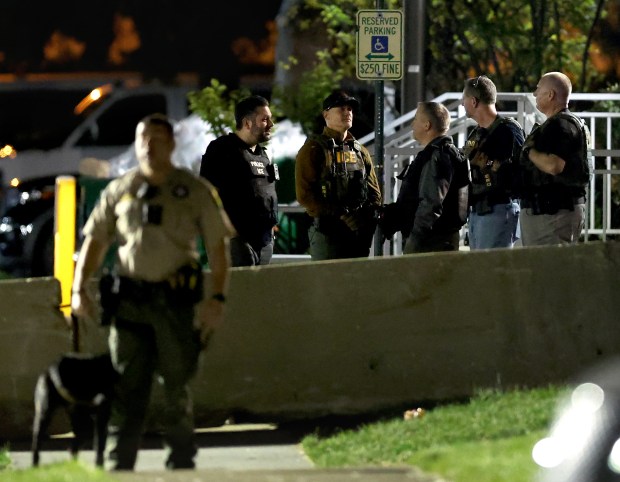
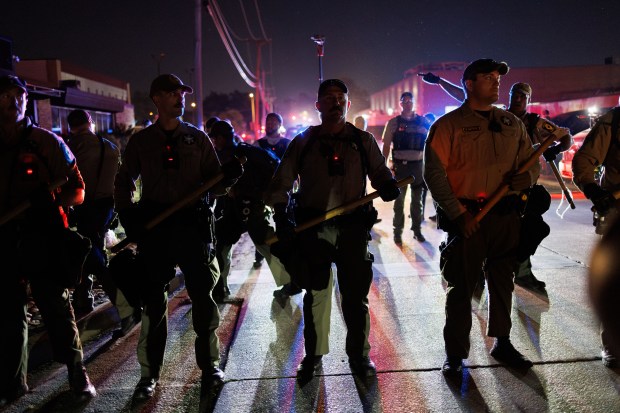
Cook County sheriff’s police pass a Day of the Dead ofrenda as they move protesters and members of the media to the corner as a 6 p.m. curfew arrives outside the U.S. Immigration and Customs Enforcement holding facility in Broadview on Nov. 1, 2025. (Chris Sweda/Chicago Tribune)
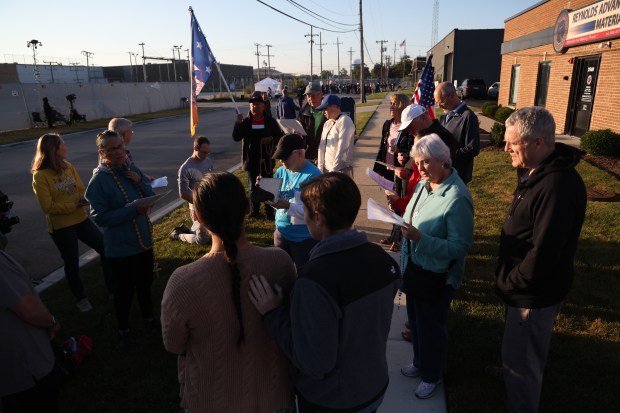
An early morning prayer service is held down the block from the U.S. Immigration and Customs Enforcement facility on Oct. 31, 2025, in Broadview. The service has been happening every Friday morning for over twenty years. (Stacey Wescott/Chicago Tribune)
An ambulance pulls out of the U.S. Immigration and Customs Enforcement holding facility on Beach Street on Oct. 13, 2025, in Broadview. (Stacey Wescott/Chicago Tribune)
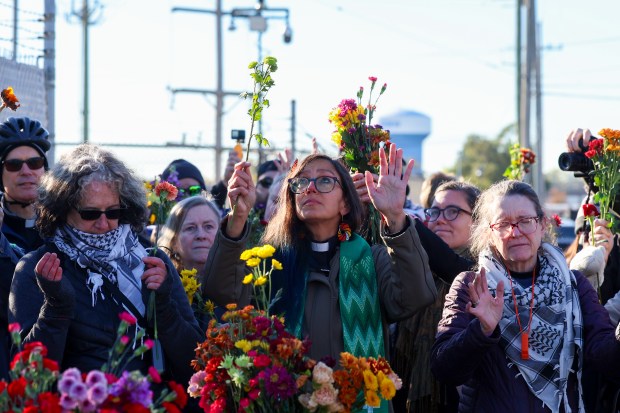
The Rev. Emily Heitzman, center, from Loyola University Chicago, and protesters participate in the flower ceremony during an interfaith prayer service led by the North Shore Unitarian Church outside of the U.S. Immigration and Customs Enforcement holding facility in Broadview on Oct. 24, 2025. (Stacey Wescott/Chicago Tribune)
Federal agents bring a detainee into the Immigration and Customs Enforcement holding facility in Broadview on Oct. 18, 2025. (Dominic Di Palermo/Chicago Tribune)
Illinois State Police troopers attempt to detain a protester outside the U.S. Immigration and Customs Enforcement holding facility in Broadview on Oct. 17, 2025. (Stacey Wescott/Chicago Tribune)
Protesters face off against Illinois State Police troopers outside the U.S. Immigration and Customs Enforcement holding facility in Broadview on Oct. 17, 2025. (Stacey Wescott/Chicago Tribune)
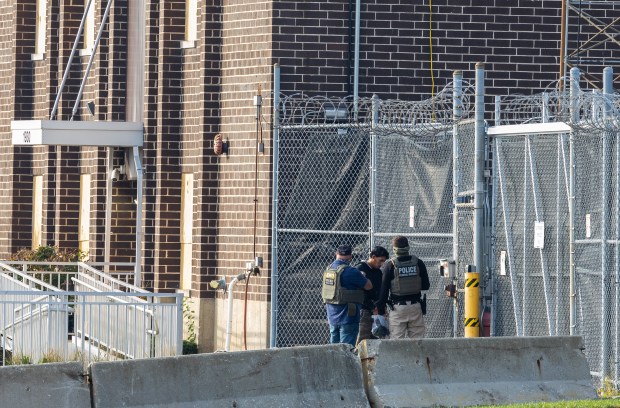
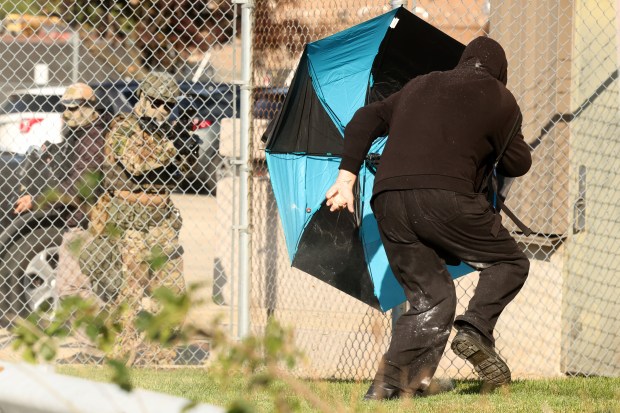
Immigration and Customs Enforcement officers stand near concrete barriers where fences were taken down outside an ICE holding facility in Broadview late on Oct. 14, 2025. (Chris Sweda/Chicago Tribune)
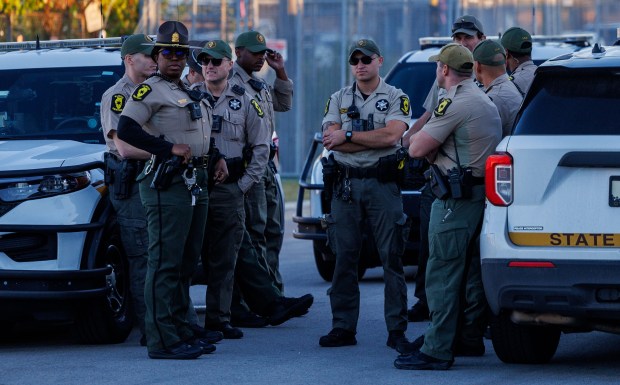
Illinois State Police troopers outside the U.S. Immigration and Customs Enforcement holding facility in Broadview on Oct. 14, 2025. (Eileen T. Meslar/Chicago Tribune)
A protester walks toward the protest zone outside the U.S. Immigration and Customs Enforcement holding facility in Broadview on Oct. 14, 2025. (Eileen T. Meslar/Chicago Tribune)
Protesters stand at the corner of Lexington and Beach streets near the U.S. Immigration and Customs Enforcement holding facility in Broadview on Oct. 14, 2025. (Eileen T. Meslar/Chicago Tribune)
A fence that a federal court has ordered the Trump administration to remove stands outside the U.S. Immigration and Customs Enforcement holding facility Oct. 13, 2025, in Broadview. (Armando L. Sanchez/Chicago Tribune)
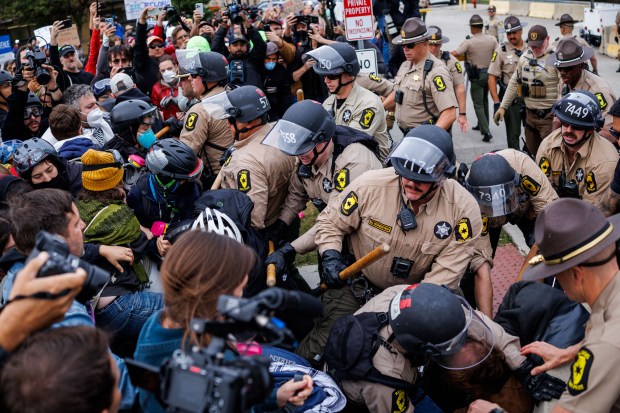
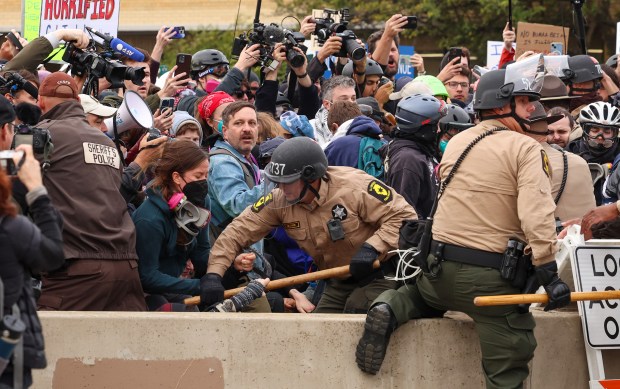
Illinois State Police troopers and Cook County sheriff's deputies push protesters from the road near a U.S. Immigration and Customs Enforcement holding facility on Oct. 10, 2025, in Broadview. (Armando L. Sanchez/Chicago Tribune)
Illinois State Police and Cook County sheriff’s deputies tussle with protesters in the designated protest zone a block from the U.S. Immigration and Customs Enforcement holding facility on Oct. 10, 2025. (Stacey Wescott/Chicago Tribune)
Protesters raise a "No Troops in Our Streets" sign at the U.S. Immigration and Customs Enforcement facility in Broadview on Oct. 9, 2025. (E. Jason Wambsgans/Chicago Tribune)
Protesters recite the rosary outside the U.S. Immigration and Customs Enforcement facility in Broadview on Oct. 9, 2025. (E. Jason Wambsgans/Chicago Tribune)
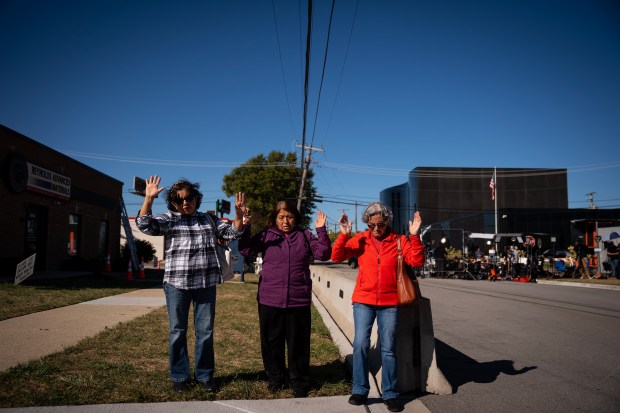
Zully Sotelo, from left, Eileen Alvarez, Kate Madrigal and Yohanna Sotelo protest outside of the U.S. Immigration and Customs Enforcement holding facility in Broadview on Oct. 9, 2025. (Stacey Wescott/Chicago Tribune)
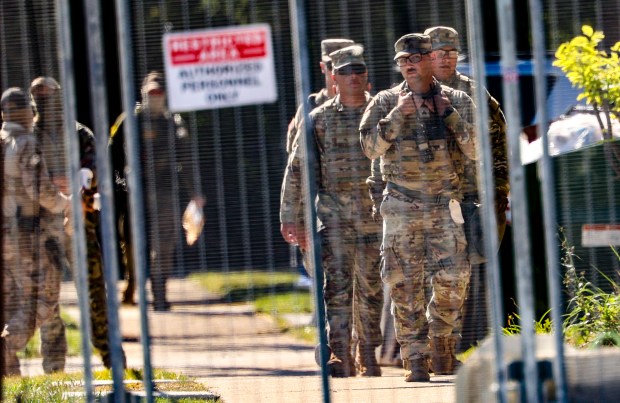
Texas National Guard members walk outside of the U.S. Immigration and Customs Enforcement holding facility in Broadview on Oct. 9, 2025. (Stacey Wescott/Chicago Tribune)
Protesters and journalists wait at the U.S. Immigration and Customs Enforcement facility in Broadview, Oct. 9, 2025. (E. Jason Wambsgans/Chicago Tribune)
A Broadview police officer moves protesters away from the U.S. Immigration and Customs Enforcement holding facility, Oct. 8, 2025, in Broadview. (Armando L. Sanchez/Chicago Tribune)
Protesters gather outside the U.S. Immigration and Customs Enforcement holding facility, Oct. 8, 2025, in Broadview. (Armando L. Sanchez/Chicago Tribune)
Protesters gather outside the U.S. Immigration and Customs Enforcement holding facility on Oct. 8, 2025, in Broadview. (Armando L. Sanchez/Chicago Tribune)
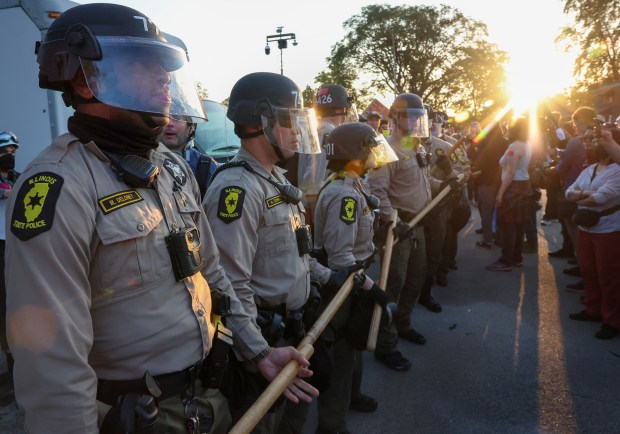
State police troopers stand outside the U.S. Immigration and Customs Enforcement holding facility, Oct. 8, 2025, in Broadview. (Armando L. Sanchez/Chicago Tribune)
A large bus arrives at the U.S. Immigration and Customs Enforcement holding facility, Oct. 8, 2025, in Broadview. (Armando L. Sanchez/Chicago Tribune)
U.S. Customs and Border Protection officers join Cook County Sheriff’s deputies to monitor an entrance, Oct. 6, 2025, outside the U.S. Immigration and Customs Enforcement holding facility in Broadview. (Brian Cassella/Chicago Tribune)
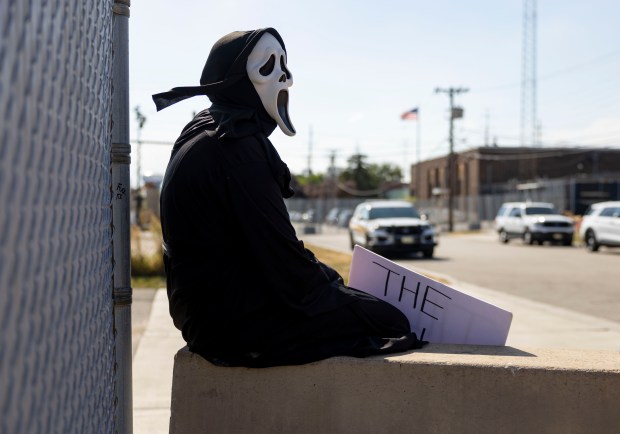
A protester sits outside, Oct. 6, 2025, at the U.S. Immigration and Customs Enforcement holding facility in Broadview. (Brian Cassella/Chicago Tribune)
Illinois State Police move protesters back near the U.S. Immigration and Customs Enforcement facility in Broadview on Oct. 4, 2025. (Armando L. Sanchez/Chicago Tribune)
Illinois State Police move protesters off the road near the U.S. Immigration and Customs Enforcement holding facility, Oct. 4, 2025, in Broadview. (Armando L. Sanchez/Chicago Tribune)
U.S. Immigration and Customs Enforcement holding facility
Activists yell at the U.S. Immigration and Customs Enforcement holding facility on Oct. 4, 2025, in Broadview. (Armando L. Sanchez/Chicago Tribune)
Illinois State Police hold a line near the U.S. Immigration and Customs Enforcement holding facility in Broadview on Oct. 4, 2025. (Armando L. Sanchez/Chicago Tribune)
Illinois State Police move protesters off the road while they protest recent immigration enforcement actions near the U.S. Immigration and Customs Enforcement holding facility in Broadview on Oct. 4, 2025. (Armando L. Sanchez/Chicago Tribune)
Protesters embrace near the U.S Immigration and Customs Enforcement facility in Broadview, Oct. 3, 2025. (E. Jason Wambsgans/Chicago Tribune)
Illinois State Police move protesters off the road near the U.S. Immigration and Customs Enforcement facility, Oct. 4, 2025, in Broadview. (Armando L. Sanchez/Chicago Tribune)
Illinois State Police and Cook County Sheriffs keep protesters from 25th Avenue near the U.S Immigration and Customs Enforcement facility in Broadview, Friday, Oct. 3, 2025. (E. Jason Wambsgans/Chicago Tribune)
Illinois State Police troopers detain a protester who refused to back up as a vehicle passed along Harvard Street near the U.S. Immigration and Customs Enforcement holding facility in Broadview on Oct. 3, 2025. (Stacey Wescott/Chicago Tribune)
Illinois State Police troopers detain a protester who refused to back up along Harvard near the U.S. Immigration and Customs Enforcement holding facility in Broadview on Oct. 3, 2025. (Stacey Wescott/Chicago Tribune)
Illinois State Police troopers detain a protester who refused to back up near the U.S. Immigration and Customs Enforcement holding facility in Broadview on Oct. 3, 2025. (Stacey Wescott/Chicago Tribune)
Protesters confront Illinois State Police troopers outside the U.S. Immigration and Customs Enforcement holding facility in Broadview on Oct. 3, 2025. (Stacey Wescott/Chicago Tribune)
Federal agents ride an armored vehicle as protesters clash with federal agents and Illinois State Police troopers near the U.S. Immigration and Customs Enforcement holding facility in Broadview on Oct. 3, 2025. (Antonio Perez/Chicago Tribune)
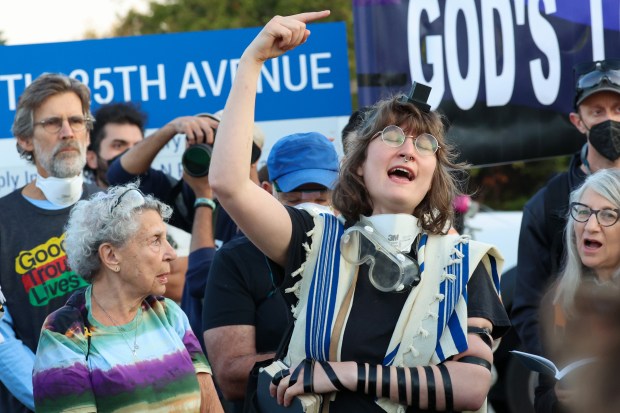
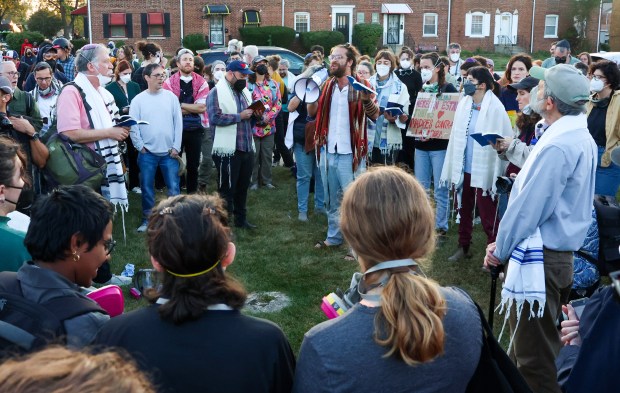
People sing and recite prayers during a Jewish prayer service near the U.S. Immigration and Customs Enforcement holding facility in Broadview on Oct. 3, 2025. (Stacey Wescott/Chicago Tribune)
Dozens participate in Jewish prayer service near the U.S. Immigration and Customs Enforcement holding facility in Broadview on Oct. 3, 2025. (Stacey Wescott/Chicago Tribune)
Protesters confront federal agents and Illinois State Police troopers near the U.S. Immigration and Customs Enforcement holding facility in Broadview on Oct. 3, 2025. (Antonio Perez/Chicago Tribune)
A protester is detained near the U.S. Immigration and Customs Enforcement holding facility in Broadview on Oct. 3, 2025. (Antonio Perez/Chicago Tribune)
Ald. Maria Hadden, 49th, records as protesters face off with federal agents and Illinois State Police troopers near the U.S. Immigration and Customs Enforcement holding facility in Broadview on Oct. 3, 2025. (Antonio Perez/Chicago Tribune)
U.S. Border Patrol chief Gregory Bovino, right, warns protesters near the U.S. Immigration and Customs Enforcement holding facility in Broadview on Oct. 3, 2025. (Antonio Perez/Chicago Tribune)
Protesters clash with federal agents and Illinois State Police troopers near the U.S. Immigration and Customs Enforcement holding facility in Broadview on Oct. 3, 2025. (Antonio Perez/Chicago Tribune)
A federal agent watches from an armored vehicle near the U.S. Immigration and Customs Enforcement holding facility in Broadview on Oct. 3, 2025. (Stacey Wescott/Chicago Tribune)
Illinois State Police troopers line up to prevent protesters from blocking traffic from the U.S. Immigration and Customs Enforcement holding facility in Broadview on Oct. 3, 2025. (Stacey Wescott/Chicago Tribune)
Illinois State Police troopers line up along Harvard Street and prevent protesters from standing on the street and blocking federal vehicles moving to and from from the U.S. Immigration and Customs Enforcement holding facility in Broadview on Oct. 3, 2025. (Stacey Wescott/Chicago Tribune)
Illinois State Police troopers line up along Harvard Street and prevent protesters from blocking federal vehicles moving to and from from the U.S. Immigration and Customs Enforcement holding facility in Broadview on Oct. 3, 2025. (Stacey Wescott/Chicago Tribune)
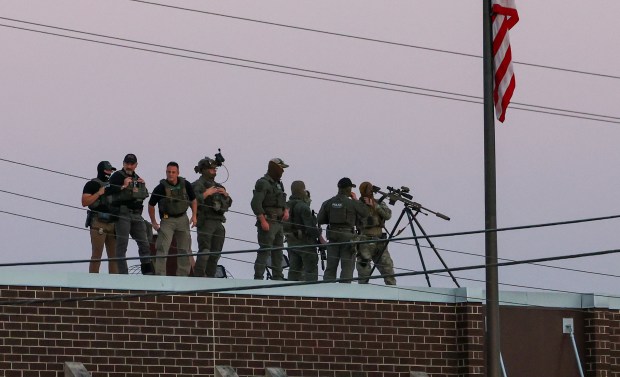
Federal agents stand on the roof of the U.S. Immigration and Customs Enforcement holding facility in Broadview on Oct. 3, 2025. (Stacey Wescott/Chicago Tribune)
Illinois State Police troopers line up along Harvard Street near the U.S. Immigration and Customs Enforcement holding facility in Broadview on Oct. 3, 2025. (Stacey Wescott/Chicago Tribune)
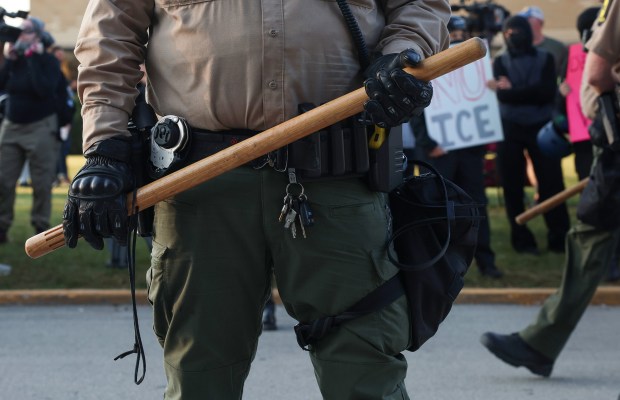
Illinois State Police troopers line up along Harvard Street and prevent protesters from standing on the street and blocking federal vehicles near the U.S. Immigration and Customs Enforcement holding facility in Broadview on Oct. 3, 2025. Some troopers were armed with additional clubs, rifles, and shielded helmets. (Stacey Wescott/Chicago Tribune)
Broadview police hold back protesters from stopping vehicles at Harvard Street and 25th Avenue near the U.S. Immigration and Customs Enforcement holding facility in Broadview on Oct. 3, 2025. (Stacey Wescott/Chicago Tribune)
A protester recovers after being sprayed in the face by a federal agent along the fence on Sept. 28, 2025, at the U.S. Immigration & Customs Enforcement facility in Broadview. (Brian Cassella/Chicago Tribune)
People pray on Sept. 28, 2025, near the U.S. Immigration & Customs Enforcement facility in Broadview. (Brian Cassella/Chicago Tribune)
Federal agents stand inside the fence on Sept. 28, 2025, at the U.S. Immigration & Customs Enforcement facility in Broadview. (Brian Cassella/Chicago Tribune)
Federal agents escort a detainee into the facility on Sept. 28, 2025, at the U.S. Immigration & Customs Enforcement facility in Broadview. (Brian Cassella/Chicago Tribune)
Protesters rally on Sept. 28, 2025, near the U.S. Immigration & Customs Enforcement facility in Broadview. (Brian Cassella/Chicago Tribune)
A protester wipes his eyes after being sprayed by a federal agent through a fence at the Immigration and Customs Enforcement facility in Broadview on Sept. 27, 2025. (Dominic Di Palermo/Chicago Tribune)
U.S. Border Patrol Chief Greg Bovino leads detainees into the ICE facility in Broadview on Sept. 27, 2025. (Dominic Di Palermo/Chicago Tribune)
A protester yells at a federal agent attempting to enter the ICE facility in Broadview on Sept. 27, 2025. (Dominic Di Palermo/Chicago Tribune)
A protester gets treated after being sprayed by a federal agent through a fence at the ICE facility in Broadview on Sept. 27, 2025. (Dominic Di Palermo/Chicago Tribune)
A detainee is unloaded from a vehicle before being brought into the ICE facility in Broadview on Sept. 27, 2025. (Dominic Di Palermo/Chicago Tribune)
Logan Woodrum, of Pontiac, protests from the top of his car outside of the ICE facility in Broadview on Sept. 27, 2025. (Dominic Di Palermo/Chicago Tribune)
A protester and veteran who served in Iraq flies the American flag upside down during a protest at the ICE facility in Broadview on Sept. 27, 2025. (Dominic Di Palermo/Chicago Tribune)
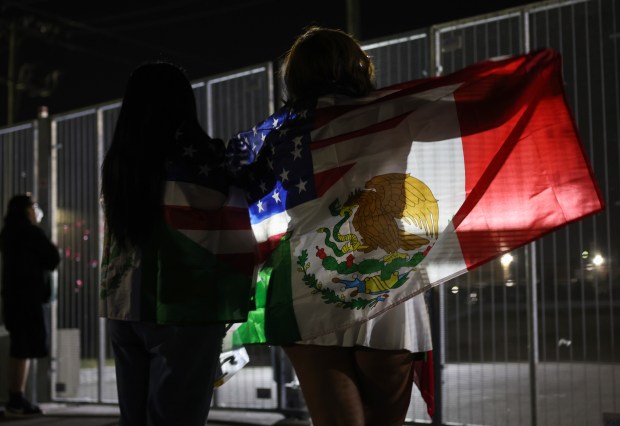
A demonstrator adjusts a flag draped over her back depicting a combined U.S. and Mexico flag while standing outside a fenced-in ICE facility on Sept. 26, 2025, in Broadview. (John J. Kim/Chicago Tribune)
A protester is detained by ICE agents outside the ICE facility in Broadview, Sept. 26, 2025. (E. Jason Wambsgans/Chicago Tribune)
Protesters clash with federal agents outside the ICE facility in Broadview, Sept. 26, 2025. (E. Jason Wambsgans/Chicago Tribune)
Protesters clash with ICE agents outside the U.S. Immigration and Customs Enforcement holding facility in Broadview, Sept. 26, 2025. (E. Jason Wambsgans/Chicago Tribune)
Protesters clash with ICE agents outside the U.S. Immigration and Customs Enforcement holding facility in Broadview, Sept. 26, 2025. (E. Jason Wambsgans/Chicago Tribune)
ICE agents move back into the U.S. Immigration and Customs Enforcement holding facility while facing off with protesters in Broadview, Sept. 26, 2025. (E. Jason Wambsgans/Chicago Tribune)
Federal agents escort a vehicle from the U.S. Immigration and Customs Enforcement holding facility in Broadview, Sept. 26, 2025. (E. Jason Wambsgans/Chicago Tribune)
A U.S. Immigration and Customs Enforcement agent fires rounds at protesters on 25th Avenue near the holding facility in Broadview, Sept. 26, 2025. (E. Jason Wambsgans/Chicago Tribune)
Protesters flinch as ICE agents fire rounds at them in traffic on 25th Avenue near the holding facility in Broadview, Sept. 26, 2025. (E. Jason Wambsgans/Chicago Tribune)
An ICE agent chases a protester into residential yard near the ICE holding facility in Broadview, Sept. 26, 2025. (E. Jason Wambsgans/Chicago Tribune)
ICE agents help an injured colleague after chasing a protester through traffic on 25th Avenue and into a residential yard near the ICE holding facility in Broadview, Sept. 26, 2025. (E. Jason Wambsgans/Chicago Tribune)
U.S. Immigration and Customs Enforcement agents help an injured colleague after chasing a protester through traffic on 25th Avenue and into a residential yard near the ICE holding facility in Broadview, Sept. 26, 2025. (E. Jason Wambsgans/Chicago Tribune)
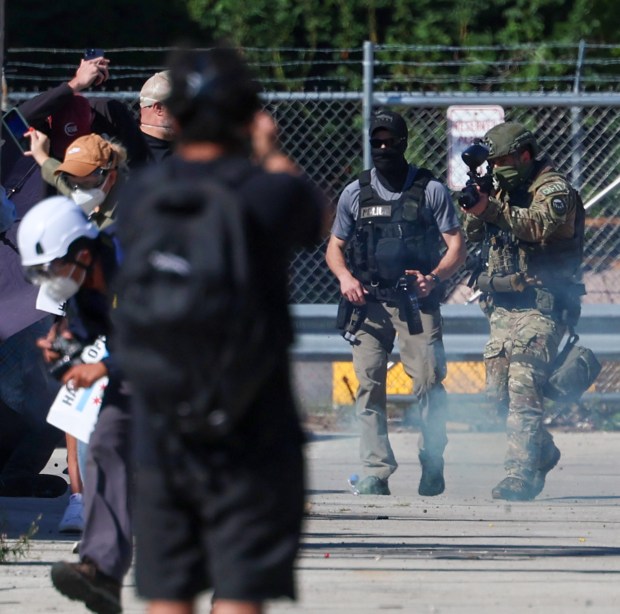
A federal agent points his rifle of pepper balls at a protester near Harvard Street and 25th Avenue a block from the U.S. Immigration & Customs Enforcement facility on Sept. 26, 2025, in Broadview. (Stacey Wescott/Chicago Tribune)
Protesters chant as they walk across Harvard Street near the U.S. Immigration & Customs Enforcement holding facility on Sept. 26, 2025, in Broadview. (Stacey Wescott/Chicago Tribune)
A protester holds a sign as federal agents move toward demonstrators near the U.S. Immigration & Customs Enforcement facility in Broadview, Sept. 26, 2025. (Antonio Perez/Chicago Tribune)
Federal agents fire baton rounds at demonstrators near the U.S. Immigration & Customs Enforcement facility in Broadview, Sept. 26, 2025. (Antonio Perez/Chicago Tribune)
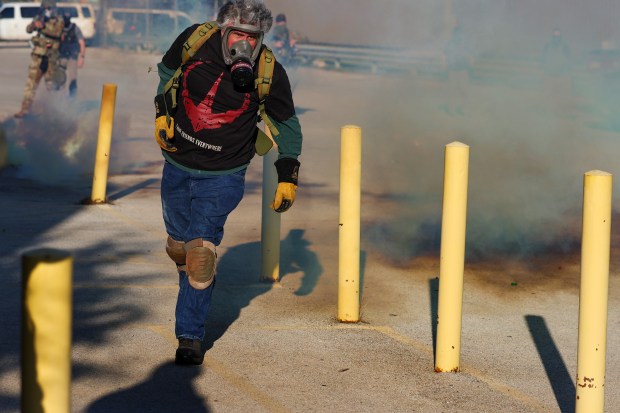
A protester runs away from federal agents firing chemical gas at him along Harvard Street near the U.S. Immigration & Customs Enforcement facility on Sept. 26, 2025, in Broadview. (Stacey Wescott/Chicago Tribune)
Baton rounds fired toward protesters outside the U.S. Immigration & Customs Enforcement facility in Broadview are seen Sept. 26, 2025. (Antonio Perez/Chicago Tribune)
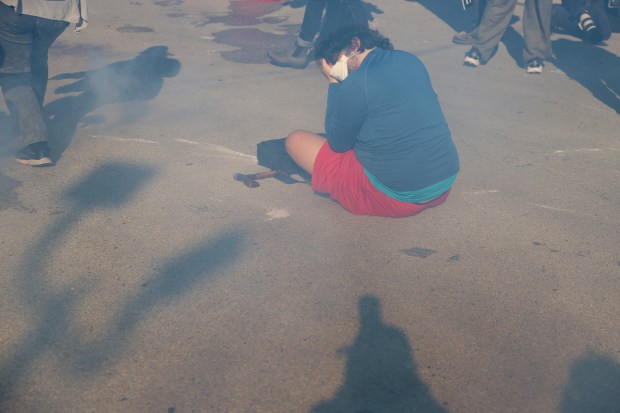
A protester covers his face as chemical gas surrounds him along Harvard Street near the U.S. Immigration & Customs Enforcement facility on Sept. 26, 2025, in Broadview. (Stacey Wescott/Chicago Tribune)
Federal agents move toward protesters at 25th Street near the U.S. Immigration & Customs Enforcement facility in Broadview, Sept. 26, 2025. (Antonio Perez/Chicago Tribune)
Levi Rolles is seen with several bruises from baton shots outside the U.S. Immigration and Customs Enforcement holding facility in Broadview, Sept. 26, 2025. (Antonio Perez/Chicago Tribune)
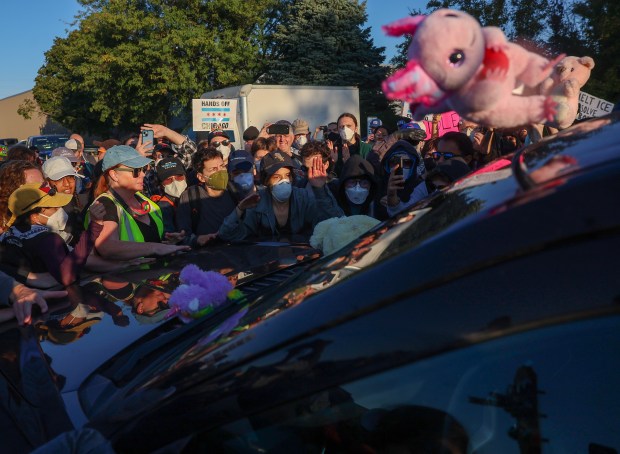
Protesters surround the SUV of a federal agent and try and prevent him from driving down Harvard Street to the U.S. Immigration & Customs Enforcement facility on Sept. 26, 2025, in Broadview. Protesters and federal agents faced off throughout the morning. Federal agents used several kinds of chemical gas, baton rounds, and arrested at least two people while protesters refused to clear the street. (Stacey Wescott/Chicago Tribune)
People pray outside the U.S. Immigration and Customs Enforcement holding facility in Broadview, Sept. 26, 2025. (Antonio Perez/Chicago Tribune)
A federal agent points his rifle full of pepper balls at protesters along Harvard Street near the U.S. Immigration & Customs Enforcement facility on Sept. 26, 2025, in Broadview. (Stacey Wescott/Chicago Tribune)
A protester holds up her phone and backs away from federal agents shooting chemical gas at protesters along Harvard Street near the U.S. Immigration & Customs Enforcement facility on Sept. 26, 2025, in Broadview. Federal agents used several kinds of chemical gas, baton rounds and arrested at least two people after protesters refused to clear the street. (Stacey Wescott/Chicago Tribune)
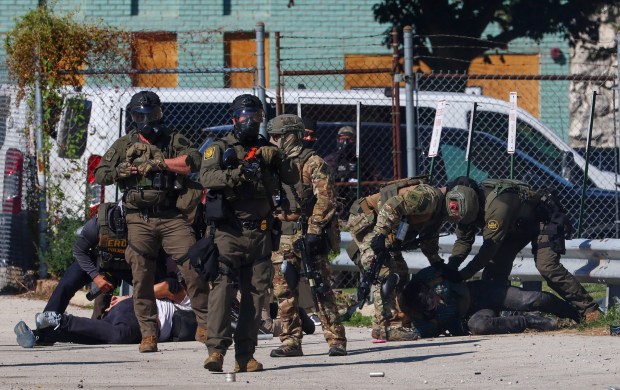
Federal agents surround and arrest two protesters along Harvard Street near the U.S. Immigration & Customs Enforcement facility on Sept. 26, 2025, in Broadview. (Stacey Wescott/Chicago Tribune)
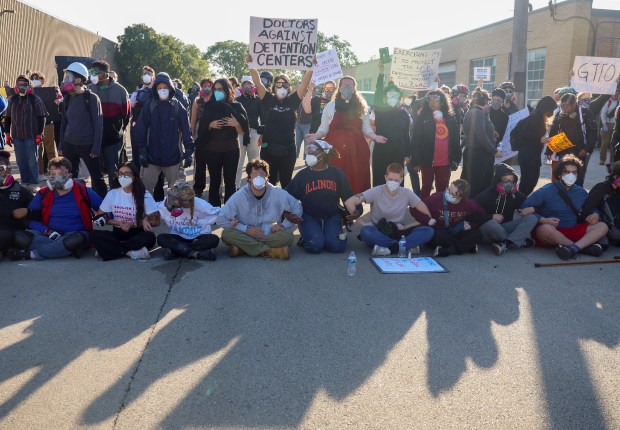
Protesters lock arms and block Harvard Street while federal agents stand guard at a gate leading to the U.S. Immigration & Customs Enforcement facility on Sept. 26, 2025, in Broadview. Protesters and federal agents faced off throughout the morning. (Stacey Wescott/Chicago Tribune)
Protesters gather outside the U.S. Immigration & Customs Enforcement facility in Broadview, Sept. 26, 2025. (Antonio Perez/Chicago Tribune)
Broadview police officers move protesters as they try and clear a path for federal agents to exit Harvard Street near the U.S. Immigration & Customs Enforcement facility on Sept. 26, 2025, in Broadview. (Stacey Wescott/Chicago Tribune)
A protester holds up a sign in the early hours of the morning before the start of confrontations with federal agents along Harvard Street near the U.S. Immigration & Customs Enforcement facility on Sept. 26, 2025, in Broadview. (Stacey Wescott/Chicago Tribune)
Curtis Evans, of Evanston, carries a U.S. flag through gas deployed by federal officers as they clear protesters from the entrance of the Immigration and Customs Enforcement facility in Broadview on Sept. 19, 2025. Evans said he was a Marine during President Ronald Reagan’s term. (Stacey Wescott/Chicago Tribune)
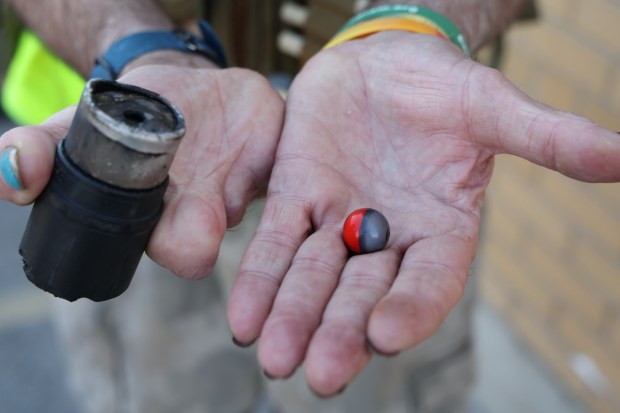
A chemical agent canister sits on the ground after being used on protesters outside the Immigration and Customs Enforcement building on Sept. 19, 2025, in Broadview. (Armando L. Sanchez/Chicago Tribune)
A protester is shot with a pepper ball outside the Immigration and Customs Enforcement building on Sept. 19, 2025, in Broadview. (Armando L. Sanchez/Chicago Tribune)
Federal law enforcement officers detain a protester outside the Immigration and Customs Enforcement building on Sept. 19, 2025, in Broadview. (Armando L. Sanchez/Chicago Tribune)
A protester who was shot with pepper balls while blocking a federal law enforcement vehicle leans against a fence outside the Immigration and Customs Enforcement building on Sept. 19, 2025, in Broadview. (Armando L. Sanchez/Chicago Tribune)
Federal agents stand on the roof of the Broadview Immigration and Customs Enforcement facility and watch protesters below on Sept. 19, 2025, in Broadview. (Stacey Wescott/Chicago Tribune)
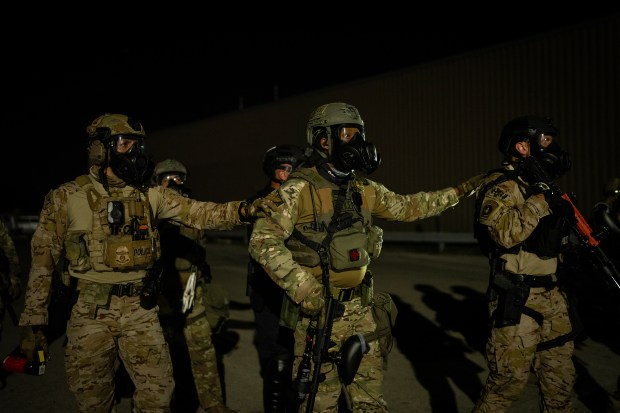
Federal officers clear protesters from the entrance of the U.S. Immigration and Customs Enforcement holding facility in Broadview, Sept. 19, 2025. (Stacey Wescott/Chicago Tribune)
Federal agents attempt to clear protesters from the street to make way for vehicles and officers to enter an Immigration and Customs Enforcement facility, Sept. 12, 2025, in Broadview. (Armando L. Sanchez/Chicago Tribune)
1 of 109
Law enforcement officers watch people protest outside the U.S. Immigration and Customs Enforcement holding facility in Broadview on Nov. 1, 2025. (Armando L. Sanchez/Chicago Tribune)
Unlike typical law enforcement agencies, ICE does not release complete lists of those arrested, but the agency periodically has been forced to release raw data of its activities under an open records lawsuit. That data has helped document the dramatic escalation of enforcement efforts in Chicago and across the country, although it doesn’t list enough details to make precise measurements of specific enforcement actions.
The best window into local impacts of Operation Midway Blitz appears to come from tallying those immigrants living in the U.S. without permanent legal status who were booked into either of two Chicago area ICE facilities — a main temporary holding jail in west suburban Broadview and an office in the South Loop. And those figures show 1,895 people booked into either facility between Sept. 8, the announced start of Operation Midway Blitz, and Oct. 15, the most recent data available.
Because some detainees were booked multiple times, ICE recorded a total of 1,912 bookings in that period — a significant boost in the pace of detentions that steadily climbed to an average of nearly 70 a day by mid-October. That’s roughly double the arrest rate in early June, the most intense immigration enforcement period prior to Operation Midway Blitz.
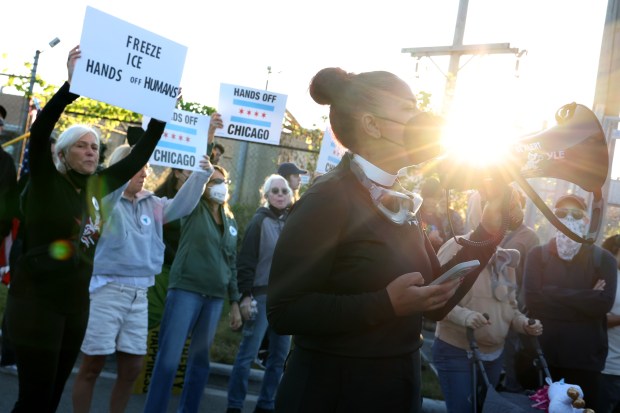
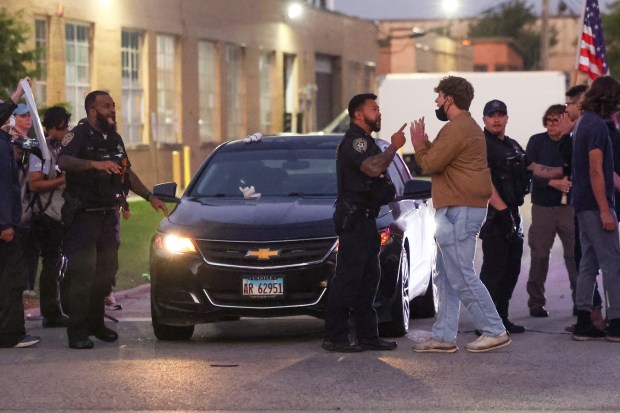
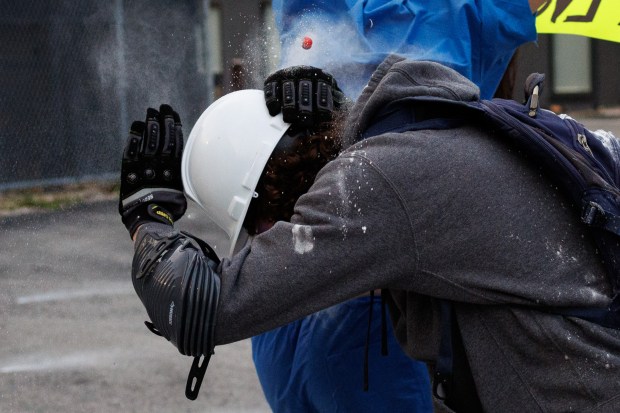
Nearly all the bookings occurred in Broadview, under the shadow of regular, sometimes confrontational protests. The nondescript building — a way station with large holding cells meant for stays less than 12 hours — rarely saw more than a handful of bookings a day under the waning days of the administration of President Joe Biden. Since Trump regained office, the facility at times has seen more than 100 people jammed there for days without beds, showers or hot food, which sparked a federal lawsuit alleging inhumane conditions.
Still, those figures may not capture those arrested and booked into another facility outside the region. DHS has broadly defined the boundaries of Operation Midway Blitz, including arrests in northwest Indiana, for example. By DHS’ calculations, agents had arrested more than 4,300 during the operation “including rapists, murderers, and gang members.”
In its Tuesday statement, the agency did not break down how many of those arrested lacked any criminal records before their arrest but cautioned that such breakdowns may miss detainees who lack rap sheets in America but have them in their home countries or others outside the United States. The agency, however, did not provide any information about how many detainees had been accused of crimes in their home countries or elsewhere.
Immigrant advocates said the new numbers confirm what they have been hearing from families and volunteers since the start of the operation.
Erendira Rendón, vice president of immigrant justice at The Resurrection Project, said her organization, along with others, has been interviewing affected families and tracking detentions in real time.
“This data proves what we have known all along: This wasn’t about catching criminals. It was about targeting our people based on the color of our skin,” Rendón said. “Immigrants are our people: hardworking, law-abiding families who deserve to live beautiful and full lives free from the fear of being kidnapped by masked men.”
Though the operation, led by U.S. Border Patrol Cmdr. Gregory Bovino, has ended, advocates say immigrants across the region, whether or not they have permanent legal status to live in the country, continue to feel as if they are living under siege.
“Bovino and his ‘gang’ may be gone for now, but our community is still reeling from the assault, still counting the people who’ve been disappeared from our lives, still bracing for the next wave. We can’t truly heal until we’re no longer living under the constant threat of their return,” she said.
Brandon Lee of the Illinois Coalition for Immigrant and Refugee Rights said the figures underscore DHS’ lack of transparency about the operation, noting that the agency has not provided a breakdown of arrests or disclosed where many detainees were taken. They said the newly released numbers further support allegations that agents used unconstitutional tactics, racially profiling Latinos, “arresting first and asking questions later.”
“Trump and other MAGA-aligned officials have long targeted Chicago and Illinois for living out our welcoming values, and we knew from the start that this administration would be targeting our communities, including citizens and noncitizens alike,” Lee said. “The numbers are jarring but unsurprising, and it sounds an alarm that goes beyond our state.”