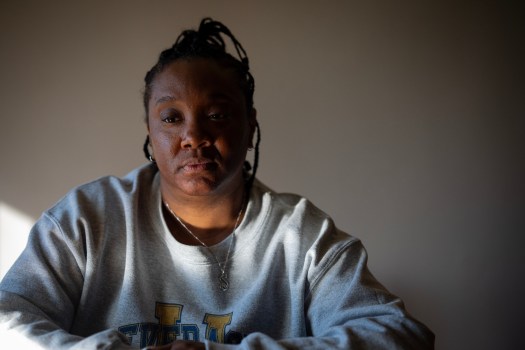

Shana Everage was in bed when she heard the back door of her Broadview home open in the early morning hours of Sept. 16. She didn’t know it at that moment, but it was her older sister Nerissa, who lived just up the street, letting herself in.
Shana got up to use the bathroom wondering what the noise was. That’s when she saw Nerissa in the room where they used to sleep when they were little. She was sitting on the bed with her head in her hands, their mom Joycelyn in the room with her.
That was the last night the three of them spent together.
Assistant principal among three dead in ‘domestic-related’ shooting outside Berwyn middle school
Three months ago, Nerissa Lee and Joycelyn Everage were fatally shot outside of the Berwyn middle school where Nerissa worked as an assistant principal. They were killed, police say, by Nerissa’s husband, Steven Lee, who then turned the gun on himself. Berwyn police have since closed their investigation into the shooting, deeming their deaths “domestic-related” and Steven the sole offender.
“When I wake up each morning,” Shana said, “I wake up to that reality.”
Tensions had been building for weeks ahead of the shooting, interviews with loved ones of the couple and records obtained by the Tribune show. Because of Steven’s erratic behavior, Illinois State Police had revoked his firearm license and local authorities tried at least twice to remove guns from the couple’s home.
But their story is not theirs alone.
To date, tens of thousands of Illinois residents with revoked firearm licenses may still have guns, a gap born out of an enforcement process that on paper seems strong but in effect, is extremely limited, experts say. The public safety risk is one authorities have warned about — and seen the implications of — for years.
The broken system was exposed in 2019, when a disgruntled employee opened fire at the Henry Pratt Co. warehouse in Aurora, killing five co-workers and wounding five officers before dying in a shootout with police. The gunman, a convicted felon, had his FOID card revoked in 2014 but was never forced to relinquish the handgun he used in the shooting.
Seven months after the Pratt fatalities, a Joliet man fatally shot his 18-month-old son with a .22-caliber Ruger — one of at least three handguns in his possession despite having his FOID card rescinded more than a year earlier.
Still, despite the mounting deaths and even money funneled toward closing the gap, the state has remained unable to ensure that people surrender their weapons after their FOID cards are rescinded.
The consequence of the unchecked risk is one Shana knows intimately. She now has no immediate family, having lost her father to illness six years ago.
“It’s just me now,” she said.
Eleven weeks
The crisis began this summer.
On June 30 at 1:42 p.m., Nerissa called 911 for a well-being check on her husband, according to police reports obtained by the Tribune through a Freedom of Information Act request. The couple lived in Broadview, just up the street from Nerissa’s family home.
Nerissa told dispatch that Steven sent her a text message threatening to end his life. She also stated that her husband had several firearms in the home, including a rifle.

Nerissa was not home when officers arrived to check on him, records state. Steven told officers that he didn’t need a medical or mental health evaluation.
Police took no further action.
The next day, police verified that Steven was licensed to purchase and carry a firearm, and contacted the state police firearms safety unit over Steven’s alleged threat of suicide, records state. Statute requires law enforcement officers to inform the state police when someone poses a “clear and present” danger to themselves or others.
On July 2, in a phone conversation with police, Nerissa said Steven had been acting unusual for two weeks, though she denied any physical abuse. She also said she had temporarily moved out because of his behavior — which was later described by family as accusatory and irate — but recently returned. Steven had plans to see a doctor. Police went to the couple’s home, but no one answered.
A day later, police officially filed a clear and present danger report with the state police. Affirming Broadview’s report, state police revoked Steven’s firearm license on July 7, spokeswoman Melaney Arnold confirmed to the Tribune.
Ten weeks
Illinois is one of 11 states that require gun owners to get a license — a firearm owner’s identification (FOID) card — before buying a firearm. Cards can be revoked for a number of reasons, from felony indictments to mental health concerns but the bulk are due to an affirmed clear and present danger report, according to Arnold.
When a FOID card is revoked, state police notify the cardholder by email and written notice. Rescinded cardholders are then required by law to surrender their cards to their local police department within 48 hours and turn in any guns they have to police — or to someone who is a legal gun owner — then self-attest they’ve met those requirements to the state.
Alongside notifying the cardholder, state police also alert local authorities.
In practice, enforcement is a difficult process, said Kristen Ziman, former police chief of Aurora who, after leading the department through the Pratt mass shooting, has become a speaker and author on law enforcement risk management. The problem is that while FOID revocation removes the legal right to possess firearms, Ziman said, it does not remove the firearms themselves. That onus, when people are noncompliant, falls to law enforcement officers.
Arnold, in a statement to the Tribune, maintained the state police are not the only agency statutorily mandated by the law to bring residents under compliance with firearm enforcement, noting that noncompliance is a Class A misdemeanor and that “every law enforcement agency in Illinois is responsible for enforcing the law.”


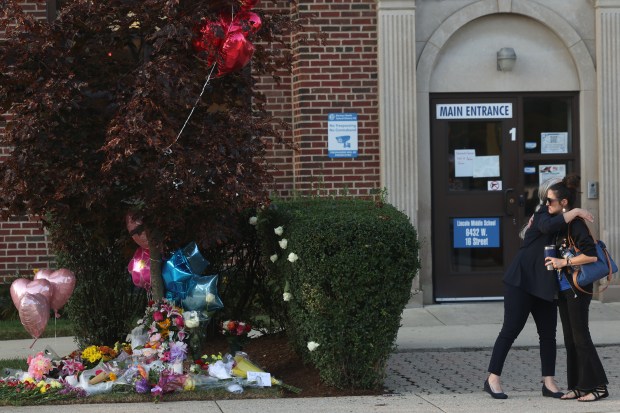
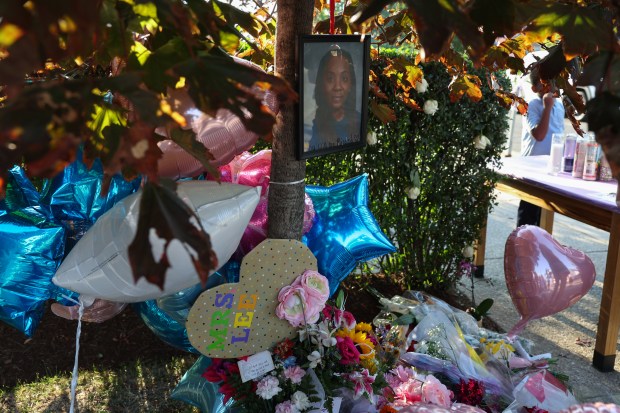
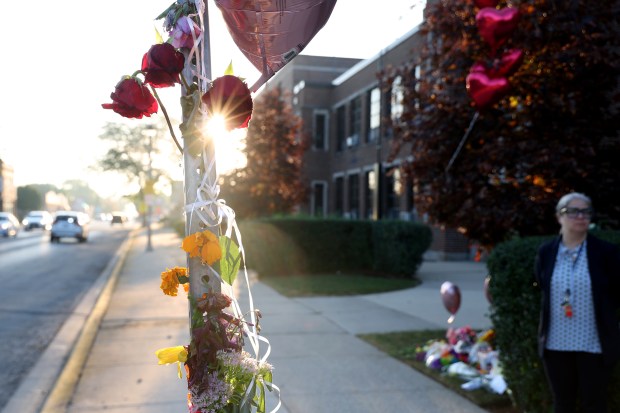
But with thousands of revocations surfacing each year, authorities must weigh resources, risk and available information to determine when ensuring compliance is urgent and beyond that, feasible.
State police sent the first notification to municipal and county law enforcement that Steven was not in compliance on July 8.
A day later, after determining that Steven had two firearm transactions on his record, a Broadview investigator made a home visit but there was no response, police records show.
The investigator left a business card.
Police again returned to the couple’s home July 14 and this time, Steven answered. Officers advised Steven that his FOID card had been revoked and that he must turn over the card and any firearms in his possession. Steven refused and asked why. Police reiterated that he was no longer deemed eligible to possess either and that he needed to reach out to the state police for further information.
Steven stated he was calling the state police and closed the door.
Nine weeks
As the summer passed, neighbor Carissa Gillespie was in the dark about the risk next door.
For eight years, her family lived behind Nerissa and Steven. Their backyards were divided by a fence. A longtime teacher, Gillespie had met Nerissa years before they were neighbors, when they both worked at Proviso West High School in Hillside. But it was across the shared fence that Gillespie met Steven. He was doing yardwork.
“He was always very polite,” she said. “Very soft-spoken.”
She couldn’t imagine him with a gun.

Per state police data going back to 2009 through Dec. 4, there are 107,342 Illinois residents who have lost their right to own guns but a backlog of about 74,733 of those revoked cardholders, or nearly 70%, have yet to tell the state they aren’t in possession of any firearms.
Since 2022, the state police have awarded grants to help local authorities conduct revocation enforcement. The Broadview Police Department has been a consistent grantee since state support became available, receiving just over $31,700 between fiscal years 2024 and 2026 according to state police reports. Still, budget-wise, the sum is relatively small, with the village’s public safety expenditures for 2026 totaling more than $16 million alone, per budget reports online.
Because the agency covers the entire state, state police prioritize conducting firearm enforcement in communities that have not received grants, according to Arnold. But the agency will step in when asked by local authorities, she said.
Broadview police did not communicate with or request help from state police in Steven’s case, according to Arnold.
State law also allows — but does not require — local authorities to seek a warrant to search for and seize a person’s revoked FOID card and any firearms they have if they refuse to obey.
However, officers cannot get a search warrant based on suspicion alone, said Ziman. Even if police believe a person has firearms, they need probable cause, she said. That could include police observations or, say, a witness attesting to the presence of guns.
Broadview spokesperson David Ormsby did not answer questions whether police sought or acquired a search warrant in Steven’s case, choosing instead to send an email statement that read, “This was a tragic event and should further show how important (it is) we all continue to support domestic violence initiatives and all the victims.”
A spokesperson for the Cook County state’s attorney’s office, when asked if the office had been contacted over a search warrant for Steven, stated, “We were not contacted by police regarding this matter.”
By July 22, state police had sent a second notification to local authorities that Steven was not in compliance.
The Cook County sheriff’s office, in a written statement to the Tribune, noted that its primary area of responsibility for FOID enforcement is unincorporated Cook and that it has no backlog of cases. As for investigating cases in other jurisdictions, the sheriff’s office stated that it routinely does but in parts of the county where local police departments do not have the resources or grant funding to engage in this kind of work.
“In this case,” the office said, “Mr. Lee was a resident of the village of Broadview and the sheriff’s office had no involvement” with investigating.
State police sent a third noncompliance notification Aug. 5.It was around then that Gillespie last saw Steven in the yard.
“We gave each other gardening … advice. We (didn’t) go to the fence and talk about what guns … you have in your house,” she said. “And that’s the part that’s scary. That it’s that close, yet in your mind it’s so far away.”
19 hours
Police arrived at the couple’s home late in the evening on Sept. 15. Steven wasn’t there, Broadview police records show. Nerissa, speaking with a responding officer, stated that before calling, Steven threatened to hurt her if she didn’t hand him the key to a safe that had two firearms inside. Nerissa gave him the key.
Steven took the safe and briefly walked away, only to return and point two guns at Nerissa.
Nine weeks had passed since Steven refused police. By then, state police had sent two more noncompliance notifications.
Broadview did not address questions over whether additional checks were made after mid-July or what capacity local authorities had to further pursue compliance. Questions about whether police responded to the state police noncompliance notifications also went unanswered.
Records provided to the Tribune do not reflect further checks after July 14.
After Steven pointed at Nerissa the guns he was deemed too dangerous to have, he threw her on the bed and choked her. Ultimately, he left with a gun in hand and drove away in her car, Nerissa told police.
Steven sent Nerissa a text that night that read, “Love you.” Police took Nerissa to her family home down the street.
The next morning, Nerissa was still keen to go to work at Lincoln Middle School, Shana said. Their mother dropped Nerissa off at the Berwyn campus. That was the last time Shana saw her big sister.
At 1:30 p.m., Broadview police spoke with Nerissa and advised her to come into the police station immediately. Police also informed her that they would be seeking an arrest warrant against Steven for aggravated domestic battery. Nerissa agreed to go after work around 5 p.m.
At 2:50 p.m., police made contact with Steven and likewise told him to come speak with police, to which Steven said he’d come by that evening.
The plan was for both Shana and her mother to pick up Nerissa from school so together, they could take her to the police station, Shana said. But after what Shana called a “divine intervention,” she didn’t get in the car. Her mother left to pick Nerissa up alone.

At 4:05 p.m., Berwyn police officers responded to Lincoln Middle after hearing gunfire nearby, the department said in a news release at the time. When officers arrived, they found a man, later identified as Steven, firing a rifle into another vehicle. The school was placed on lockdown.
Five o’clock came and went and Nerissa didn’t show up at the Broadview station.
By 5:15 p.m., Nerissa, Joycelyn and Steven had all been pronounced dead, Cook County medical examiner records show. Nerissa and Joycelyn died of multiple gunshot wounds in a homicide, the medical examiner’s office determined through an autopsy. Steven died of a shot in the head in a suicide, the office said.
State police sent a sixth, and final, noncompliance notification that day.
‘I thought we had time’
Born and raised in Arkansas, Joycelyn moved to Chicago at 18 years old. That’s where she met Shana and Nerissa’s father, Sherman Everage Jr., an Alabama native who had landed in the city after a stint in the military. They were together 52 years, married for 50, Shana recalled in a series of interviews with the Tribune. As she spoke, she wore a gray sweatshirt with the family name: “Everage.”
Joycelyn spent her career working with medical records in hospitals while Sherman was a grade school teacher. Shana and Nerissa were in elementary school when their parents moved into the Broadview home where Shana and Nerissa grew up, and where Shana still lives.

Joycelyn’s loved ones described her as a God-fearing woman who didn’t tolerate nonsense. But she loved flowers, and Nona McCullum, who knew Joycelyn for more than 40 years, said she was a good friend.
Over the decades, between kids and different addresses and deaths, it was hard to see each other often, McCullum said. But this summer, they had made a plan to have lunches on the regular. They only made it once.
McCullum’s voice broke: “I thought we had time.”
As an adult, Nerissa followed in her father’s footsteps and pursued a career in teaching. Over the years, she climbed the ranks from teacher to administrator. Along the way, she met Steven when she taught at the same school he did janitorial work, according to Shana.
A private person, she and Steven married in the courthouse in 2014.
Nerissa loved her work, Shana said. Former colleagues remembered Nerissa as funny, a good listener and thoughtful. Students built a natural rapport with her.
It was just two years ago that Nerissa became assistant principal of Lincoln Middle School. Shana said their father especially, who died in 2019, would have been proud of Nerissa.
Shana recalled, in the months after their father’s death, gifting Nerissa a small apple-shaped keychain that read “No. 1 Teacher” for Christmas. Nerissa carried the keychain everywhere. She had it up until the day she died.
After
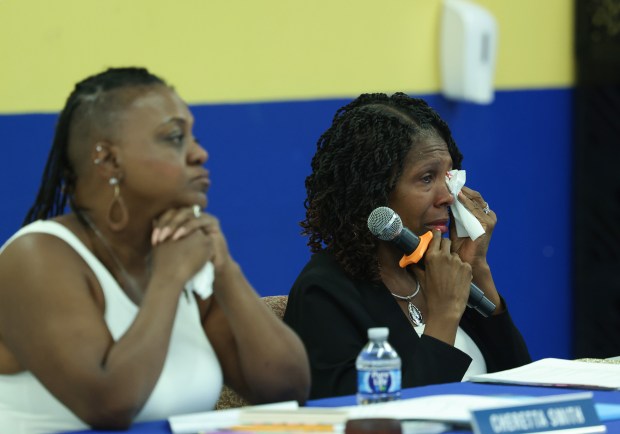
Two days after the shooting, the Berwyn North School District 98 Board of Education met for its monthly meeting. The agenda called for discussions on extending school playground hours and student uniforms but first, board members said a thank you to the community — and a goodbye to their friend.
“While to reporters (Nerissa) was a story,” Superintendent Michelle Smith said at the meeting, “to us she is so much more than that. … To her students, she was the voice that said, ‘You matter, you belong and you can.’ To her peers, she was just a steady hand.”


The afternoon they were killed, Shana and her mother had planned to help Nerissa secure an order of protection, Shana said. She wishes her sister had acquired one earlier.
Earlier this year, Gov. JB Pritzker signed legislation that requires law enforcement agencies to promptly remove guns and FOID cards from those subject to orders of protection. Known as Karina’s Law, the legislation was named after a woman who was shot and killed in Chicago’s Little Village neighborhood in 2023 after she had filed a restraining order against her husband. The action should have required him to give up his gun as the case went through the court system.
“Karina’s Law was designed to support law enforcement in removing firearms from people who are quite likely to commit acts of violence, shootings and homicide,” said Amanda Pyron, executive director of The Network, a Chicago-based organization whose mission is to end gender-based violence.
But there are times — in Nerissa’s case, for example — that people do not secure orders of protection before tensions escalate, leaving them in a liminal space where stopgaps allotted by Karina’s Law don’t yet kick in. In those instances, the hope is that law enforcement, where possible, refer to community-based services that can help, Pyron said.
Sheila Craig, Steven’s sister, told the Tribune in a brief phone call she doesn’t know what happened to her brother and that she wishes there was something she could have done.
“I’m so sorry. … I really hate that this happened,” she said. “He was my brother. I loved him. And I loved Nerissa.”
On a recent afternoon, with the midday sun slipping through her blinds, Shana flicked through the decades of a family album.
“I’m strong,” she said to herself. “I can do this.”
Carefully, she paused to pull prints from the plastic sleeves, from Nerissa in her grade school days sporting red stockings, to her parents, smiling wide, dressed in their Sunday best.
One after another, the memories fanned out before Shana, her loss on full display.