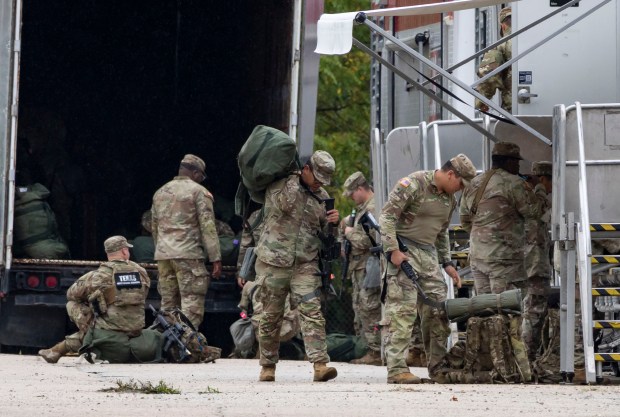


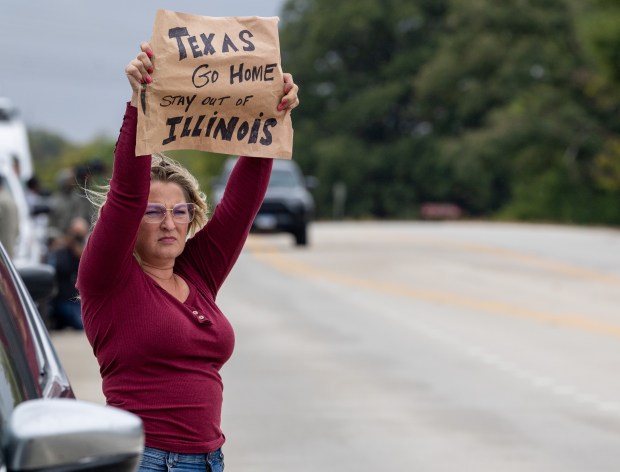





The U.S. Supreme Court on Tuesday denied a request from President Donald Trump’s administration to allow the Republican president to deploy National Guard troops to Illinois streets while a court battle over a restraining order plays out.
The conservative-majority court’s order represents a significant political victory for Gov. JB Pritzker and other Democratic governors in their escalating battle with Trump over his authority to go against their wishes and use federalized troops on U.S. soil to assist immigration enforcement personnel carrying out the president’s mass deportation efforts in Chicago and other American cities.
While considering a Trump motion to stay a lower court’s order blocking the deployment, the Supreme Court asked the administration and the state of Illinois to submit supplemental briefs regarding a provision in federal law that Trump says allows him to dispatch National Guard troops in cases where there is an invasion, a rebellion or a time when the president “is unable with the regular forces to execute the laws of the United States.”
“At this preliminary stage, the Government has failed to identify a source of authority that would allow the military to execute the laws in Illinois,” the order Tuesday said. “Thus, at least in this posture, the Government has not carried its burden to show that (the law) permits the President to federalize the Guard in the exercise of inherent authority to protect federal personnel and property in Illinois.”
The key issue the high court sought briefings on was whether the term “regular forces” means “the regular forces of the United States military,” and if so, how that fits into existing law involving the president’s power to order up the National Guard.
In the order Tuesday, the justices did not find merit to the Trump administration’s argument that “regular forces” refers to civilian law enforcement such as immigration agents.
“We conclude that the term ‘regular forces’ … likely refers to the regular forces of the United States military,” the order said. “This interpretation means that to call the Guard into active federal service … the President must be ‘unable’ with the regular military ‘to execute the laws of the United States.’ Because the statute requires an assessment of the military’s ability to execute the laws, it likely applies only where the military could legally execute the laws.”
Three of the conservative justices, Clarence Thomas, Samuel Alito and Neil Gorsuch, logged dissents, with Thomas and Alito writing that the court “has unnecessarily and unwisely departed from standard practice.”
Unlike a recent appellate ruling allowing troops to be deployed in Oregon, the Supreme Court in this case went against the president’s wishes, at least preliminarily keeping a restraining order in place that currently has no termination date.
In a prepared statement, Pritzker praised the Supreme Court ruling, calling it “a big win for Illinois and American democracy.”
“This is an important step in curbing the Trump Administration’s consistent abuse of power and slowing Trump’s march toward authoritarianism,” the governor said. “American cities, suburbs, and communities should not have to (face) masked federal agents asking for their papers, judging them for how they look or sound, and living in fear that (the) President can deploy the military to their streets. The brave men and women of our National Guard should never be used for political theater and deserve to be with their families and communities, especially during the holidays, and ready to serve overseas or at home when called upon during times of immense need.”
Illinois Attorney General Kwame Raoul, whose legal team has been arguing in court against the federalized deployment of the Illinois National Guard troops during Trump’s Operation Midway Blitz, also welcomed the high court’s ruling.
“Nearly 250 years ago, the framers of our nation’s Constitution carefully divided responsibility over the country’s militia, today’s U.S. National Guard, between the federal government and the states — believing it impossible that a president would use one state’s militia against another state,” Raoul said in a statement. “The extremely limited circumstances under which the federal government can call up the militia over a state’s objection do not exist in Illinois, and I am pleased that the streets of Illinois will remain free of armed National Guard members as our litigation continues in the courts.”
Chicago Mayor Brandon Johnson also declared victory after the ruling, which he billed as the Supreme Court “rebuking President Trump’s attempts to militarize and demonize our city.”
“This decision doesn’t just protect Chicago — but protect cities around the country who have been threatened by Trump’s campaign against immigrants and Democratic-led cities,” the mayor wrote in his statement.
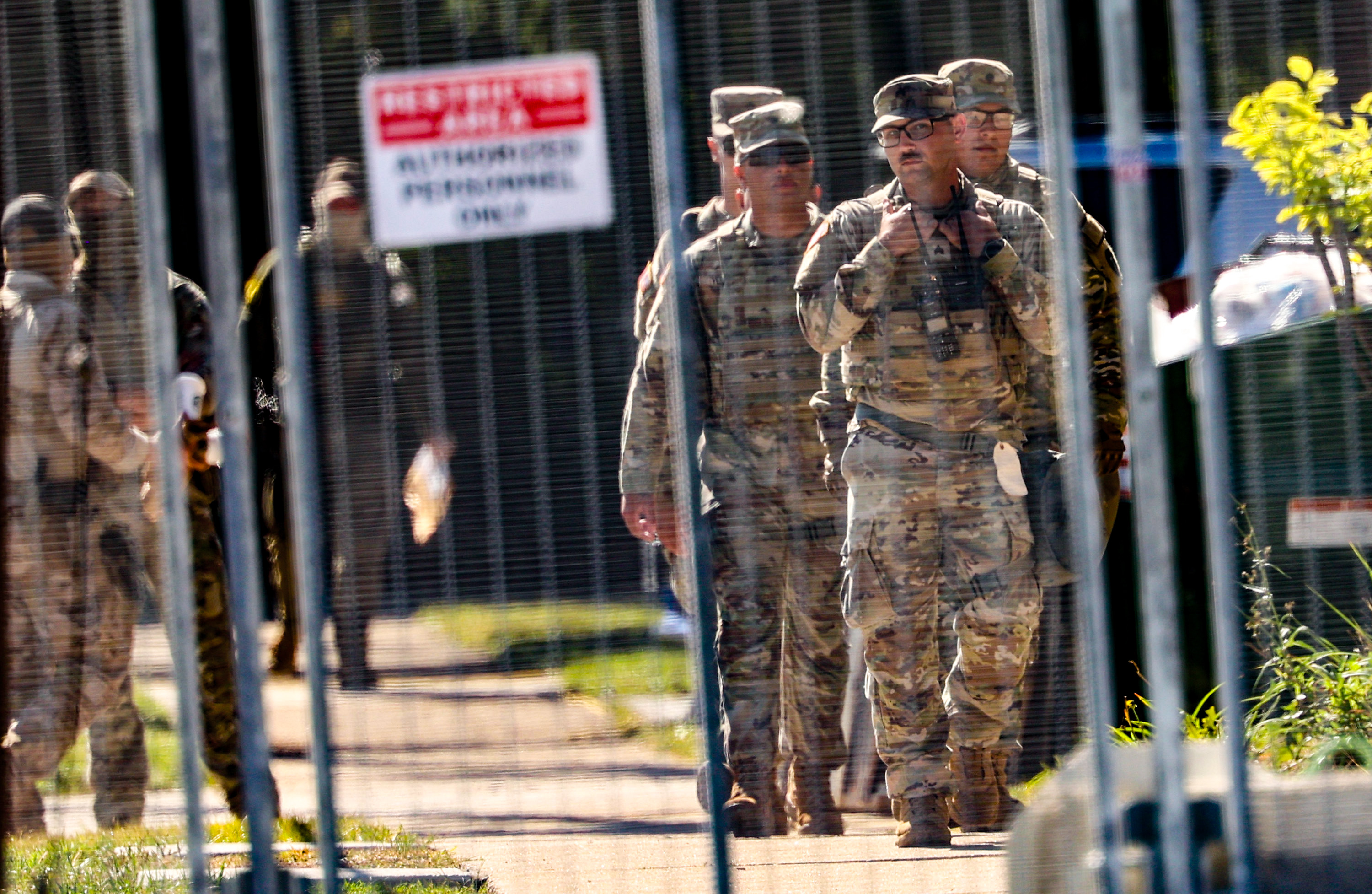
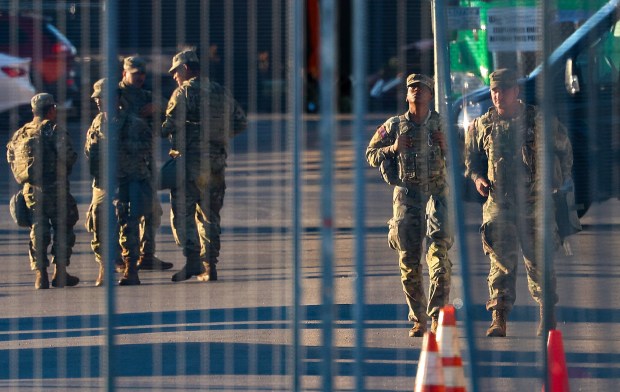
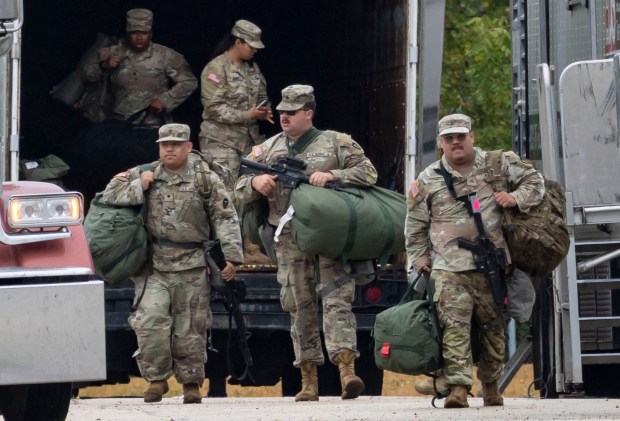
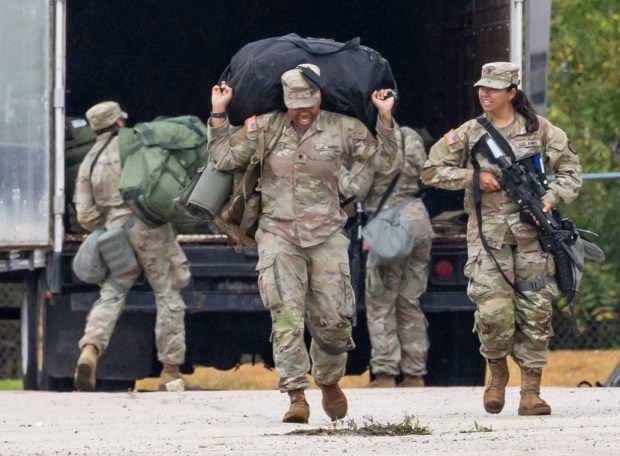
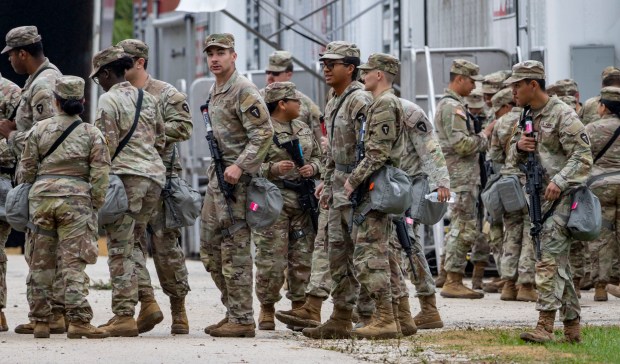
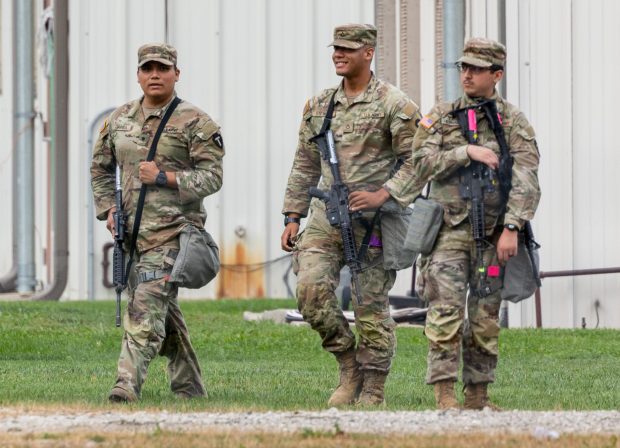
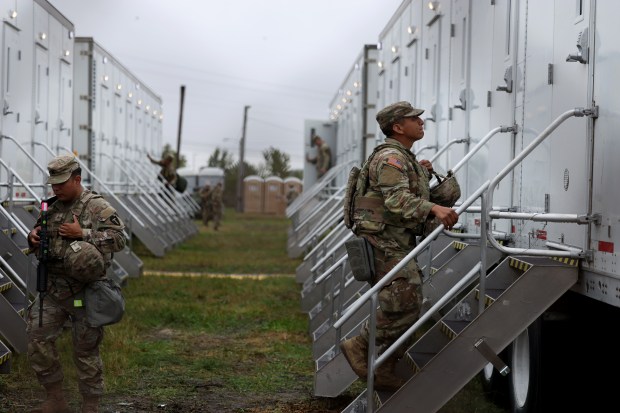
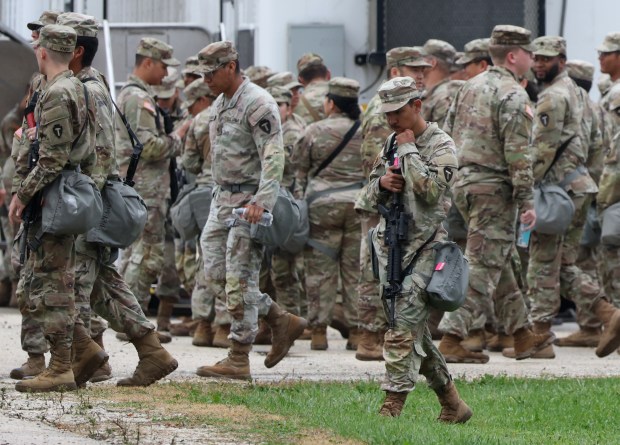
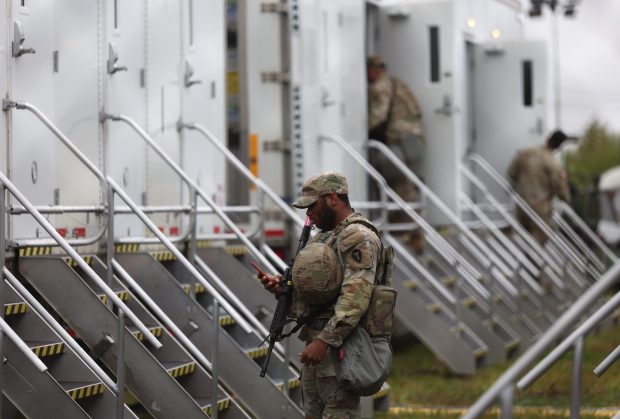
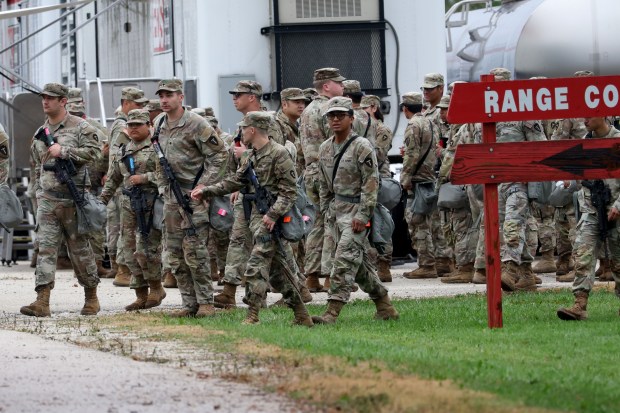
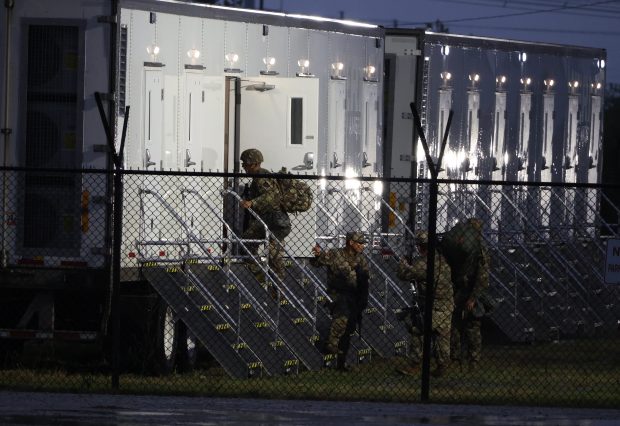
Right now, 300 Illinois National Guard troops remain under Trump’s control over Pritzker’s objections until April 15 to support the Department of Homeland Security’s immigration enforcement efforts under Midway Blitz, even though the guard members have carried out no significant operational missions and have spent most of their time stationed at a northern Illinois base. This is despite the Trump administration’s stated purpose of federalizing the Illinois National Guard members to protect federal officers and assets during the Trump administration’s stepped up immigration enforcement efforts.
But with Tuesday’s Supreme Court ruling, it remains to be seen how much longer those troops will truly remain under the president’s purview.
The Pentagon, U.S. Northern Command, which oversees the National Guard deployments, and the White House would not say whether the 300 federalized Illinois National Guard members would remain under federal control until April. But the White House said in a statement that the Supreme Court ruling will not deter the Trump administration from “working day in and day out to safeguard the American public.”
“The President promised the American people he would work tirelessly to enforce our immigration laws and protect federal personnel from violent rioters,” said White House spokeswoman Abigail Jackson. “He activated the National Guard to protect federal law enforcement officers, and to ensure rioters did not destroy federal buildings and property. Nothing in today’s ruling detracts from that core agenda.”
Gregory Bovino, the tough-talking U.S. Border Patrol commander who has overseen immigration enforcement agents on the ground who’ve engaged in controversial tactics against people protesting their presence, such as using tear gas, took to social media after the Supreme Court ruling, posting: “Don’t worry, Chicago, we will be here for YEARS!”
“Despite calls for violence against our agents, the brave men and women of the United States Border Patrol have come together and developed serious plans to help Chicago rid their streets of criminal illegal aliens,” Bovino said on X, followed by American flag and flexed-arm emojis. “We work for YOU.”
U.S. District Judge April Perry issued a temporary restraining order on Oct. 9 barring National Guard troop deployment in the Chicago area and elsewhere in Illinois, and she later extended the order indefinitely, pending a hearing on a more permanent injunction.
In its filing to the Supreme Court over Perry’s order, the Trump administration called it part of a “disturbing and recurring pattern” that “improperly impinges on the President’s authority and needlessly endangers federal personnel and property.”
It asked that Trump be allowed to deploy some 700 troops in Illinois — 300 from the Illinois National Guard and another 400 federalized out of Texas.
In the 46-page response, the state of Illinois said it would be inappropriate for the high court to get involved at this stage in the proceedings, when a district court’s decision has yet to be decided on appeal.
The filing also said lawyers for Trump offered “no meaningful response” to the factual basis for Perry’s restraining order, adding that declarations submitted by a series of immigration officials outlining purported violence against agents and out-of-control protests simply did not hold water.
Pritzker, one of Trump’s harshest critics, who is seeking a third term as Illinois’ Democratic governor and is eyeing a potential 2028 White House bid, has warned that Trump was attempting to normalize the use of National Guard troops as a militarized mobilization that could be deployed around polling places in the Nov. 3, 2026, general election in an effort to depress Democratic turnout.
Pritzker has criticized Trump for earlier saying violent crime in Chicago warranted the federalization of National Guard troops, while federal law prevents the guard from engaging in standard law enforcement. Trump’s Justice Department later argued the guard troops were needed to protect and allow federal agents to conduct immigration enforcement activities.
But the high court decision said the National Guard could not be called in, absent the use of the regular military to quell disorder — something that would require congressional action.
For months, as Trump threatened National Guard deployment over Pritzker’s opposition, the Democratic governor criticized the president for “overreach.” In August, Pritzker said calling in the National Guard to patrol Chicago streets would be “unprecedented and unwarranted. It is illegal, it is unconstitutional, it is un-American.”
When Perry issued a temporary restraining order in October to prevent the guard’s use, Pritzker hailed the role of the judiciary.
“We’ve always said that we have to rely on the judiciary to be the check and balance on what the president and the Congress are trying to do or sometimes failing to do,” he said. “So we’re going to take them to court. We think we’re going to get the right results, because we know that it’s unconstitutional for him to attack our states and our cities the way that he has.”
The high court’s ruling also helps burnish Pritzker’s image among Democrats looking for a national leader who has been successful in trying to curb Trump’s encroachment on state rights.
In addition to forming a commission to attempt to hold federal immigration officials and agents accountable for their aggressive tactics in Operation Midway Blitz, Pritzker has also moved to separate his administration from the controversial national immunization policies of Trump’s secretary of Health and Human Services, Robert F. Kennedy Jr.
Trump, however, has previously threatened to invoke the two-century-old Insurrection Act to make military deployments on domestic soil that go far beyond the protection of federal assets and agents that were part of his original federalization of the National Guard.
“I’d do it if it was necessary. So far it hasn’t been necessary, but we have an Insurrection Act for a reason,” Trump told reporters on Oct. 7. “If I had to enact it, I’d do that. If people were being killed and courts were holding us up, or governors or mayors were holding us up, sure, I’d do that.”
In addition, U.S. Sens. Dick Durbin and Tammy Duckworth issued a joint statement praising Tuesday’s Supreme Court ruling while criticizing the president.
“It’s long past time for the Trump Administration to back off Chicago. The majority of Americans believe they’ve gone too far, and even the Supreme Court’s conservative supermajority refused to greenlight this blatantly unlawful overreach,” the two Illinois Democrats said. “Our government is supposed to help our communities — not go to war with them.”
Tribune reporters Rick Pearson and Alice Yin contributed.