NiSource’s new GenCo subsidiary is a novel development. “As far as we know, we may be the first in the country that have kind of come up with this solution,” NIPSCO President Vince Parisi said.
GenCo was set up as a way to supply power to major power consumers like data centers without affecting other customers’ rates. That includes at least 2.3 gigawatts, up to 3 gigawatts, of additional power for data centers.
Amazon Web Services’ plan for a $15 billion data center investment, including in Hobart, puts a sharp focus on NIPSCO’s ability to feed that power-hungry beast.
“We’re in pretty advanced discussions” for other data centers, too, Parisi said.
The Indiana Utility Regulatory Commission is making up rules as it goes along for how to treat this novel entity, Parisi said. That includes not needing rate cases and a few other regulations that don’t seem to apply to GenCo the way they would to NIPSCO. GenCo exists only to generate electricity, not to serve customers.
The IURC will examine the books to keep tabs on accounting and other GenCo functions.
GenCo allows NIPSCO to separate the cost for serving large customers from its core customers, Parisi said. The Indiana Utility Regulatory Commission approved a large rate increase for NIPSCO’s electric customers earlier this year.
For NIPSCO customers, one of the promises made is $1 billion coming back to them as bill credits.
NIPSCO wants to start these monthly bill credits in 2027, growing to about $7 to $9 per month in 2032 for a residential electric customer, with the amount adjusted every six months for the remainder of the 15-year contract with GenCo.

“We haven’t spent a lot of time on this,” Parisi said, but GenCo will be a natural gas customer as well. “There is a gas benefit, but that will be a little bit down the road,” he said.
Ashley Williams, executive director of Just Transition Northwest Indiana, is among the skeptics. “History has shown us we cannot trust NIPSCO to manage this AI data center boom. We are highly skeptical of the NIPSCO GenCo and Amazon agreement,” she said.
“Customers are being asked to rely on a utility that already charges the highest rates in the state, is under investigation for billing discrepancies, and is steadily revealing its true priorities: profiting from this boom, abandoning its renewable energy commitments, and locking us into a fossil-fueled past,” she said.
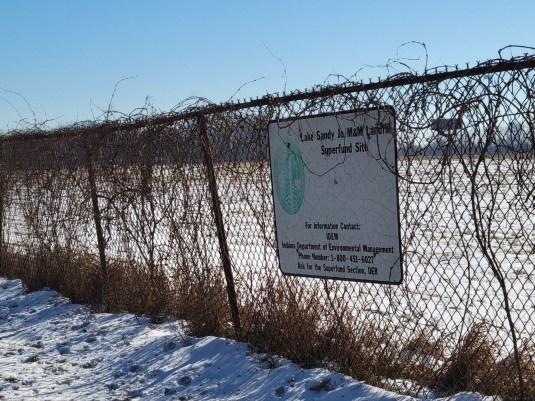
“Right now, NIPSCO is making a complete 180, pivoting to build new dirty gas plants specifically to power these data centers, while simultaneously seeking federal extensions to delay cleaning up its toxic coal ash waste,” Williams said.
“This is a monopoly utility whose duty is to generate profit for shareholders, not to protect ratepayers. It’s time we demand accountability from GenCo and decision-makers, not acquiesce,” she said.
Parisi offered counterarguments in support of the data centers. “Arm yourself with the actual facts. The data is out there,” he said. “I think the data centers are doing a better job now of telling their story.”
“The water usage now is significantly less than what’s out in the public,” Parisi said. “We see this as being really good for Indiana and Northwest Indiana in particular.”
“They’re good community actors. They support local organizations and schools. They want to be part of those communities,” he said.
“It’s not too often that we say you’ll have all this benefit and no cost to the customer. It’s almost too hard to wrap your mind around,” Parisi said.
NIPSCO is continuing the push to move from coal-fired power plants to other sources, including natural gas and renewables like wind and solar.
The coal-fired Michigan City Generating Station, often mistaken for a nuclear power plant because of its distinctive cooling tower, is still set to be decommissioned at the end of 2028, Parisi said.
NIPSCO is due to draft a new integrated resource plan in 2027. That plan outlines how NIPSCO will meet demand over the next 10 to 20 years.
The utility is converting its Schahfer Generating Station in Wheatfield into a natural gas power plant as part of its plan to provide energy for data centers, including the $15 billion Amazon Web Services said it is investing in Northwest Indiana, including Hobart.
In addition, NIPSCO is investing heavily in battery storage to have power ready when it’s needed, Parisi said. The gold standard in the industry is four hours of storage, but the technology is improving rapidly, so eight hours of storage isn’t unheard of now.
The distance between the customer and the source of electricity is a factor because some electricity is lost along the way through the transmission lines.
“For the most part, they can kind of be anywhere,” he said.
“Everything we do, we do through MISO,” or Midcontinent Independent System Operator, which controls the electrical grid here, Parisi said.
NIPSCO will provide power to the grid, which will in turn serve customers. GenCo will insulate existing customers from the extra capacity needed to serve data centers and other future power-hungry industries.
“They all seem to want to go fast. We’ve got to put the capacity in place to make that work,” Parisi said.
“We’ll invest between $6 billion and $7 billion. We’ll have 2,000 jobs that we’ll have over the next five, six, seven years as we construct all this for just the one data center,” he said.
The Indiana General Assembly this year enacted a law authored by state Rep. Ed Soliday, R-Valparaiso, to pave the way for small nuclear reactors to be built. NIPSCO doesn’t currently have plans to build any, but Parisi noted some of NiSource’s employees have a nuclear energy background.
A NIPSCO team is internally exploring options, following up on a commitment to Gov. Mike Braun to research and review options. A Purdue University team is also looking into it.
“It’s certainly something we’ll explore,” but it needs to be cost-effective, Parisi said, and won’t happen in the near future.
Power plants that burn natural gas offer reliability and, while not clean energy, are cleaner than coal-fired plants. Northwest Indiana is situated well for them, Parisi said, with several major interstate pipelines crisscrossing NIPSCO territory.
This is a significant moment in NIPSCO history. Parisi said he’s still getting used to talking about energy in gigawatts rather than megawatts.
“I’m just generally excited about this opportunity to serve our customers,” he said.
Doug Ross is a freelance reporter for the Post-Tribune.