Chicago Public Schools has received less than half of the thousands of applications it needs for Local School Council positions before Tuesday’s deadline.
The district had received 2,350 applications for 6,123 vacant positions as of Wednesday afternoon, according to a CPS spokesperson. There are currently 478 schools with available seats.
Local School Councils, or LSCs, act like mini school boards at each district-run school. The elected members oversee school budgets, approve academic plans and select and evaluate principals. This year’s election is slated for March 18.
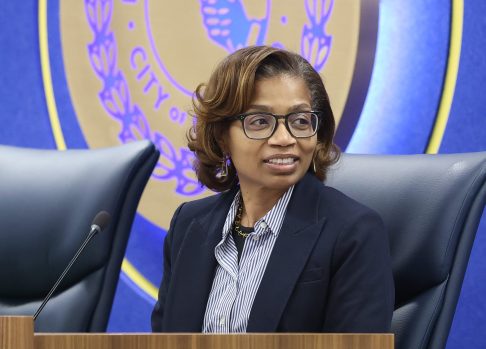
“Whatever your connection to CPS, we need your voice,” district interim CEO Macquline King said at a Chicago Board of Education meeting Wednesday. “LSCs play a critical role in the success of our district, and are a great opportunity for students, parents, staff and community members to get more involved in their school and communities.”
Few other large school districts in the country have such a decentralized approach to school governance. State lawmakers created LSCs in 1988 to shift decision-making power back to local communities and families.
A traditional council has at least 12 seats: the principal, six parents, two community representatives, two teachers, one non-teaching staff member and up to three students. Representatives are elected to two-year terms, except for students, who serve for one year. Students must be in sixth grade or up to run.
In recent years, CPS has struggled to recruit applicants. Currently, only 78 of 511 councils are completely filled, according to the LSC members map. During the first elections more than three decades ago, 17,256 Chicagoans ran for positions.
Council participation is key to school success, said Cassie Creswell, executive director of nonprofit Illinois Families for Public Schools. She noted that LSCs need to reach a quorum to vote at meetings, which are typically held monthly.
“They have a really important impact on school culture,” said Creswell, who is a former LSC chair at Jones College Prep. “It’s so important that we have this grassroots form of democratic governance, and sustain it, and preserve it, and empower it.”
Community organizer Natasha Dunn called LSCs “an opportunity for change,” particularly in Black and brown communities, she said.
“It allows for regular citizens who are concerned about education to get involved,” said Dunn, a South Shore resident. “You get to have a voice on curriculum, on dress codes and programs and services that students need.”
Dunn previously served on councils at O’Keefe Elementary School and King College Prep, where representatives voted to install a new principal. “Parent engagement was really key,” she said. “We made a change we needed to make.”
To apply, candidates must complete a nomination form available on the district’s website. No experience or formal education is required. The final deadline is Tuesday at 3 p.m. Anyone in Chicago can vote in a school’s election in March, so long as they live within the school’s attendance boundary or voting district.