
On Thursday, we honor what would have been the 97th birthday of the Rev. Martin Luther King Jr. If King were alive today, I believe he would encourage us to fight against injustice and inequality. He would inspire us to love our neighbors.
King was a prophet and master of language, sent by God at a time in history when race relations were deeply fractured. He understood that words had the power to heal or hurt, to tear down or build up.
His last speech, “I’ve Been to the Mountaintop,” delivered at Mason Temple in Memphis, Tennessee, was prophetic and profound. He sensed death was imminent. King was in Memphis to support striking sanitation workers. He rallied against injustice and unfair treatment of sanitation workers.
“We’ve got some difficult days ahead. But it really doesn’t matter with me now, because I’ve been to the mountaintop. And I don’t mind. Like anybody, I would like to live a long life. Longevity has its place. But I’m not concerned about that now. I just want to do God’s will. And he’s allowed me to go up to the mountain. And I’ve looked over. And I’ve seen the promised land. I may not get there with you. But I want you to know tonight, that we, as a people, will get to the promised land. And so I’m happy, tonight. I’m not worried about anything. I’m not fearing any man! Mine eyes have seen the glory of the coming of the Lord,” King said.
He gave his life for racial equality, justice and human dignity.
Because of King’s leadership, the following major bills were passed and signed into law:
- The Civil Rights Act of 1964: This law outlawed segregation in public places and banned employment discrimination based on race, color, gender and national origin.
- The Voting Rights Act of 1965: This act eliminated discriminatory voting practices, such as literacy tests and poll taxes.
- The Fair Housing Act of 1968: Passed just a week after his assassination, this legislation prohibited discrimination in the sale, rental and financing of property.
Large numbers of African Americans and Latinos elected to political offices can be traced back to the work of King around the Voting Rights Act of 1965. Black and brown CEOs are beneficiaries of King’s work.
Since the death of King, landmark laws he championed have been weakened by executive orders, the Supreme Court and Congress. There has been an attempt to pit racial groups and economic classes against each other. The United States of America is at its weakest point when we are divided.
We are all born innocent. Our parents and environment shape our thinking. Imagine if in every home children were taught to love their neighbor and follow the Ten Commandments. My mother taught me to love everyone irrespective of color or ethnicity.
The challenges today seem insurmountable for those who have suffered long years of poverty, hurt, neglect and disinvestment. I am reminded — God is at work in our difficult seasons.
Where are the modern-day prophets — those fighting for racial harmony, equity in health care, and education, housing, employment and contract opportunities? Where are those fighting for equity in technology and the cannabis industry?
King would be appalled to learn that the largest big-city gap in life expectancy in the U.S. is in a community on the West Side of Chicago — West Garfield Park.
He would be outraged to hear that three predominately Black communities — Lawndale, Garfield Park and Englewood — experienced the highest increase in property tax bills.
King would be saddened to know that the leading cause of death for Black teens and men ages 15 to 44 is homicide.
The poverty of spirit and hopelessness across Black communities would trouble King. Low voting participation by Black and brown citizens would cause King to ask: What did I give my life for? He would be disappointed to learn of communities where there are no grocery stores within walking distance.
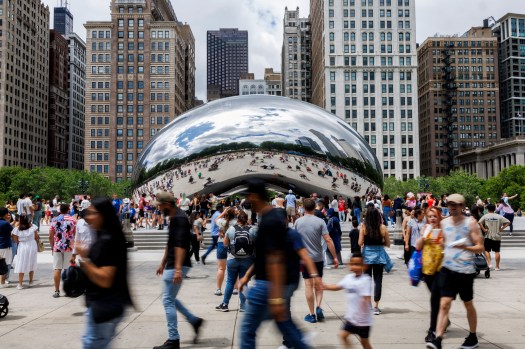
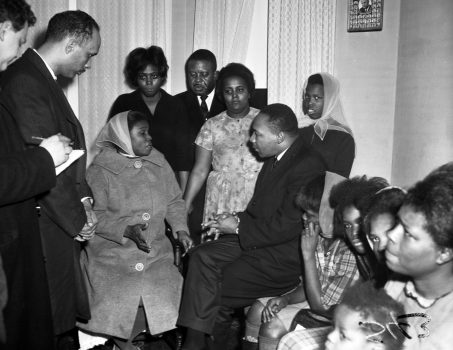
King would be concerned about the persistent achievement gap among minority children. He warned against the prison industrial complex that has become the new Jim Crow. King saw firsthand some of the problems in Chicago when he lived on the West Side in Lawndale.
Where is the sense of urgency to make life better for the poor and those suffering? As a preacher of the gospel of Jesus Christ, King understood that the spirit of the Lord was upon him, and he was anointed to deal with the problems of the poor.
The following are suggestions to help usher in King’s dream:
- All people should share the message of nonviolence and love with someone outside your comfort zone.
- Congress should pass the John R. Lewis Voting Rights Advancement Act.
- Faith leaders must speak out against injustice. The church and other institutions should promote nonviolence in the community as a way of conflict resolution and teach the history of King.
- Cook County elected leaders should fight to ensure detainees in Cook County Department of Corrections get a speedy trial.
The prophets of today must fight for independence of public agencies and institutions. They should advocate for access to information — books, the internet, public television and fair reporting by the media. They must fight for access to health care and lifesaving therapeutics.
King completed his mission and left an indelible print on the soul of America.
New Zion M.B. Church, 1252 S. Wolcott Ave., is hosting a community celebration at 10 a.m. Monday honoring the life of King.
I write this commentary to make those comfortable with forgetting the sacrifice King made uncomfortable.
Willie Wilson is a business owner, philanthropist and former mayoral candidate.
Submit a letter, of no more than 400 words, to the editor here or email letters@chicagotribune.com.