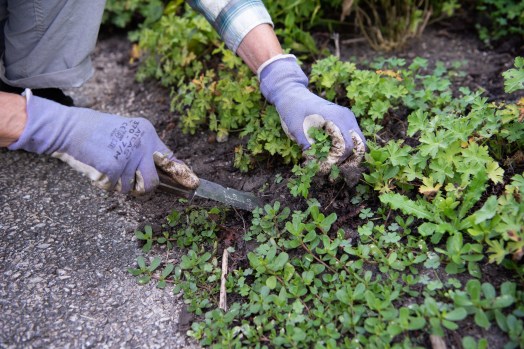

A gardening friend and I were having a debate over the weekend about what constitutes a weed in our gardens. Is there a biological difference between a weed and a perennial that one can buy at a garden center?
— Richard Anderson, Barrington
Different gardeners have different ideas about what plants are weeds in their gardens. I define a weed as a plant that is growing where it is not wanted in the garden, so I have lots of latitude for which plants I want to remove. For example, are violets in the lawn weeds, or are their flowers interesting spring color accents? I consider them weeds to be eradicated when there are lots of them, but I do not think that all need to be removed. My wife, on the other hand, thinks they are fine. Yes, there are still violets in our lawn and there will continue to be violets.
There is a biological difference between a weedy plant and an invasive plant. Weedy plants readily spread, especially in disturbed areas, but generally do not pose a threat to the integrity of native plant communities. Perennial flowers that are aggressive spreaders need routine thinning to keep them from taking over a border or plant bed. Flowers that are well-suited to your garden’s growing conditions and that have a tendency to spread aggressively will do so with vigor. The violet causing trouble in my garden was purchased as an ornamental flower and planted in a bed. Now it seeds all over the lawn and throughout my garden beds. It’s very happy in my garden. Invasive plants are defined by their impact on the integrity of the plant community. When plants are introduced to a new location, either intentionally or accidentally, they can spread prolifically, out-compete native species for resources, and eventually even dominate the landscape. Buckthorn is an example of an invasive plant in the Chicago region. The violet in my garden is weedy and annoying but not invasive. The buckthorn seedlings that germinate from fruit dropped by my neighbor’s buckthorns and bird feeding would quickly overtake my garden plants without regular intervention.
Some factors common to many invasive plants include rapid growth and early maturity, production of many seeds, wide dispersal of seeds by birds and wind, seeds that germinate quickly, few natural enemies, and an ability to reproduce vegetatively. Use regional resources for guidance regarding invasive plants. The Chicago Botanic Garden has an invasive plant policy and we encourage people to check our website for a list of invasive plants in the Chicago region.
For more plant advice, contact the Plant Information Service at the Chicago Botanic Garden at plantinfo@chicagobotanic.org. Tim Johnson is senior director of horticulture at the Chicago Botanic Garden.