
Naperville City Council members, facing a packed house opposed to a data center being built on Naperville’s far northeast side, voted 6-1 Tuesday night to reject the project.
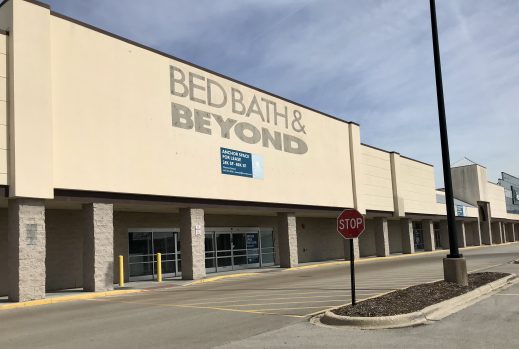
Developer Karis Critical made one last attempt at submitting a plan it hoped would pass council muster, scaling down the proposed building to 145,000 square feet, but failed to persuade council members that it was a good fit for the 1960 Lucent Lane property, located off the Interstate 88 corridor.
The final version of the plan called for a 24-megawatt IT load center and 12 back-up generators, representing a 33% reduction in scale, Karis attorney Russ Whitaker said. Revisions were made following legal negotiations with the city.
When Naperville residents first learned of the proposal nearly five months ago, Karis was requesting to construct two 211,000-square-foot data center buildings with a 72-megawatt IT load.
Negative resident feedback and an assessment that city utilities could not accommodate that size prompted the company to reduce it to a single 211,000-square-foot building with a 36-megawatt IT load and 24 backup generators. That version won the backing of the city’s Planning and Zoning Commission.

“The Karis data center is consistent with all the underlying zoning and 60 years of the Nokia campus being a center of innovation, investment and jobs in the city of Naperville,” Whitaker said, arguing it would be no different than the adjacent Nokia building, which also has a data center.
Neighboring property owners, however, were vocal in their objections. Many said they believed the project, regardless of its size, was unsuitable for its location given its close proximity to homes and the noise and potential health problems it could generate.
Council members Patrick Kelly, Supna Jain, Ian Holzhauer, Mary Gibson, Ashfaq Syed and Benny White voted against the center. Councilman Josh McBroom voted in favor of it. Mayor Scott Wehrli and Councilman Nate Wilson abstained.
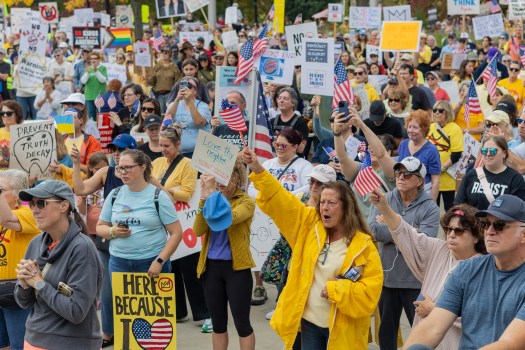
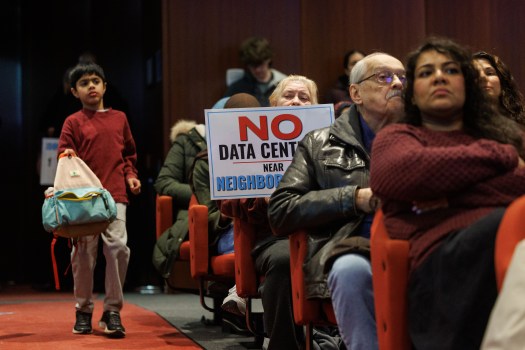
Similar to past Planning and Zoning Commission meetings on the topic, Naperville residents flooded the meeting, had their children attend and carried signs saying “No data centers near neighborhoods.” Council chambers were standing room only throughout the evening.
When Naperville resident Rich Janor asked those opposed to the center to stand up, a majority in the room did so. Dozens of people spoke against the project, although there were some — many affiliated with construction and trade organizations — who supported it.
“Revitalizing the Lucent campus is not just another construction project. It’s an opportunity to bring jobs, investment and new opportunities to Naperville,” said Anthony Giunti, a Naperville resident and an international representative of the International Brotherhood of Electrical Workers 6th District.

Katherine Butt, a 7-year-old who lives in the Fairview subdivision, was among those who asked the council to reject the plan.
“I want my neighborhood to be safe,” Katherine said. “One of my school rules is to be safe. Is building a data center safe? Another one of the rules is respectful. Is building a data center respectful? I also think you can build it, but far, far away, at least 100 miles away.”
Janor criticized Karis for presenting yet another new version of the center just before the council vote, calling it “legal maneuvering at the 11th hour, presumably to cast some doubt on a potential no vote here tonight.”
“Lawsuits against this body are lawsuits against all of us, and I can assure you that if any entity threatens legal action, residents in this room will have your back, Mr. Mayor and city council.”
The majority of council members appeared to agree with the protesters, who raised concerns about the center not fitting the city’s conditional use requirements, the noise the facility would generate and the health impact of the exhaust generated by the backup diesel generators.
“I find that petitioner has not met its burden by preponderance to show that the use will not be detrimental to public health, safety, general welfare,” Kelly said, “and that failure alone justifies denials of the application.”
In light of the scaled-back proposal, Werhli at one point proposed that the vote by pushed back to at least Feb. 17 so the developer would have time to conduct a new air dispersion study. Without that information, the council would be making a decision without all the information.
If that happened, it would require another public hearing, City Attorney Michael DiSanto said.
“I believe there’s certainly relevant information that, apparently, was potentially obstructed from us having tonight because of negotiations with city staff,” Wehrli said. The new study might sway council members to change their vote, he said.

But Holzhauer pushed back against that, describing the efforts to delay the vote as “contrived.”
“If this council, to my surprise, somehow decided to prolong this, I think that would be fraught with legal peril,” he said.
Wehrli’s motion to table the issue to allow time for a study to be done failed with a 6-3 vote.
“I think this is a unique moment in our economic development history,” the mayor said. “I can’t recall another matter where council or any petitioner, members of the council have asked for additional time and information, and then we’ve been told no.”
Collecting as much information as possible should be the priority, not taking a “vote of convenience.”
For that reason, the mayor abstained in voting.
A spokesperson for Karis said the company did not agree with the council’s action.
“We are disappointed by the outcome of the vote, which overturned the city plan commission’s recommendation, and by the city council’s decision not to allow additional time for further studies to address concerns regarding our operations,” the spokesperson said following the meeting.
cstein@chicagotribune.com