Congregation Bene Shalom in Skokie, founded by a popular rabbi 53 years ago and known for being a Jewish congregation focused on serving the deaf and hearing impaired as well as the hearing community, closed on Jan. 6.
Dwindling membership and decreased funding forced the congregation into the very difficult decision, leaders said. Its building at 4435 Oakton St., Skokie, was sold to Congregation Kol Emeth, which had rented space in the building for 2½ years.
The decision to close the congregation, which was founded 53 years ago, was “a process,” said Laura Schwartz, who had been president of the Board of Directors for eight years.
“We’ve been talking about it for about a year. We looked at our funding and we knew we had to make the decision soon. It was heart-wrenching. It wasn’t a rash decision.”
It was apparent to the Board that the congregation couldn’t continue because of three factors, Schwartz indicated: “Lack of funding and low attendance at services, and not a lot of people to do the work.”
The Reform congregation was started by founding Rabbi Douglas Goldhamer, who was considered a master of Kabbalah (Jewish mysticism), healing prayer and meditation.
Congregation members said there was a sign-language interpreter at every service, and it was the first Jewish synagogue in the United States devoted to serving a primarily deaf and hearing-impaired congregation.
When Goldhamer died in 2022, which was the congregation’s 50th year, many congregation members left.
Charlene Brooks, who had served as the congregation’s cantor for almost 30 years, had been encouraged by Goldhamer to attend the seminary he founded. Brooks became a rabbi in June of 2022 and was asked to lead the congregation when Goldhamer died.
“It was a great honor. It was a challenge because he was one-of-a-kind,” Brooks said of taking over the leadership of the congregation. “And it was a wonderful opportunity because I felt I’d been exposed to so much spirituality and knowledge that you can only gain from working with someone like him. It was wonderful to lead the congregation.”
The decision to close the synagogue was “incredibly difficult” for her, Brooks said, even though they had been talking about the financial situation for a very long time.
Knowing that the building will remain a synagogue is “a great comfort because the opportunities for it to change dramatically were there,” Brooks said. She appreciates the fact that the bimah, the raised platform where the torah is read and services are led, is “still maintaining the magic and history that it has.”
Brooks said she is not retiring and plans to keep doing funerals. “As long as I can remember it was important to me to bring honor and comfort to families who have lost loved ones.”

She added that, because her parents were both Holocaust survivors, when it came to their relatives, “they never had the opportunity to mourn them in any kind of comforting way.”
In addition, Brooks is continuing to be available to members of the congregation for whatever they need from her.
The building will continue to be a place for Jewish people to gather and pray.
Hazzan Sarah Alexander joined Congregation Kol Emeth in June as spiritual leader of the Conservative synagogue. She joined Rabbi Emeritus Barry Schechter, who has served Kol Emeth since 1981, first as cantor, then rabbi.
Alexander said that the synagogue decided to purchase the Bene Shalom building because, “We had been renting from them for about two and a half years. When they approached us and said that they were going to be shutting their doors, it offered us the opportunity to purchase the building. It fit right in with our plans for future growth.”
They had already made steps in that direction.
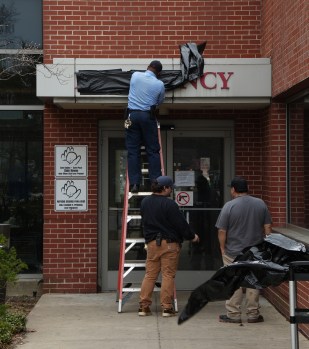
“We have three classes a week now,” she said. “We’re doing social action outreach programs. We’re becoming a more active synagogue. One of the ways that we can be more present in the community is having our own building, being able to put our name out front so people can actually find us and know we exist.”
There will be services every Friday night and Saturday morning.
Congregation Kol Emeth is not planning to make any changes to the building but they will be redoing the parking lot, which is located behind the building.
To get assistance regarding the many aspects of closing a synagogue, the Congregation Bene Shalom Board worked with the Jewish Community Legacy Project, which offers support to small Jewish congregations. Board President Schwartz said that Noah Levine, President and CEO of the Legacy Project, suggested that they put the funds from the sale of the building into an endowment fund and use it for charity.
“That made me feel a whole lot better that with the closing the money would continue to do good for many years and help people,” Schwartz said.
The Board carefully chose recipients for those proceeds, including funds for interpreter services so that Jews who are deaf can attend services.
“We’re going to give scholarships to Jews who are deaf who want to go to college,” Schwartz added.
Funds are being provided in perpetuity and on a one-time basis to a variety of organizations that support the deaf as well as needy local organizations.
In addition to encouraging Bene Shalom to establish that endowment fund, the Legacy Project assisted the board in decision-making about other aspects of closing the congregation.
“They have a big network of synagogues,” Schwartz reported. “There’s a small temple in Colorado that needed a torah,” she said, so one torah was sent there. In terms of the other two torahs, Schwartz related, one will be picked up by someone from a congregation in Upstate New York. The third torah, which survived the Holocaust, is being returned to London for repairs, and will afterwards either be lent out again or put in a museum.
Many other items, including kitchen supplies, were donated, some going to immigrants.
“The prayer books have to be buried,” reported Schwartz, who plans to bury them on the grounds of property that she owns in Michigan.
Myrna Petlicki is a freelance reporter for Pioneer Press.