We got the happy word some time ago that Chicago was pushing for a return of the Democratic National Convention to the United Center in 2028 and had been led to believe that it was within the realm of possibility.
In essence, Chicago’s pitch was, look guys, with Trump causing chaos all around and the Democratic Party trying to get its own act together, why not suspend the usual practice of traipsing across the country and collecting bids, pitting one stressed-out city against another? Who has the time for that in the current situation? What is the party going to do, ask Minneapolis to put together a bid? That city has other problems.
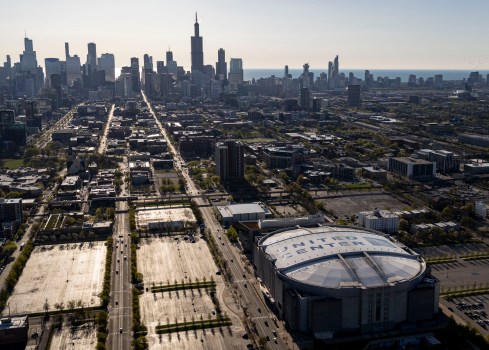
Here stands Chicago, fresh from the highly successful 2024 convention (at least in convention terms) ready to go with the arena, the hotels, the warm welcome, not only in friendly territory but with lots of media-friendly stories about past Immigration and Customs Enforcement and Border Patrol excesses lurking just beyond the security fence. All the site details can simply be reprised from the last time around, saving everyone’s money. Indeed, doing things twice (or even thrice) is actually common in the world of major conventions for precisely those reasons: Once you’ve gone to all that trouble, you might as well reap the benefits the following year, especially since you can improve on the first time.
There’s a complication in that the United Center presumably will be in the middle of a construction project by 2028, building a new theater and retail amenities where a lot of media trucks sat the last time, but we assume that could be worked out; there’s plenty of space in the United Center’s environs. And with United and American airlines fighting tooth and nail over dominance at Chicago O’Hare and adding new flights virtually by the hour to everywhere from Kalamazoo to Maui, the city has never been more convenient to reach by air. Nowhere else has a similar level of competitively fueled connectivity. Even the Kennedy Expressway is no longer under construction as it was in 2024, although we might be counting our chickens if we are talking 2028.
We won’t bore you with the economic, marketing, media-driven, image-related and other advantages of having a major political convention take place in your city. We went on about all of that the last time. Plus, it’s obvious. Sure, some people miss out or are inconvenienced, but the benefits are legion to restaurants, hotels, Uber drivers, museums, caterers and on and on. Perhaps most importantly, conventions bring in tax revenue to a city that needs plenty.
So if you are the mayor of Chicago, you have one job when it comes to bidding for the Democratic National Convention in 2028: Act enthusiastic. We’d even go so far to say this applies just as well to the Republican National Convention, not that they are likely to head our way. Milwaukee saw a $320 million economic impact from Trump’s gathering, according to the local host committee.
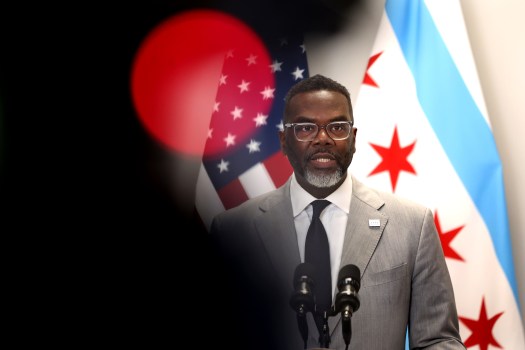
Is that the sort of message we saw this week from Brandon Johnson? Nope. This is what he said.
“The Democratic National Convention would take place at a time when the Trump administration would still be in charge,” the mayor said. “What we’ve seen in cities across America and more recently in Minneapolis, that to turn over the security of our city to the Trump administration … it’s not just me, but a number of us have profound concerns about that.”
First, the convention would not involve turning over the security of the entire city to the Trump administration. Second, we’ve seen no evidence that the Secret Service is not capably doing its job protecting those whom it is mandated to protect. To suggest those officers would do less than their best because they are protecting Democrats rather than administration officials is an insult to that storied institution.
You can be appalled by what has transpired with ICE and the Border Patrol in the name of immigration enforcement and refrain from using it as a cudgel with which to bash all of federal law enforcement. The Trump administration will still be in charge because that is its electoral term: Chicago simply cannot refuse to have any dealings whatsoever with the federal government, and to imply that it can is, to say the least, unhelpful. It’s also ironic that Johnson is pouring cold water on a DNC bid presumably designed to end the Trump administration’s tenure, which many here would see as a cathartic payback for Trump’s myriad insults.
Gov. JB Pritzker offered a sop to Johnson’s remarks, calling this “a real question,” which is also unhelpful, although given that the audience for the bid (which also includes 2032) is made up of fellow Democrats, it surely will be seen as political rhetoric.
Pritzker is, of course, far more of a pragmatist than Johnson, and he went on to point out how the 2024 convention made Chicago “shine” and he rightly noted that 2028 is a long way away.
Trump will likely still be in place; the mayor may not be. And, of course, there will have been midterm elections. Of impact yet unknown.
But that’s not our main point here. If, in 2028, we live in a city where local and state officials are openly refusing to cede control to the Secret Service or any other aspect of the federal government’s lawful operations, as Johnson implied, we will have much bigger problems to worry about than staging a political convention.
We remain more optimistic about America’s recovery from the current horrors than that.
Submit a letter, of no more than 400 words, to the editor here or email letters@chicagotribune.com.