
A new corporate headquarters is slated to set up shop in Batavia’s downtown.
QT9, an Aurora-based software company, is planning to move into the property at 190 S. Water St. — which, per the city, previously housed the Pamarco Co., which operated a factory at the site for more than 100 years but has since relocated to a different building in Batavia.
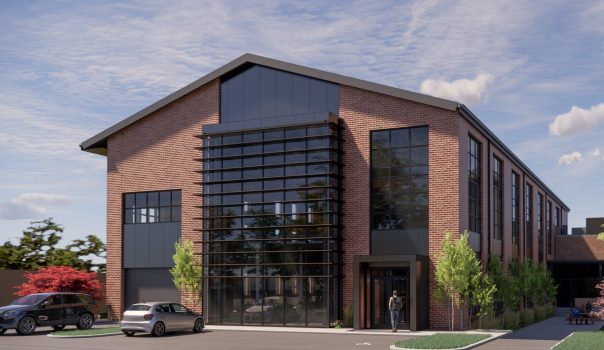
But, before QT9 moves into the downtown space, the building is set to undergo renovations costing around $12 million, a portion of which is going to be supplied by the city.
At its meeting on Monday, Batavia’s City Council approved a redevelopment agreement for the building, which includes a promise of almost $1.9 million in TIF, or tax increment financing, funds to help with the renovation costs.
A TIF district is a sort of economic development incentive, in which the value of a property is essentially frozen, and the extra or “increment” taxes created by developing the property go into a special fund used to pay for costs related to improving the area.
The building currently sits within the city’s TIF District 3, which is set to expire in 2039, City Administrator Laura Newman said at a recent Batavia City Council Committee of the Whole meeting. But the city is also looking to create a new TIF district that would incorporate the project area, with plans for this renovation to be the first project developed using TIF assistance from the new district, Newman said.
Per the redevelopment agreement, the property would be removed from TIF District 3 and placed into TIF District 7 should it be created.
And because the project is set to be in a TIF district that hasn’t been created yet, there is currently no increment to use to fund it, according to city documents. So, the city is planning to fund the incentive by a loan from its general fund, which will be paid back using the future property tax increment created by the project, which is projected to add $7 million in equalized assessed value to the property.
At the Committee of the Whole meeting, Newman said the existing building is in “pretty rough shape” and cited the benefits the redevelopment would have on the city.
“It’s something that we have been waiting for for a very long time, and could have a tremendous impact on our downtown,” Newman said.
For example, QT9’s move to Batavia is expected to bring 65 to 70 new employees to the downtown, thereby bringing additional business to the area, according to Newman. She also pointed to the possibility that the block east of it may become a mixed-use development including apartments and public parking, meaning employees could live nearby.
“Having a large employer like this could really be a game-changer for downtown activity,” Newman said.
At the Committee of the Whole meeting, Mayor Jeff Schielke asked if the project would impact area businesses like Warehouse 55, which recently moved from Aurora into Batavia.
Austin Dempsey — the CEO of BEI Commercial Real Estate, which Dempsey said currently owns the property and which is a partner in Manhattan Real Estate Ventures, the joint venture that’s redeveloping the building — said it wouldn’t, “except for a lot more customers in the door.”
Newman also noted that the proposed designs for the building’s renovation have been received favorably by the city’s Plan Commission and Historic Preservation Commission.
Dempsey, at the meeting, said he “takes great pride in” being “a preservationist of historic buildings.”
“What a cool story of a 100-plus-year-old building that was part of a windmill factory and a munitions factory during World War II, and now it’s going to be on the cutting edge of technology,” Dempsey told The Beacon-News on Tuesday.
BEI has been developing and redeveloping properties across the area for decades, Dempsey said.
QT9 also has local roots, founder and president Brant Engelhart told The Beacon-News on Tuesday.
The company began out of Engelhart’s home in Aurora in 2005, he said Tuesday. QT9 started out based in Aurora, then for a time was located in Naperville, and currently is housed at 2731 Beverly Drive, on Aurora’s far East Side north of Interstate 88. It also has international offices in Ireland and Australia.
As for its connections to Batavia, Engelhart said at the Committee of the Whole meeting that many of his employees are already from Batavia, and some are looking at homes in the city’s downtown. His internship program is also largely made up of Batavia students.
Engelhart told The Beacon-News that QT9 has “grown explosively” in recent years. The company provides things like quality management systems and enterprise resource planning, per its website, and sells mainly in manufacturing, for industries like medical devices and pharmaceuticals, according to Engelhart.
That growth is what prompted its plans to move to a larger space, which company officials have been seeking for around two years.
The company was also looking to set up shop in a downtown building with a more walkable campus, Engelhart said, for which the Batavia building fits the bill.
“Downtown Batavia is fun,” he said on Tuesday. “There’s restaurants everywhere to walk in, there’s little shops, there’s coffee shops … it’s a great environment for my employees.”
As for the upcoming renovations, the developer is expecting construction costs of around $12 million, per the city. Of that, the city is planning to supply around 15% of the project costs.
The incentive will be provided as a reimbursement after occupancy of the building, per the city, and can be used to reimburse costs for things like engineering, architecture, demolition and remodeling. The agreement includes a claw back provision that requires repayment of a portion of the incentive if QT9 ceases operating at the building within six years of occupying it. And, if costs are lower than projected, the incentive is to be reduced proportionally so it remains at the agreed-upon percentage of the total costs.
Under the terms of the agreement, the building must be ready for QT9 to occupy it by the end of 2028, but both the developer and the software company say they are aiming for much earlier.
At the City Council meeting on Monday — at which the redevelopment agreement was approved — Dempsey told the council that the aim is to begin construction within the next 90 days. Both Dempsey and Engelhart told The Beacon-News the goal is for QT9 to occupy the building starting in late 2026 or early 2027.
The city, too, expressed enthusiasm about the plans for the building at Monday’s City Council meeting.
“This is, I think, something that Batavia should be very proud of,” Schielke said of the project, “that we’ve yet again saved one of the more historic areas and are continuing to do some very interesting things with (them).”
mmorrow@chicagotribune.com