Illinois will adopt the childhood vaccine schedule recently released by the American Academy of Pediatrics, in a rejection of federal recommendations.
The move is the latest example of Illinois breaking with the federal government over health care policies and guidance since President Donald Trump took office. The Trump administration has spent the last year revamping health care policies, such as by recommending fewer vaccines for children and pulling out of the World Health Organization.
“While Donald Trump and (Health and Human Services Secretary Robert F. Kennedy Jr.) undermine science, spread dangerous vaccine misinformation and put countless lives at risk, my administration is forging a different path — one that puts our people first,” Gov. JB Pritzker said in a news release Thursday. “With key insights from the (Illinois Immunization Advisory Committee), we’re endorsing clear, evidence-based immunization schedules to help keep Illinois families safe as the federal government chooses conspiracy theories over American lives.”
The American Academy of Pediatrics’ vaccine schedule is the same as what Illinois already recommends. Last year, Illinois adopted an older federal childhood vaccine schedule from before the Trump administration began making changes.
But Illinois Department of Public Health Director Dr. Sameer Vohra said Wednesday during a meeting of the state’s Immunization Advisory Committee that, because it’s a new year and the federal government keeps making changes, it was important to revisit the recommendations to clear up any confusion over where Illinois stands.
The American Academy of Pediatrics’ childhood vaccine schedule differs from the new federal recommendations in a number of ways, largely sticking to previous guidelines. The academy, for example, continues to recommend routine flu vaccinations, broad vaccination to protect against meningococcal disease, hepatitis B vaccinations for all infants and COVID-19 vaccines for all children from the ages of 6 to 23 months, whereas the new federal schedule does not, instead leaving it up to parents and doctors whether to vaccinate individual children, in most cases.

The American Academy of Pediatrics released its schedule last month after the Centers for Disease Control and Prevention dramatically reduced the number of vaccines it recommends for children. A dozen prominent medical groups, including the Chicago-based American Medical Association, have thrown their support behind the academy’s schedule.
The academy had criticized new federal recommendations as a departure “from longstanding medical evidence.”
Meanwhile, federal officials said the new CDC schedule came after a review of other countries’ vaccine practices and the scientific evidence behind them, conducted at the instruction of Trump.
“The updated CDC childhood schedule continues to protect children against serious diseases while aligning U.S. guidance with international norms,” the U.S. Department of Health and Human Services said in a statement Thursday. “Many peer nations achieve high vaccination rates without mandates by relying on trust, education and strong doctor-patient relationships, and HHS will work with states and clinicians to ensure families have clear, accurate information to make their own informed decisions.”The statement also said, “Democrat-led states that imposed unscientific school closures, toddler mask mandates and vaccine passports during the COVID era are the ones who destroyed public trust in public health and should not be guiding policy.”
Illinois’ decision to adopt the academy’s vaccine schedule came a day after the Illinois Immunization Advisory Committee met to discuss the dueling vaccine schedules. That committee voted to recommend the state adopt the academy’s vaccine schedule after many committee members expressed dismay at the new federal schedule.
The new federal schedule is “very stripped down,” said the committee chair, Dr. Marielle Fricchione, with Rush University System for Health, during the meeting Wednesday.
She said the new federal schedule is lacking in many areas, such as by leaving out a number of high-risk groups that should be getting vaccines to protect against meningococcal disease, an illness caused by a bacteria that can infect the brain lining, spinal cord and bloodstream. The new federal guidelines no longer recommend broad vaccination to protect against meningococcal disease, instead recommending it only for kids in certain high-risk groups and saying it should be up to parents and doctors whether to vaccinate individual children who are not at high risk.
“This goes against all standards of care, it goes against our oaths as physicians, it goes against epidemiology and it goes against science,” Fricchione said of the missing high-risk groups.
Dr. Archana Chatterjee, a committee member, recounted a story at the meeting about how her daughter caught rotavirus as an infant and had to be hospitalized. The illness can cause diarrhea and vomiting, especially in young children.
The academy schedule continues to recommend rotavirus vaccines for all infants, whereas the federal schedule says it should be left up to parents and doctors whether to give the shots to babies.
Chatterjee said her daughter is now grown and “doing great,” but she said she told the story to emphasize the importance of the vaccine.
“These are real things that actually impact (families),” said Chatterjee, who is dean of the Chicago Medical School at Rosalind Franklin University of Medicine and Science. “This impacts everyone, and it is not just the deaths that we need to focus on.”
Illinois’ decision to adopt the academy’s vaccine schedule is one of a series of recent moves by the state that part ways with federal public health policy.
Earlier this week, Illinois announced that it was joining a network of the World Health Organization in hopes of better positioning the state to respond to emerging health threats, after the federal government withdrew from the organization.
Illinois also broke with federal vaccine recommendations last year, deciding to continue to recommend hepatitis B vaccines for nearly all newborns and to continue to recommend COVID-19 vaccines for all children ages 6 to 23 months.
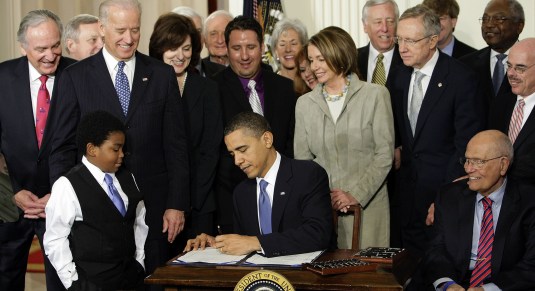
Pritzker signed a bill into law last year formally establishing a process for the state to issue its own vaccine guidelines, after Kennedy, a longtime vaccine skeptic, fired and replaced all the members of a federal vaccine advisory committee.
State-regulated insurance plans are required to cover vaccines recommended by the state, and, at this point, all the vaccines recommended by the state continue to be covered by private insurance plans, Medicaid and the Vaccines for Children Program, according to the state health department.