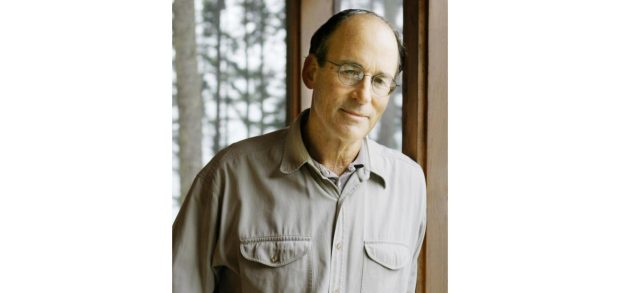
Donald G. York was a longtime University of Chicago astronomer and astronomy professor who co-founded the Sloan Digital Sky Survey, a wide-ranging mapping of the solar system that produced a three-dimensional map of a large fraction of the sky.
York, considered a visionary within his field, was behind several key innovations in the lead-up to creating the Sloan Digital Sky Survey. He helped build the Apache Point Observatory in New Mexico, and he then led the construction of a modular telescope there that enabled researchers to swap out different instruments and then to use it remotely from any location in the world.
With the Sloan Digital Sky Survey, York then marshaled forces to create one single telescope that could map hundreds of millions of objects in the sky — a central telescope systematically scanning the sky, and then releasing massive quantities of data publicly available to any scientist.
“Leading large astronomy collaborations of academics with strongly held ideas of how projects should proceed is challenging,” said Edward “Rocky” Kolb, a U. of C. professor of astronomy and astrophysics. “York was adept at herding the cats and keeping people on task.”
York, 81, died of complications from chronic diseases on Dec. 26 at his home in Ann Arbor, Michigan, said his wife of nearly 60 years, Anna. He had been a longtime Hyde Park resident before moving to Ann Arbor in 2023.
Born in Shelbyville, Illinois, in 1944 to an accountant father and a homemaker mother, York moved with his family to Terre Haute, Indiana, at age 8 to live with his grandparents after his father’s death.
After graduating from Terre Haute’s Wiley High School, where he played football for three years, York earned a bachelor’s degree in physics in 1966 from the Massachusetts Institute of Technology, where he played rugby. He then got a Ph.D. in astronomy in 1971 from the U. of C., spending 3½ years at the famed Yerkes Observatory in Williams Bay, Wisconsin.
York started his career as a research fellow at Princeton University — where he worked with noted astronomer Lyman Spitzer — and was part of a team that worked on the NASA satellite Orbiting Astronomical Observatory 3, which was launched in 1972 and known after its launch as Copernicus.
While working on Copernicus, York was the first researcher to find an isotope of hydrogen known as deuterium inside these clouds. Up to that point, deuterium had been known theoretically but never observed. That discovery was crucial in giving researchers an understanding of less-visible matter in the cosmos, known now as dark matter and dark energy.
“That helped to settle the question of whether the universe was expanding or contracting — a major scientific question at that time,” his wife said of the now-known expansion.
In 1982, York took a tenured professor job at the U. of C., working in the same department as a fellow MIT rugby player, then-University of Chicago astronomy and astrophysics department chair David Schramm. Several years later, York helped build the Apache Point Observatory in New Mexico, which was created by a consortium of universities, including the U. of C., and he also served as the 3.5-meter telescope’s founding director.
Still, York and other astronomers yearned for more. He began to develop the outlines of a project involving another telescope — also to be located at Apache Point — that would scan the sky and collect calibrated and standardized data.
The concept turned into the Sloan Digital Sky Survey, which began collecting data in 1998 and has contributed to more than 12,000 scientific papers so far. Named for the Alfred P. Sloan Foundation, the dedicated optical telescope gathered massive amounts of data during its initial 11-year collection period, including of objects from 7 billion years ago.
Publicly available, the Sloan Digital Sky Survey’s data can help any scientist at any career stage. Among its discoveries: There are black holes at the center of every massive galaxy; the Milky Way has adjoining dwarf companion galaxies around it; and galaxies have dark matter “halos” around them. The data also have allowed researchers to study supernovae and ripples from the so-called Big Bang.

Aided by the survey, York also pursued his own research questions, including unidentified diffuse interstellar bands and cataloguing the spectra, or brightness at different wavelengths, of quasi-stellar objects to study the three-dimensional distribution of intergalactic gas.
York published about 600 peer-reviewed academic papers — drawing more than 100,000 citations — and in 2012 he co-edited the book “The Astronomy Revolution: 400 Years of Exploring the Cosmos.”
“(Don) was able to see the potential in astronomy projects far down the road, willing to invest immense effort to get there and tolerating whatever length of time it took,” said longtime U. of C. astronomy and astrophysics professor Rich Kron, a friend and fellow co-founder of the Sloan Digital Sky Survey.
“Before the Sloan Digital Sky Survey, astronomical research was pursued by small groups working independently,” Kron said. “The Sloan Digital Sky Survey demonstrated the power of large collaborations of institutions and scientists to pursue deep questions at a scale not otherwise possible. He was able to build a culture that got scientists to work together toward a single goal.”
In a 2021 interview with the U. of C.’s news office, York discussed the silo-like nature of astronomy research in the 1980s.
“At the time, you would apply for observing time at a public telescope and might get six nights a year at best,” York said. “And no two researchers would want to use their time the same way or take the same approach, so getting together a precise survey of 1 million objects was close to impossible. But our idea was that this would be a dedicated project with everyone pooling resources and all the data would be available to everyone involved.”
The success of the Sloan Digital Sky Survey “rippled through astronomy and changed how astronomy was done,” Anna York said.
A product of public schooling, York was the prime mover behind an initiative begun in 1996 to connect 24 public schools in the neighborhood around the U. of C. with the internet. York co-founded the collaboration, known as the Chicago Public Schools/University of Chicago Internet Project, with an eye toward making sure that public schoolchildren were not left behind in an increasingly technologically-oriented world.
“He believed in public education and saw schools as the key to creating more fairness, opportunity and justice in this world. Don was the greatest champion for our local schools and Chicago’s young people,” said Shaz Rasul, who worked on the project from 2001 until 2010 before working in the university’s office of civic engagement. “He wanted to make sure that there would be no digital divide and the opportunities that the Internet would create would be accessible to all.”
From 1996 until 2016, York and Rasul focused on four areas, including physical technology aspects like wiring, power, the computers themselves and keeping them working, and on helping teachers understand how to integrate such technologies into their curricula and classroom practices.
They also built a library of resources to combat misinformation, and they created partnerships with museums and other cultural centers to allow teachers and students to digitally engage with their collections.
“Don dreamed big, brought the right people together and rolled up his sleeves to make things happen,” Rasul said. “He always thought that the university had an opportunity to do great good in partnership with the community, and his work is an example of how to make that a reality.”
York retired from the U. of C. about a decade ago. Outside of work, he enjoyed camping, hiking, spending time with family and being a regular part of Ellis Avenue Church and the Hyde Park Union Church.
In addition to his wife, York is survived by four children, Sean, Maurice, Chandler and Jeremy; six grandchildren; and a sister, Diana Wortham.
A service will take place June 13 at the Hyde Park Union Church, 5600 S. Woodlawn Ave., Chicago.
Bob Goldsborough is a freelance reporter.