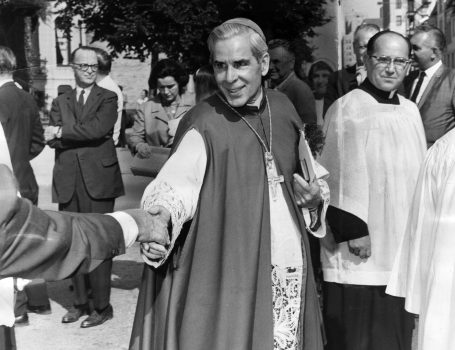
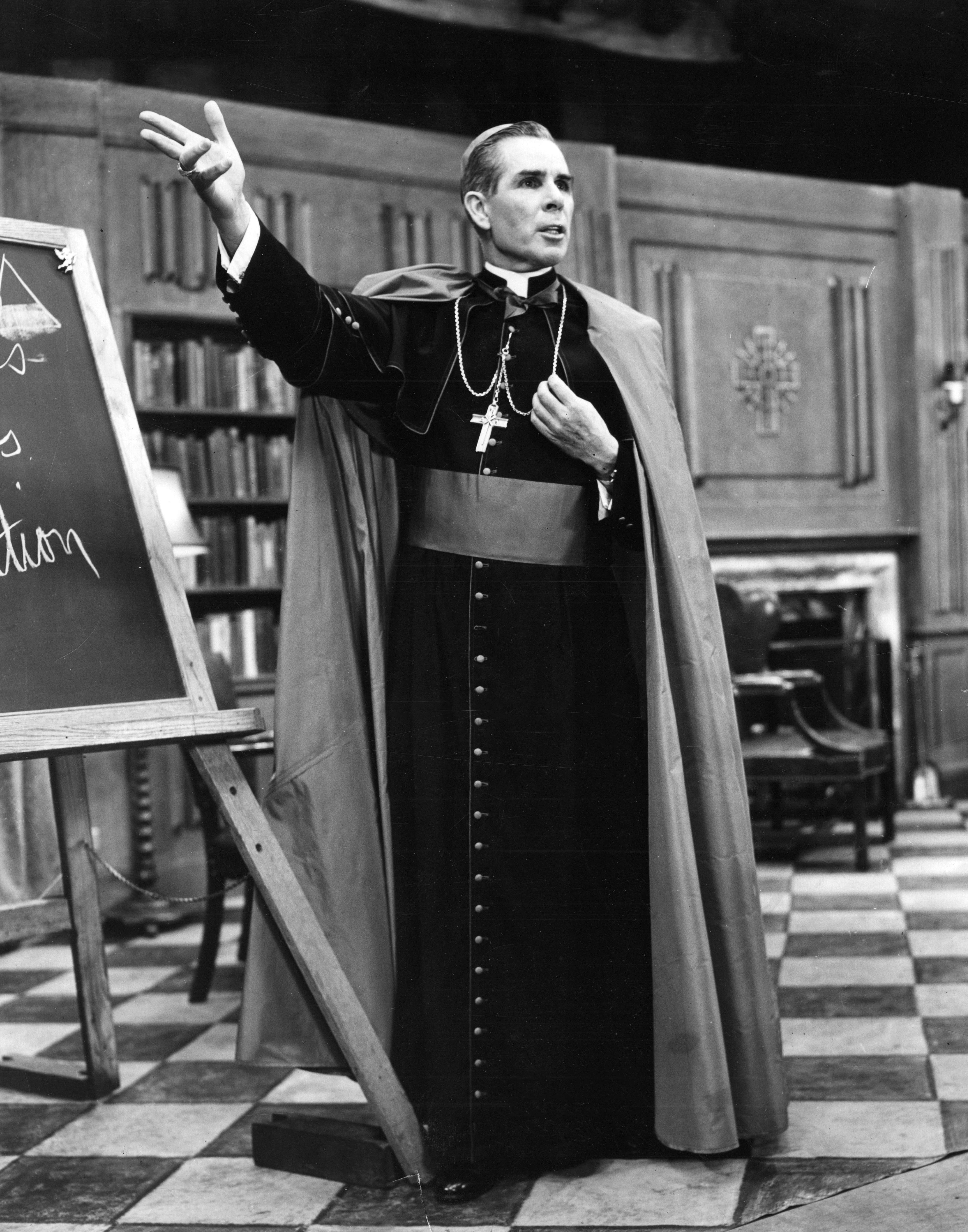
With a captivating voice and piercing eyes that seemed to penetrate the camera, the Illinois-born bishop explained the paradox of human suffering to millions of viewers on one episode of his acclaimed 1950s television show “Life Is Worth Living.”
Draped in a flowing ferraiolo and pectoral cross, Fulton J. Sheen declared that love has the ability to transform worldly burdens, paving the way for grace and redemption.
“Love will not kill pain. But love will diminish it,” Sheen, who would later be elevated to an archbishop, told his vast at-home audience of Catholics and non-Catholics alike. “A mother sits up with her sick child all night long. It is not agony. It is love. … Love in the face of sorrow does not seek isolation. It wants to take on that pain as its own.”
The groundbreaking prime-time weekly series surprisingly competed for viewership with secular heavy-hitters such as “The Frank Sinatra Show” and legendary comedian Milton Berle, who joked, “At least I’m losing my ratings to God.”
Airing in black-and-white, Sheen’s distinctive blend of humor and theology entranced viewers, earning him the 1953 Emmy Award for Most Outstanding Television Personality over stars of the era, including broadcaster Edward R. Murrow, actor Lucille Ball and comedian Jimmy Durante.
Upon acceptance, the cleric born and raised in the Diocese of Peoria credited his program’s success to its four writers: evangelists Matthew, Mark, Luke and John.
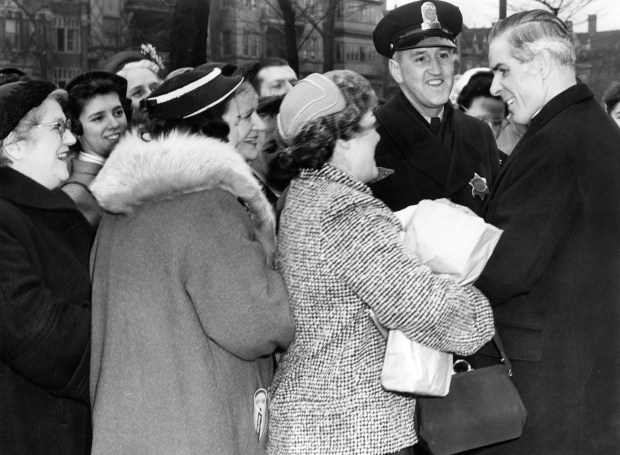

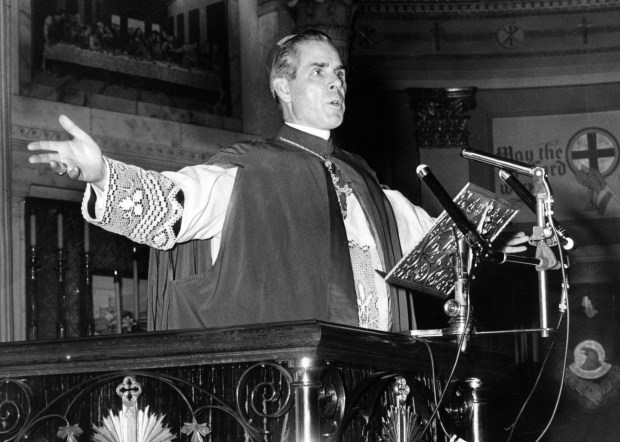


Catholic faithful continued to be touched by Sheen’s words and legacy for decades after his 1979 death, prompting calls for his canonization as a saint of the church.
Then a miracle — the healing of a Peoria-area baby born without a heartbeat and unresponsive for 61 minutes — was attributed to Sheen’s intercession and approved by Pope Francis in 2019, fulfilling a requirement on his pathway to becoming a saint.
The Vatican earlier this week gave the green light for Sheen’s beatification, which will make him the first Illinois native to be beatified — the last major step before potential sainthood in the Catholic Church.
“The people in Illinois, and particularly in the Diocese of Peoria, should take great pride because Fulton Sheen’s life was shaped by the people around him,” said Peoria Bishop Louis Tylka during an interview with the Tribune shortly after the announcement was made.
No date or location has been set yet for the beatification ceremony, according to officials with the Diocese of Peoria.
The canonization process for Sheen, who was born in 1895 on a farm in El Paso in central Illinois, has been long and often turbulent, including a long court fight over his body’s final resting place.
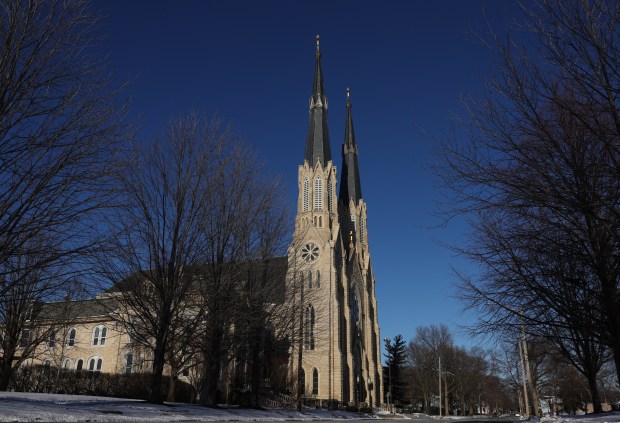
This was resolved in 2019 when his remains were moved from New York and buried in a tomb at the Cathedral of St. Mary of the Immaculate Conception in Peoria.

The Vatican then scheduled Sheen’s beatification ceremony in Peoria for late December 2019. But in a highly unusual move, the event was abruptly postponed just a few weeks prior, amid the church’s global sex abuse crisis, as the New York state attorney general investigated cases statewide.
While no accusations of abuse were made against Sheen personally, a bishop in Rochester, New York, raised concerns that more investigation was needed to determine if Sheen had mishandled allegations of abuse or misconduct while he served as a bishop there in the late 1960s.
In a December 2019 op-ed, Monsignor James Kruse of the Diocese of Peoria had blasted the Rochester Diocese’s call for caution as an “unexplainable act of sabotage.”
In the piece, Kruse said he was confident “an investigation will demonstrate that Sheen acted properly,” adding that an examination of documents sent to the Vatican revealed “that Bishop Sheen acted rightly and did not place children in (harm’s) way.”
“Sheen was exonerated, so the Vatican said, ‘Go ahead with the beatification,’” Kruse said during a December 2019 interview with the Peoria Journal Star.
In September 2025, a federal bankruptcy judge approved a roughly $246 million settlement between the Diocese of Rochester and hundreds of survivors of clergy sex abuse.
“If we look back on 2019, and in particular the state of New York, the climate wasn’t such that was supportive of the cause to move forward at that time,” Tylka told the Tribune. “But the reality is … the causes of concern have been resolved and we’re just grateful that the cause (for canonization) is moving forward. In God’s providence, we’re going to celebrate the beatification of an individual who was once known as America’s bishop.”
The matter of Sheen’s beatification had been paused since late 2019.
Yet his supporters across Illinois have been hoping and praying his cause for canonization moves forward.

The local mother who sought Sheen’s help years ago during the traumatic birth of her baby said she’s elated to finally celebrate the archbishop’s beatification, calling the news “amazing.”
“It will be good for the Diocese of Peoria. For the state of Illinois. For the whole church in the U.S.,” said Bonnie Engstrom of Washington, Illinois, whose son’s dramatic healing has been declared a miracle by the church. “People all around the world have been impacted by the teachings of Fulton Sheen. … There is so much depth and beauty in what he said.”
A Peoria couple inspired by Sheen recounted discussing him with Chicago-born Pope Leo XIV during an unexpected meeting with the Holy Father in June.
While on their honeymoon in Rome, newlyweds Kristen and Austin Savage briefly spoke to the pontiff before he gave them a sposi novelli blessing during a papal audience at the Vatican.
“I’d like to think Fulton Sheen was kind of interceding for us to bring his cause,” Kristen Savage said during an interview recounting the experience with “Dive Deep Podcast,” which is produced by the Diocese of Springfield.
The couple did not return Tribune requests for comment.
Pope Leo responded that as a child he had watched Sheen on television, according to the podcast interview.
“And it may have had an influence on him,” Austin Savage added during the podcast.

The husband and wife said they met one another at a Fulton Sheen-themed event at the Peoria cathedral where his tomb rests.
Sheen had “played a major role in our relationship,” Kristen Savage added.
She recalled that the Holy Father assured them “he would remember what we said,” Kristen Savage added during the podcast interview.
“So that definitely did give us hope for Fulton Sheen’s canonization,” she added. “Maybe we will see it during Pope Leo’s pontificate.”
‘Pray for my son’
The pregnancy had been healthy and largely uneventful.
In September 2010, Bonnie Engstrom was preparing for a home birth, as she had done with her first two children.
As her due date approached, the expectant mother would watch old episodes of “Life Is Worth Living” on YouTube with her husband, Travis Engstrom, she recalled during a recent interview with the Tribune.
Most mornings, she prayed to Sheen to take care of her baby, an invocation seeking for him to intercede on her behalf to God.
“I knew that I could trust Sheen to take good care of my child,” Bonnie Engstrom later wrote in her book “61 Minutes to a Miracle: Fulton Sheen and the True Story of the Impossible.” “Midwesterners tend to be hardworking and kind, and Sheen was a local boy to boot! It felt good knowing that such a holy man was praying for my unborn baby.”
If the child was a boy, the Engstroms planned to name him James Fulton, in Sheen’s honor.

In addition to revolutionizing religious broadcasting, Sheen was a renowned theologian, authoring more than five dozen books, according to Catholic University of America in Washington, D.C., where he had studied and taught.
Featured on the cover of Time Magazine in 1952, Sheen had hosted the radio show “The Catholic Hour With Bishop Fulton Sheen” for many years and then later the television show “The Fulton Sheen Program” in the 1960s.
The prelate was also credited with raising millions of dollars for Catholic missions, money that often went to some of the poorest parts of the world, according to the Archbishop Fulton J. Sheen Foundation in Peoria.
In 2002, Sheen’s cause for canonization as a saint was officially opened, which is a multistage process in the Catholic Church.
A decade later, Pope Benedict XVI announced that Sheen’s life had been recognized as one of “heroic virtue,” proclaiming him a “venerable servant of God.”
But to reach the second stage, beatification, a miracle had to be attributed to Sheen’s intercession.
Once a candidate is beatified, another miracle is generally needed before the candidate is canonized, though popes in the past have sometimes waived that step in special cases.

In mid-September 2010, the throes of labor gripped Bonnie Engstrom.
A dangerous knot had formed in her umbilical cord, tightening as her baby passed through the birth canal and cutting off his supply of oxygen.
On Sept. 16, 2010, she gave birth to a roughly 10-pound baby boy.
Yet the newborn seemed lifeless in her arms, his limbs limp and his skin an ashen shade of blue, she recalled.
The midwife and doula could not find a pulse; chest compressions could not revive him, the mom recounted.
Her husband grabbed a cup of water she’d been sipping and performed an emergency baptism, Bonnie Engstrom recalled.
As they waited for the ambulance, the mother sat on her bedroom floor repeating the name “Fulton Sheen” in her head.
In her shock and fear, “I didn’t know how to pray for my son,” Bonnie Engstrom recalled.
“But I already had this habit of asking for Fulton Sheen’s intercession for James during the pregnancy,” she said. “So in that moment, all I could do was say his name and just trust that he would pray for my son. That he would intercede.”
At the hospital, doctors tried multiple interventions to resuscitate the baby’s heart; to offer some comfort to the infant, a nurse held his tiny foot.
“She told me that he felt cold, like a corpse,” the mother recounted.
But 61 minutes after the infant’s birth, just as the physicians were about to call the time of death, monitors showed that his heart rate inexplicably shot up to 147 beats per minute, Bonnie Engstrom said.
“And it never stopped again,” she added.

Pope Francis officially approved the baby’s healing as a miracle attributed to the intercession of Sheen in 2019. The Catholic Church examines miracles through a typically lengthy process, which includes investigation by medical experts and theologians, before the Vatican’s approval.
“I knew that Jesus had performed this miracle. I knew that Fulton Sheen had played a part in it. I just believed it, with my whole heart,” said Bonnie Engstrom, who went on to have five more children. “We lived the miracle every day.”
Now James Fulton Engstrom is a 15-year-old high school freshman. His favorite subjects are math and art; he loves cheering on his siblings at their sports events.
He refers to Sheen as “my protector.”
“I think about him every day,” the teen added. “I also like to pray to him.”
Local and relevant
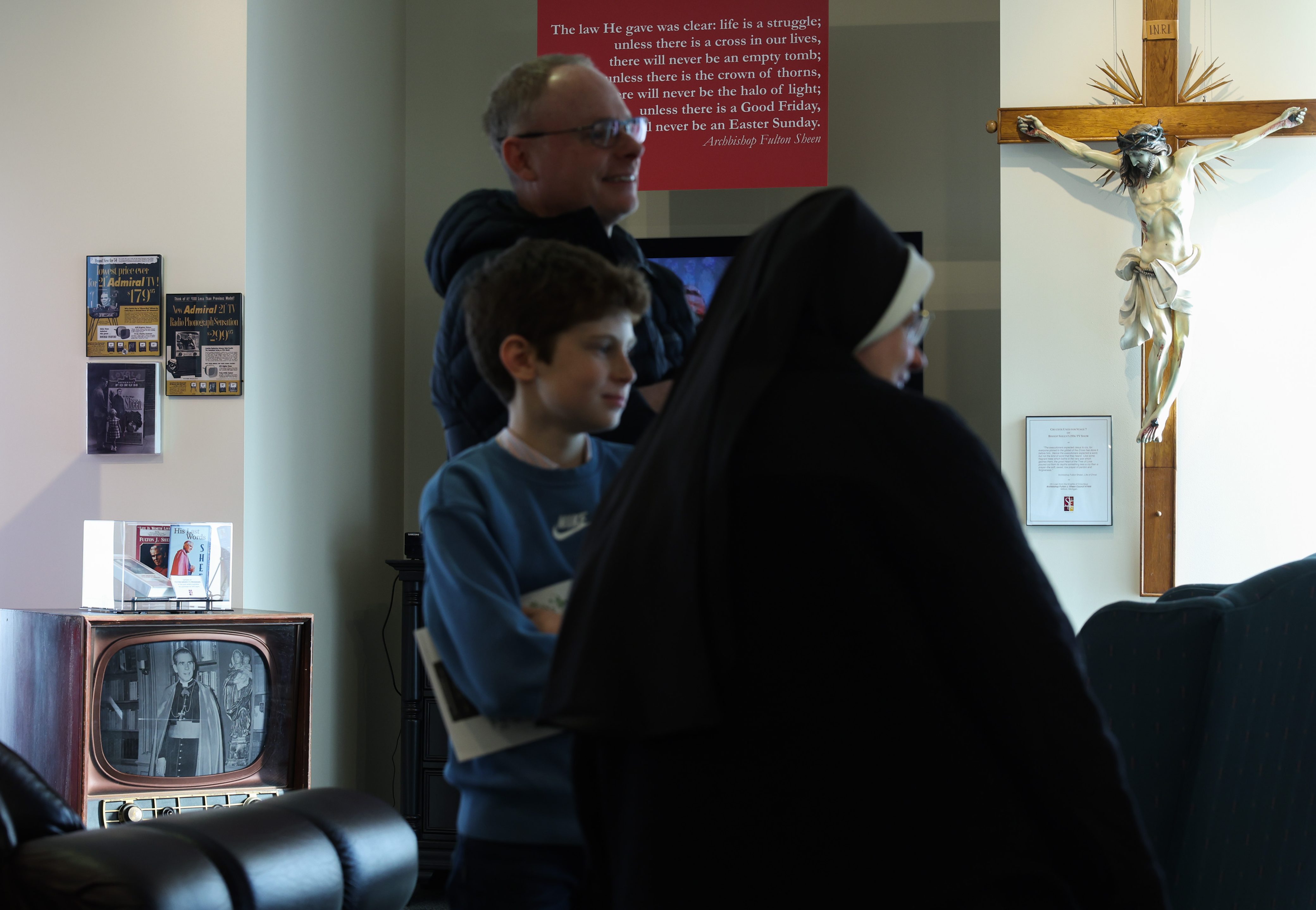
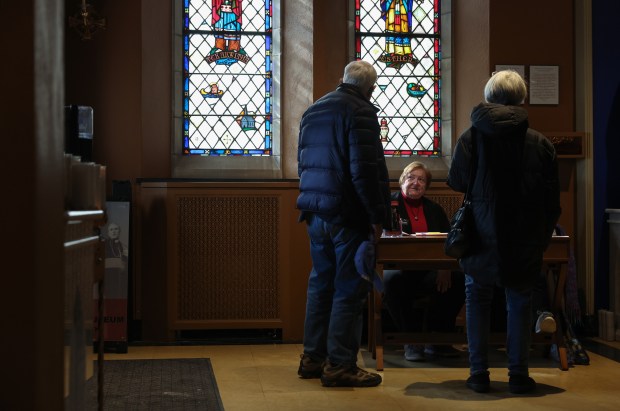
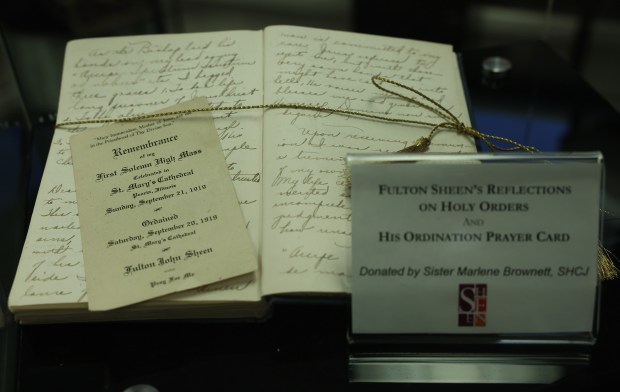
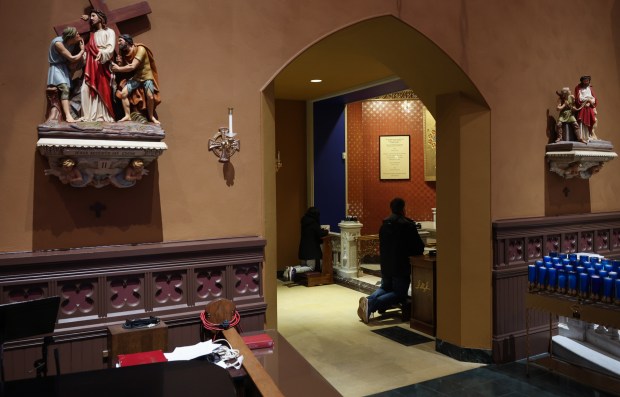
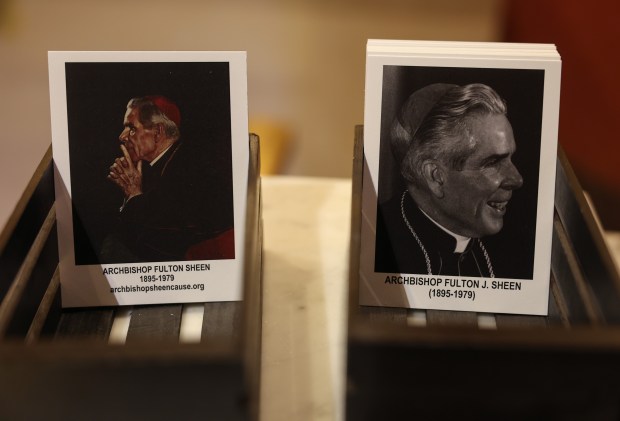
Visitors at the Archbishop Fulton J. Sheen Museum in Peoria can view artifacts from his life, including photos, writings, a selection of his vestments and his desk.
On a recent weekday, the documentary “Archbishop Fulton J. Sheen: Servant of All” played on a television in one section of the museum.
It includes one eerily prophetic moment from a late February 1953 episode of “Life Is Worth Living” titled “The Death of Stalin.”
Sheen, known for his staunch opposition to Communism, gave a dramatic reading from the burial scene of Shakespeare’s “Julius Caesar” but replaced the Roman characters with the names of Soviet leaders, subbing Stalin for the ill-fated Caesar.
“Stalin must one day meet his judgment,” Sheen proclaimed during the episode’s climax.



About a week later, Stalin suffered a stroke. On March 5, 1953, the totalitarian ruler was dead.
Museum visitor Bea Elbert of Germantown Hills marveled that Sheen was born and raised just a few miles from her home.
“It’s relatable,” she said. “He walked in the places that we walk. Everyone is capable of becoming a saint. It does make it special. It makes it real.”
Donna Lukens of Springfield came into the museum and bought several copies of “Fulton Sheen’s Wartime Prayerbook” — a small and light-weight book designed to fit in a uniform pocket — to send to her grandson in the Air Force Academy.
“He’ll always have the word of God on him,” she said.
Lukens recalled watching Sheen on television as a child in the living room while her mother would iron the laundry.
Throughout childhood, her family frequently moved to different cities around the country, but “Fulton Sheen was always there,” Lukens added.
The archbishop’s niece, Joan Sheen Cunningham of Peoria, believed her uncle would “want to be canonized because it would give him more power to serve Christ,” according to her memoir “My Uncle Fulton Sheen.”
“Fulton Sheen would make a good saint for our times because he is still so relevant today,” Cunningham, who died in 2022, said in the book.

Kathleen Sprows Cummings, professor of history at the University of Notre Dame, said saints tend to tap into a human need.
In the case of Sheen, his use of burgeoning media decades ago can be pertinent today as the world grapples with ethical questions on use of artificial intelligence and social media, said Cummings, author of the book “A Saint of Our Own: How the Quest for a Holy Hero Helped Catholics Become American.”
“I think Sheen’s media savvy is really important today, at a time when everybody’s worried in the Catholic church and beyond about the corrosive effects of new media,” she said. “Sheen was someone who really harnessed new media for good. He did it first with radio and then with television.”
In general, a local saint can be a very powerful figure for the faithful, Cummings said.
“Locally is how we access the holy. I think it’s really important for people to have … a saint of their own, someone who they connect to,” she added. “That can happen in other ways. It can happen through ways of life or experience or occupations. But the way those connections happen most clearly is through place. A saint who walks where I walk. A saint who lives where I live.”
The Associated Press contributed.