
Content oversight provided by Studio 1847
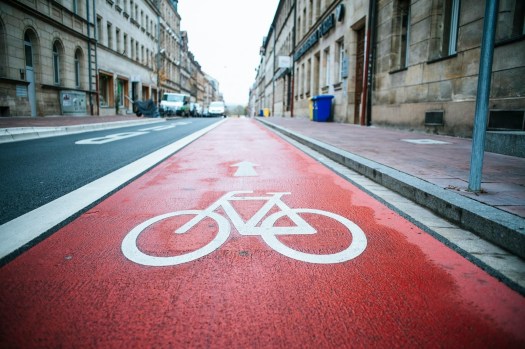
The question of how bicycle riders can safely travel roadways has long troubled society. If the roads themselves are made for automobiles to drive on at high speeds, and the sidewalks are for pedestrians who are walking, where do cyclists using bicycles to traverse a city best fit in? In Chicago, the answer became bike lanes, specifically sanctioned lanes between the road and the sidewalk in which cyclists could ride.
However, as Chicago’s bike network has expanded, safety outcomes have become more complicated. While bike lanes were introduced to improve conditions for cyclists, recent city data and crash patterns suggest that some designs may be contributing to new and sometimes more dangerous conflict points, particularly at busy intersections and along high-speed arterial roads, leading to more bicycle accidents in Chicago.
Where the risk is concentrated
Certain Chicago corridors have emerged as consistent danger zones for cyclists, not because people aren’t riding carefully, but because of how traffic patterns, turning movements and infrastructure collide.
At the Wicker Park “Six Corners” intersection of North Avenue, Damen Avenue and Milwaukee Avenue, heavy cyclist volume intersects with complex turning traffic. Right-turning vehicles regularly cross bike lanes at sharp angles, creating a high risk of so-called right hook collisions.
Milwaukee Avenue, often called Chicago’s most heavily used cycling corridor, illustrates the paradox of popularity and danger. While it carries more bike traffic than almost any other street, it has also been the site of multiple high-profile cyclist fatalities. Common causes include “dooring” incidents and delivery vehicles stopping in bike lanes, forcing riders into fast-moving traffic.
In the Loop and central business district, confusion often arises near two-way protected lanes such as Dearborn Street. Bus boarding islands, while effective for transit riders, can create narrow pinch points where cyclists, buses and turning vehicles converge with little margin for error.
High-speed arterials like Western Avenue and Ashland Avenue pose a different problem entirely. With speed limits exceeding 30 miles per hour and narrow travel lanes, even minor driver errors can result in severe or fatal injuries when cyclists are present.
Design conflicts in modern bike lanes
When examining crash patterns, many safety issues stem less from the idea of bike lanes and more from how they are integrated into existing streets.
Protected lanes can create a false sense of security, particularly at intersections. Drivers turning right from general traffic lanes often fail to see cyclists traveling inside protected barriers on the passenger side, an issue traffic engineers now openly acknowledge as a major design challenge.
Maintenance has also become a growing concern. In the winter months, many protected lanes function as snow and debris traps. Without specialized mini-plows, these lanes can become unusable, forcing cyclists back into standard traffic lanes at the most dangerous time of year.
Community resistance has further complicated implementation. In neighborhoods such as Brighton Park, residents have protested bike lanes along corridors like Archer Avenue, arguing that the removal of vehicle lanes increases congestion and could slow emergency response times. These tensions reflect broader questions about how street space is allocated in dense urban areas.
What the data actually shows
Rather than a simple rise or fall in safety, Chicago’s cycling data tells a mixed story.
While total traffic fatalities citywide declined by roughly 30% between 2021 and 2024, reported non-fatal bicycle injuries increased significantly during the same period by as much as 49%, according to some analyses. This suggests that while fewer crashes are deadly, more cyclists are being injured in everyday traffic interactions.
After recognizing that bike lanes on major arterials often produce volatile interactions, the Chicago Department of Transportation has adjusted its approach. Through the Chicago Cycling Strategy, the city has shifted increased attention toward “Neighborhood Greenways,” low-stress residential routes designed to reduce exposure to fast-moving traffic.
Expert perspectives and what comes next
Industrial engineer John Forester wrote in his 2022 book, “Effective Cycling,” that accidents in bike lanes are 2.6 times more likely than on roadways. Safety researchers have long noted that intersections are the most dangerous places for cyclists. Studies consistently show that the vast majority of urban bicycle crashes occur during turning movements or at crossings, rather than mid-block travel. This reality has pushed planners to rethink how bike lanes function at intersections, not just between them.
Rather than layering bike lanes onto streets designed decades ago for cars alone, transportation experts increasingly argue for full corridor redesigns that account for all users from the outset. That approach requires more space, clearer sightlines and designs that reduce decision-making under pressure for both drivers and cyclists.
FAQ
Q: Have Chicago bike lanes increased bicycle safety overall?
A: The results are mixed. While bike lanes have expanded access and visibility for cyclists, injury data suggests that certain designs — particularly on busy arterials — have introduced new risks that are still being addressed.
Q: What are the most common problems with bike lane design in Chicago?
A: Frequent issues include intersection conflicts, “right hook” crashes, dooring from parked cars, delivery vehicles blocking lanes and limited winter maintenance.
Q: Are specific areas seeing higher rates of cycling injuries?
A: Yes. Corridors such as Milwaukee Avenue, parts of the Loop and major arterials like Ashland and Western consistently report higher numbers of cyclist injuries due to traffic volume and speed.
Q: What is the city doing right now to address these risks?
A: Chicago is actively replacing plastic bollards with concrete barriers on key corridors, including major stretches of Kinzie Street, while expanding neighborhood greenways and redesigning intersections with clearer turning protections.