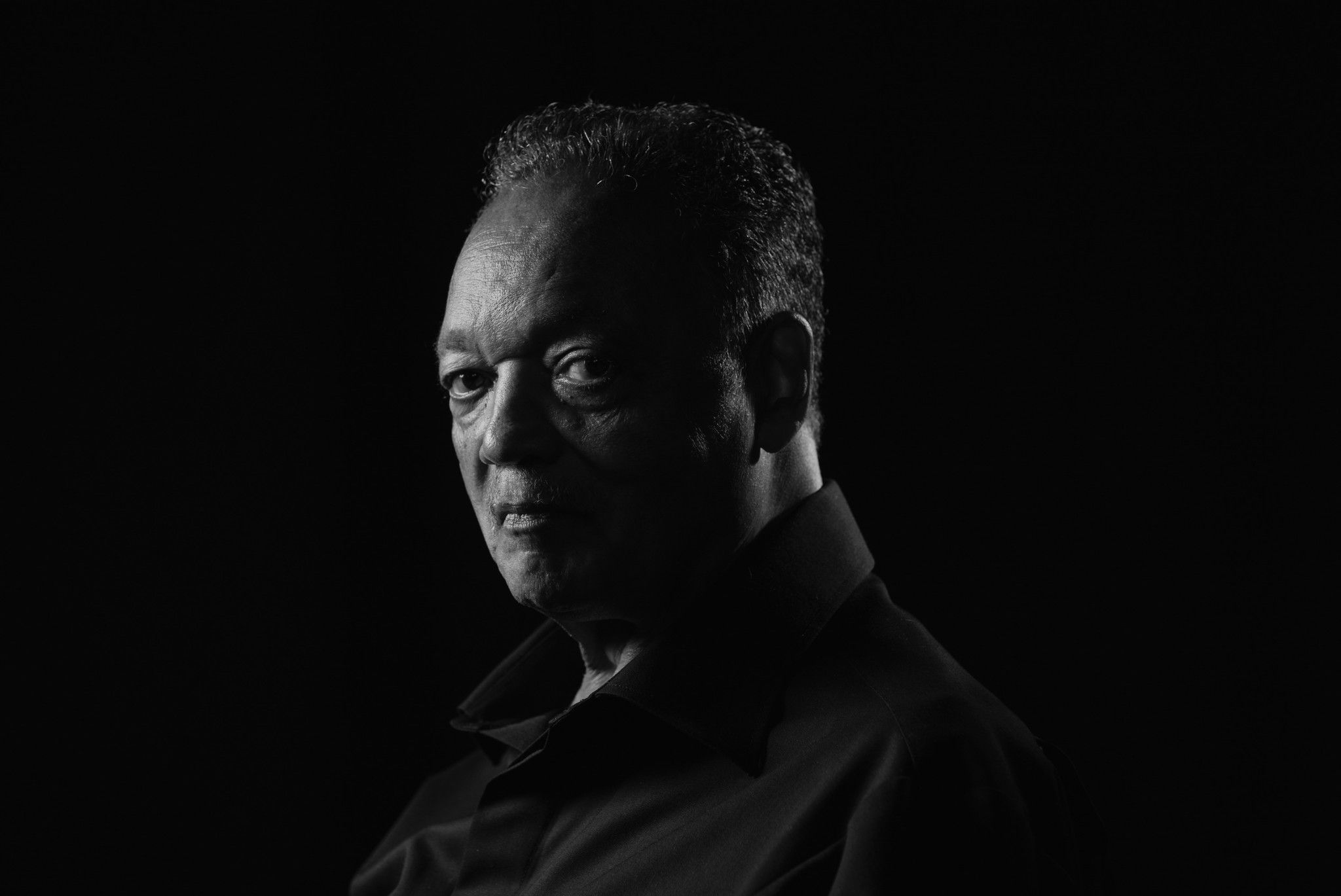
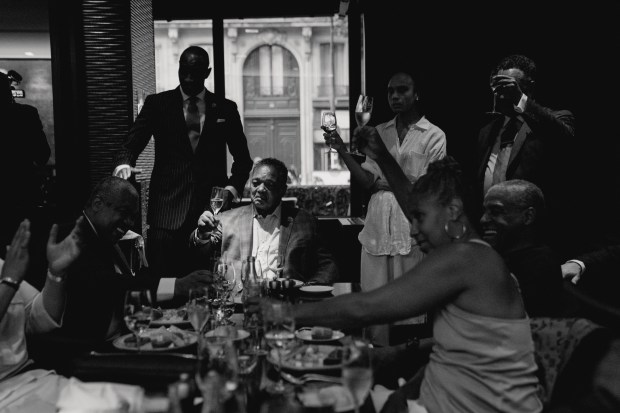
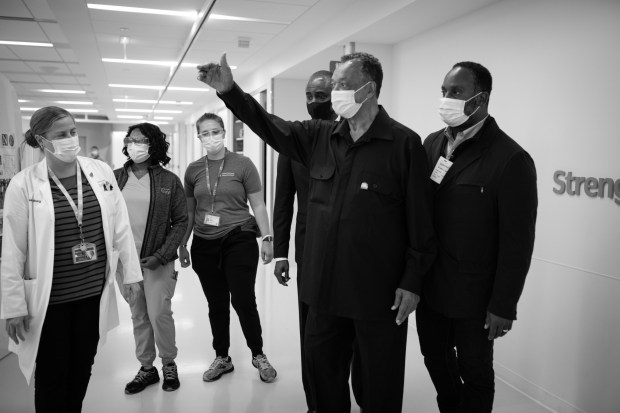
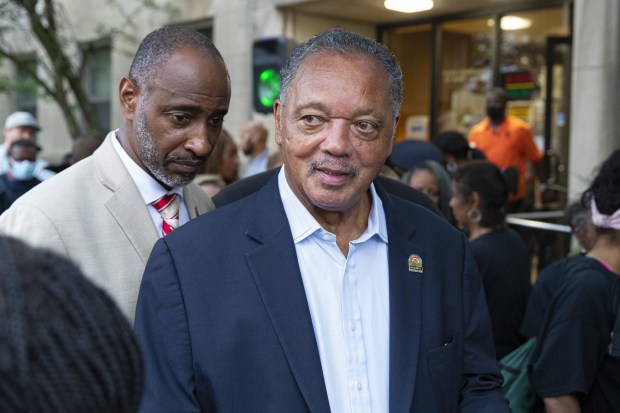
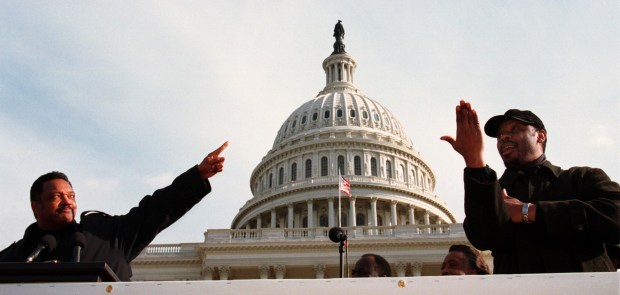
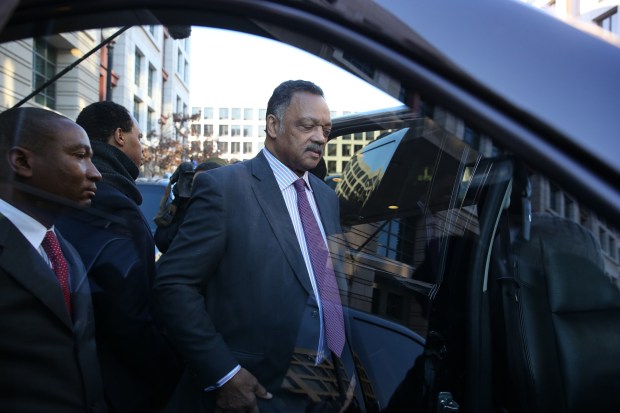
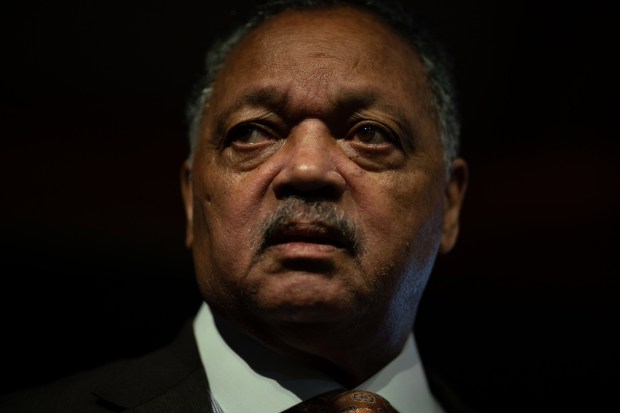
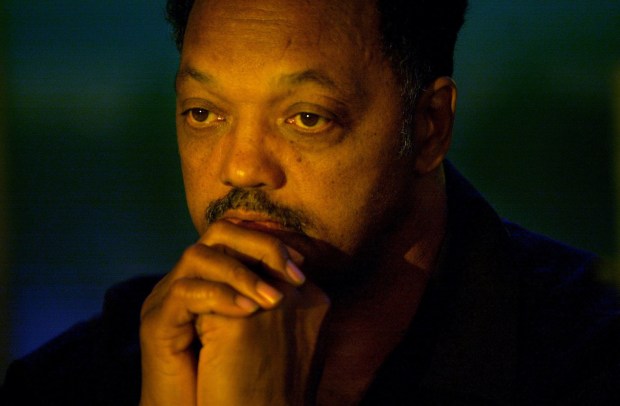
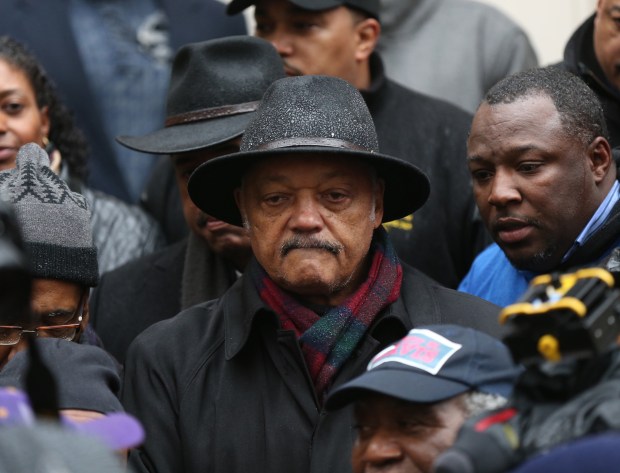
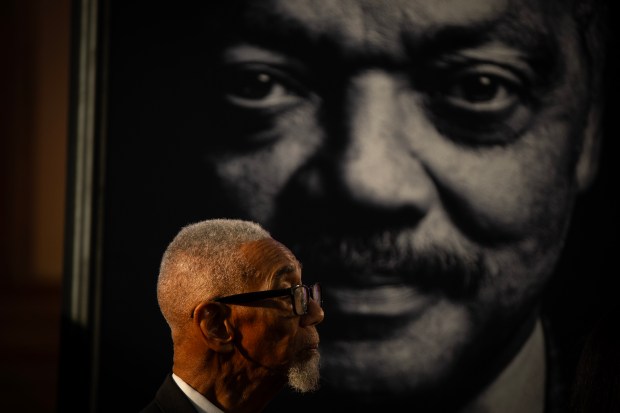
The Rev. Jesse Jackson at Rainbow/PUSH Coalition headquarters in Chicago on Sept. 30, 2021. (E. Jason Wambsgans/Chicago Tribune)
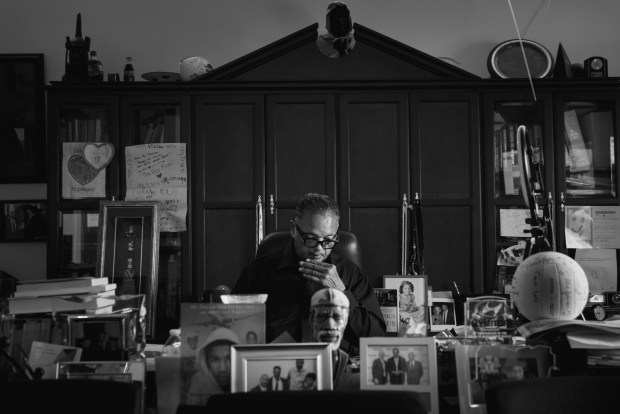
The Rev. Jesse Jackson in his office at the Rainbow/PUSH Coalition headquarters in Chicago on Sept. 29, 2021. (E. Jason Wambsgans/Chicago Tribune)
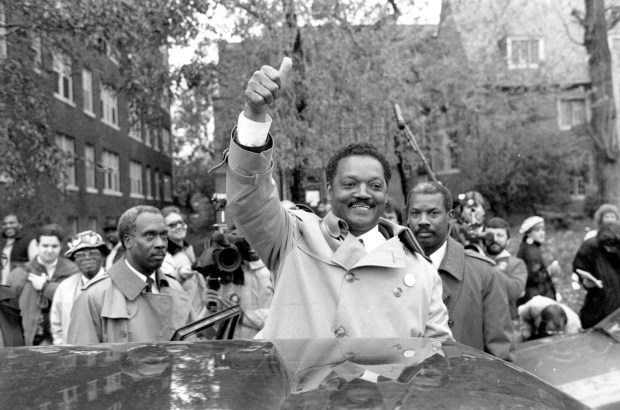
The Rev. Jesse Jackson, a former presidential candidate, gives a thumbs-up and yells out for people to vote as he leaves the polls on Election Day at the Bryn Mawr Church at 7000 S. Jeffery Blvd. in Chicago on Nov. 8, 1988. (Phil Greer/Chicago Tribune)
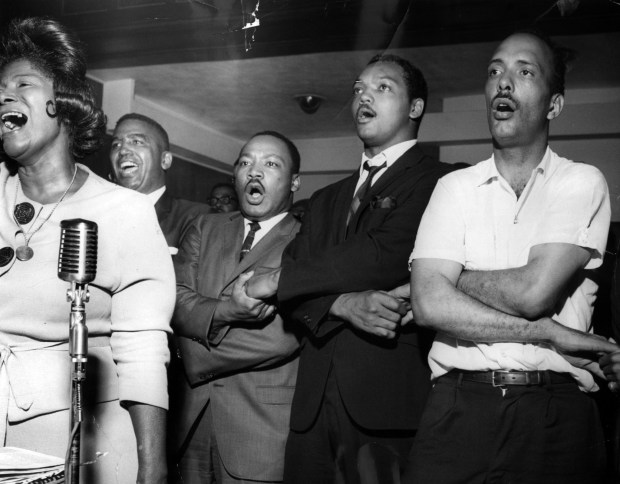
Mahalia Jackson, left, sings "We Shall Overcome" with civil rights leaders the Rev. Martin Luther King Jr., third left, Jesse Jackson, second from right, and Albert Raby, right, on Aug. 4, 1966. The event happened at 844 W. 71st St. in Chicago. (Ray Foster/Chicago Tribune)
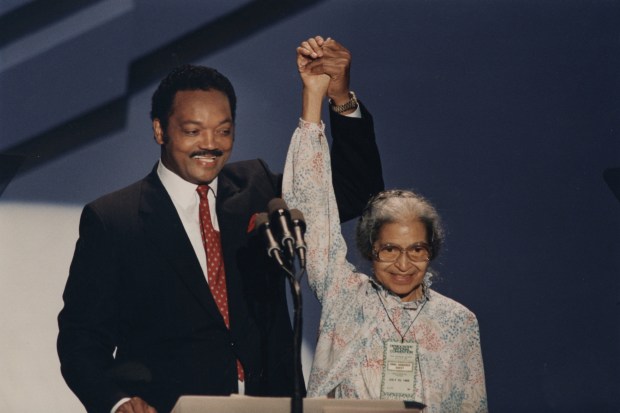
The Rev. Jesse Jackson and Rosa Parks appear at the Democratic National Convention on July 19, 1988, in Atlanta. (Karen Engstrom/Chicago Tribune)
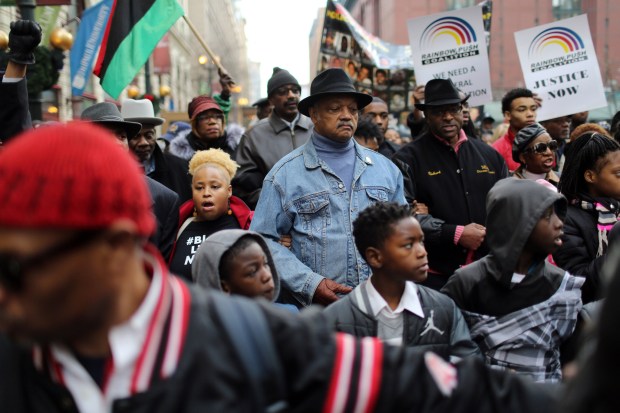
The Rev. Jesse Jackson and the Rainbow/PUSH Coalition lead a protest through the Loop on Dec. 6, 2015, in response to the Laquan McDonald shooting and continuing Chicago police investigation. (Brian Cassella/Chicago Tribune)
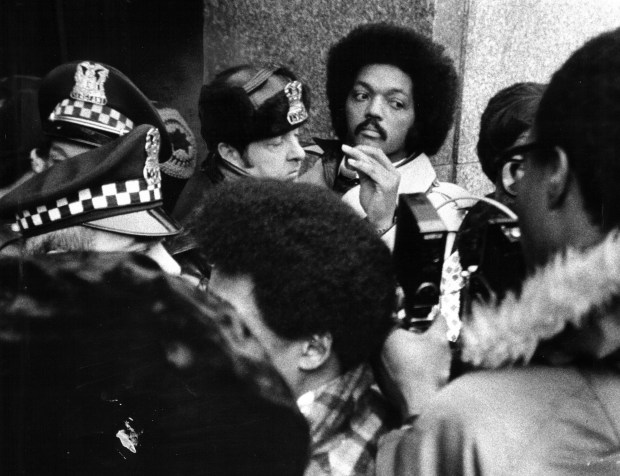
Trying to get in to the Board of Education Building to meet with School Superintendent Joseph Hannon, the Rev. Jesse Jackson and followers clash with police barring them from the door near LaSalle Street and Wacker Drive on Dec. 15, 1975. Hannon refused to talk to them about their demand that the principal of Terrell Elementary School be fired. The Rev. Jackson and followers were arrested on charges of disorderly conduct after they refused to leave and a shoving match took place. (James O'Leary/Chicago Tribune)
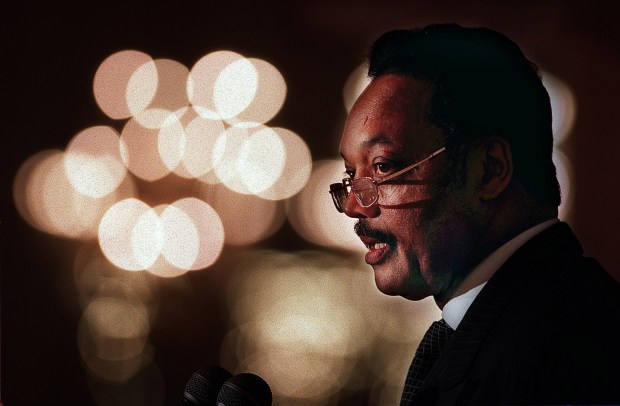
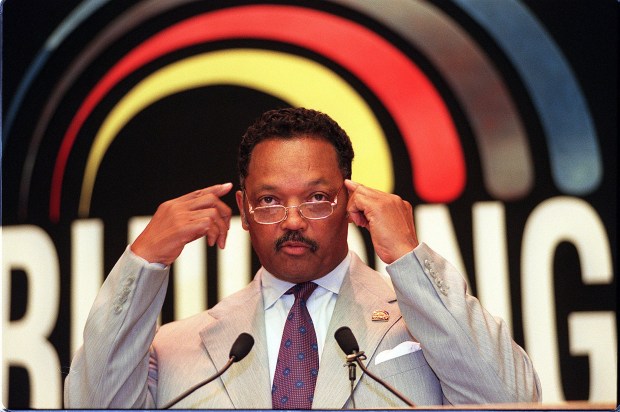
The Rev. Jesse Jackson speaks at a luncheon on March 24, 1999, at Midland Hotel where he announced that he would not run for president in the year 2000. (Phil Velasquez/Chicago Tribune)
Pete Souza / Chicago Tribune
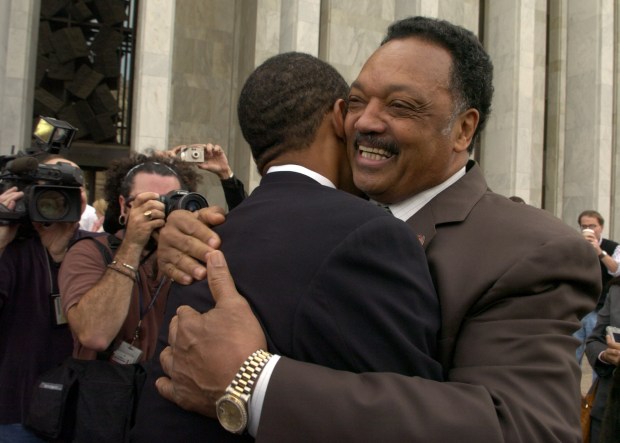
The Rev. Jesse Jackson hugs Barack Obama outside the Library of Congress Jan. 4, 2005, where a reception was held in honor of Obama who had just been sworn in as a U.S. senator.
Paul F. Gero / Chicago Tribune
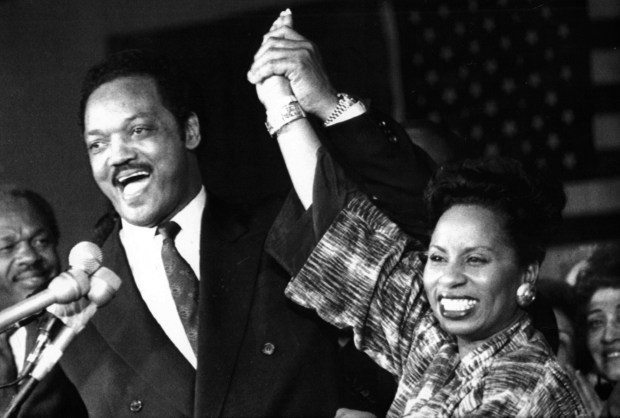
Jesse Jackson and his wife, Jackie, clasp hands in triumph Tuesday at the Albert Thomas Convention Center in Houston, March 8, 1988. Jackson led the balloting in five Southern states.
Bonnie Trafelet/Chicago Tribune
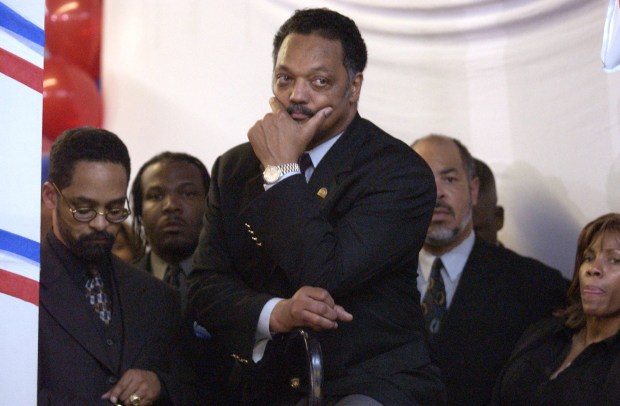
The Rev. Jesse Jackson, center, during the campaign party for Illinois State Senate 15th district candidate the Rev. James T. Meeks in Dolton in 2002.
Vashon Jordan Jr. / Chicago Tribune
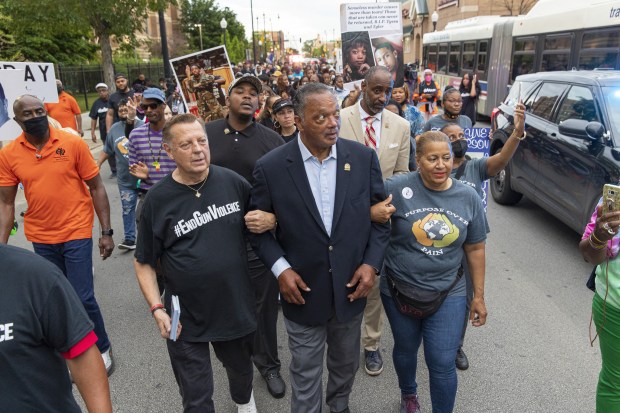
The Rev. Michael Pfleger, from left, the Rev. Jesse Jackson and Chicago Fire Commissioner Annette Nance-Holt march in a peace walk led by St. Sabina Church in Auburn Gresham, June 25, 2021.
E. Jason Wambsgans / Chicago Tribune
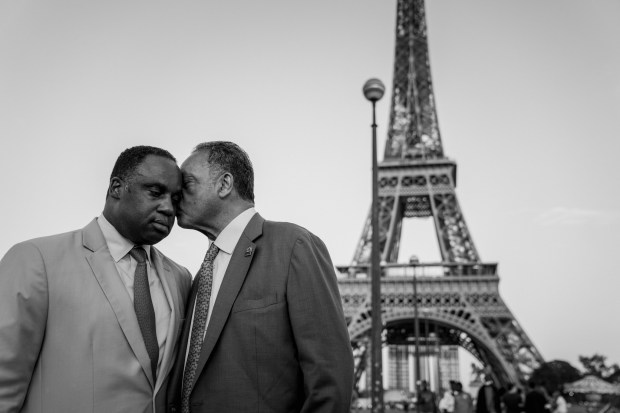
The Rev. Jesse Jackson and his son Jonathan Jackson at the Eiffel Tower in Paris on July 16, 2021.
E. Jason Wambsgans / Chicago Tribune
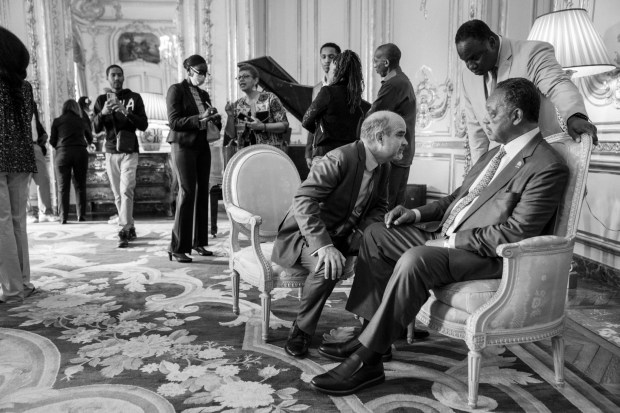
Rev. Jesse Jackson chats with J. Liam Wasley, acting Deputy Chief of Mission, during a reception for Jackson at the residence of the U.S. Embassy in Paris in advance of his his being awarded the rank of Commander of the National Order of the Legion of Honor on July 16, 2021.
E. Jason Wambsgans / Chicago Tribune
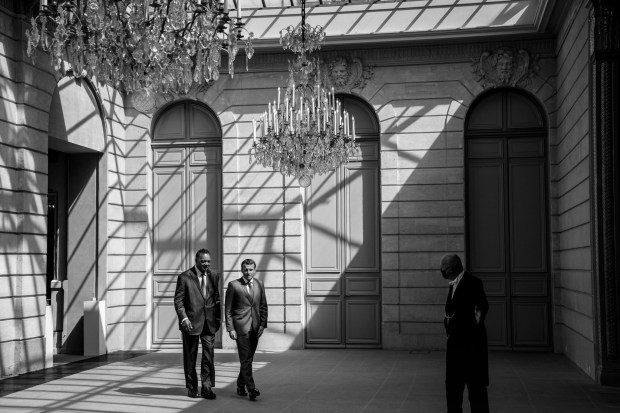
French President Emmanuel Macron escorts Jesse Jackson to the Legion of Honor ceremony at the Elysee Palace in Paris on July 19, 2021. Jackson was given the rank of commander of the national order of the Legion of Honor, the highest of all French military and civilian honors.
E. Jason Wambsgans / Chicago Tribune
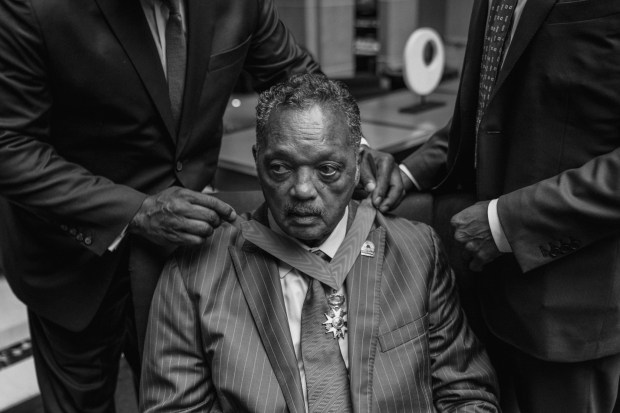
The Rev. Jesse Jackson after receiving the Legion of Honor medal in Paris.
E. Jason Wambsgans / Chicago Tribune
Rev. Jesse Jackson is moved by a speech during a dinner with family and friends after receiving the Legion of Honor Medal in Paris on July 19, 2021.
E. Jason Wambsgans / Chicago Tribune
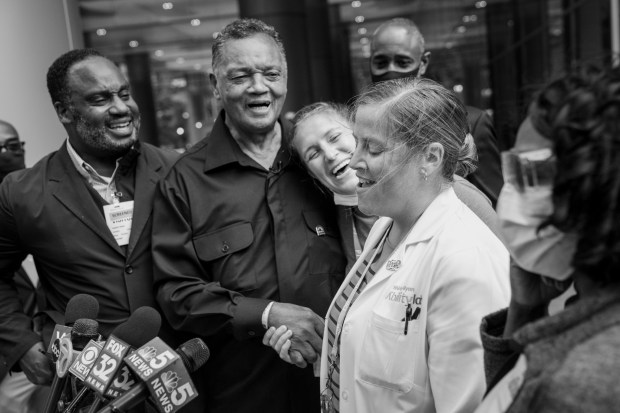
Rev. Jesse Jackson waves goodbye to staff and patients at the Shirley Ryan AbilityLab, where he spent nearly a month recovering from COVID-19 on Sept. 22, 2021.
E. Jason Wambsgans / Chicago Tribune
The Rev. Jesse Jackson jokes with his physician, Dr. Leslie Rydberg, right, and physical therapist Talia Shapiro, center, as he is released from therapy at the Shirley Ryan AbilityLab after recovering from COVID-19 on Sept. 22, 2021.
E. Jason Wambsgans / Chicago Tribune
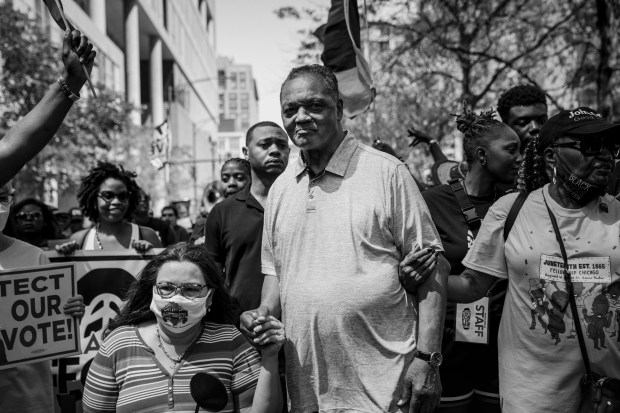
Sen. Tammy Duckworth joins Rev. Jesse Jackson as they lead a Juneteenth march through the Loop on June 19, 2021.
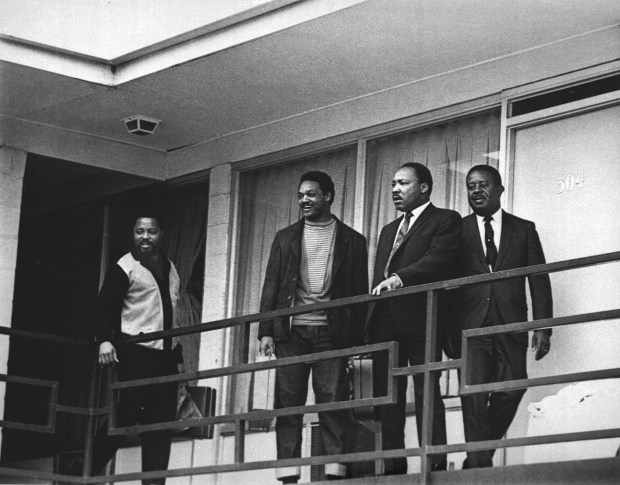
The Rev. Martin Luther King Jr. stands with other civil rights leaders on the balcony of the Lorraine Motel in Memphis, Tenn., on April 3, 1968, a day before he was assassinated at approximately the same place. From left are Hosea Williams, Jesse Jackson, King, and Ralph Abernathy. The 39-year-old Nobel Laureate was the proponent of non-violence in the 1960's American civil rights movement. (Charles Kelly/AP)
Nancy Stone / Chicago Tribune
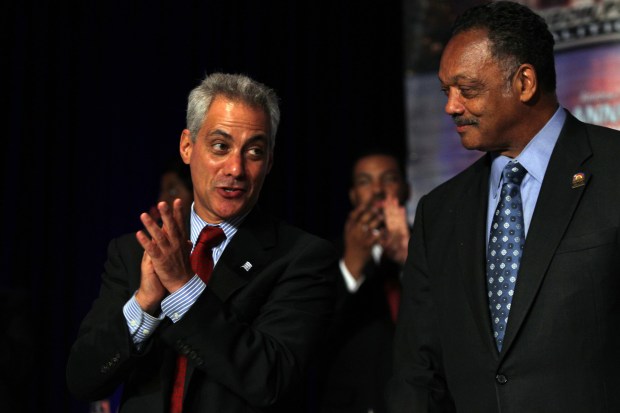
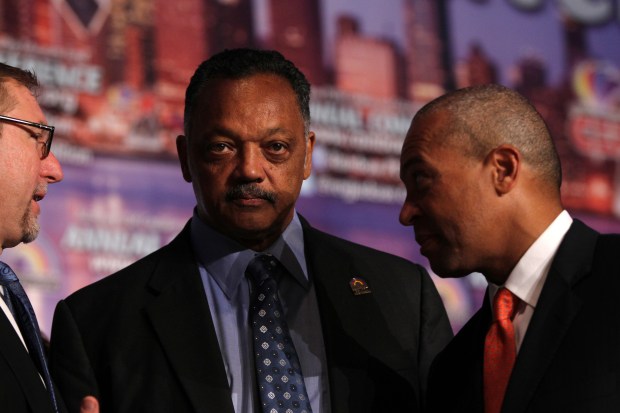
Mayor Rahm Emanuel and Jesse Jackson applaud a speech by Massachusetts Gov. Deval Patrick at the annual Operation PUSH conference in Chicago, July 11, 2012.
James Branaman/Chicago tribune
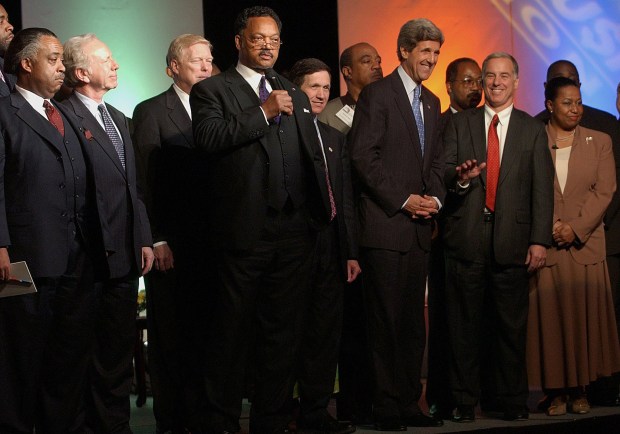
On June 22, 2003, seven Democratic presidential candidates appeared on the same stage in Chicago at Jesse Jackson's Rainbow/PUSH forum. The Rev. Al Sharpton, from left, Joe Lieberman, Richard Gephardt, Dennis Kucinich, John Kerry, Howard Dean and Carol Moseley Braun, are pictured behind the Rev. Jesse Jackson.
E. Jason Wambsgans / Chicago Tribune
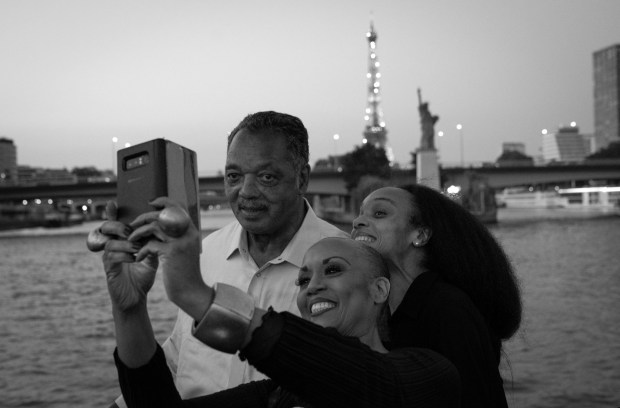
The Rev. Jesse Jackson poses for a picture with his daughters Santita Jackson, center, and Jacqueline Jackson during a boat ride on the Seine River in Paris on July 20, 2021.
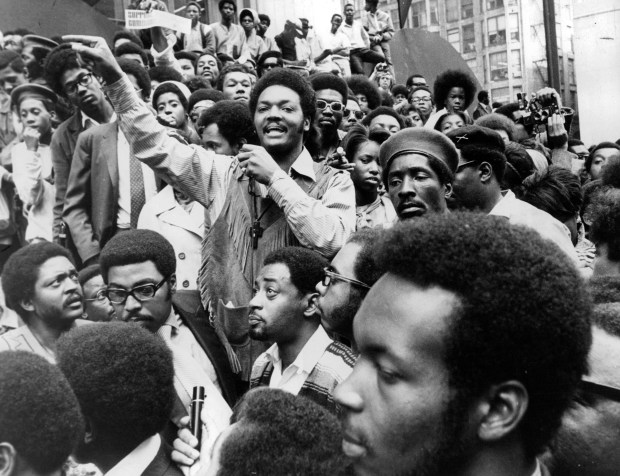
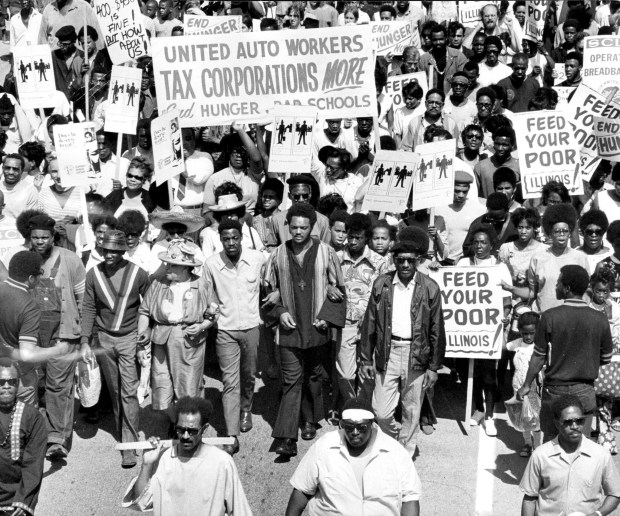
The Rev. Jesse Jackson issues directions to a crowd of more than 3,000 people who attended a “Black Monday” rally protesting job discrimination in Chicago's Civic Center Plaza on Sept. 22, 1969. (Luigi Mendicino/Chicago Tribune)
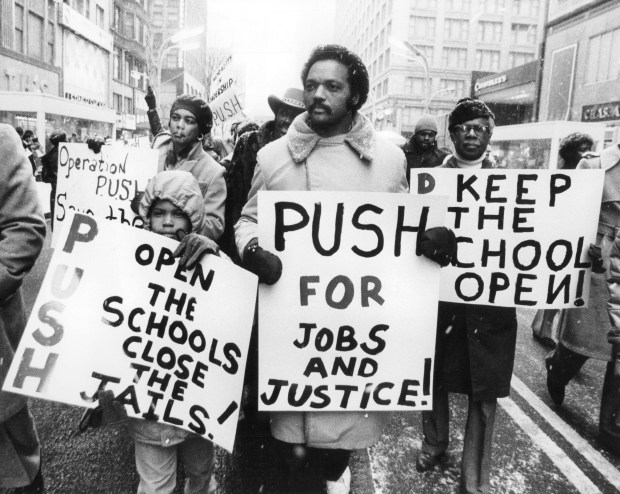
More than 500 demonstrators led by the Rev. Jesse Jackson march in the Loop on Jan. 5, 1979, protesting the school’s financial plight. (Walter Kale/Chicago Tribune)
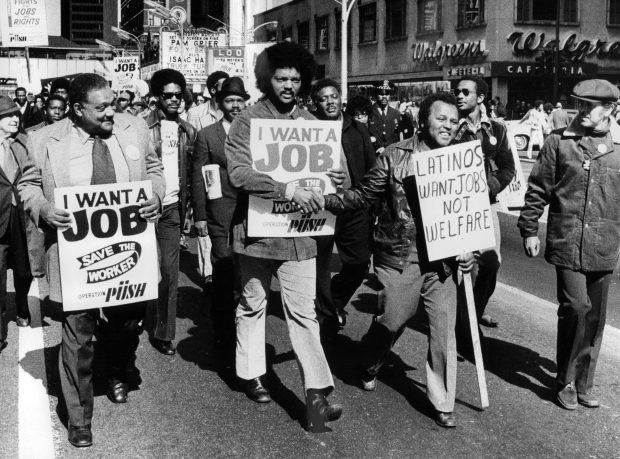
After the Fire Department’s fire prevention parade, the Rev. Jesse Jackson, center, led a group of people down State Street demanding jobs for low-income residents on Oct. 7, 1974, in Chicago. The group had a brief confrontation with the police. (William Kelly/Chicago Tribune)
Ovie Carter / Chicago Tribune
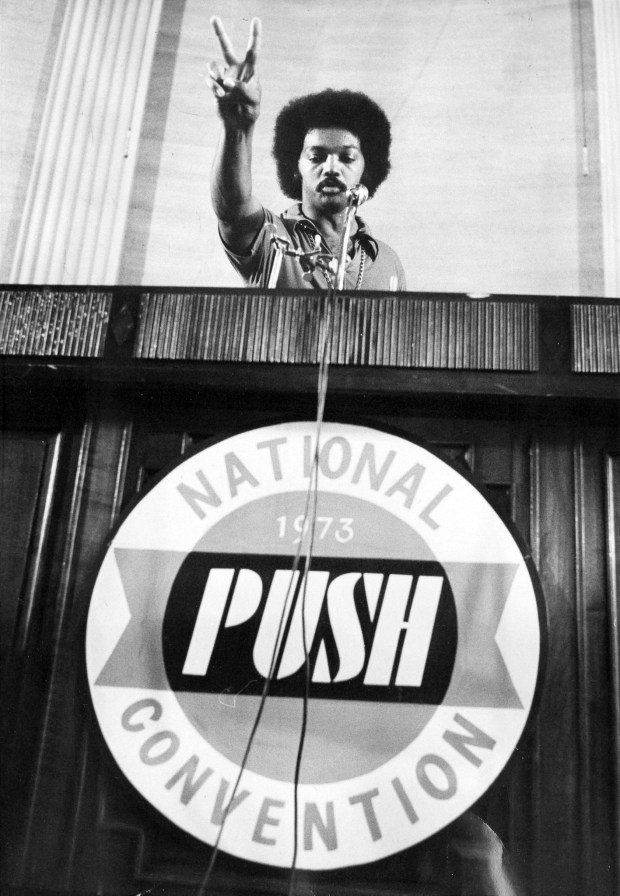
Rev. Jesse Jackson addresses a group of P.U.S.H conventioneers at headquarters, 50th and Drexel, July 25, 1973.
Charles Osgood/Chicago tribune
The Rev. Jesse Jackson addresses the Operation PUSH Coalition in the Grand Ballroom of McCormick Place in 1999.
Vashon Jordan Jr. / Chicago Tribune
The Rev. Jesse Jackson walks to the front of a peace walk led by St. Sabina Church in Auburn Gresham on June 25, 2021.
Michael Budrys / Chicago Tribune
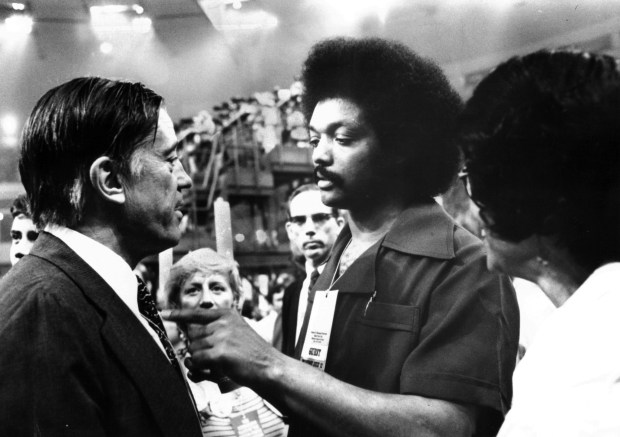
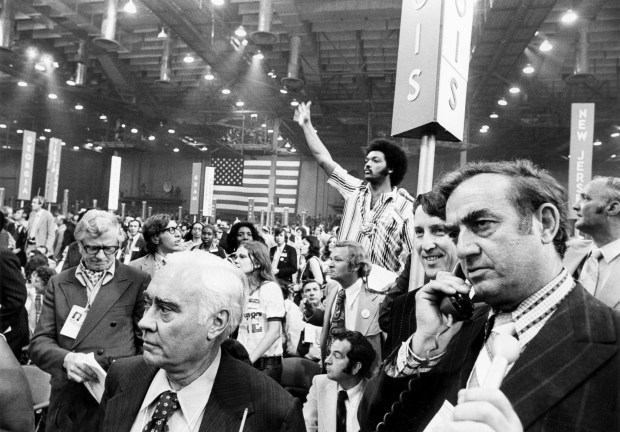
The Rev. Jesse Jackson, head of Operation PUSH, pokes a finger at Benjamin Bradlee, executive editor of the Washington Post, as they discuss issues on the floor of Madison Square Garden on July 13, 1976. Jackson is attending the convention as an observer, far different than in 1972 when he was among those instrumental in a credentials decision that kept Mayor Daley and his delegates from taking their convention seats.
Ovie Carter / Chicago Tribune
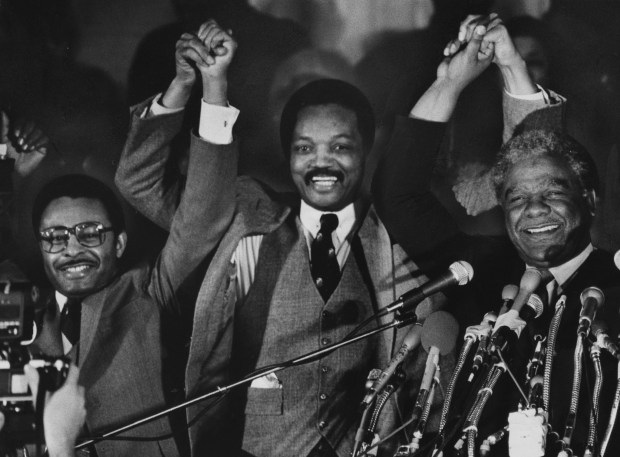
Presidential candidate Jesse Jackson with U.S. Senate hopeful Roland Burris, left, and Chicago Mayor Harold Washington, right, March 17, 1984, in Chicago.
Walter Kale / Chicago Tribune
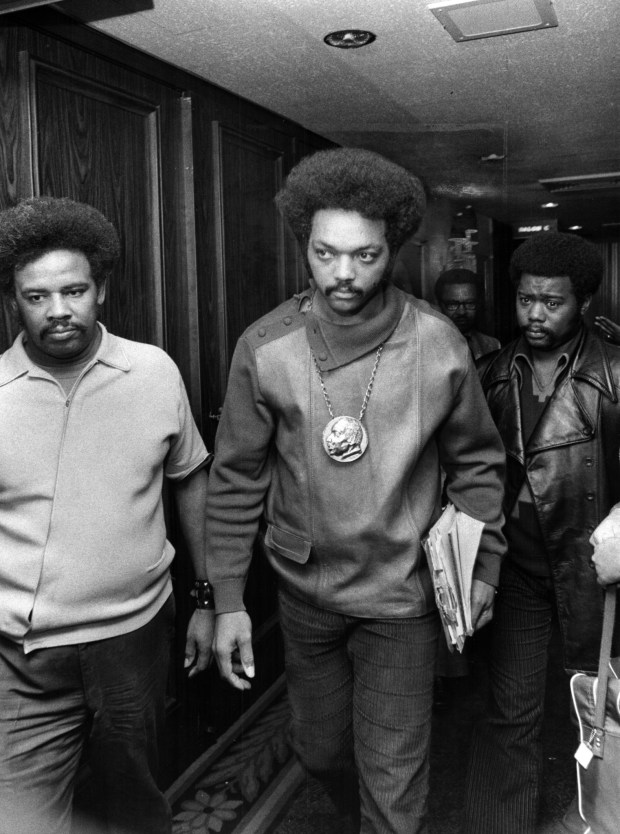
The Rev. Jesse Jackson, center, leaves a meeting with Southern Christian Leadership Conference leader Ralph Abernathy on Dec. 3, 1971, at the Marriott Hotel in Chicago. The earlier showdown at the Marriott between Jackson and Abernathy led to Jackson's split from the civil rights group to form Operation PUSH on Dec. 18, 1971.
Luigi Mendicino / Chicago Tribune
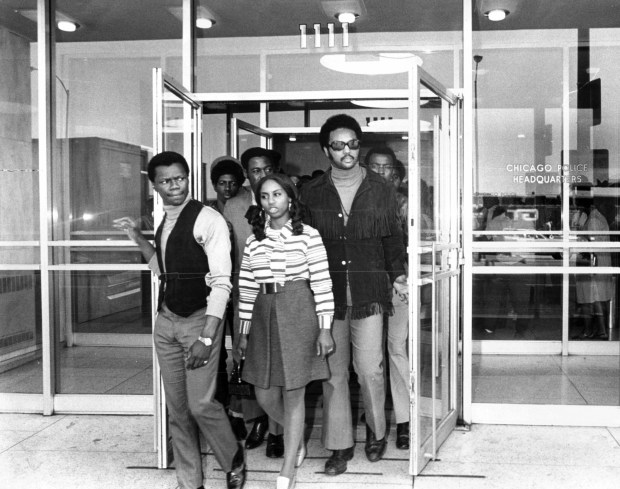
Rev. Jesse Jackson, director of Operation Breadbasket, leaves jail after signing his own cognizance bond on Sept. 12, 1969, at the central police building in Chicago. Jackson was accompanied by Larry Patterson and Robert Weathers, who had been arrested and jailed with him. Jackson's wife Jacqueline is in the front.
Chicago Tribune archive
The Rev. Jesse Jackson marches in 1969.
Brian Cassella / Chicago Tribune
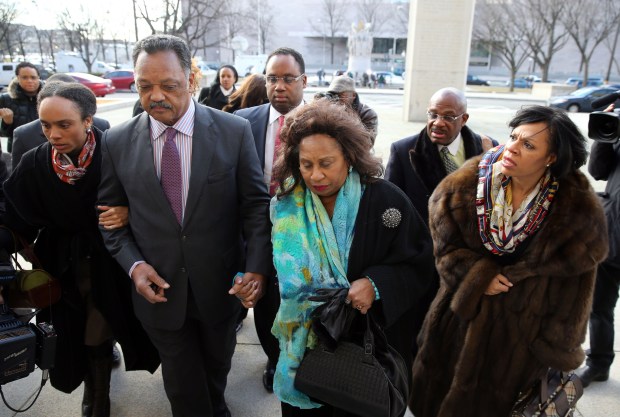
The Rev. Jesse Jackson and family arrive to support Jesse Jackson Jr. at U.S. District Court in Washington. Feb. 20, 2013.
Zbigniew Bzdak / Chicago Tribune
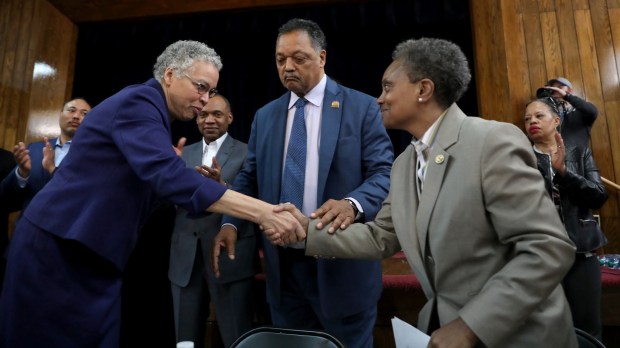
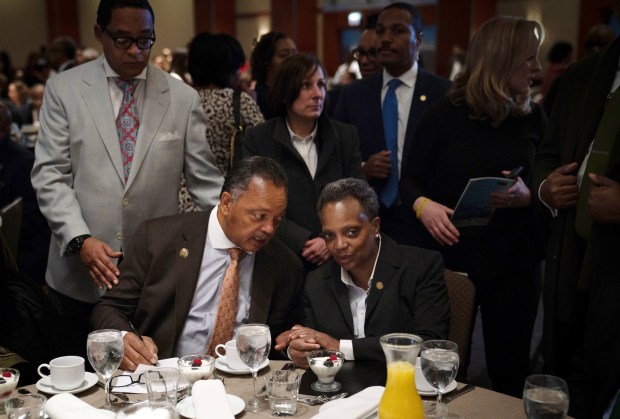
Cook County Board President Toni Preckwinkle, left, and Chicago Mayor-elect Lori Lightfoot greet with the Rev. Jesse Jackson between them at a unity event on April 3, 2019, at Rainbow/PUSH Coalition.
Ernie Cox / Chicago Tribune
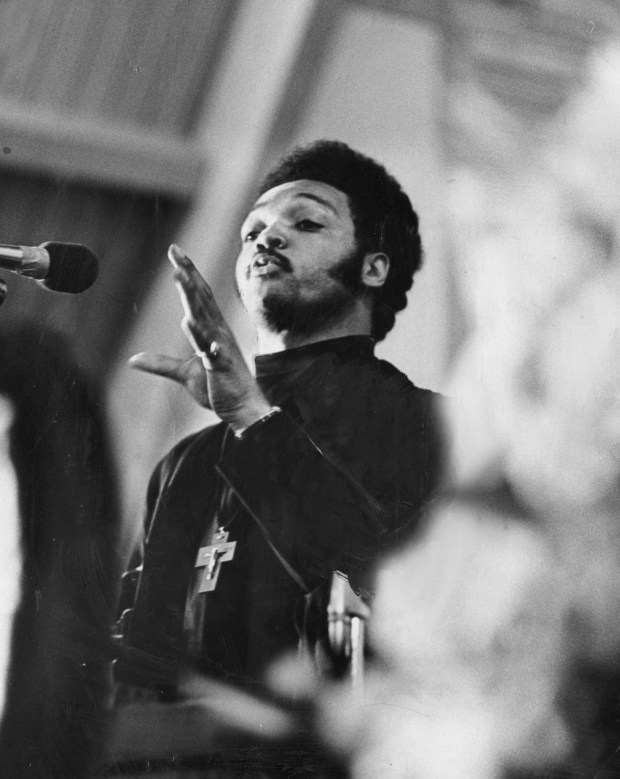
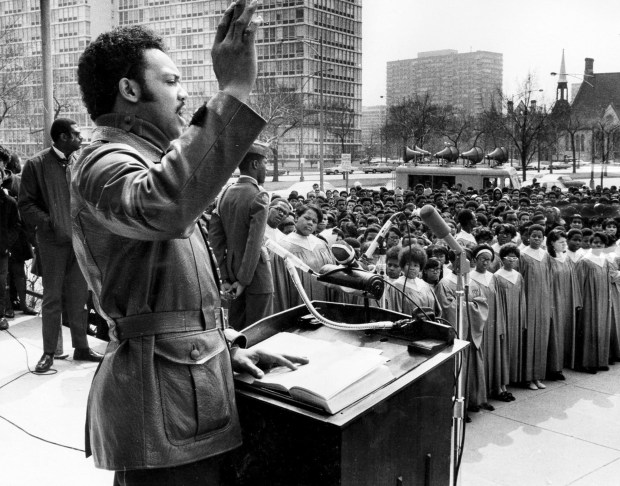
The Rev. Jesse Jackson speaks at Fred Hampton's funeral on Dec. 9, 1969.
Chicago Tribune historical photo
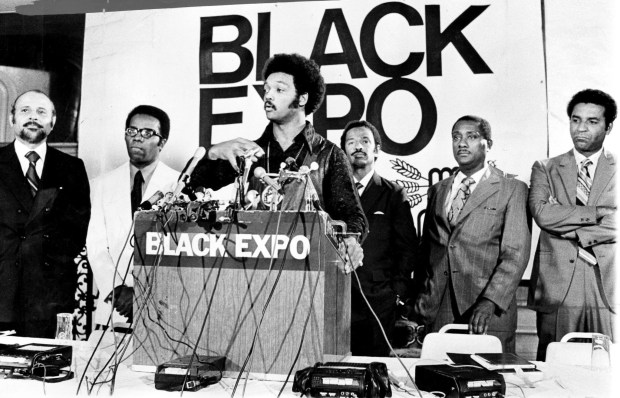
The Rev. Jesse Jackson at the kickoff for Black Expo in 1971.
Chicago Tribune
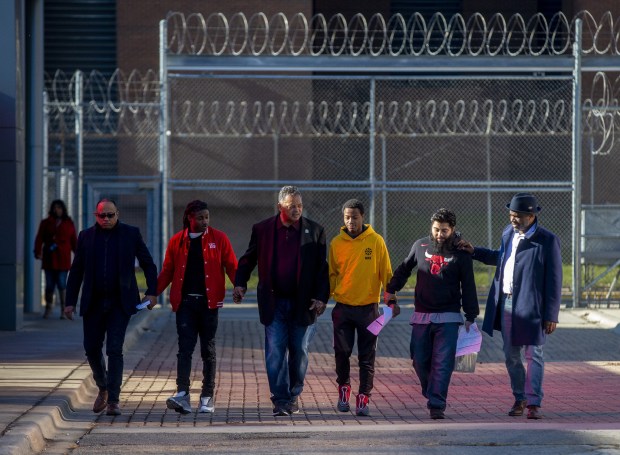
Bishop Tavis Grant, from left, Aaron Kinzer, the Rev. Jesse Jackson, Dionte Johnson and Brian Serratos walk out of Cook County Jail after a Christmas service led by Jackson in Chicago's Little Village neighborhood on Dec. 25, 2019.
Nancy Stone/Chicago Tribune
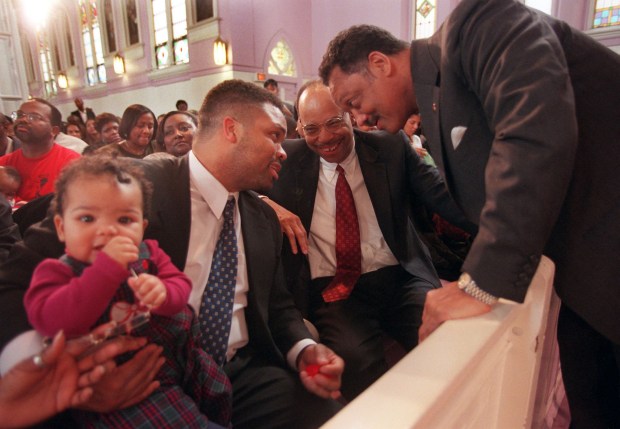
Jesse Jackson Jr., left, with his daughter Jessica, chats with former U.S. Rep. Mel Reynolds, center, and his father, the Rev. Jesse Jackson, right, during services at Salem Baptist Church on Jan. 28, 2000.
E. Jason Wambsgans / Chicago Tribune
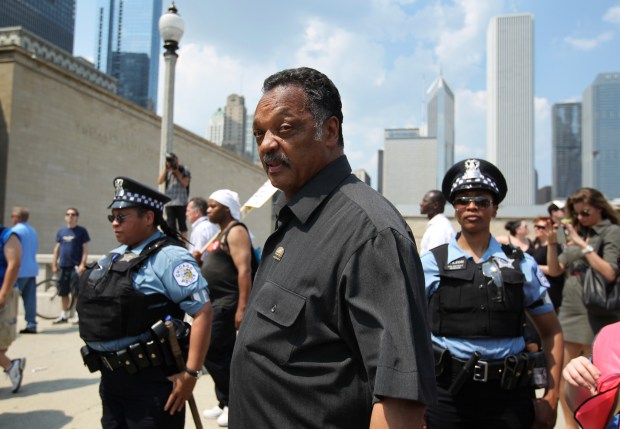
The Rev. Jesse Jackson joins NATO protesters moving toward the Loop on May 20, 2012, in Chicago.
Anthony Souffle / Chicago Tribune
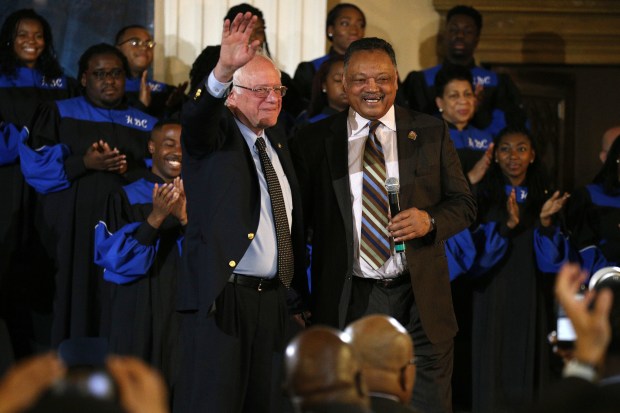
Democratic presidential candidate U.S. Sen. Bernie Sanders stands with Rev. Jesse Jackson March 12, 2016 after they spoke together at the Rainbow/PUSH Coalition headquarters in the Hyde Park neighborhood of Chicago.
Chris Sweda / Chicago Tribune
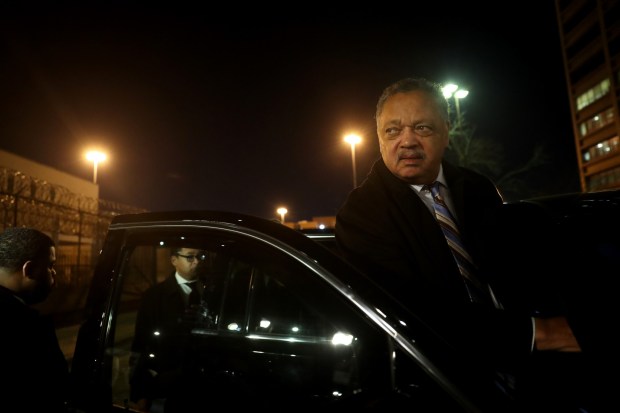
The Rev. Jesse Jackson gets in his vehicle after speaking on behalf of Bernard Kersh after Kersh bonded out of Cook County Jail in Chicago on Dec. 6, 2019. Kersh was charged with aggravated battery to a peace officer after allegedly spitting at a police officer, prompting the officer to body-slam Kersh to the ground.
Antonio Perez / Chicago Tribune
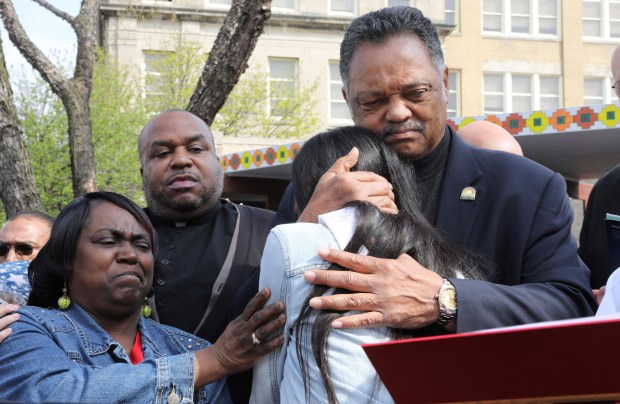
Dominique Jones weeps while comforted by the Rev. Jesse Jackson at the start of the walk for peace down the streets of Englewood along with Cardinal Cupich, elected officials, and activists on Good Friday, April 14, 2017.
Karen Engstrom / Chicago Tribune
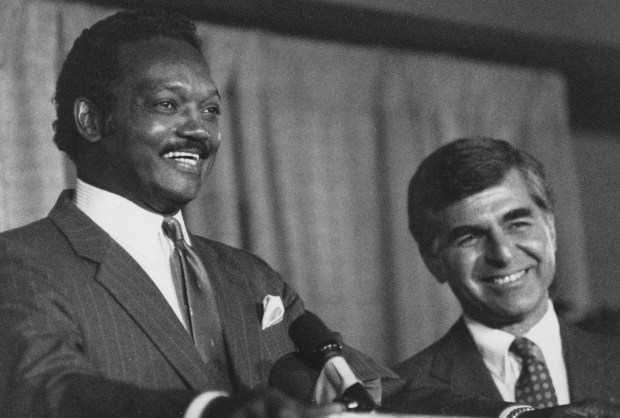
The Rev. Jesse Jackson with nominee Michael Dukakis at the Democratic National Convention on July 18, 1988, in Atlanta.
John Lee/Chicago Tribune
The Rev. Jesse Jackson speaks during a news conference after speaking to congregation members at the Temple Sholom of Chicago in the Lakeview neighborhood on Aug. 15, 1999.
William Yates / Chicago Tribune
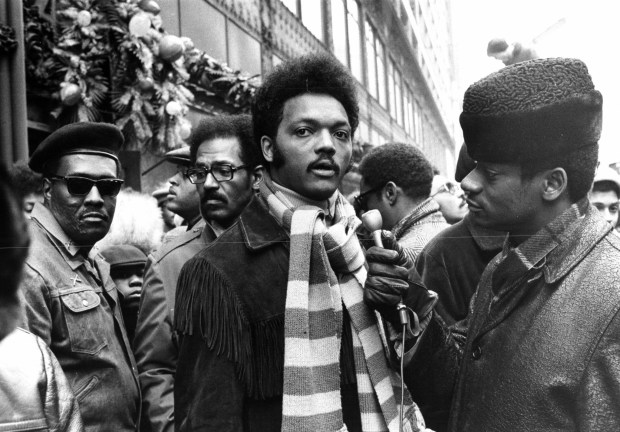
Rev. Jesse Jackson holds a press conference in the Loop after a motorcade to try to register voters among Black wards on Jan. 24, 1970.
E. Jason Wambsgans / Chicago Tribune
The Rev. Jesse Jackson chats with Mayor Lori Lightfoot at the 30th annual Rainbow/PUSH Coalition Martin Luther King Jr. Day scholarship breakfast, Jan. 20, 2020.
Dave Nystrom / Chicago Tribune
The Rev. Jesse Jackson yells to the chairman to get attention for a demand to get a 2/3rd vote during the 1972 Democratic Convention in Miami Beach, Florida, on July 10, 1972. Jackson and his group managed to prevent delegates controlled by Mayor Richard J. Daley from being seated.
Alyssa Pointer / Chicago Tribune
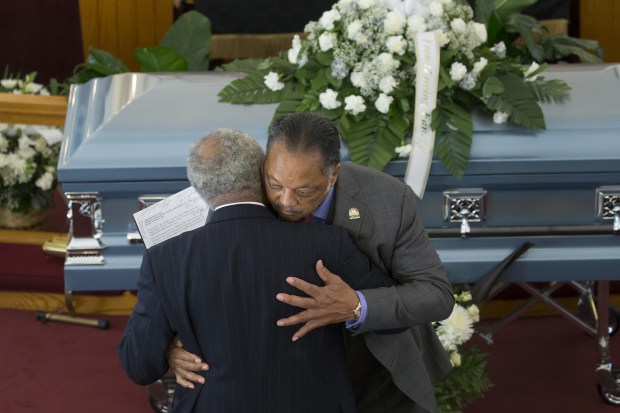
U.S. Rep. Danny Davis, left, receives a hug from the Rev. Jesse Jackson during the funeral service for his Davis' grandson, Javon Wilson, at Carey Tercentenary African Methodist Episcopal Church on Nov. 26, 2016.
Stacey Wescott/Chicago Tribune
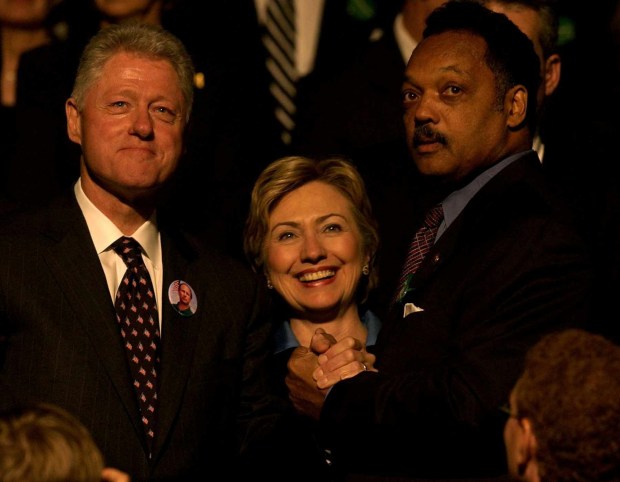
Former President Bill Clinton and Hillary Clinton greet the Rev. Jesse Jackson before a memorial service for Paul Wellstone and five others at Williams Arena in Minneapolis in 2002.
Pete Souza/Chicago Tribune
The Rev. Jesse Jackson was the keynote speaker at a rally calling for Congress not to impeach President Bill Clinton on Dec. 17, 1998. Ricky Abraham of New York City was on hand to provide interpretation for the hearing impaired.
Brian Cassella / Chicago Tribune
The Rev. Jesse Jackson leaves federal court in Washington after his son Jesse Jackson Jr. and daughter-in-law Sandi Jackson pleaded guilty to charges related to using federal campaign funds for their personal use.
Armando L. Sanchez / Chicago Tribune
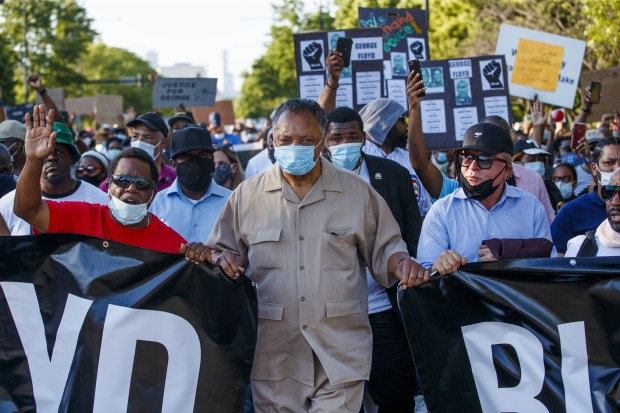
The Rev. Jesse Jackson marches June 2, 2020, in Bronzeville after the May 25 fatal police killing of George Floyd in Minneapolis.
Zbigniew Bzdak / Chicago Tribune
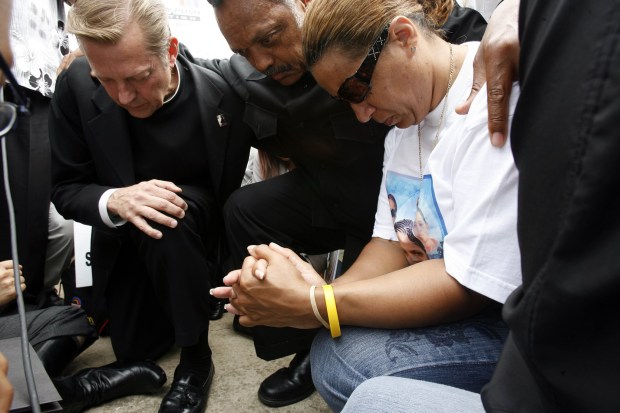
The Rev. Michael Pfleger, from left, the Rev. Jesse Jackson and Annette Nance-Holt, mother of gun violence victim Blair Holt, pray in front of Chuck's Gun Shop in Riverdale on June 29, 2007.
E. Jason Wambsgans / Chicago Tribune
The Rev. Jesse Jackson at the 30th annual Rainbow/PUSH Coalition Dr. Martin Luther King Jr. Day scholarship breakfast, Jan. 20, 2020.
Chicago Tribune
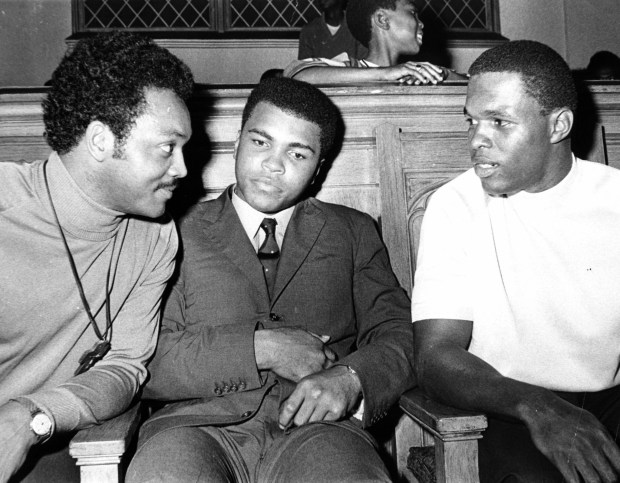
Rev. Jesse Jackson, from left, Cassius Clay and Gayle Sayers at an event for the CTA bus drivers on Sept. 4, 1968.
Nancy Stone / Chicago Tribune
Joel Ewanick with General Motors, left and Massachusetts Gov. Deval Patrick flank the Rev. Jesse Jackson, who held his annual Operation/PUSH Coalition conference in Chicago on July 11, 2012.
John Yates / Chicago Tribune
The Rev. Jesse Jackson at services in memory of the Rev. Martin Luther King Jr. outside Dunbar High School in Chicago in 1969.
George Quinn / Chicago Tribune
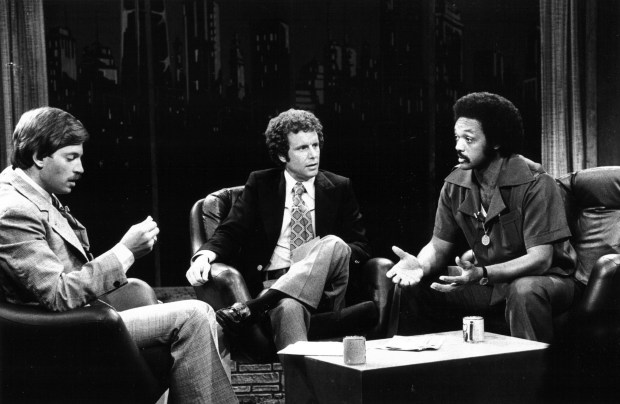
David Duke, left, the Grand Wizard and National Director of the Ku Klux Klan and Rev. Jesse Jackson, right, during a taped discussion with Steve Edwards, center, the host of WLS-TV on Sept. 8, 1977, at 190 N. State Street in Chicago.
Candice C. Cusic/Chicago Tribune
Rev. Jesse Jackson was given an award at the culmination of the American Appreciation and Education Weekend Celebration, an event commemorating the anniversary of President Lyndon B. Johnson's signing of the Voting Rights Act of 1965 and celebrating the birthday of Jackson's uncle, Rev. J. Archie Hargraves in 2001.
Abel Uribe / Chicago Tribune
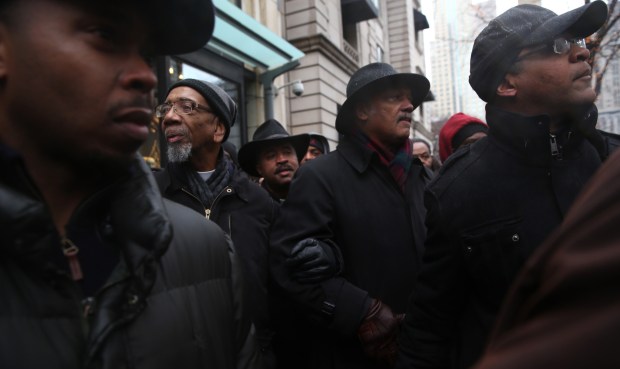
U.S. Rep. Bobby Rush, second from left, and the Rev. Jesse Jackson lock arms along Michigan Avenue during a demonstration on Black Friday 2015 in the wake of the release of video showing the fatal police shooting of Laquan McDonald.
Ovie Carter / Chicago Tribune
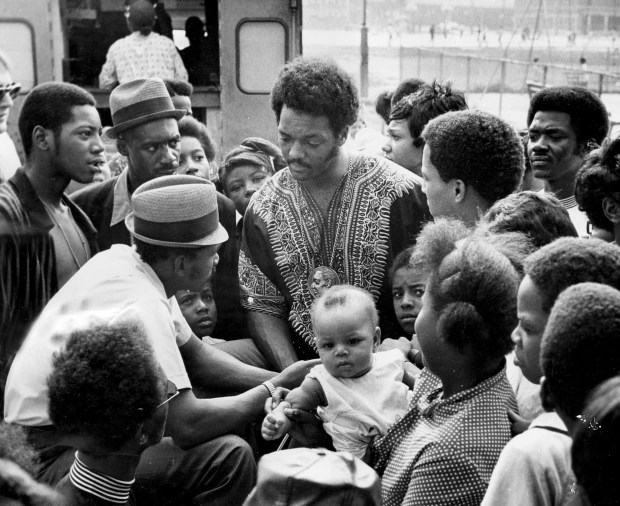
The Rev. Jesse Jackson at Cabrini-Green in 1970.
Frank Hanes / Chicago Tribune
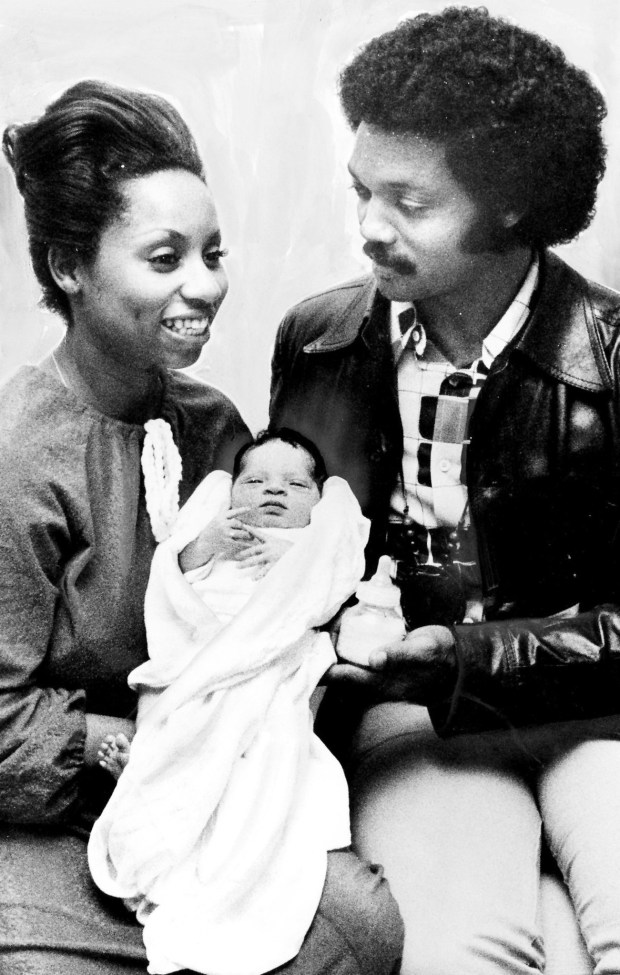
The Rev. Jesse and his wife, Jacqueline, introduce their day old daughter Jacqueline Lavinia Sept. 29th, 1975.
Chris Walker / Chicago Tribune
The Rev. Jesse Jackson, center, listens to protesters chant during a stop outside the historic Chicago Water Tower as protesters march on Michigan Avenue on Nov. 27, 2015, demanding justice for Laquan McDonald.
Charles Osgood / Chicago Tribune
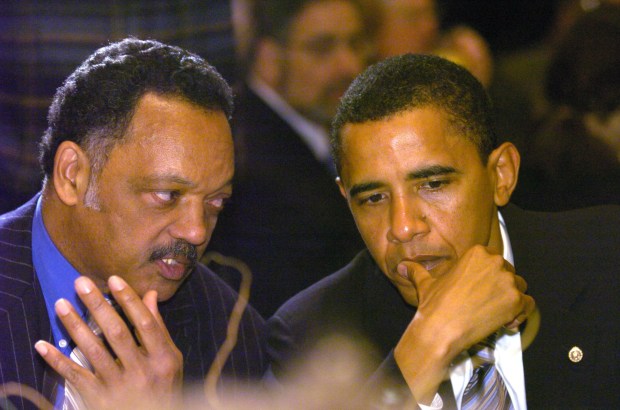
The Rev. Jesse Jackson, left, chats with U.S. Sen. Barack Obama at the Rainbow/PUSH Dr. Martin Luther King Jr. Scholarship Award Breakfast in 2005.
E. Jason Wambsgans / Chicago Tribune
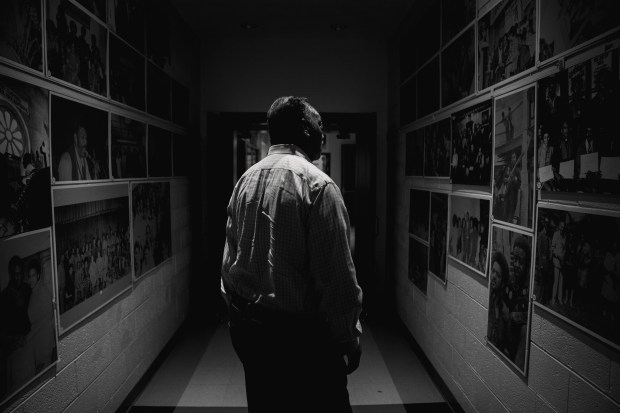
The Rev. Jesse Jackson among historical photos at Rainbow/PUSH Coalition headquarters on July 13, 2021.
1 of 68
The Rev. Jesse Jackson at Rainbow/PUSH Coalition headquarters in Chicago on Sept. 30, 2021. (E. Jason Wambsgans/Chicago Tribune)
Here’s what to know about the Chicago-based Baptist minister, political figure and two-time presidential candidate whose soaring oratory made him a central figure in the Civil Rights Movement and national politics for more than six decades.
‘Rev. Jackson belonged to Chicago, and Chicago belonged to him’
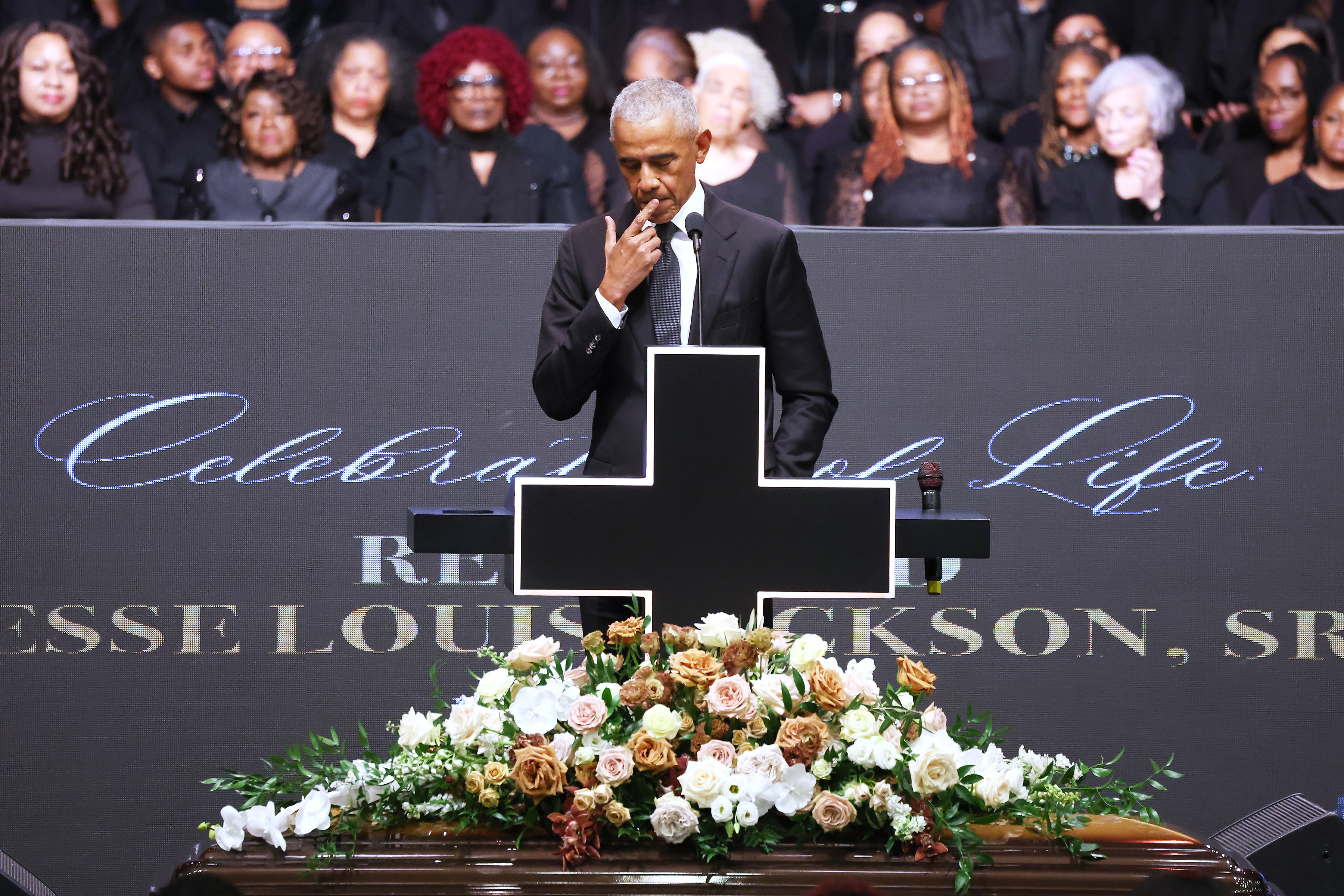
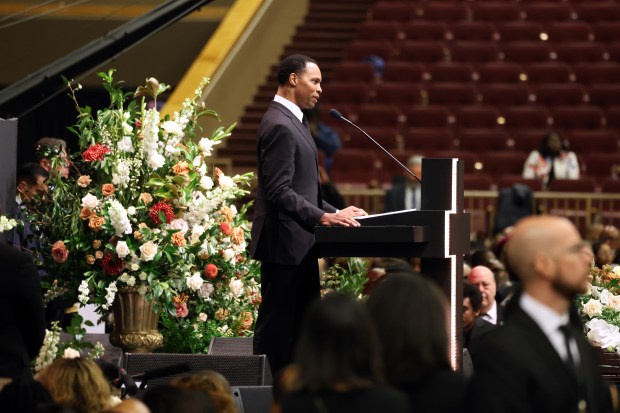
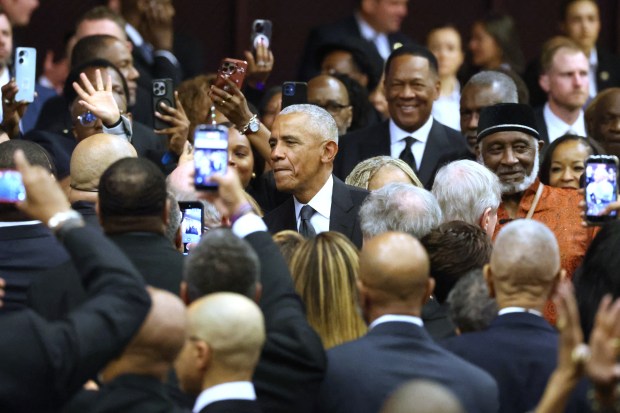
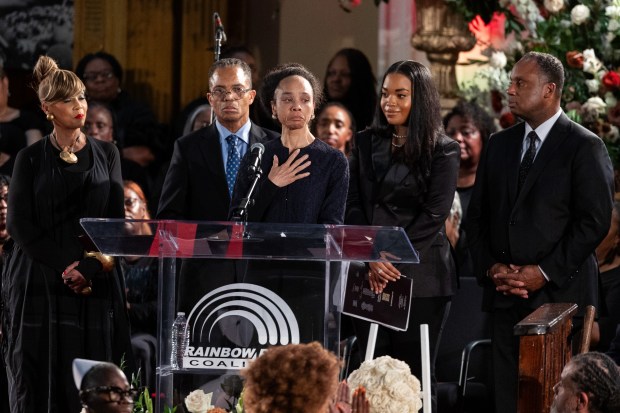
Former President Barack Obama speaks during the memorial service for the Rev. Jesse Jackson at House of Hope in Chicago on March 6, 2026. (Terrence Antonio James/Chicago Tribune)
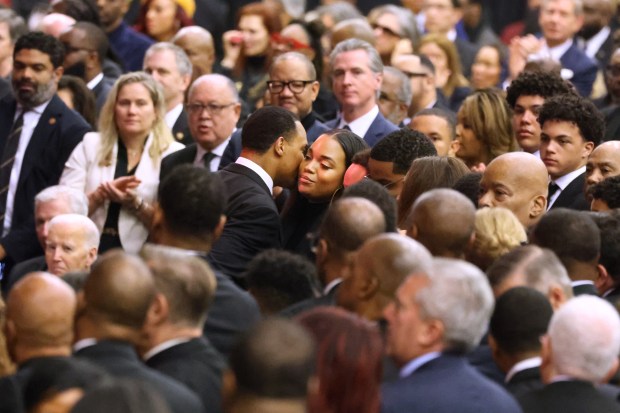
Yusef Jackson, center left, kisses his sister Ashley Jackson after speaking during the service for their father, the Rev. Jesse Jackson, at House of Hope on March 6, 2026. (Terrence Antonio James/Chicago Tribune)
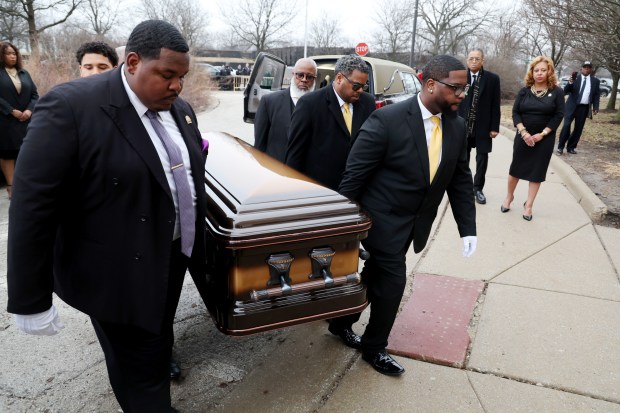
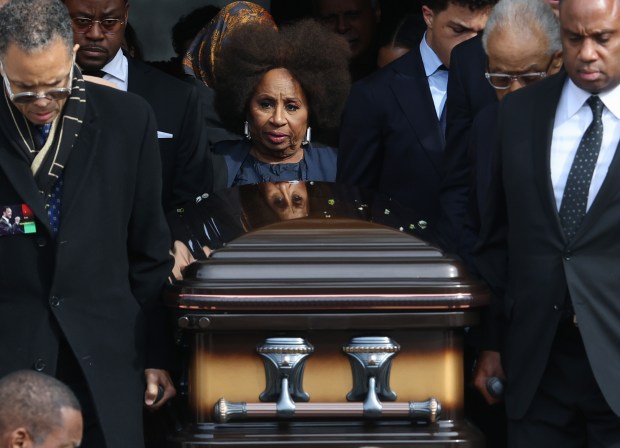
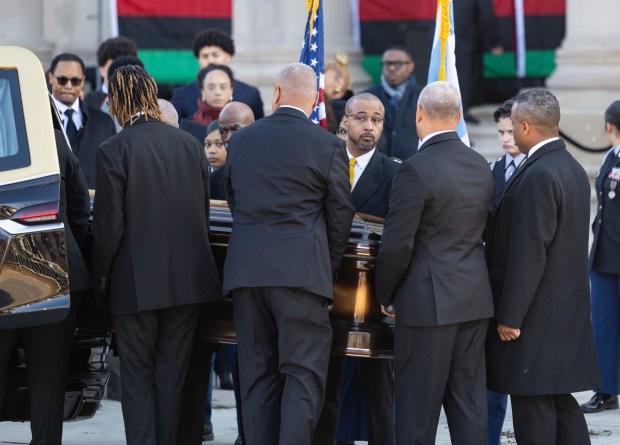
Jesse Jackson Jr. watches as pallbearers carry the casket of his father, the Rev. Jesse Jackson, into House of Hope for his public service on March 6, 2026. (Terrence Antonio James/Chicago Tribune)
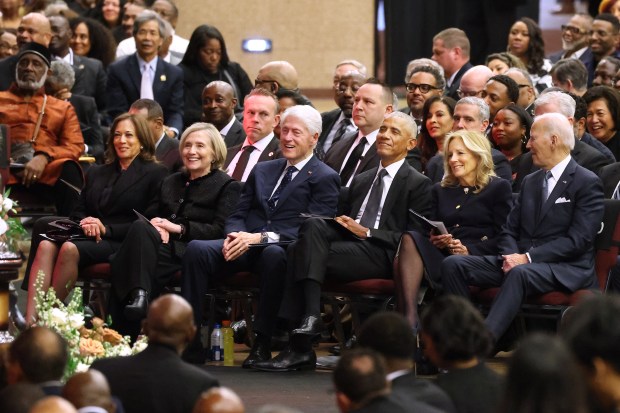
Seated from left are former Vice President Kamala Harris, former Secretary of State Hillary Clinton, former President Bill Clinton, former President Barack Obama, former first lady Jill Biden and former President Joe Biden at the homegoing service for the Rev. Jesse Jackson at House of Hope in Chicago on March 6, 2026. (Terrence Antonio James/Chicago Tribune)
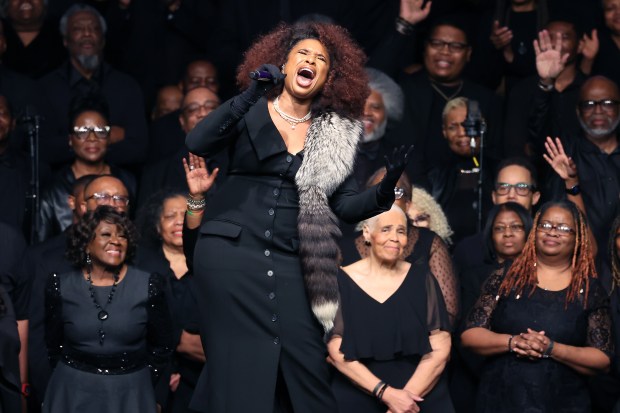
Jennifer Hudson sings at the homegoing service for the Rev. Jesse Jackson at House of Hope in Chicago on March 6, 2026. (Terrence Antonio James/Chicago Tribune)
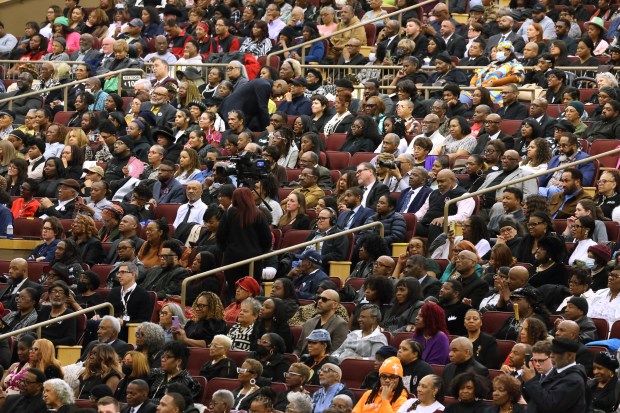
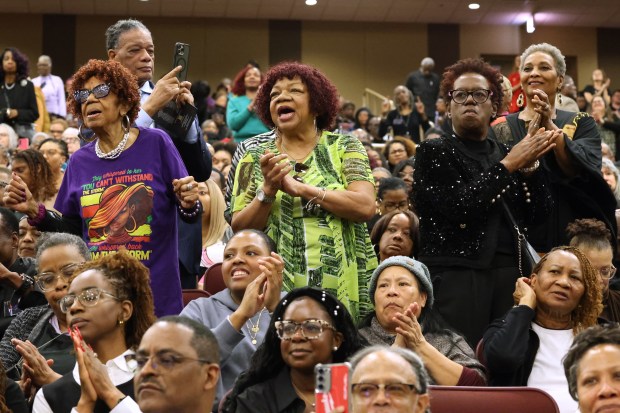
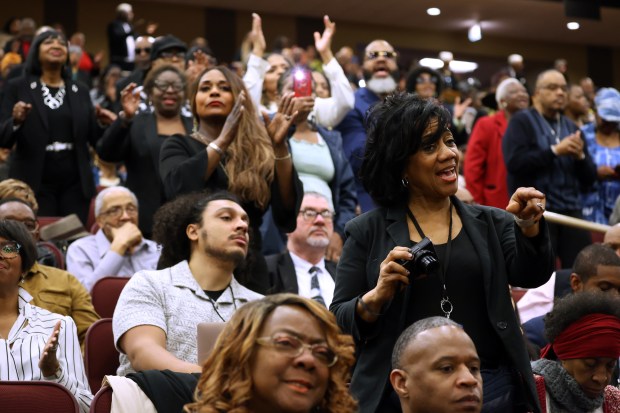
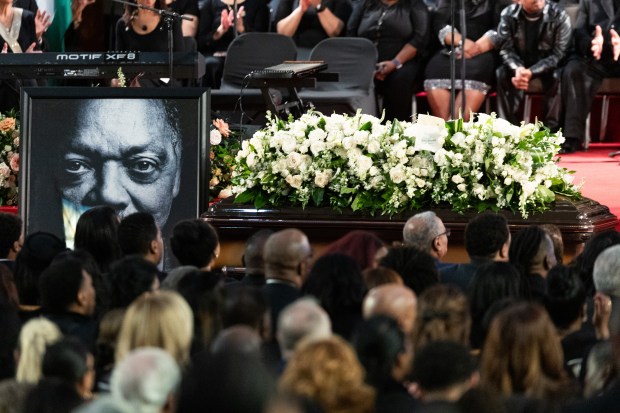
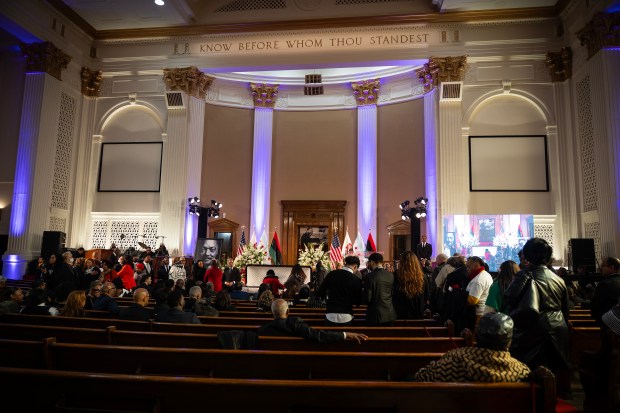
Hundreds of people attend the public service for the Rev. Jesse Jackson at House of Hope on March 6, 2026. (Terrence Antonio James/Chicago Tribune)
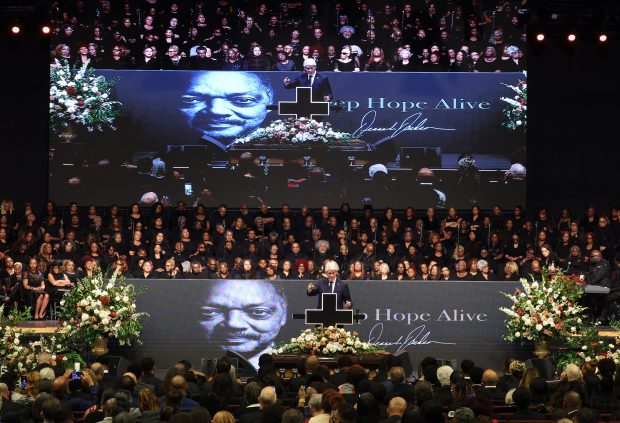
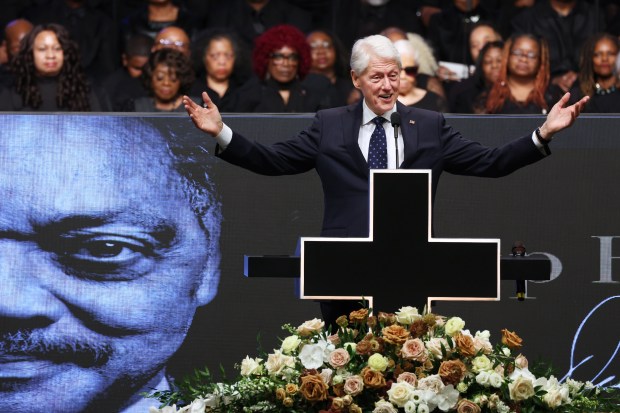
Former President Bill Clinton speaks during the public service for the Rev. Jesse Jackson at House of Hope in Chicago on March 6, 2026. (Terrence Antonio James/Chicago Tribune)
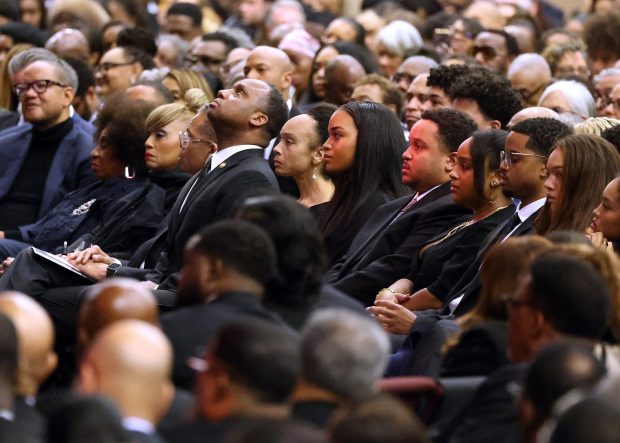
The Jackson family attends the public service for the Rev. Jesse Jackson at House of Hope in Chicago on March 6, 2026. (Terrence Antonio James/Chicago Tribune)
Yusef Jackson speaks during the public service for his father, the Rev. Jesse Jackson, at House of Hope in Chicago on March 6, 2026. (Terrence Antonio James/Chicago Tribune)
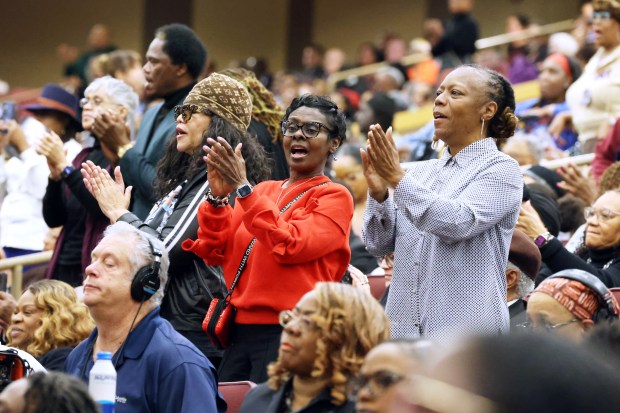
People sing during the homegoing service for the Rev. Jesse Jackson at House of Hope on March 6, 2026. (Terrence Antonio James/Chicago Tribune)
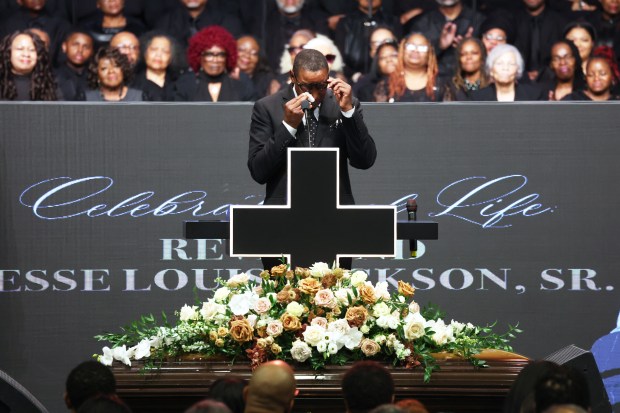
Former NBA star Isiah Thomas dabs his eyes while speaking during the homegoing service for the Rev. Jesse Jackson at House of Hope in Chicago on March 6, 2026. (Terrence Antonio James/Chicago Tribune)
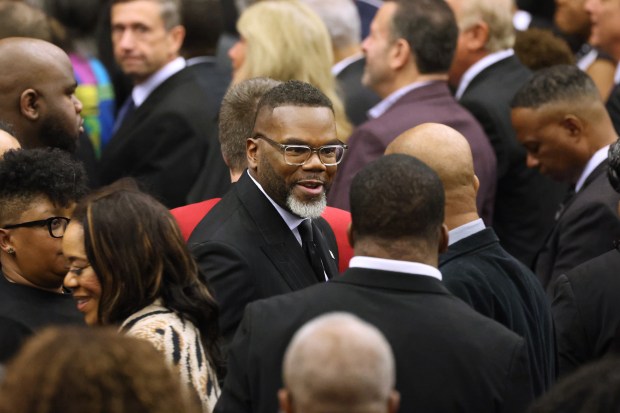
Chicago Mayor Brandon Johnson attends the homegoing service for the Rev. Jesse Jackson at House of Hope on March 6, 2026. (Terrence Antonio James/Chicago Tribune)
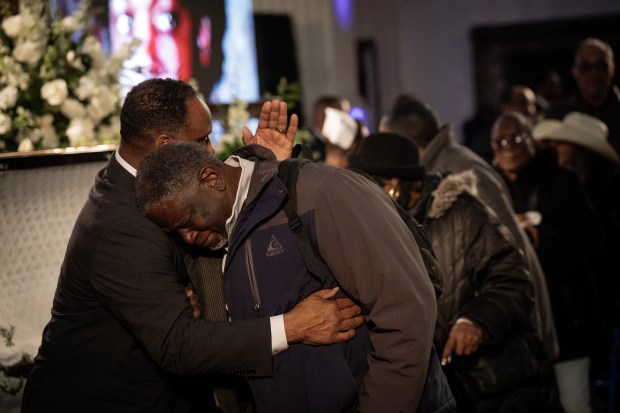
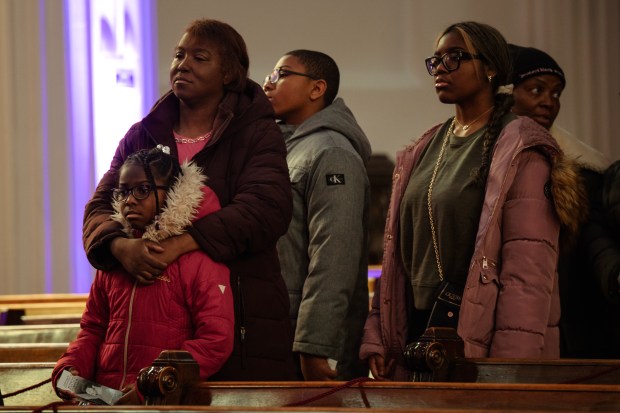
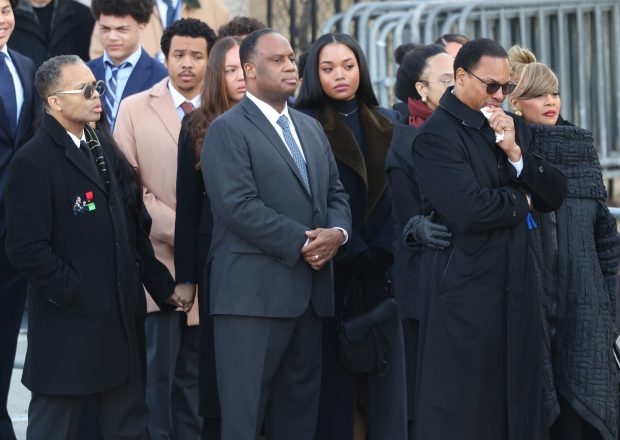
People attend the homegoing service for the Rev. Jesse Jackson at House of Hope on Chicago's South Side on March 6, 2026. (Terrence Antonio James/Chicago Tribune)
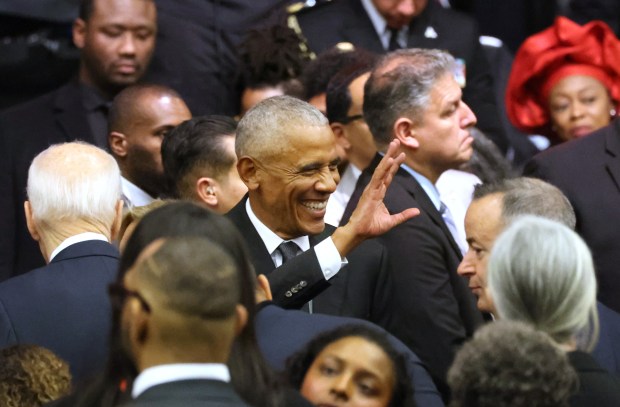
Former Presidents Joe Biden, left, and Barack Obama arrive at the public service for the Rev. Jesse Jackson at House of Hope on March 6, 2026. (Terrence Antonio James/Chicago Tribune)
Former President Bill Clinton speaks during the homegoing service for the Rev. Jesse Jackson at House of Hope in Chicago on March 6, 2026. (Terrence Antonio James/Chicago Tribune)
People sing during the public service for the Rev. Jesse Jackson at House of Hope on March 6, 2026. (Terrence Antonio James/Chicago Tribune)
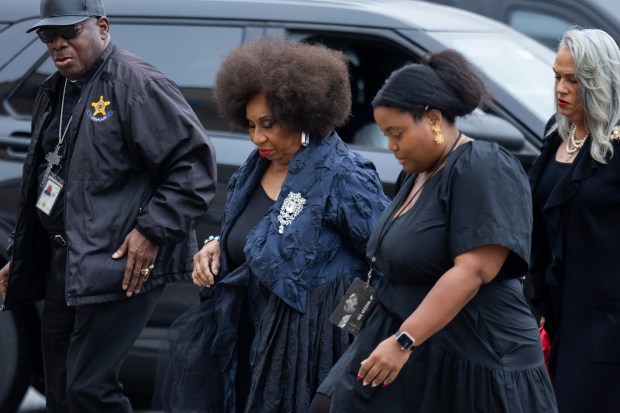
Jacqueline Jackson, center, widow of the Rev. Jesse Jackson, arrives to House of Hope ahead of his public service on March 6, 2026. (Josh Boland/Chicago Tribune)
Jackie Jackson and Santita Jackson enter the House of Hope ahead of the public service for the Rev. Jesse Jackson in Chicago’s South Deering neighborhood Friday, March 6, 2026. (Josh Boland/Chicago Tribune)
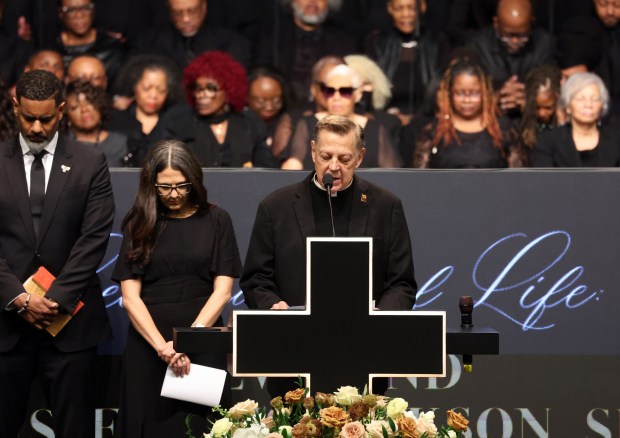
The Rev. Michael Pfleger speaks during the public service for the Rev. Jesse Jackson at House of Hope on East 114th St. in Chicago on March 6, 2026. (Terrence Antonio James/Chicago Tribune)
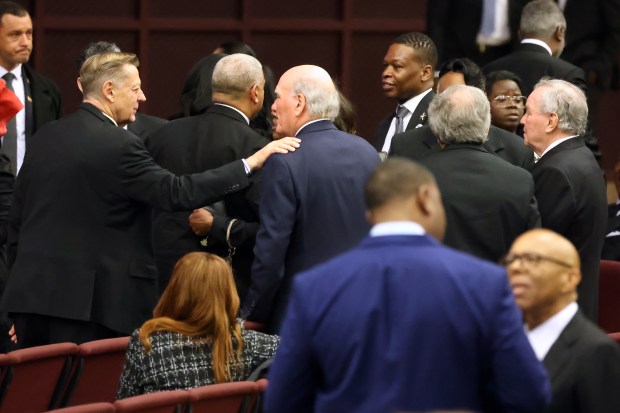
The Rev. Michael Pfleger, from left, talks to Bill Daley as he and his brothers John Daley and former Chicago Mayor Richard M. Daley arrive at the public service for the Rev. Jesse Jackson at House of Hope church in Chicago on March 6, 2026. (Terrence Antonio James/Chicago Tribune)
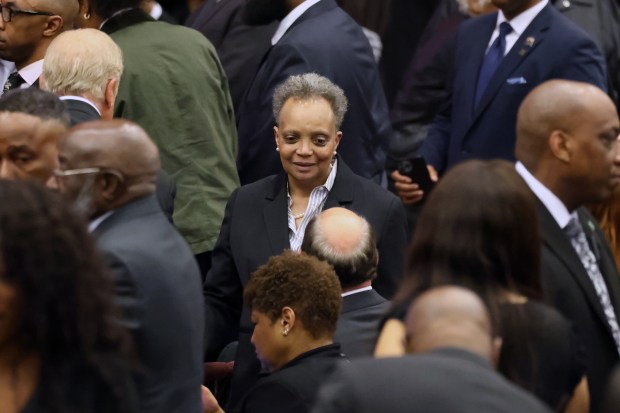
Former Chicago Mayor Lori Lightfoot arrives at the public service for the Rev. Jesse Jackson at House of Hope church on March 6, 2026. (Terrence Antonio James/Chicago Tribune)
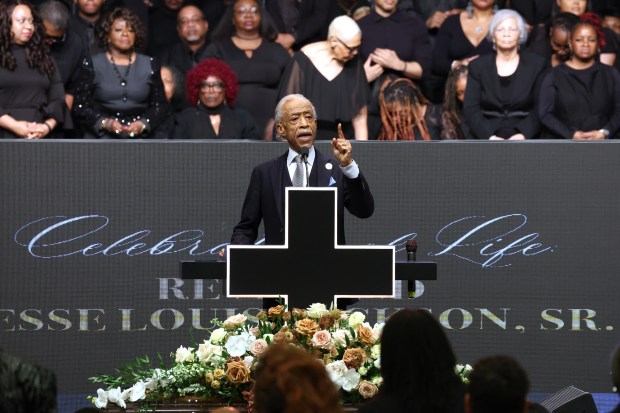
The Rev. Al Sharpton speaks during the public service for the Rev. Jesse Jackson at House of Hope in Chicago on March 6, 2026. (Terrence Antonio James/Chicago Tribune)
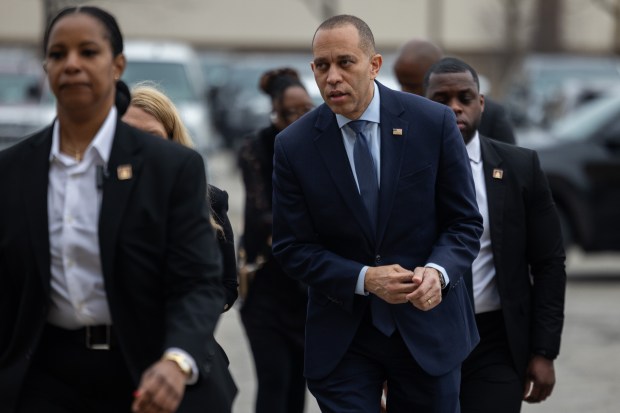
U.S. Rep. Hakeem Jeffries, center, arrives outside the House of Hope ahead of the public service for the Rev. Jesse Jackson in Chicago’s South Deering neighborhood on March 6, 2026. (Josh Boland/Chicago Tribune)
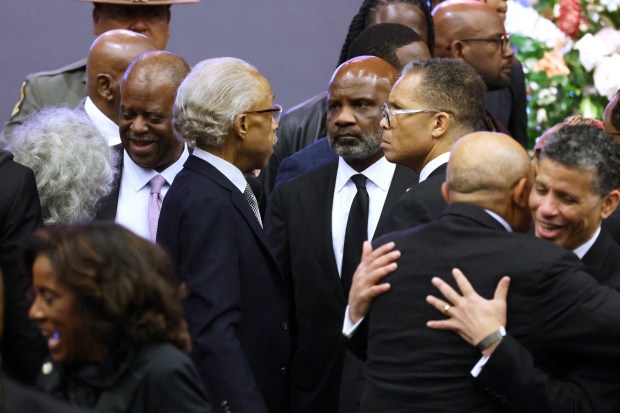
The Rev. Al Sharpton, center left, talks to Jesse Jackson, Jr., center right, at the public service for the Rev. Jesse Jackson at House of Hope church in Chicago on March 6, 2026. (Terrence Antonio James/Chicago Tribune)
Former president Barack Obama arrives at the public service for the Rev. Jesse Jackson at House of Hope in Chicago on March 6, 2026. (Terrence Antonio James/Chicago Tribune)
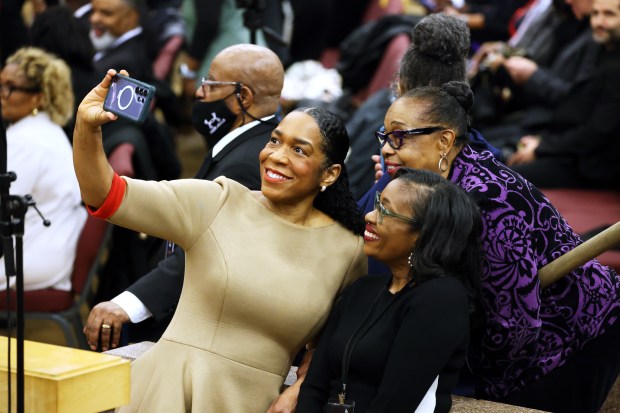
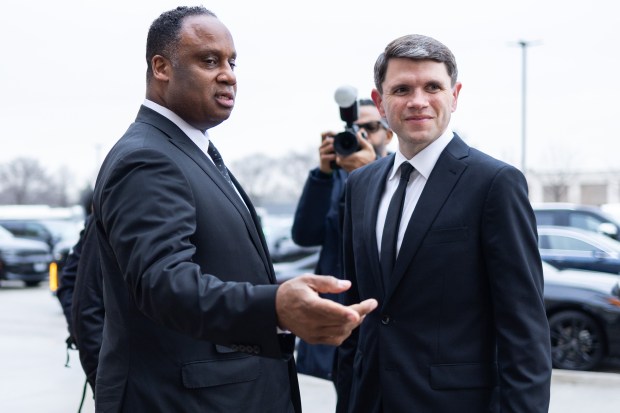
Illinois Lt. Gov. Juliana Stratton, left, takes a photo with other attendees at the service for the Rev. Jesse Jackson on March 6, 2026, at House of Hope church on Chicago's South Side on March 6, 2026. (Terrence Antonio James/Chicago Tribune)
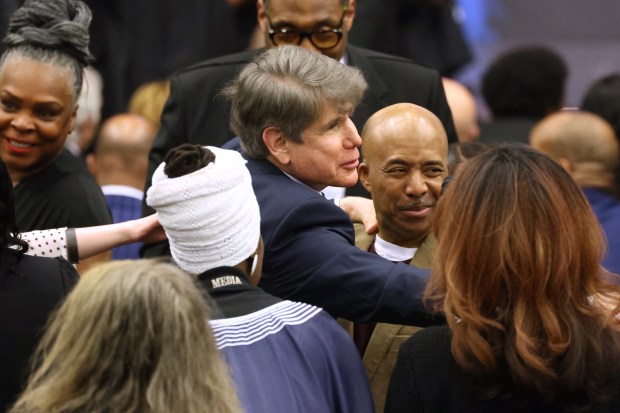
Former Illinois Gov. Rod Blagojevich arrives at the service for the Rev. Jesse Jackson on March 6, 2026, at House of Hope in Chicago. (Terrence Antonio James/Chicago Tribune)
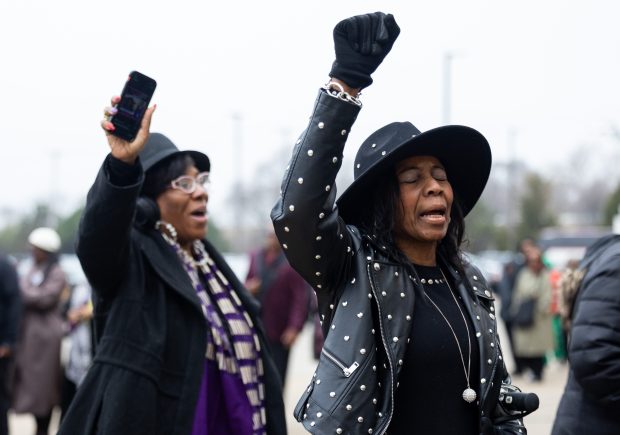
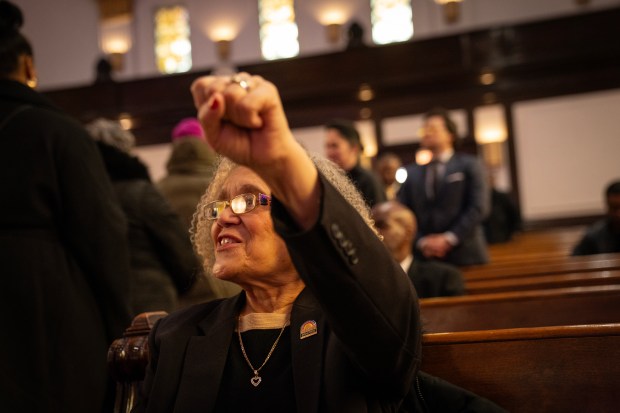
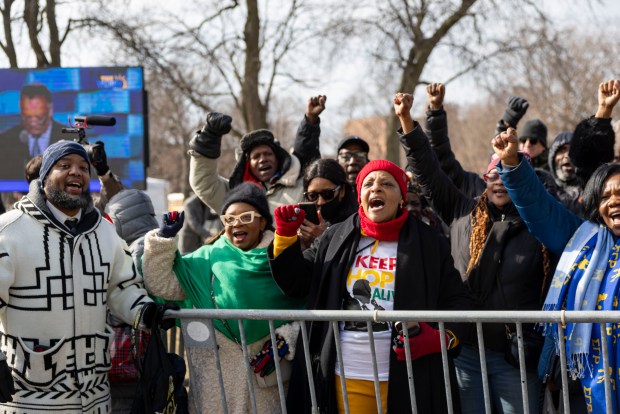
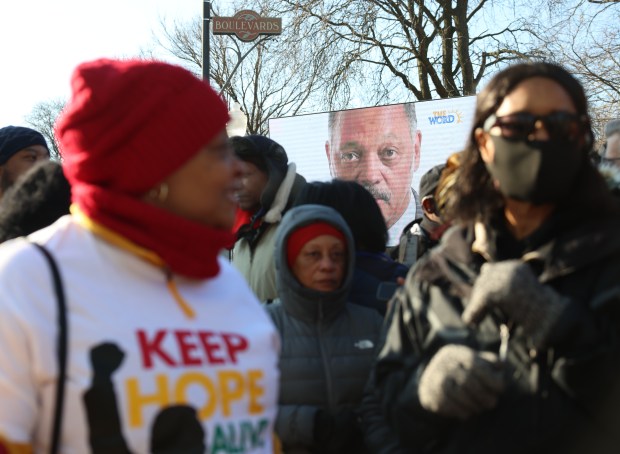
Antoinette Simmons, left, of Chicago, and Shalone Graves recite a verse from a Rev. Jesse Jackson speech as they hold up their fists outside House of Hope ahead of the public service for the Rev. Jesse Jackson on March 6, 2026. (Josh Boland/Chicago Tribune)
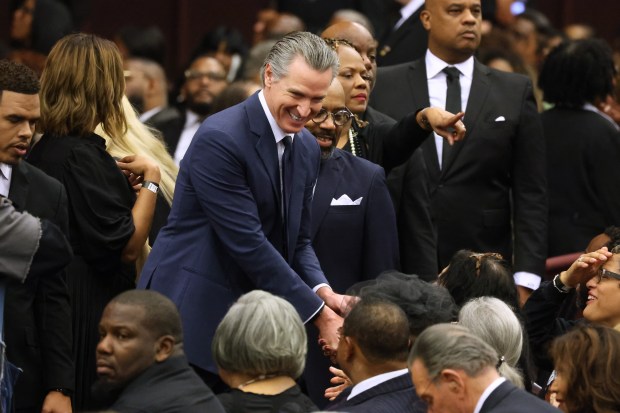
California Gov. Gavin Newsom arrives at the public service for the Rev. Jesse Jackson at House of Hope on March 6, 2026. (Terrence Antonio James/Chicago Tribune)
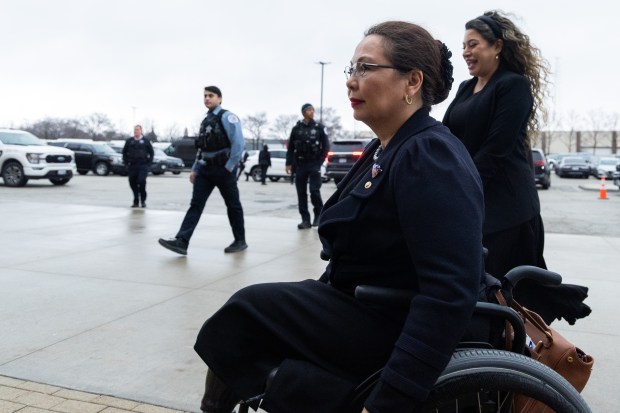
U.S. Sen. Tammy Duckworth arrives at the House of Hope church ahead of the public service for the Rev. Jesse Jackson in Chicago’s South Deering neighborhood on March 6, 2026. (Josh Boland/Chicago Tribune)
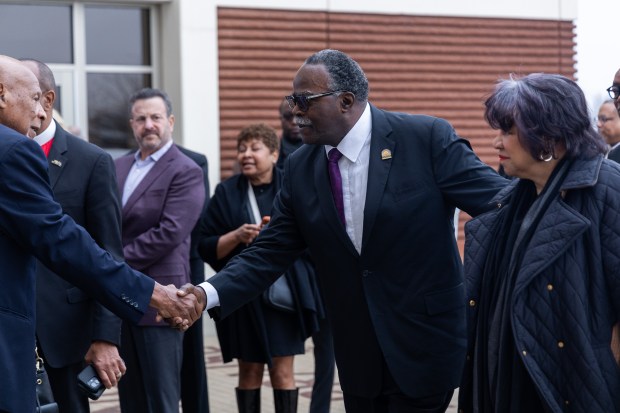
U.S. Rep. James Clyburn of South Carolina shakes hands with a person outside the House of Hope church ahead of the public service for the Rev. Jesse Jackson in Chicago’s South Deering neighborhood on March 6, 2026. (Josh Boland/Chicago Tribune)
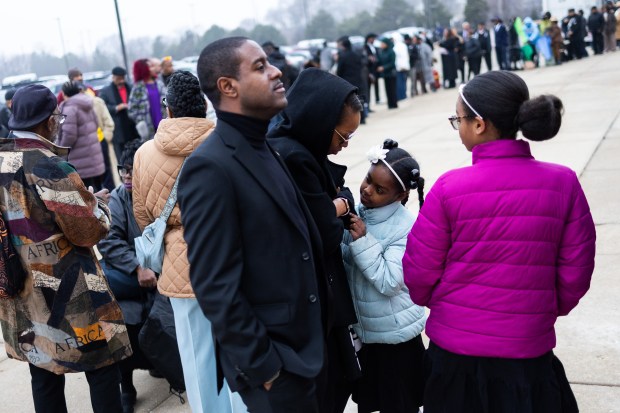
David Boyd, 41, from left, his wife, Constance, 40, daughter Autumn, 8, and Ariana, 11, all of Indianapolis, stand outside the House of Hope ahead of the public service for the Rev. Jesse Jackson in Chicago’s South Deering neighborhood on March 6, 2026. “We are here to pay our respects,” Boyd said. (Josh Boland/Chicago Tribune)
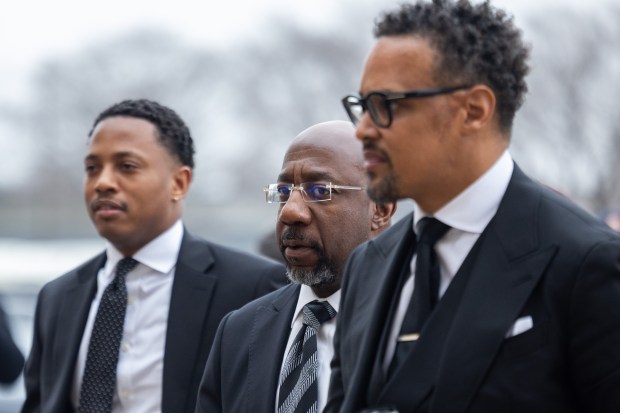
U.S. Sen. Raphael Warnock of Georgia, center, arrives at House of Hope ahead of the public service for the Rev. Jesse Jackson in Chicago’s South Deering neighborhood on March 6, 2026. (Josh Boland/Chicago Tribune)
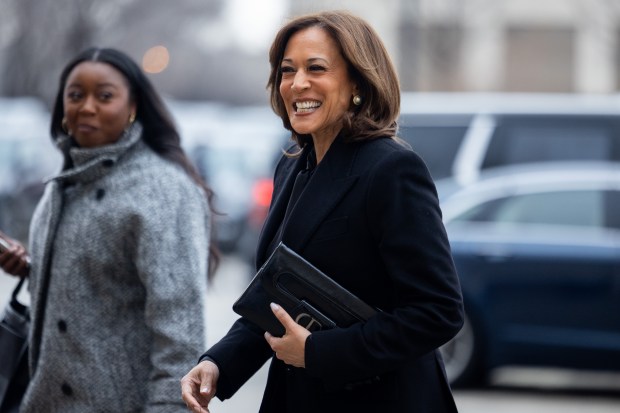
Former U.S. Vice President Kamala Harris arrives at House of Hope ahead of the public service for the Rev. Jesse Jackson on March 6, 2026. (Josh Boland/Chicago Tribune)
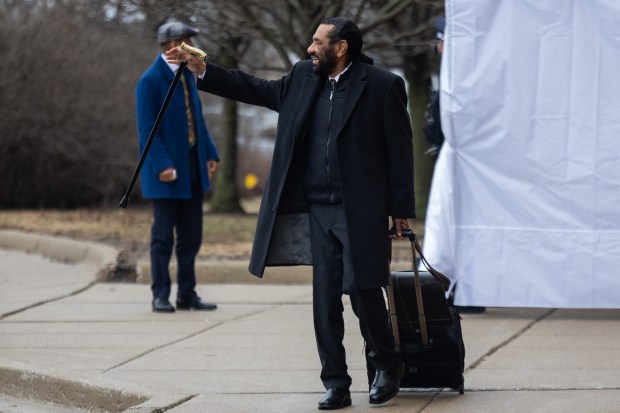
Texas Rep. Al Green arrives at the House of Hope ahead of the public service for the Rev. Jesse Jackson in Chicago’s South Deering neighborhood on March 6, 2026. (Josh Boland/Chicago Tribune)
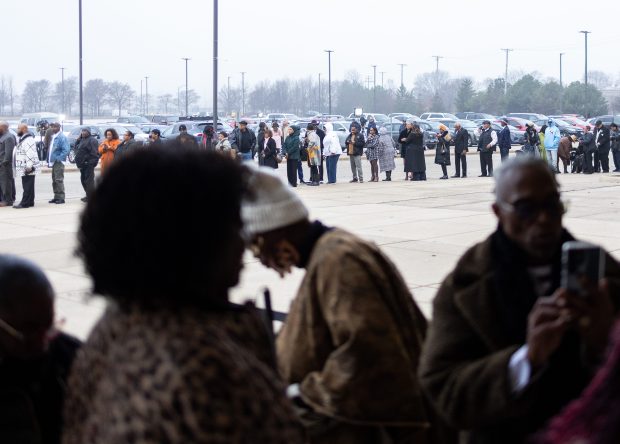
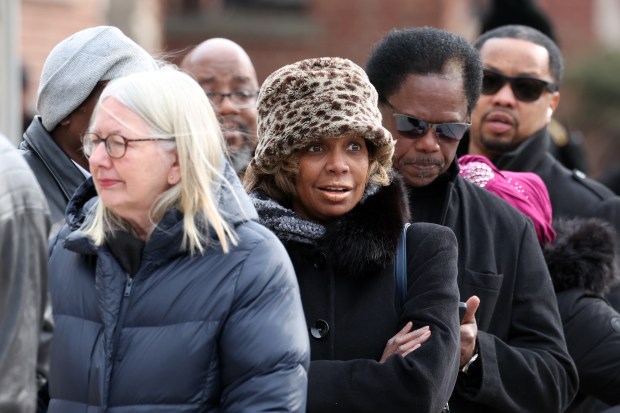
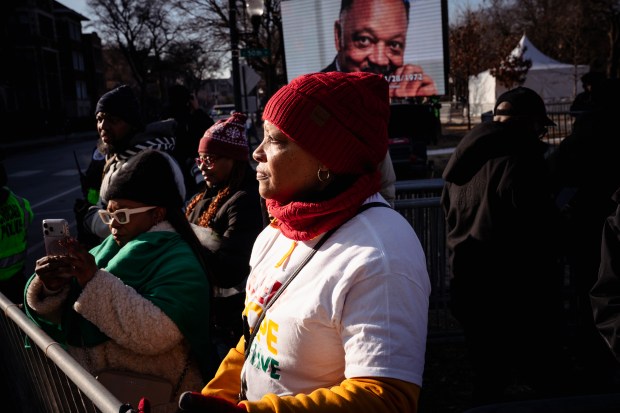
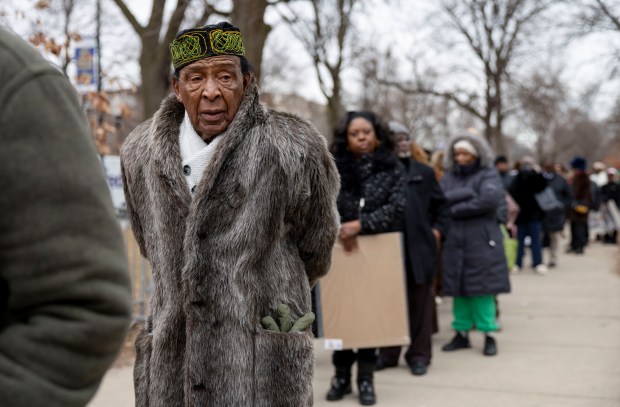
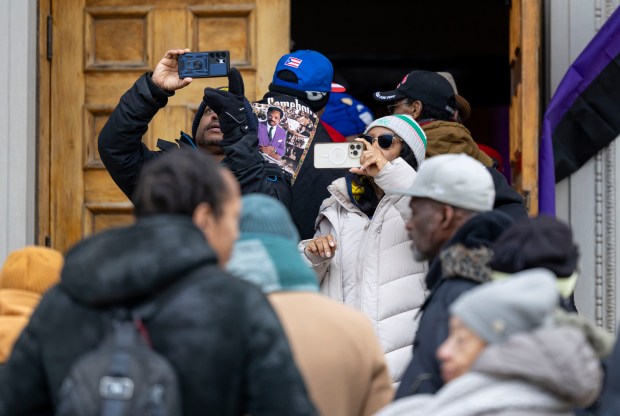
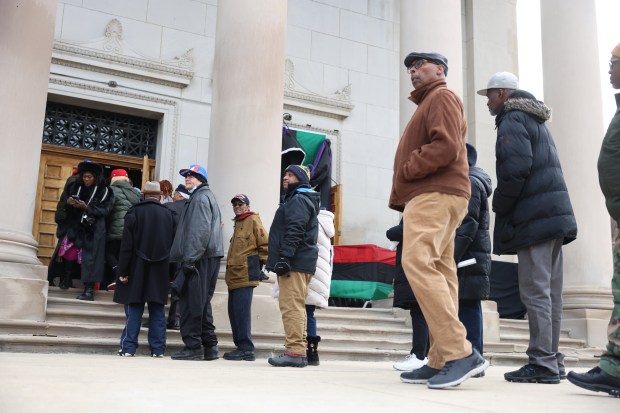
People stand in line outside the House of Hope ahead of the public service for the Rev. Jesse Jackson in Chicago’s South Deering neighborhood on March 6, 2026. (Josh Boland/Chicago Tribune)
Rep. Johnathon Jackson greets Texas Rep. James Talarico outside the House of Hope ahead of the public service for the Rev. Jesse Jackson in Chicago’s South Deering neighborhood on March 6, 2026. (Josh Boland/Chicago Tribune)
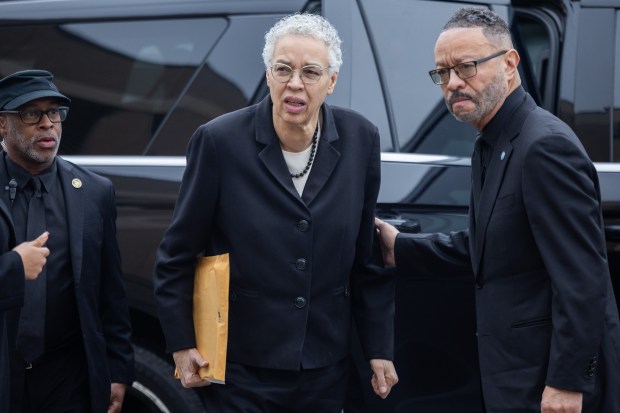
Cook County Board President Toni Preckwinkle, center, arrives at House of Hope ahead of the public service for the Rev. Jesse Jackson in Chicago’s South Deering neighborhood on March 6, 2026. (Josh Boland/Chicago Tribune)
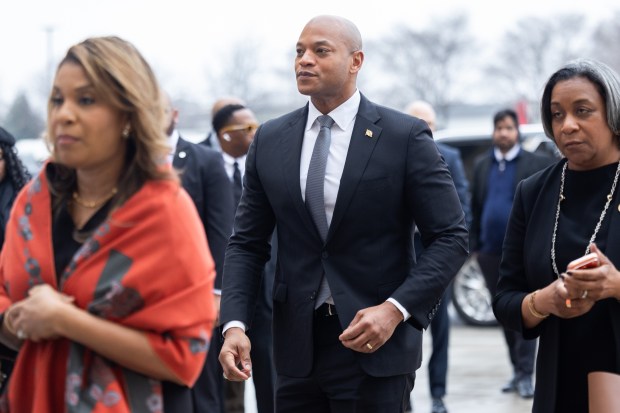
Maryland Gov. Wes Moore, center, arrives at the House of Hope ahead of the public service for the Rev. Jesse Jackson in Chicago’s South Deering neighborhood on March 6, 2026. (Josh Boland/Chicago Tribune)
California Gov. Gavin Newsom arrives ahead of the public service at House of Hope for the Rev. Jesse Jackson on March 6, 2026. (Josh Boland/Chicago Tribune)
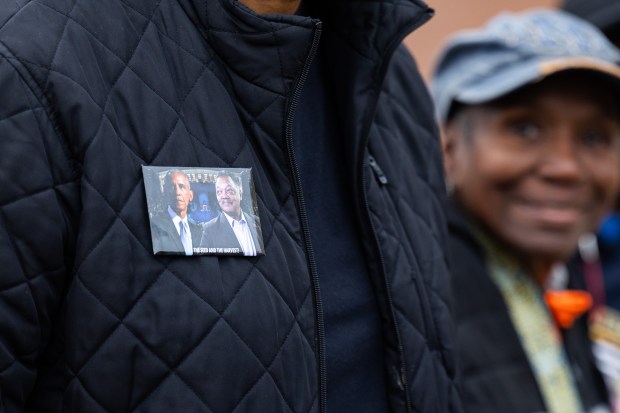
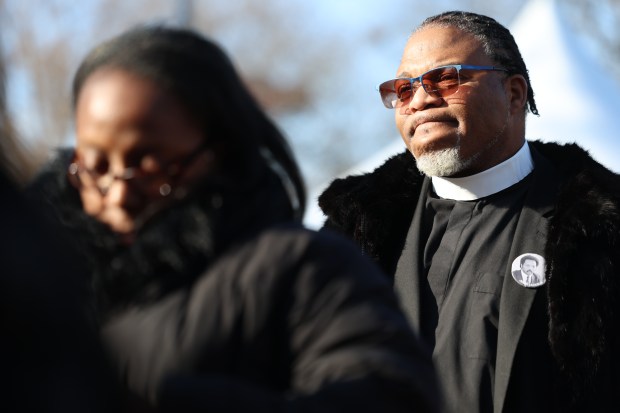
Steve Lewis, 64, of Chicago, wears a pin on his coat outside the House of Hope ahead of the public service for the Rev. Jesse Jackson in Chicago’s South Deering neighborhood on March 6, 2026. (Josh Boland/Chicago Tribune)
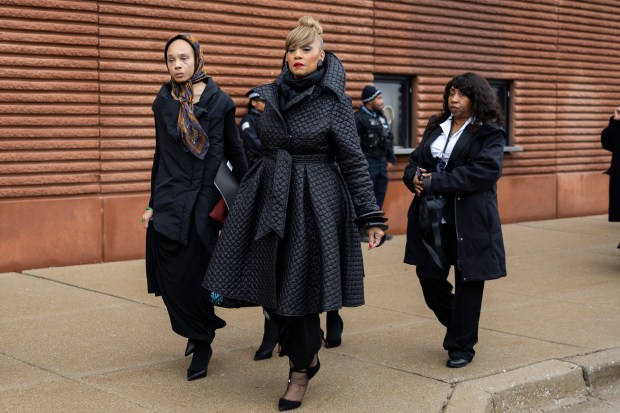
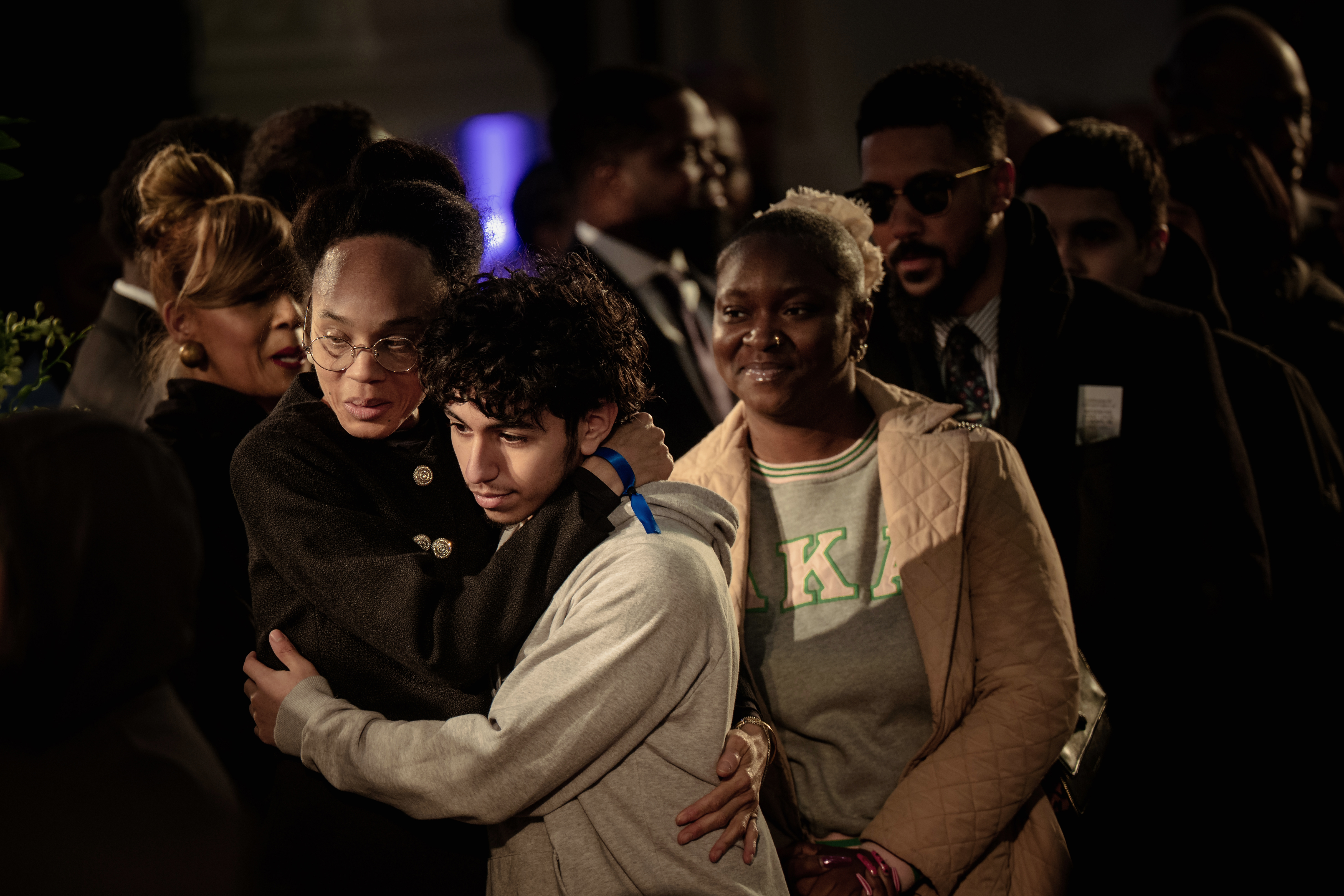
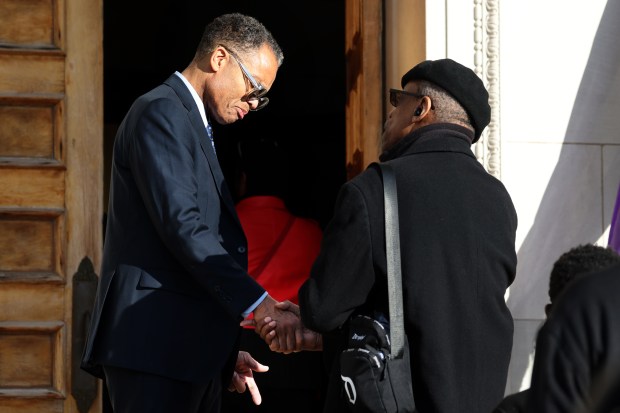
Mourners arrive at House of Hope in Chicago for the public service for the Rev. Jesse Jackson on March 6, 2026. (Terrence Antonio James/Chicago Tribune)
Anthony Curry Sr., 66, of Chicago, stands with Larry Brooks, 76, of Chicago outside House of Hope ahead of the public service for the Rev. Jesse Jackson in Chicago’s South Deering neighborhood on March 6, 2026. (Josh Boland/Chicago Tribune)
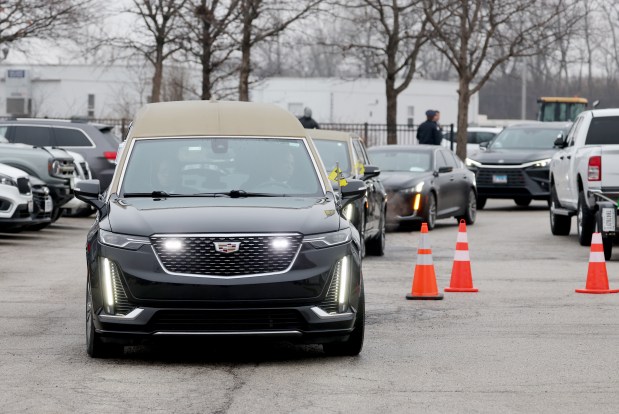
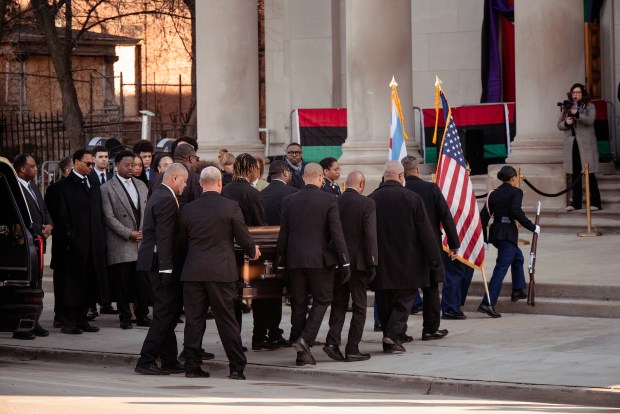
The procession for the Rev. Jesse Jackson arrives for his public service at House of Hope in Chicago on March 6 2026. (Terrence Antonio James/Chicago Tribune)
1 of 44
Former President Barack Obama speaks during the memorial service for the Rev. Jesse Jackson at House of Hope in Chicago on March 6, 2026. (Terrence Antonio James/Chicago Tribune)
A crescendo of voices from the worlds of religion, politics, business, sports and entertainment converged at the South Side’s House of Hope, providing a requiem to the vast reach of the leadership, inspiration and teachings that made the Rev. Jesse Jackson a national civil rights icon.
More than 1,000 people attended the public celebration of life ceremony for Jackson, including former Presidents Bill Clinton, Barack Obama and Joe Biden, who were accompanied by former first ladies Jill Biden and Hillary Rodham Clinton, as well as Gov. JB Pritzker, Chicago Mayor Brandon Johnson, NBA Hall of Famer Isiah Thomas and Cubs owner Tom Ricketts. Read more here.
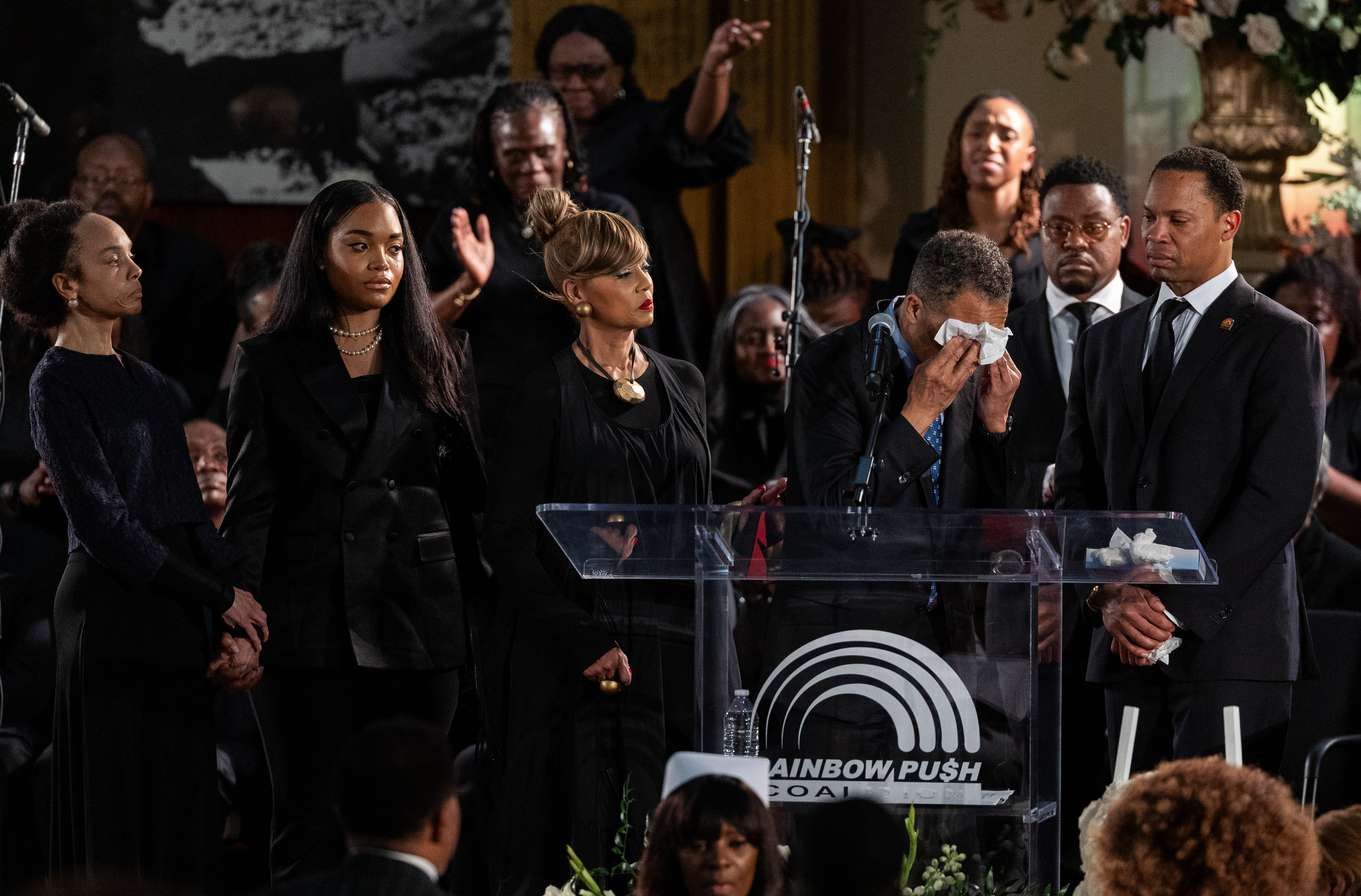
Jackie Jackson, Ashley Jackson, Santita Jackson, and Yusef Jackson stand behind Jesse Jackson Jr. as he cries during his speech during a funeral service for their father, the Rev. Jesse Jackson, at Rainbow PUSH Coalition headquarters in Chicago, March 7, 2026. (Josh Boland/Chicago Tribune)
Jacqueline Jackson is reflected in the casket of her late husband, the Rev. Jesse Jackson, as their sons Jesse Jackson Jr., left, and U.S. Rep. Jonathan Jackson, right, walk as pallbearers after Jackson's funeral service at Rainbow PUSH Coalition, March 7, 2026, in Chicago. (John J. Kim/Chicago Tribune)
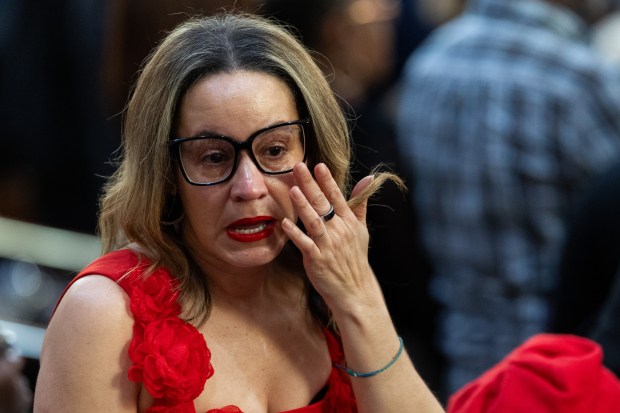
A woman cries during a private service for the Rev. Jesse Jackson at Rainbow PUSH Coalition headquarters in Chicago, March 7, 2026. (Josh Boland/Chicago Tribune)
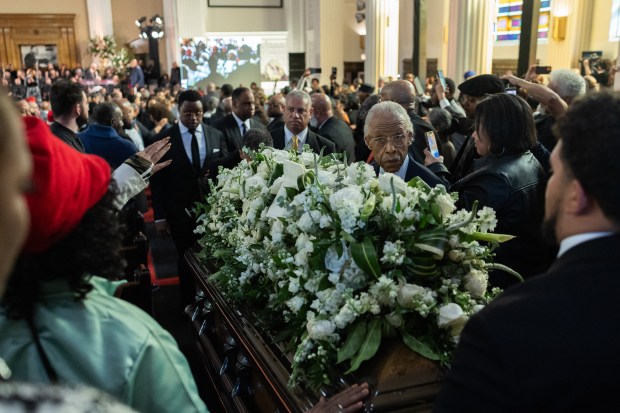
Rev. Al Sharpton, right, helps Jesse Jackson Jr. push the casket up the aisle during a private service for the Rev. Jesse Jackson at Rainbow PUSH Coalition headquarters in Chicago, March 7, 2026. (Josh Boland/Chicago Tribune)
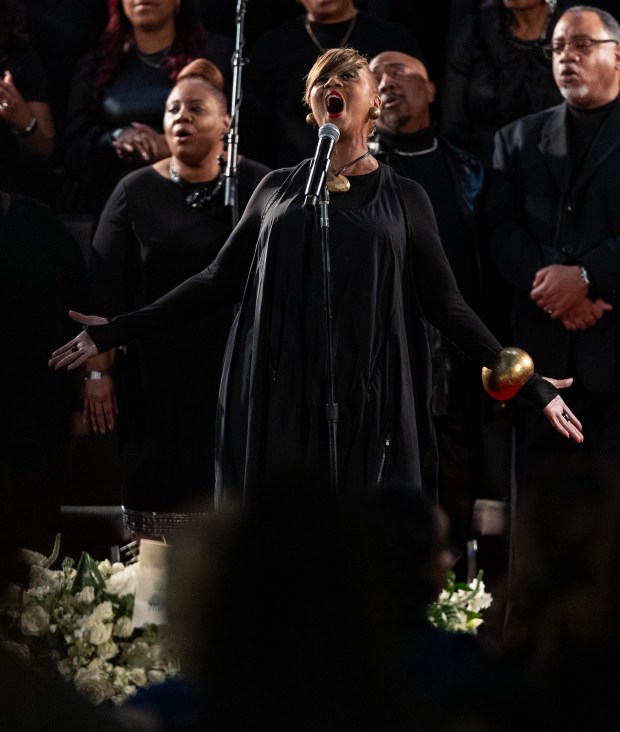
Santita Jackson performs during a private service for the Rev. Jesse Jackson at Rainbow PUSH Coalition headquarters in Chicago, March 7, 2026. (Josh Boland/Chicago Tribune)
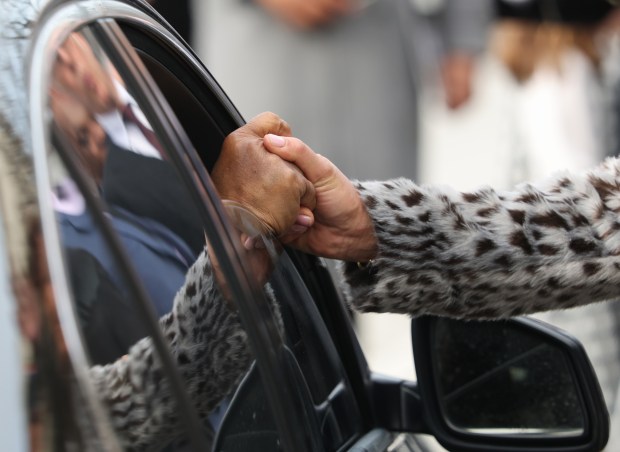
A mourner, right, holds Jacqueline Jackson's hand through a car window after the funeral service for Jackson's husband, the Rev. Jesse Jackson, at Rainbow PUSH Coalition Saturday, March 7, 2026, in Chicago. (John J. Kim/Chicago Tribune)
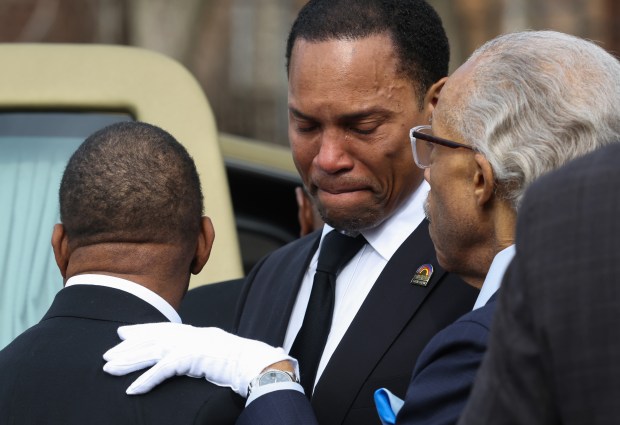
Yusef Jackson, center, is comforted by the Rev. James Meeks, left, and the Rev. Al Sharpton after transporting the casket of Jackson's father, the Rev. Jesse Jackson, into a hearse following his funeral service at Rainbow PUSH Coalition Saturday, March 7, 2026, in Chicago. (John J. Kim/Chicago Tribune)
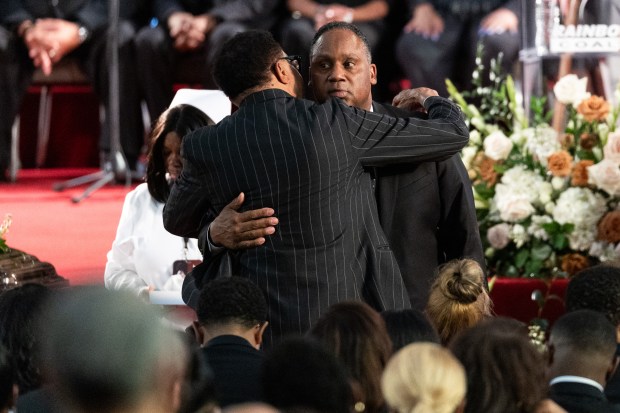
Yusef Jackson embraces Cassius the grandchild of the Rev. Jesse Jackson during a private service for the Rev. Jesse Jackson at Rainbow PUSH Coalition headquarters in Chicago Saturday, March 7, 2026. (Josh Boland/Chicago Tribune)
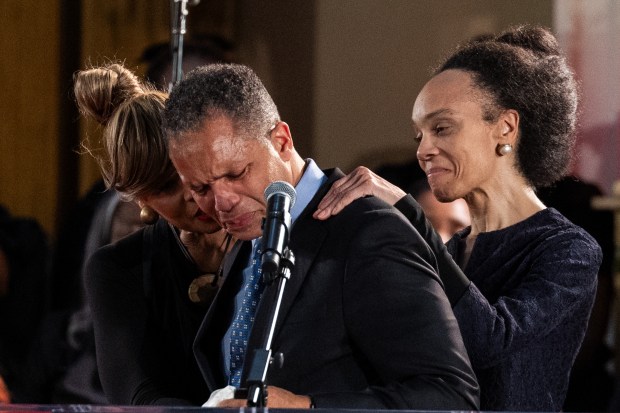
Jesse Jackson Jr. cries as his sisters Santita Jackson and Jackie Jackson embrace him during a private service for their father, the Rev. Jesse Jackson, at Rainbow PUSH Coalition headquarters in Chicago, March 7, 2026. (Josh Boland/Chicago Tribune)
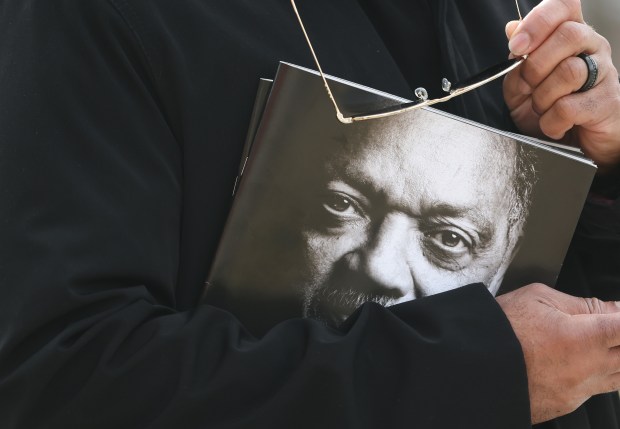
Ken Abrom holds programs for the funeral of the Rev. Jesse Jackson after attending the hours-long service at Rainbow PUSH Coalition Saturday, March 7, 2026, in Chicago. (John J. Kim/Chicago Tribune)
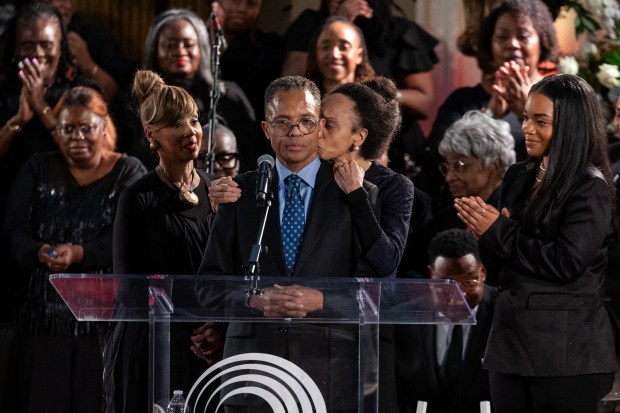
Jesse Jackson Jr. is kissed by his sister Jackie Jackson while Santita Jackson and Ashley Jackson stand behind them during a private service for their father, the Rev. Jesse Jackson, at Rainbow PUSH Coalition headquarters in Chicago, March 7, 2026. (Josh Boland/Chicago Tribune)
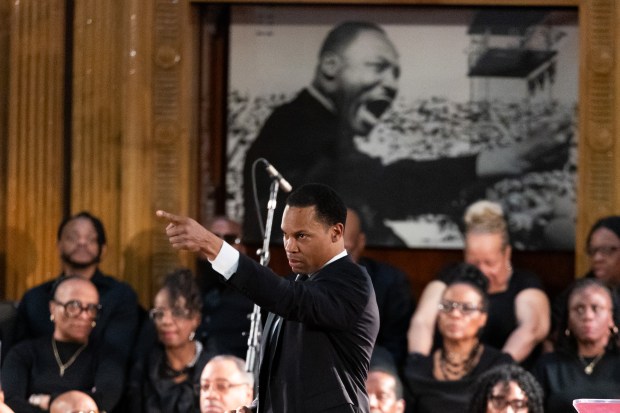
U.S. Rep. Jonathan Jackson speaks during a private service for his father, the Rev. Jesse Jackson, at Rainbow PUSH Coalition headquarters in Chicago, March 7, 2026. (Josh Boland/Chicago Tribune)
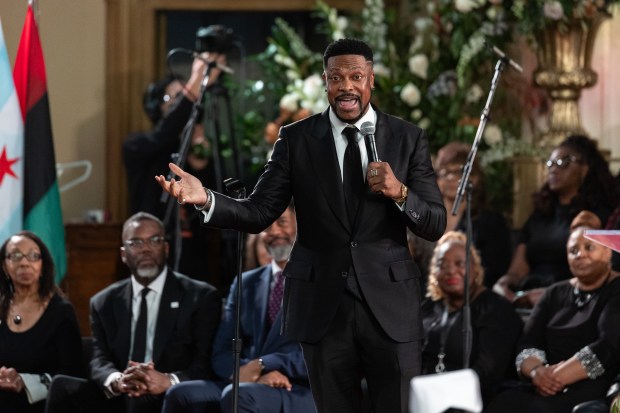
Comedian Chris Tucker speaks during a private service for the Rev. Jesse Jackson at Rainbow PUSH Coalition headquarters in Chicago Saturday, March 7, 2026. (Josh Boland/Chicago Tribune)
Jackie Jackson, center, cries as her siblings Santita Jackson, from left, Jesse Jackson Jr., Ashley Jackson and U.S. Rep. Jonathan Jackson stand behind her during a funeral service for the Rev. Jesse Jackson at Rainbow PUSH Coalition headquarters in Chicago, March 7, 2026. (Josh Boland/Chicago Tribune)
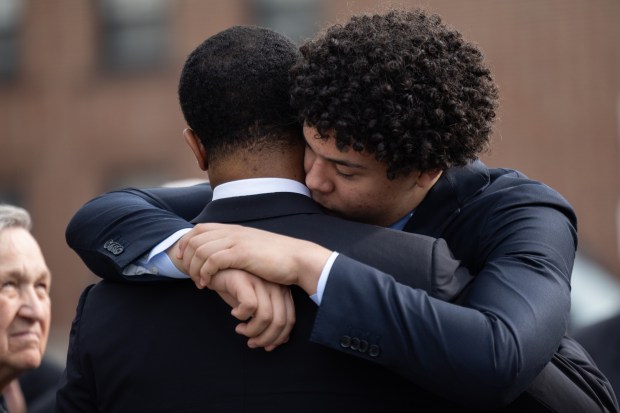
U.S. Rep. Jonathan Jackson embraces a friend during a private service for his father, the Rev. Jesse Jackson, at Rainbow PUSH Coalition headquarters in Chicago, March 7, 2026. (Josh Boland/Chicago Tribune)
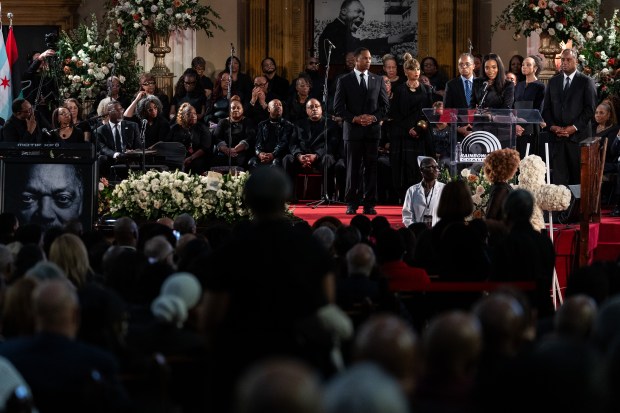
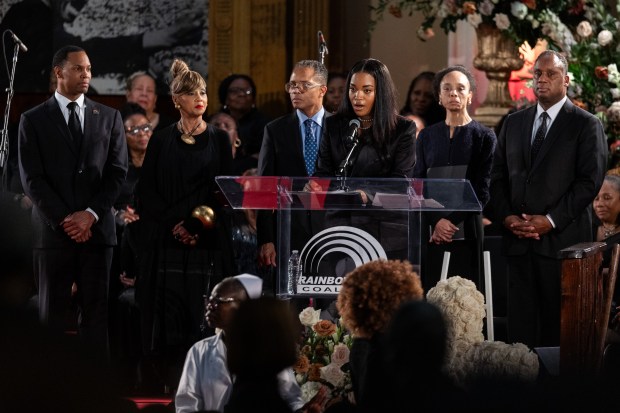
The casket of the Rev. Jesse Jackson sits at the foot of the stage as Yusef Jackson, Santita Jackson, Jesse Jackson Jr., Ashley Jackson, Jackie Jackson and U.S. Rep. Jonathan Jackson stand on stage while Ashley speaks during a private service for their father, the Rev. Jesse Jackson, at Rainbow PUSH Coalition headquarters in Chicago, March 7, 2026. (Josh Boland/Chicago Tribune)
Yusef Jackson, Santita Jackson, Jesse Jackson Jr., Ashley Jackson, Jackie Jackson and U.S. Rep. Jonathan Jackson stand on stage as Ashley speaks during a private service for their father, the Rev. Jesse Jackson, at Rainbow PUSH Coalition headquarters in Chicago, March 7, 2026. (Josh Boland/Chicago Tribune)
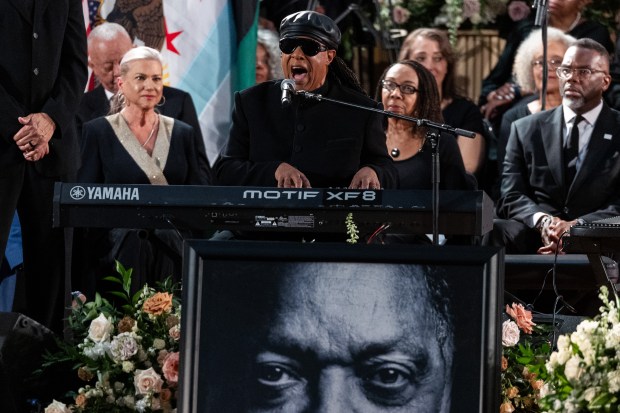
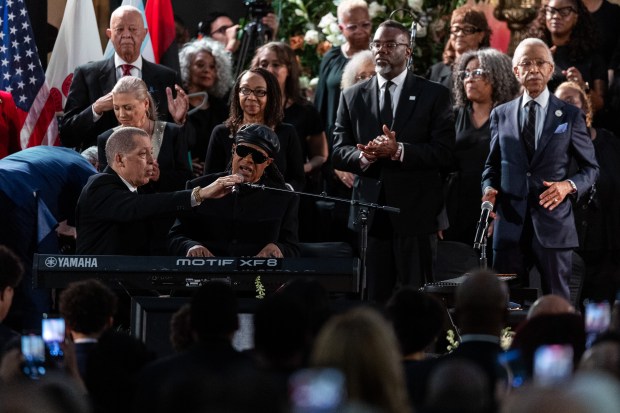
Stevie Wonder performs during a private service for the Rev. Jesse Jackson at Rainbow PUSH Coalition headquarters in Chicago, March 7, 2026. (Josh Boland/Chicago Tribune)
Stevie Wonder performs during a private service for the Rev. Jesse Jackson at Rainbow PUSH Coalition headquarters in Chicago, March 7, 2026. (Josh Boland/Chicago Tribune)
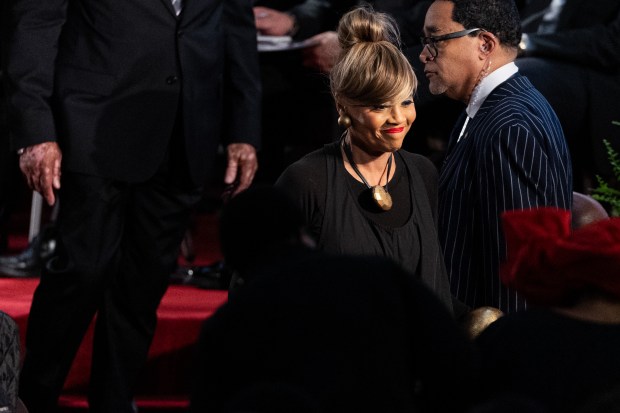
Santita Jackson walks through the aisle during a private service for her father, the Rev. Jesse Jackson, at Rainbow PUSH Coalition headquarters in Chicago, March 7, 2026. (Josh Boland/Chicago Tribune)
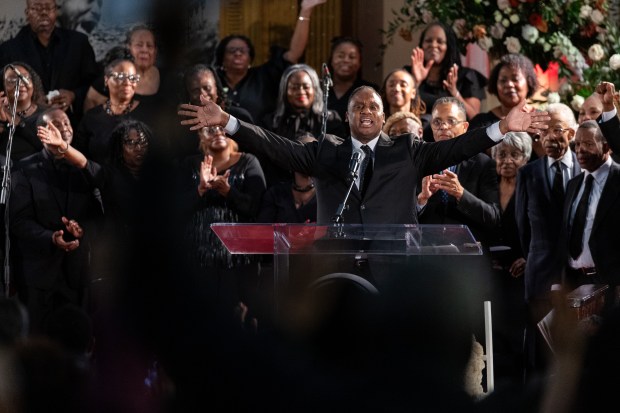
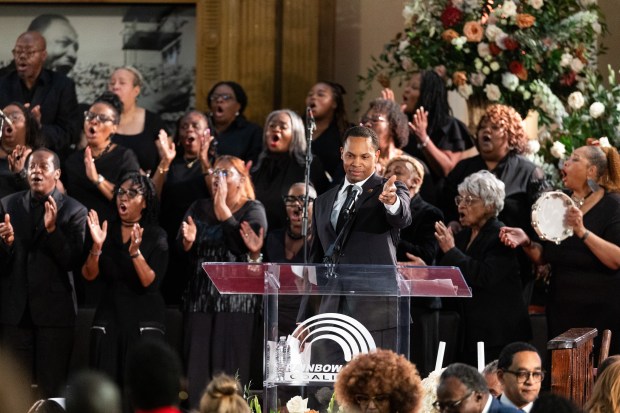
Yusef Jackson reaches out towards the crowd as the PUSH choir sings during a private service for the Rev. Jesse Jackson at Rainbow PUSH Coalition headquarters in Chicago, March 7, 2026. (Josh Boland/Chicago Tribune)
The portrait and casket of the Rev. Jesse Jackson during a private service at Rainbow PUSH Coalition headquarters in Chicago, March 7, 2026. (Josh Boland/Chicago Tribune)
Yusef Jackson points to the crowd during a private service for the Rev. Jesse Jackson at Rainbow PUSH Coalition headquarters in Chicago, March 7, 2026. (Josh Boland/Chicago Tribune)
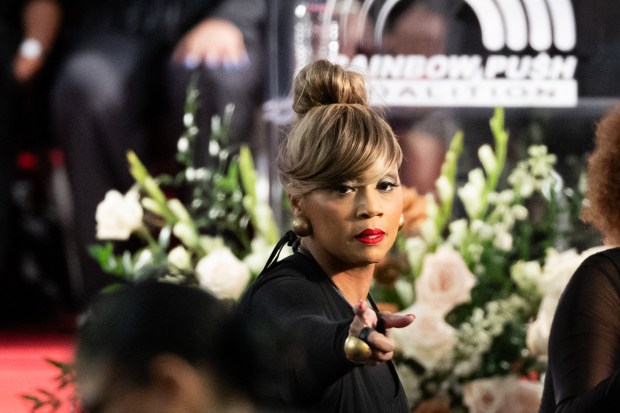
Santita Jackson points to an attendee during a private service for her father, the Rev. Jesse Jackson ,at Rainbow PUSH Coalition headquarters in Chicago, March 7, 2026. (Josh Boland/Chicago Tribune)
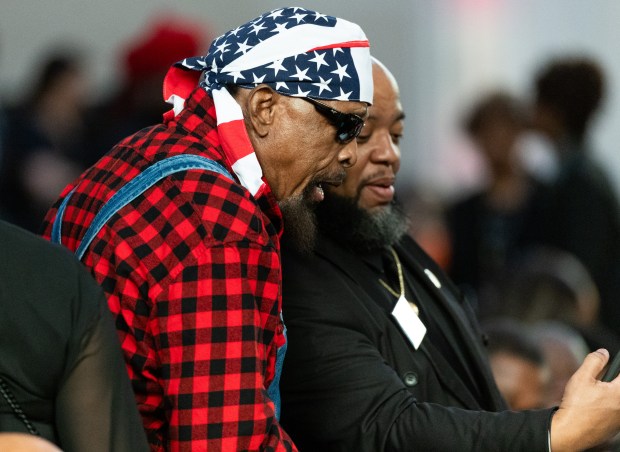
Mr. T., left, takes a picture with Marcus Jones, of Chicago, during a private service for the Rev. Jesse Jackson at Rainbow PUSH Coalition headquarters in Chicago, March 7, 2026. (Josh Boland/Chicago Tribune)
Jesse Jackson Jr. stands outside the hearse carrying the casket of the Rev. Jesse Jackson ahead of a private service for the late civil rights leader at Rainbow PUSH Coalition headquarters in Chicago, March 7, 2026. (Josh Boland/Chicago Tribune)
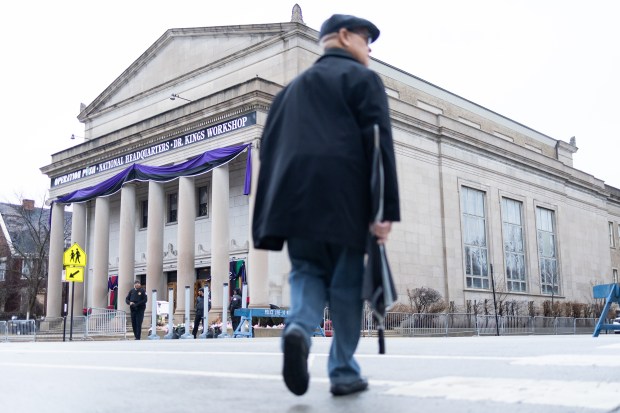
Albert Jones, of Chicago, walks across the street ahead of a private service for the Rev. Jesse Jackson at Rainbow PUSH Coalition headquarters in Chicago, March 7, 2026. (Josh Boland/Chicago Tribune)
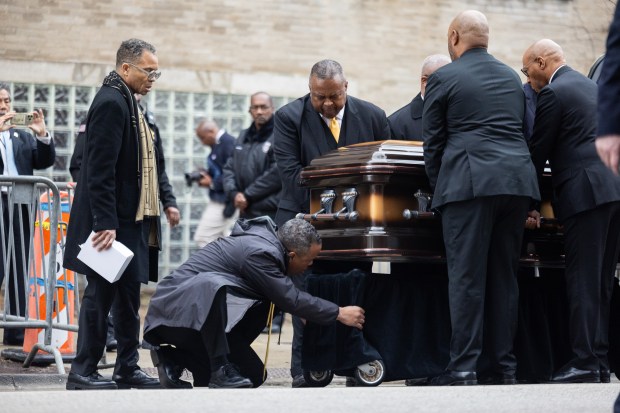
Jesse Jackson Jr., far left, observes as people lower the casket of the Rev. Jesse Jackson onto a trolly ahead of a private service for late civil rights leader at Rainbow PUSH Coalition headquarters in Chicago, March 7, 2026. (Josh Boland/Chicago Tribune)
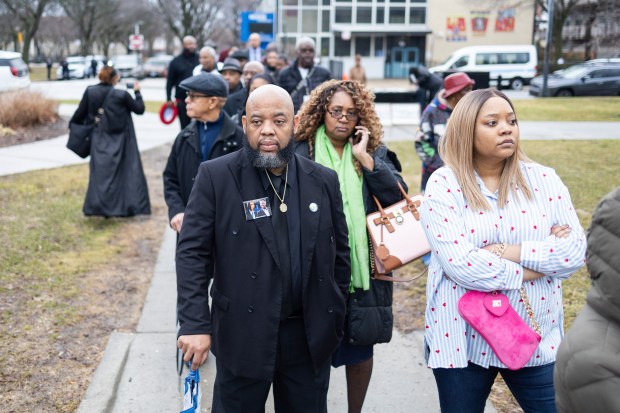
Marcus Jones, far left, of Chicago and Jazz Manfield, center, stand in line ahead of a private service for the Rev. Jesse Jackson at Rainbow PUSH Coalition headquarters in Chicago, March 7, 2026. (Josh Boland/Chicago Tribune)
1 of 29
Jackie Jackson, Ashley Jackson, Santita Jackson, and Yusef Jackson stand behind Jesse Jackson Jr. as he cries during his speech during a funeral service for their father, the Rev. Jesse Jackson, at Rainbow PUSH Coalition headquarters in Chicago, March 7, 2026. (Josh Boland/Chicago Tribune)
They sent the Rev. Jesse Jackson home the only way it could have been done: with Gospel music, testimony that often brought people to their feet and story after story about a man who rose from humble beginnings to become one of America’s most influential Civil Rights leaders.
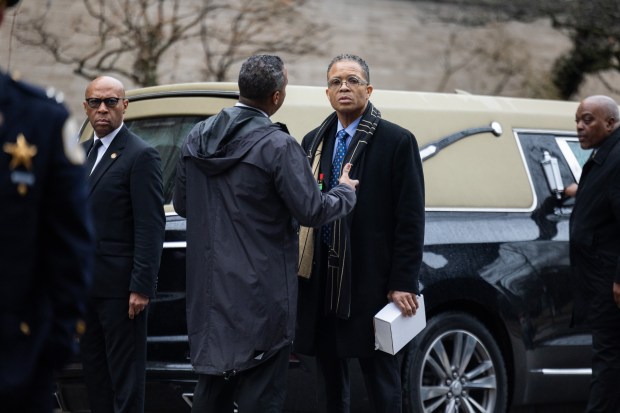
The final service in Jackson’s honor, in a packed chapel at the Rainbow PUSH Coalition, proved befitting of a human rights advocate who came to be known, simply, as the “country preacher.” Jackson earned that nickname in the years after leaving the Chicago Theological Seminary, while he marched from Selma to Montgomery and through streets in Chicago and far beyond.
Like any good country preacher, Jackson could move people to tears and move them to act. Speakers and performers at his funeral Saturday — a group that included his children, singer Stevie Wonder and South African President Cyril Ramaphosa — came to do both. Read more here.
He advocated for the people. They came in droves to visit him one last time.
Jackie Jackson hugs each visitor paying their respects at the casket of her father, the Rev. Jesse Jackson, on the first day of public visitation at Rainbow PUSH Coalition headquarters on Feb. 26, 2026. (E. Jason Wambsgans/Chicago Tribune)
Former U.S. Rep. and civil rights activist Bobby Rush stands at the casket of the Rev. Jesse Jackson on first day of public visitation at Rainbow PUSH Coalition headquarters, Feb. 26, 2026. (E. Jason Wambsgans/Chicago Tribune)
Jesse Jackson Jr., left, greets mourners at Rainbow PUSH Coalition headquarters in Chicago on the second day of public visitation for his father the late Rev. Jesse Jackson, Feb. 27, 2026. (Terrence Antonio James/Chicago Tribune)
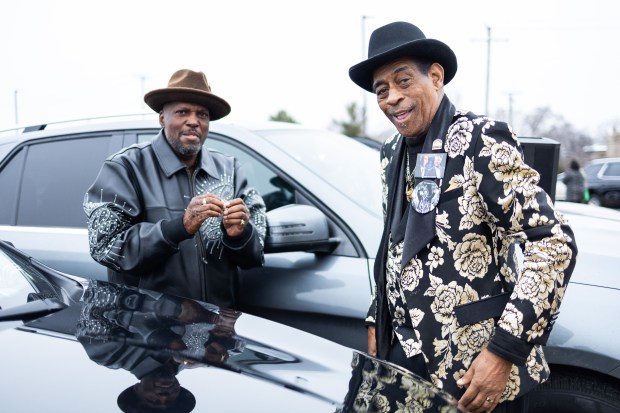
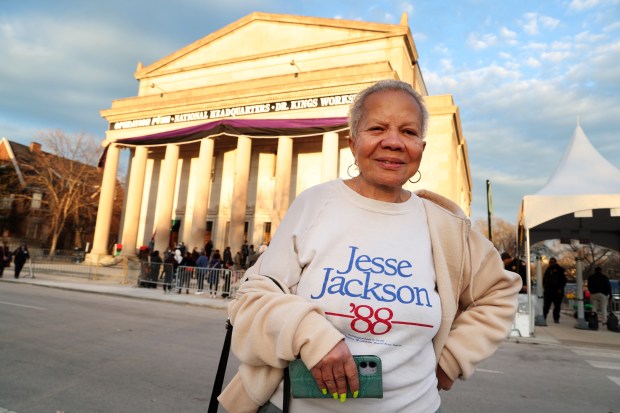
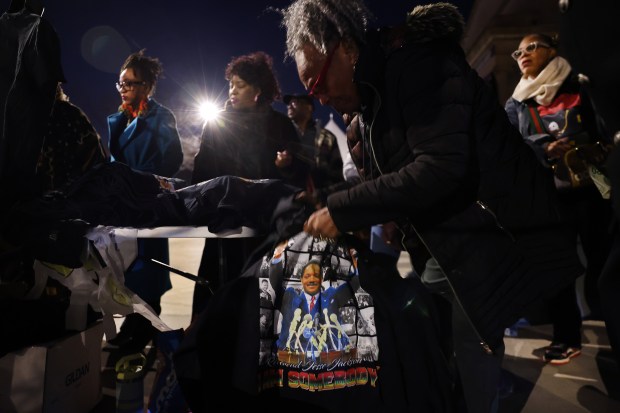
Melody McDowell, of Chicago’s south suburbs, wears a shirt from the Rev. Jesse Jackson’s 1988 presidential run as she visits Rainbow PUSH Coalition headquarters in Chicago on the second day of public visitation for Jackson, Feb. 27, 2026. (Terrence Antonio James/Chicago Tribune)
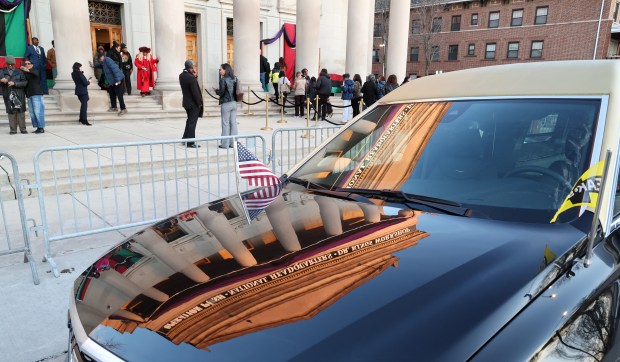
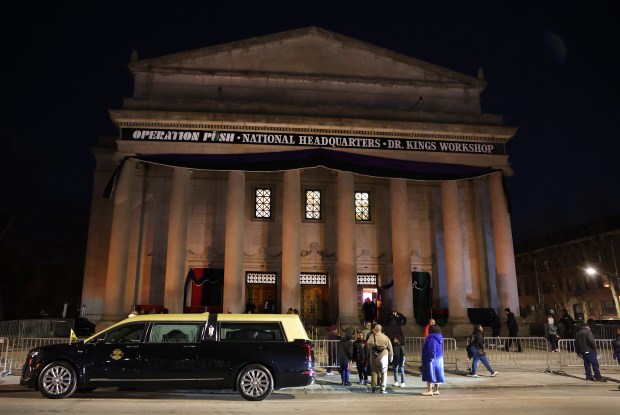
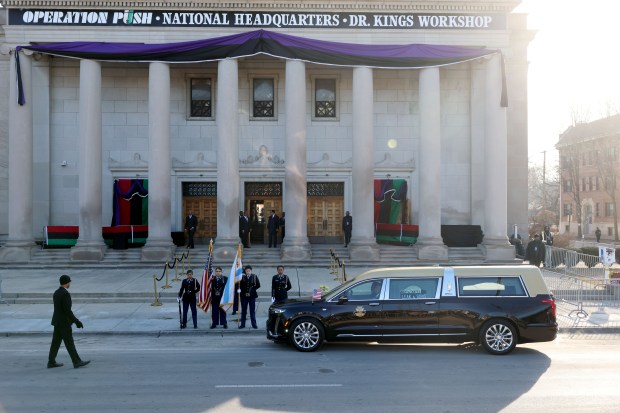
The Rainbow PUSH Coalition headquarters in Chicago is reflected on the hood of a hearse on the second day of public visitation for the Rev. Jesse Jackson, Feb. 27, 2026. (Terrence Antonio James/Chicago Tribune)
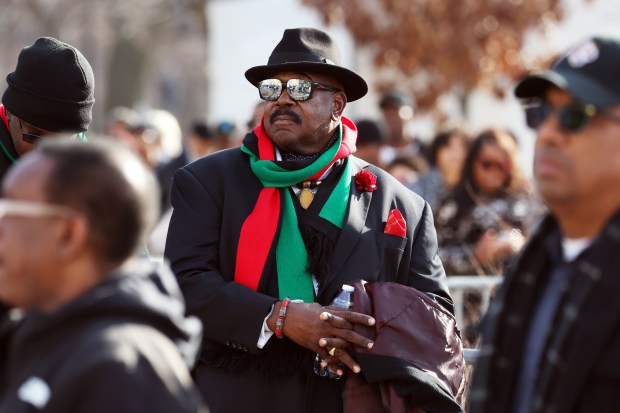
Stanford Nelson, from Milwaukee, waits in line to enter Rainbow PUSH Coalition headquarters in Chicago on the second day of public visitation for the late Rev. Jesse Jackson, Feb. 27, 2026. (Terrence Antonio James/Chicago Tribune)
A steady stream of visitors pay their respects on first day of public visitation for the Rev. Jesse Jackson at Rainbow PUSH Coalition headquarters, Feb. 26, 2026. (E. Jason Wambsgans/Chicago Tribune)
T-shirts for sale outside of Rainbow PUSH Coalition to commemorate the life of the Rev. Jesse Jackson as people gather for the second day of the public visitation for Jackson, Feb. 27, 2026. (Chris Sweda/Chicago Tribune)
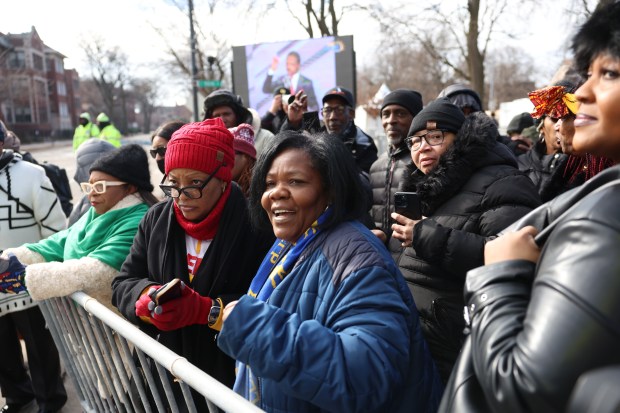
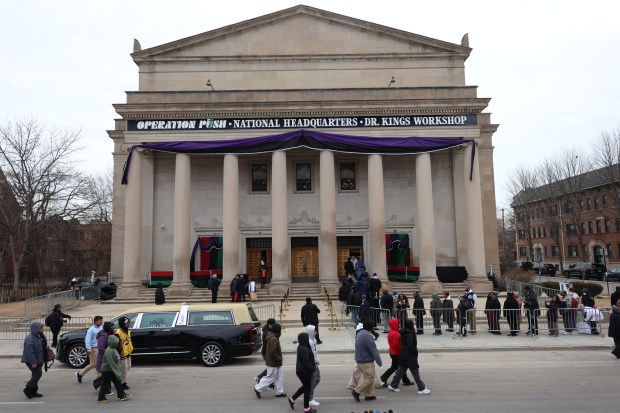
People gather outside Rainbow PUSH Coalition in Chicago on the second day of the public visitation for the Rev. Jesse Jackson, Feb. 27, 2026. (Chris Sweda/Chicago Tribune)
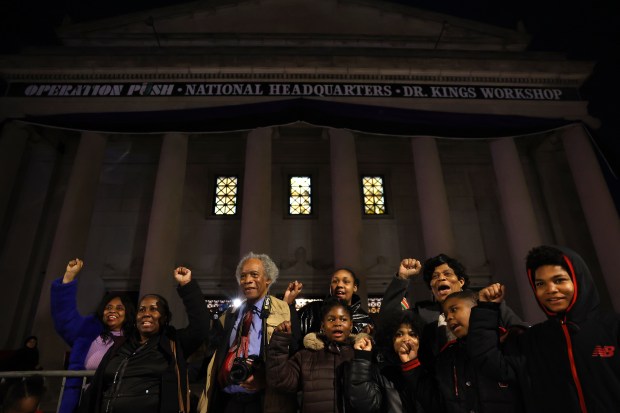
A group of people, including former Chicago Sun-Times photographer John H. White, third from left, pose outside of Rainbow PUSH Coalition as people gather for the second day of the public visitation for the Rev. Jesse Jackson on Feb. 27, 2026. (Chris Sweda/Chicago Tribune)
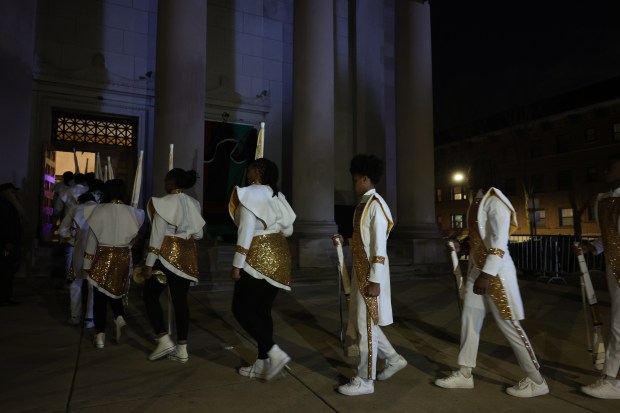
Members of the South Shore Drill Team enter the Rainbow PUSH Coalition headquarters during a visitation for the Rev. Jesse Jackson, Feb. 26, 2026, in Chicago. (John J. Kim/Chicago Tribune)
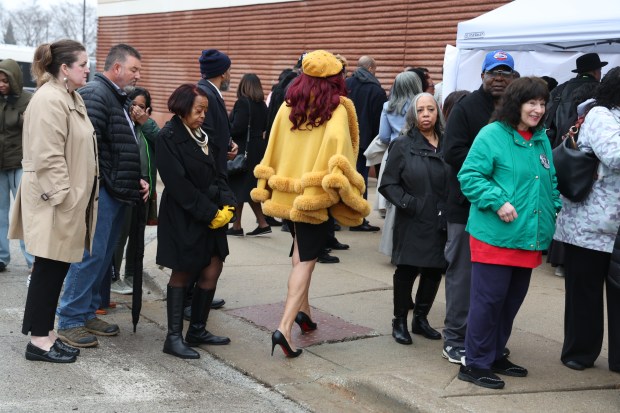
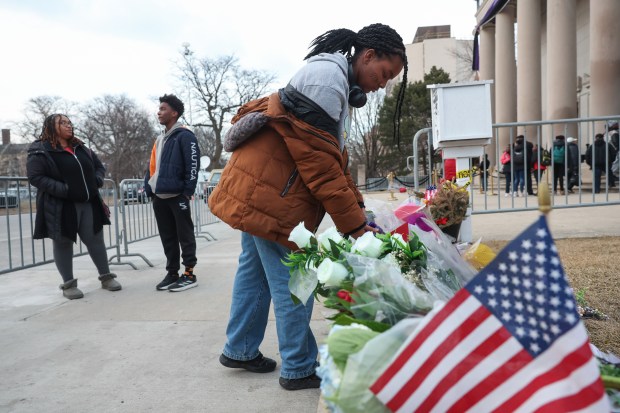
Brianna White, 17, places flowers outside the Rainbow PUSH Coalition headquarters during a visitation for the Rev. Jesse Jackson, Feb. 26, 2026, in Chicago. (John J. Kim/Chicago Tribune)
Rep. Jonathan Jackson comforts Jerome Morgan, who flew from Washington, D.C. to pay his respects on first day of public visitation for the Rev. Jesse Jackson at Rainbow PUSH Coalition headquarters, Feb. 26, 2026. “I only met hime once, shook his hand. But I learned a lot from him, that you can be a part of the process,” Morgan said. (E. Jason Wambsgans/Chicago Tribune)
People wait in line outside Rainbow PUSH Coalition headquarters in Chicago to attend the first day of public visitation for the Rev. Jesse Jackson, Feb. 26, 2026. (Terrence Antonio James/Chicago Tribune)
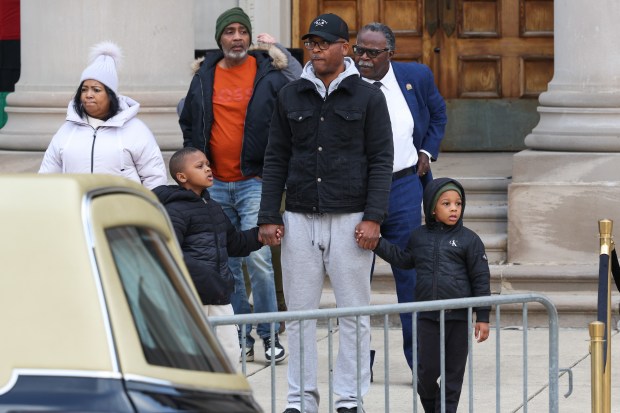
Dwayne Belle holds his children's hands as they exit the Rainbow PUSH Coalition headquarters during a visitation for the Rev. Jesse Jackson, Feb. 26, 2026, in Chicago. (John J. Kim/Chicago Tribune)
Monita Johnson drove from Flint, Michigan with her children Aliece Jefferson and Pierre Jefferson to pay their respects on the first day of public visitation for the Rev. Jesse Jackson at Rainbow PUSH Coalition headquarters, Feb. 26, 2026. (E. Jason Wambsgans/Chicago Tribune)
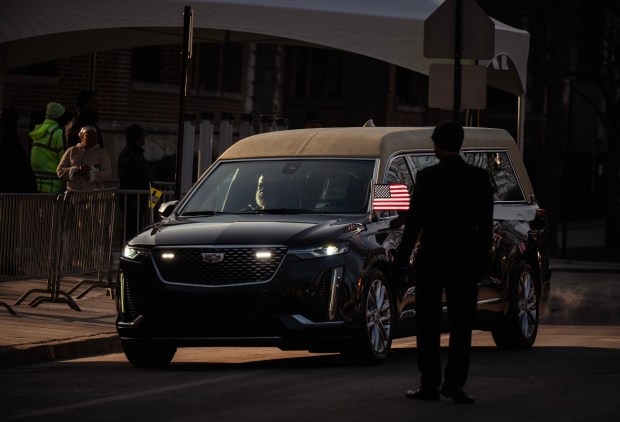
The procession for the Rev. Jesse Jackson arrives at Rainbow PUSH Coalition headquarters on Feb. 26, 2026. (Brian Cassella/Chicago Tribune)
Yusef Jackson, right, and his siblings arrive for the first day of public visitation for their father, the Rev. Jesse Jackson, at Rainbow PUSH Coalition headquarters on Feb. 26, 2026. (E. Jason Wambsgans/Chicago Tribune)
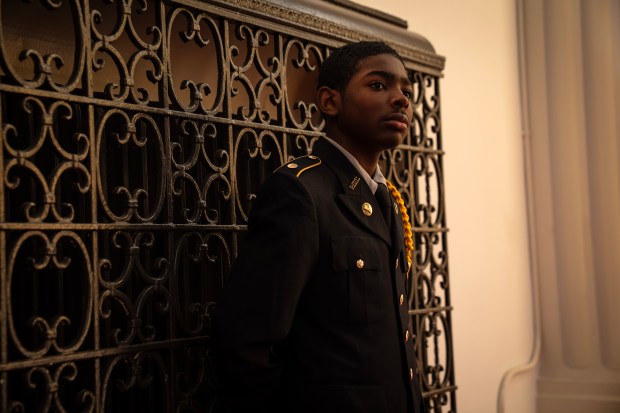
Jayveon Baskerville-Bolar, a cadet leader from the The Air Force Academy High School listens to a prayer on first day of public visitation for the Rev. Jesse Jackson at Rainbow PUSH Coalition headquarters, Feb. 26, 2026. (E. Jason Wambsgans/Chicago Tribune)
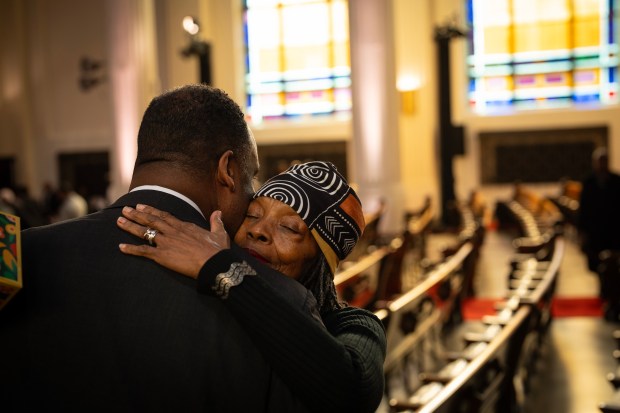
Tawanda Phillips embraces Rep. Jonathan Jackson on the first day of public visitation for the Rev. Jesse Jackson at Rainbow PUSH Coalition headquarters, Feb. 26, 2026. (E. Jason Wambsgans/Chicago Tribune)
Gwendolyn Evans, who has followed the Rev. Jesse Jackson for over 50 years and sings in the choir at Rainbow PUSH Coalition, chants along with a video of Rev. Jackson on first day of public visitation for the Rev. Jesse Jackson at headquarters, Feb. 26, 2026. (E. Jason Wambsgans/Chicago Tribune)
A steady stream of visitors pay their respects on the first day of public visitation for the Rev. Jesse Jackson at Rainbow PUSH Coalition headquarters, Feb. 26, 2026. (E. Jason Wambsgans/Chicago Tribune)
Pamelashell Hooks, in red hat, and other mourners chant “I am somebody” before entering the visitation for the Rev. Jesse Jackson on Feb. 26, 2026, at Rainbow PUSH Coalition Headquarters in Chicago. (Brian Cassella/Chicago Tribune)
Jesse Jackson Jr. steps outside during the visitation for the Rev. Jesse Jackson on Feb. 26, 2026, at Rainbow PUSH Coalition Headquarters in Chicago. (Brian Cassella/Chicago Tribune)
Pamelashell Hooks of Florida watches the arrival of the Jackson family to the first day of public visitation for the Rev. Jesse Jackson at Rainbow PUSH Coalition headquarters, Feb. 26, 2026. (E. Jason Wambsgans/Chicago Tribune)
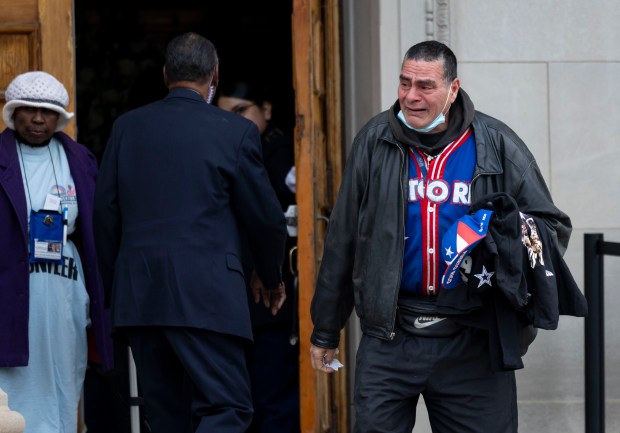
A mourner is emotional after departing the visitation for the Rev. Jesse Jackson on Feb. 26, 2026, at Rainbow PUSH Coalition Headquarters in Chicago. (Brian Cassella/Chicago Tribune)
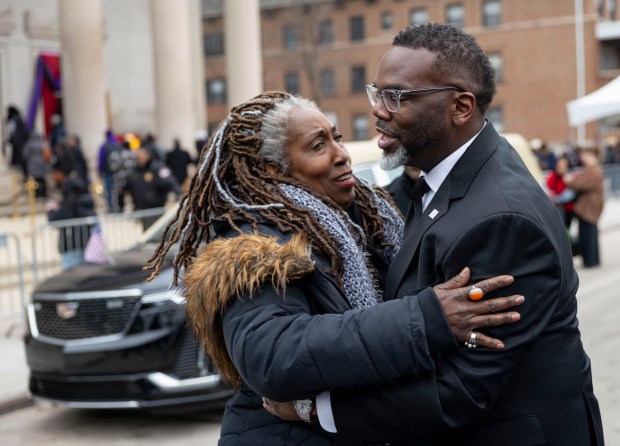
Mayor Brandon Johnson greets people while departing the visitation for the Rev. Jesse Jackson on Feb. 26, 2026, at Rainbow PUSH Coalition Headquarters in Chicago. (Brian Cassella/Chicago Tribune)
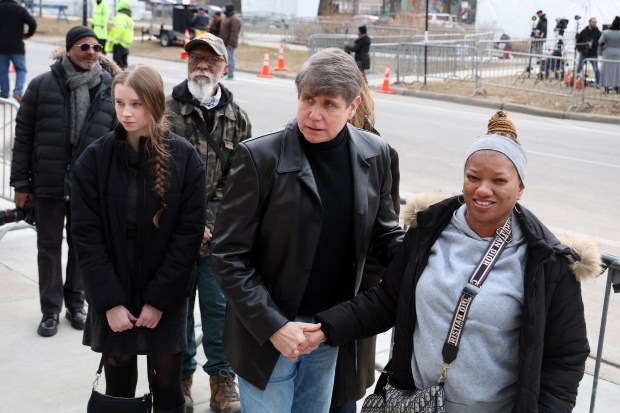
Former Gov. Rod Blagojevich, center, arrives at Rainbow PUSH Coalition headquarters in Chicago to attend the first day of public visitation for the Rev. Jesse Jackson, Feb. 26, 2026. (Terrence Antonio James/Chicago Tribune)
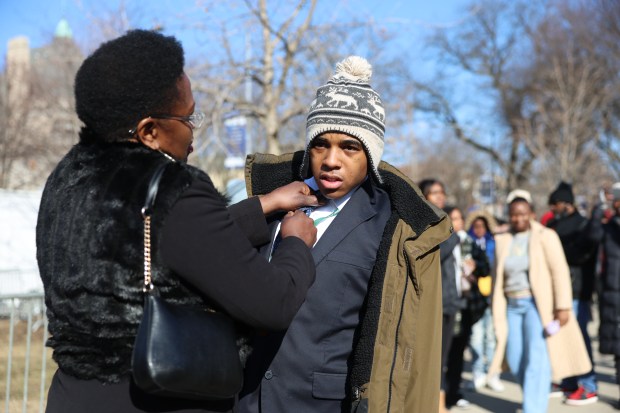
Allen Norris, 18, has his tie fixed by his mother Artila Mims as they wait to attend the first public visitation for the Rev. Jesse Jackson at Rainbow PUSH Coalition headquarters on Feb. 26, 2026. (Brian Cassella/Chicago Tribune)
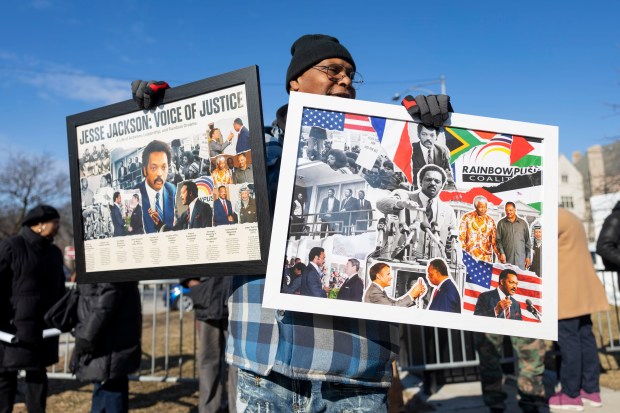
A man holds posters outside on the first day of the visitation for the Rev. Jesse Jackson on Feb. 26, 2026, at Rainbow PUSH Coalition Headquarters in Chicago. (Brian Cassella/Chicago Tribune)
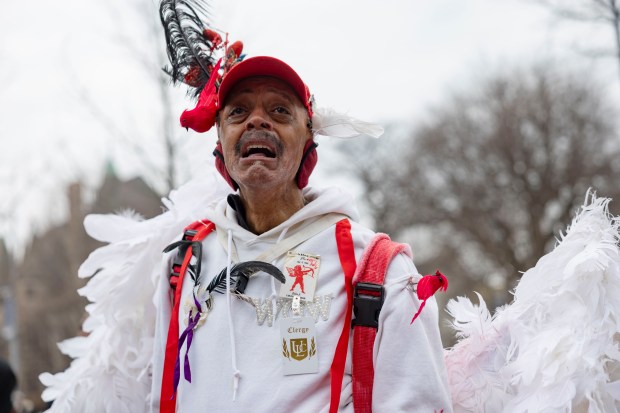
A mourner becomes emotional outside the visitation for the Rev. Jesse Jackson on Feb. 26, 2026, at Rainbow PUSH Coalition Headquarters in Chicago. (Brian Cassella/Chicago Tribune)
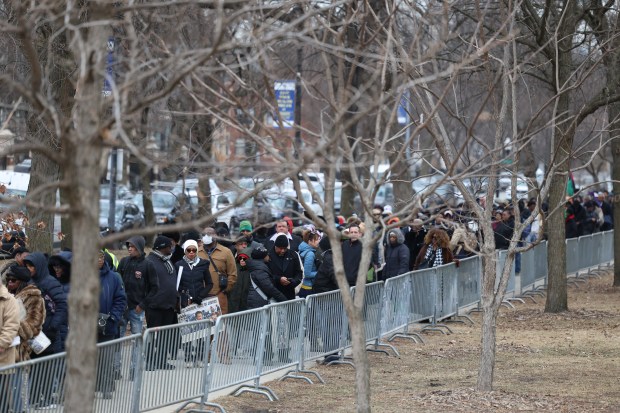
People wait in line to attend the first public visitation for the Rev. Jesse Jackson at Rainbow PUSH Coalition headquarters on Feb. 26, 2026. (Brian Cassella/Chicago Tribune)
Victor Smith waits in line outside the visitation for the Rev. Jesse Jackson on Feb. 26, 2026, at Rainbow PUSH Coalition Headquarters in Chicago. (Brian Cassella/Chicago Tribune)
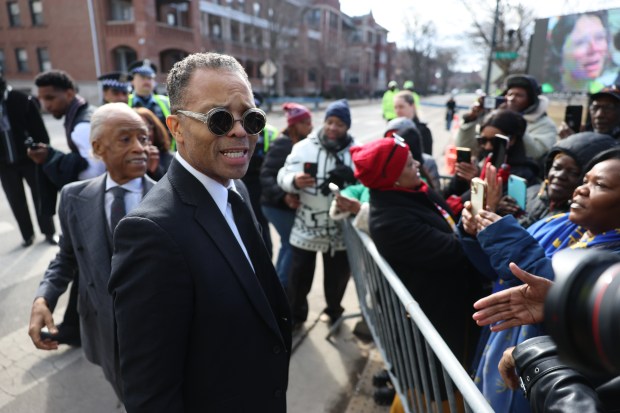
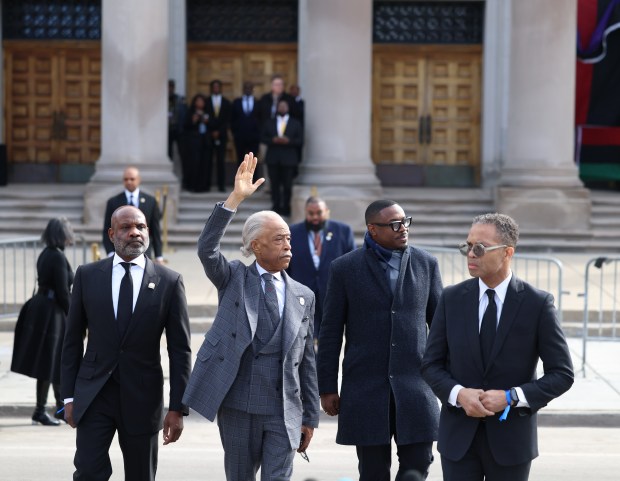
Jesse Jackson Jr., foreground, and Rev. Al Sharpton, left, greet those waiting in line outside the first public visitation for the Rev. Jesse Jackson at Rainbow PUSH Coalition headquarters on Feb. 26, 2026. (Brian Cassella/Chicago Tribune)
Pamelashell Hooks, of Florida’s, second left, and other members of the public wait in line to attend the first public visitation for the Rev. Jesse Jackson at Rainbow PUSH Coalition headquarters on Feb. 26, 2026. (Brian Cassella/Chicago Tribune)
Rev. Al Sharpton, center, and Jesse Jackson Jr., acknowledge the crowd forming at the first public visitation for the Rev. Jesse Jackson at Rainbow PUSH Coalition headquarters on Feb. 26, 2026. (Brian Cassella/Chicago Tribune)
Mourners arrive on the first day of the visitation for the Rev. Jesse Jackson on Feb. 26, 2026, at Rainbow PUSH Coalition Headquarters in Chicago. (Brian Cassella/Chicago Tribune)
People wait in line to attend the first public visitation for the Rev. Jesse Jackson at Rainbow PUSH Coalition headquarters on Feb. 26, 2026. (Brian Cassella/Chicago Tribune)
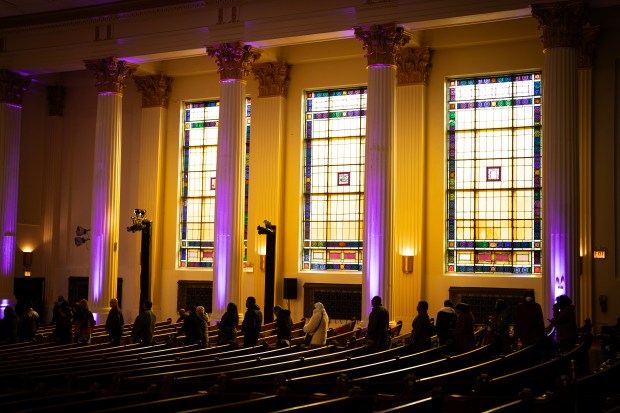
People attend the first public visitation for the Rev. Jesse Jackson at Rainbow PUSH Coalition headquarters on Feb. 26, 2026. (Brian Cassella/Chicago Tribune)
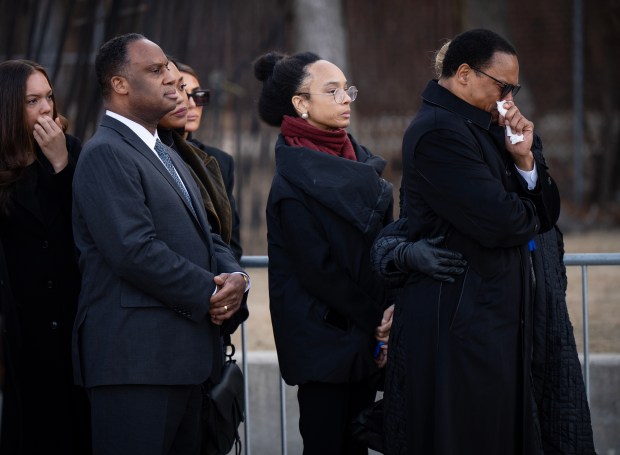
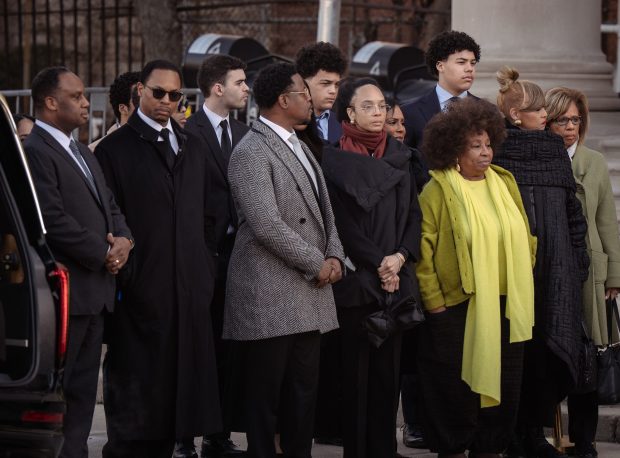
Jacqueline Jackson, widow of the Rev. Jesse Jackson, and family watch the casket of Rev. Jackson at the first day of public visitation for at Rainbow PUSH Coalition headquarters, Feb. 26, 2026. (E. Jason Wambsgans/Chicago Tribune)
The casket of Rev. Jesse Jackson, Sr., arrives for the first day of public visitation at Rainbow PUSH Coalition headquarters, Thursday, Feb. 26, 2026. (E. Jason Wambsgans/Chicago Tribune)
Family members watch the casket arrive on the first day of the visitation for the Rev. Jesse Jackson on Feb. 26, 2026, at Rainbow PUSH Coalition Headquarters in Chicago. (Brian Cassella/Chicago Tribune)
The casket of the Rev. Jesse Jackson arrives for the first day of public visitation at Rainbow PUSH Coalition headquarters, Feb. 26, 2026. (E. Jason Wambsgans/Chicago Tribune)
Pastor King James Camper, of Richton Park, waits outside the first public visitation for the Rev. Jesse Jackson at Rainbow PUSH Coalition headquarters on Feb. 26, 2026. (Brian Cassella/Chicago Tribune)
Members of the Jackson family, including from left, Jesse Jackson Jr., U.S. Rep. Jonathan Jackson and Yusef Jackson wait for the processional to arrive outside the first public visitation for their father, the Rev. Jesse Jackson, at Rainbow PUSH Coalition headquarters on Feb. 26, 2026. (Brian Cassella/Chicago Tribune)
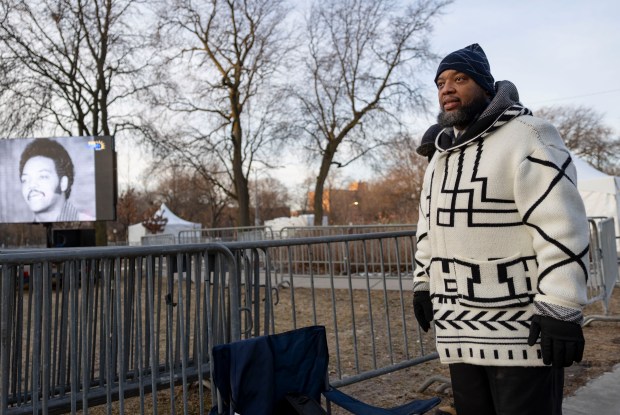
An image of the Rev. Jesse Jackson is displayed outside Rainbow PUSH Coalition headquarters ahead of a public visitation following his death, Feb. 26, 2026. (Brian Cassella/Chicago Tribune)
Marcus Jones, of Calumet City, waits as the first person on line for the visitation for the Rev. Jesse Jackson on Feb. 26, 2026, at Rainbow PUSH Coalition Headquarters in Chicago. (Brian Cassella/Chicago Tribune)
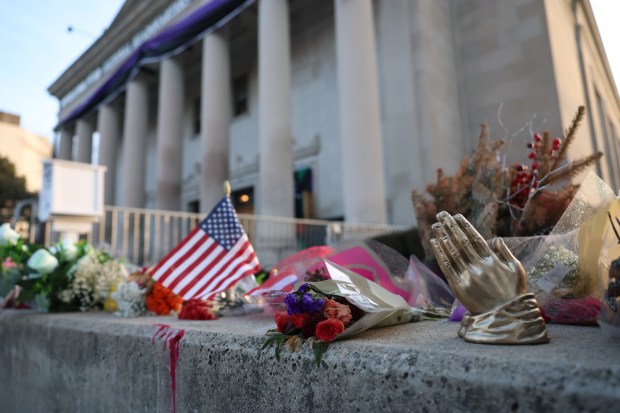
Items are set in memorial outside the first public visitation for the Rev. Jesse Jackson at Rainbow PUSH Coalition headquarters on Feb. 26, 2026. (Brian Cassella/Chicago Tribune)
1 of 48
Jackie Jackson hugs each visitor paying their respects at the casket of her father, the Rev. Jesse Jackson, on the first day of public visitation at Rainbow PUSH Coalition headquarters on Feb. 26, 2026. (E. Jason Wambsgans/Chicago Tribune)
Sunlight had only just started to clear the tops of the buildings lining Drexel Boulevard while Marcus Jones stood early Thursday morning across the street from the Rainbow PUSH Coalition, gloves and a hat protecting him from the bitter cold. He hadn’t intended to be first in line on the first day of public visitation for the Rev. Jesse Jackson, but there he was, alone at the front.
It was more than two hours before the doors opened, and more than an hour before the procession arrived from the funeral home. Jones had left his house in Calumet City in the dark and arrived not long after 7 a.m., and he’d come “to be a part of history,” he said, and to say goodbye to a man who made him feel something — a mix of pride and gratitude and strength. Read more here.
After the Fire Department’s fire prevention parade, the Rev. Jesse Jackson, center, led a group of people down State Street demanding jobs for low-income residents on Oct. 7, 1974, in Chicago. The group had a brief confrontation with the police. (William Kelly/Chicago Tribune)
Raised in South Carolina under Jim Crow segregation laws, Jackson became a protege of the Rev. Martin Luther King Jr. until the Black leader’s 1968 assassination, and he participated with King in the famed 1965 Selma to Montgomery marches.
In Chicago, Jackson led King’s civil rights group and later established activist and social justice organizations that eventually evolved into the Kenwood-based Rainbow/PUSH Coalition. The organization became a driving force for social justice and civil rights, especially during the 1980s, as Jackson built a reputation both as a peripatetic champion of the economically and politically downtrodden and as an expert power player who organized boycotts against major companies he felt weren’t hiring minorities or investing in minority communities.
Known for his rhetorical flourishes and his short, catchy and sometimes-rhythmic and rhyming phrases — ideal as sound bites — Jackson sought to instill self-confidence in Black people with his trademark call-and-response celebration of the self that started with “I am somebody.” Another signature line was his anti-drug refrain, “Down with dope, up with hope.” Read more here.
South Carolina honors native son the Rev. Jesse Jackson
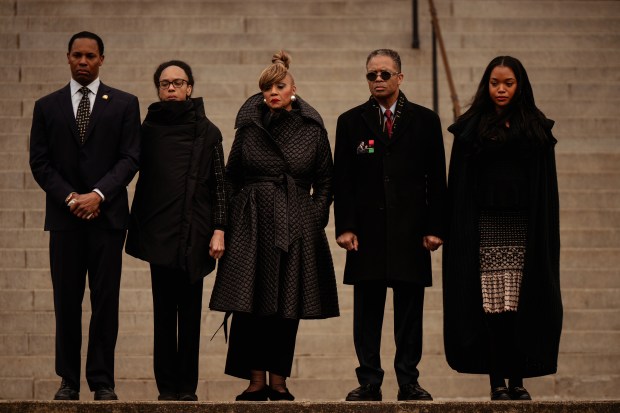
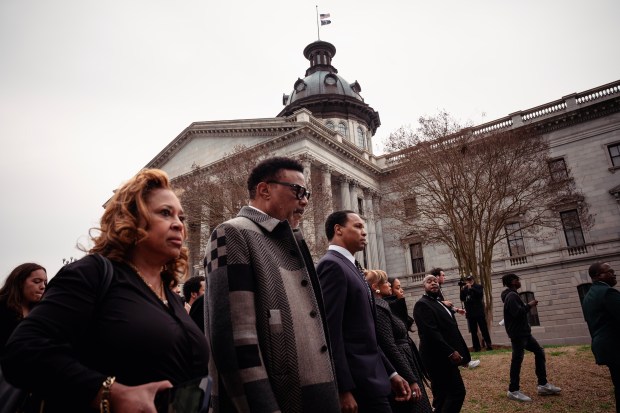
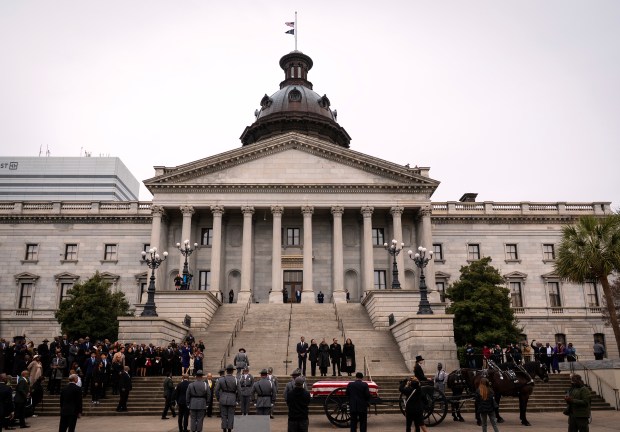
The Rev. Jesse Jackson's children, from left, Yusef Jackson, Jackie Jackson, Santita Jackson, Jesse Jackson Jr. and Ashley Jackson watch as the procession for their father arrives at the South Carolina State House, March 2, 2026. (E. Jason Wambsgans/Chicago Tribune)
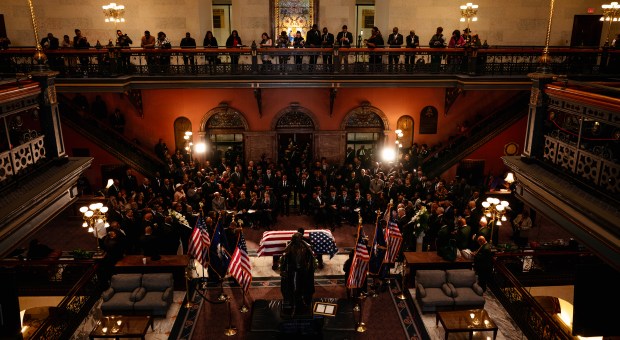
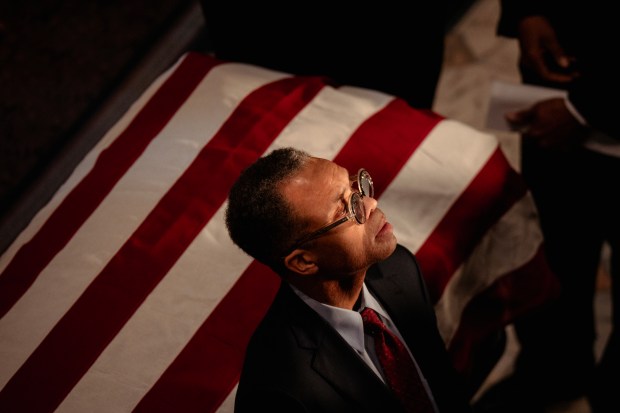
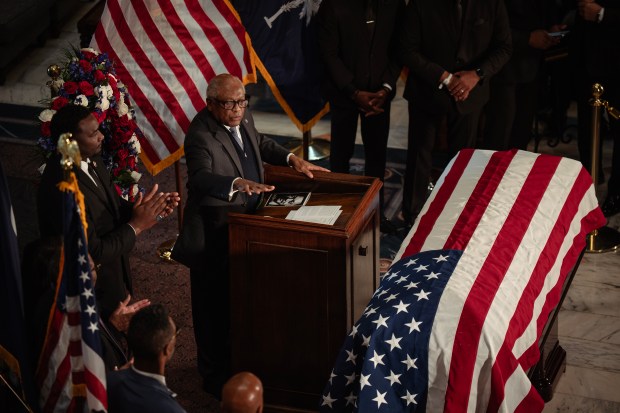
The Rev. Jesse Jackson lies in repose at the South Carolina State House in Columbia, March 2, 2026. (E. Jason Wambsgans/Chicago Tribune)
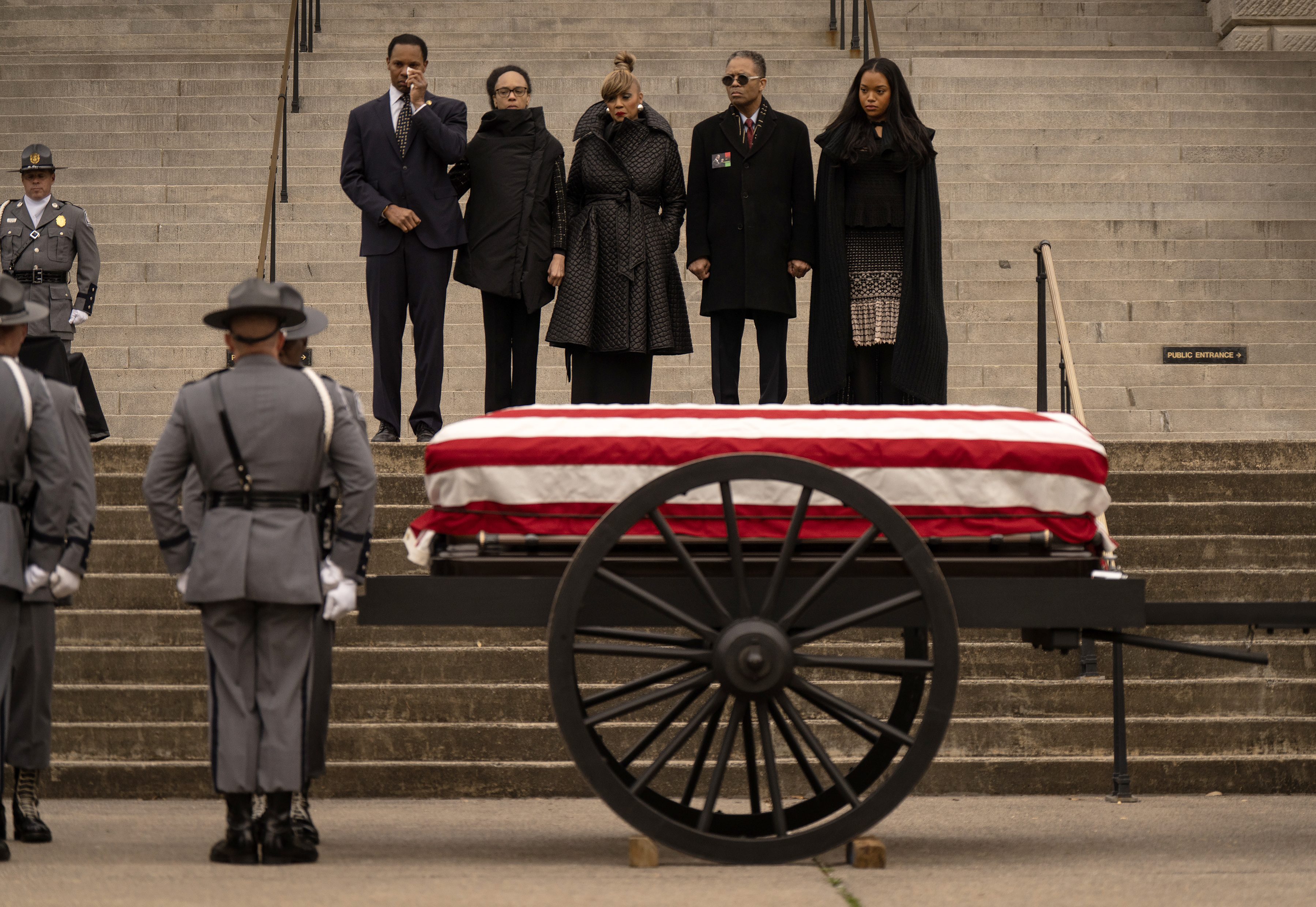
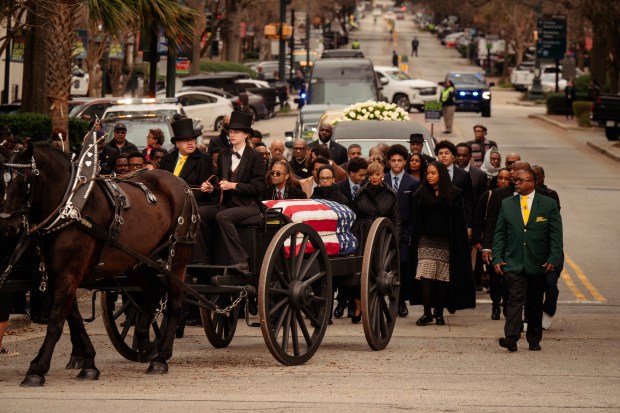
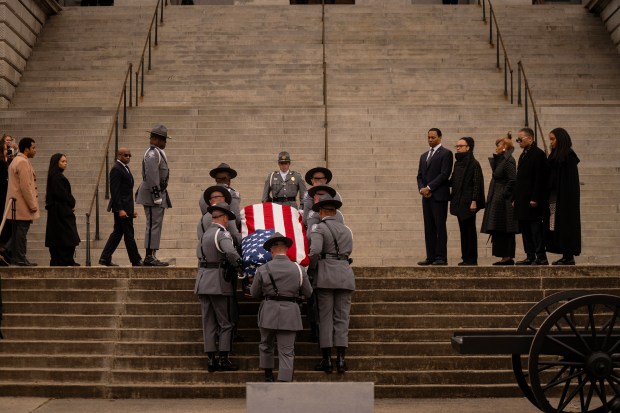
The casket of the Rev. Jesse Jackson is carried by a caisson on the way to the South Carolina State House in Columbia, March 2, 2026. (E. Jason Wambsgans/Chicago Tribune)
Yusef Jackson, from left, Jackie Jackson, Santita Jackson, Jesse Jackson Jr. and Ashley Jackson watch the casket of their father, the Rev. Jesse Jackson, as it's carried by South Carolina state troopers outside the South Carolina State House in Columbia, March 2, 2026. (E. Jason Wambsgans/Chicago Tribune)
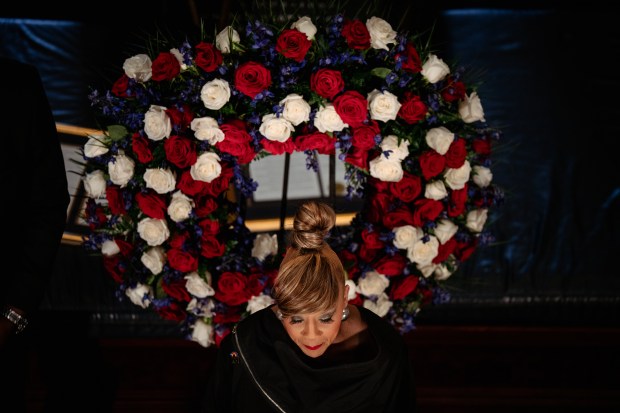
Ashley Jackson, from left, Jackie Jackson, Santita Jackson and Jesse Jackson Jr. sing “Lift Every Voice” as their father the Rev. Jesse Jackson's casket lies in repose in the South Carolina State House in Columbia, March 2, 2026. (E. Jason Wambsgans/Chicago Tribune)
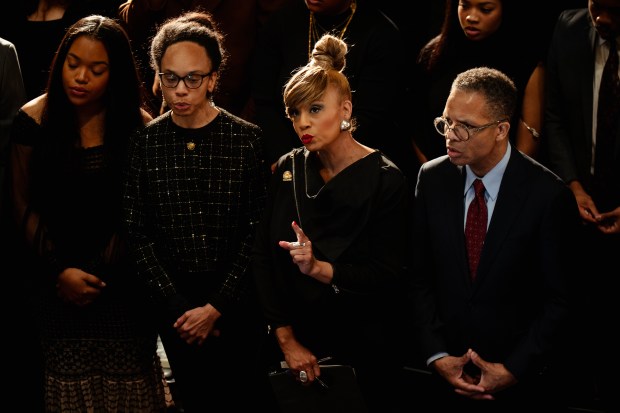
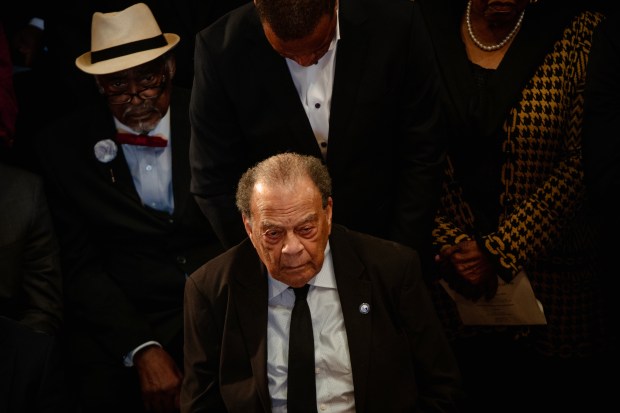
Civil rights activist and former U.S. Rep. and Andrew Young pays his respects as the Rev. Jesse Jackson lies in repose at the South Carolina State House in Columbia, March 2, 2026. (E. Jason Wambsgans/Chicago Tribune)
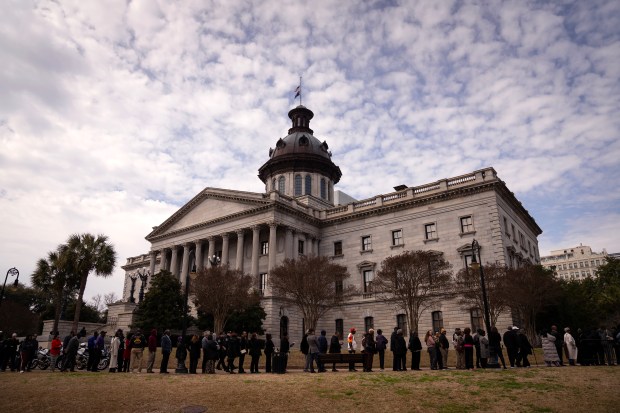
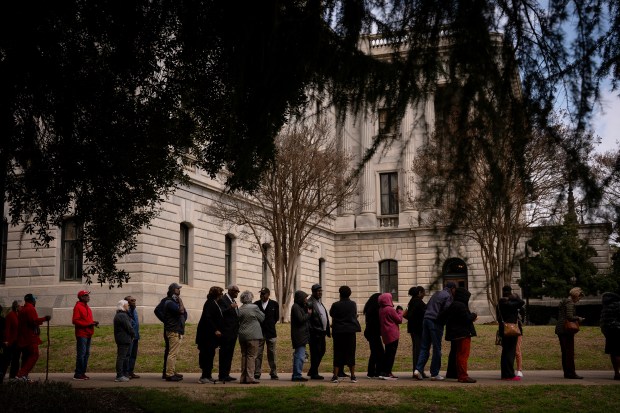
The flags fly at half-staff over the South Carolina State House in Columbia as a crowd wraps around the building to pay their respects to the Rev. Jesse Jackson lying in repose inside the capitol, March 2, 2026. (E. Jason Wambsgans/Chicago Tribune)
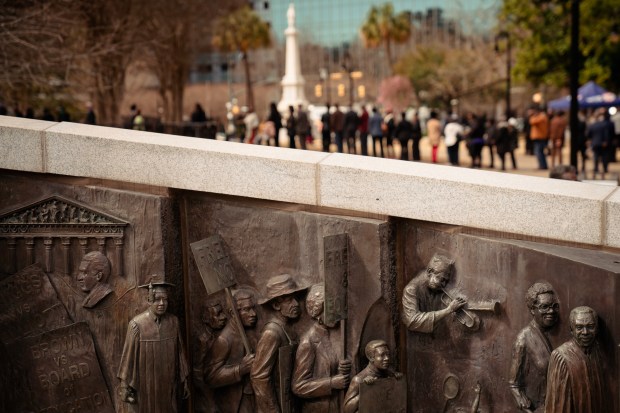
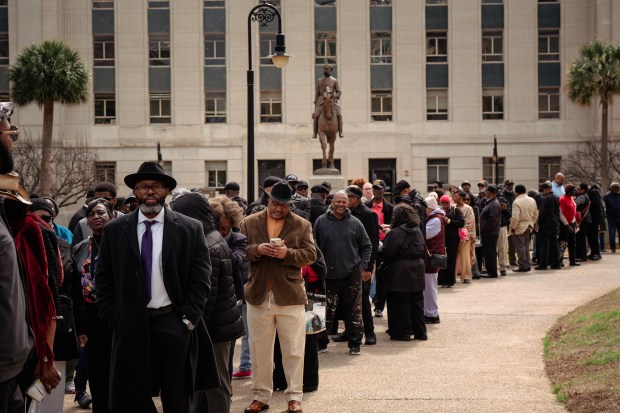
An African American history monument by sculptor Ed Dwight in front of a long line of visitors waiting to pay their respects to to the Rev. Jesse Jackson wraps around the South Carolina State House in Columbia, March 2, 2026. (E. Jason Wambsgans/Chicago Tribune)
A line of visitors to see the Rev. Jesse Jackson lying in repose wait to get into the Carolina State House in Columbia, March 2, 2026. (E. Jason Wambsgans/Chicago Tribune)
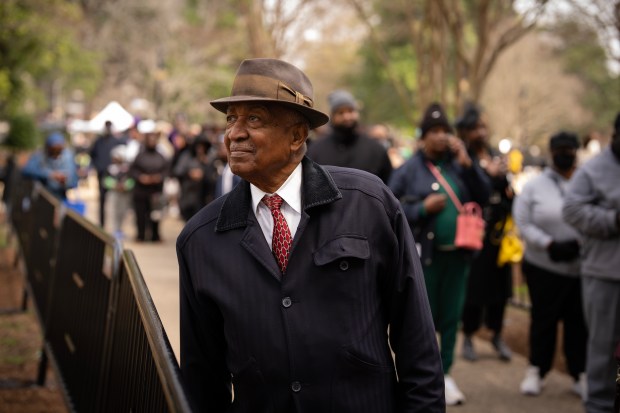
Marcono Hines Jr., of Durham, North Carolina, left, waits in a long line of visitors waiting to pay their respects to the Rev. Jesse Jackson at the South Carolina State House in Columbia, March 2, 2026. (E. Jason Wambsgans/Chicago Tribune)
Joe L. Reed, from Montgomery, Alabama, waits to pay his respects to the Rev. Jesse Jackson at the South Carolina State House in Columbia, March 2, 2026. (E. Jason Wambsgans/Chicago Tribune)
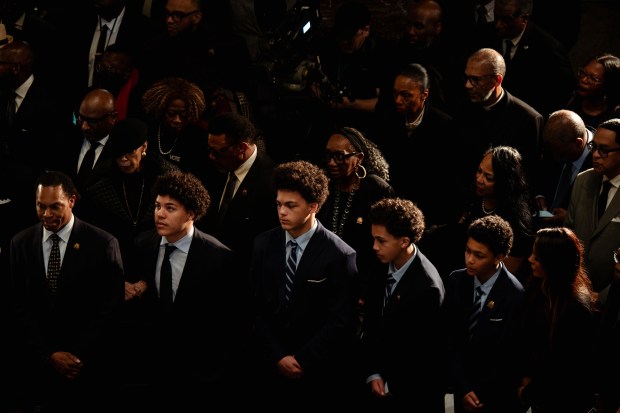
Yusef Jackson, left, and his family attend a ceremony for his father, the Rev. Jesse Jackson, in the South Carolina State House in Columbia, March 2, 2026. (E. Jason Wambsgans/Chicago Tribune)
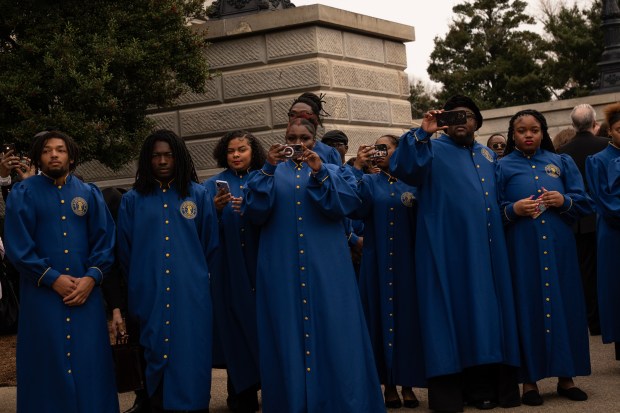
Choir members from Allen University, a historically Black university in Columbia, South Carolina, watch the caisson procession with the casket of the Rev. Jesse Jackson outside the South Carolina State House in Columbia, March 2, 2026. (E. Jason Wambsgans/Chicago Tribune)
Judge Greg Mathis joins the Jackson family walking behind the caisson procession with the casket of the Rev. Jesse Jackson outside the South Carolina State House in Columbia, March 2, 2026. (E. Jason Wambsgans/Chicago Tribune)
Santita Jackson thanks people gathered for the ceremony as her father the Rev. Jesse Jackson's casket lies in repose in the South Carolina State House in Columbia, March 2, 2026. (E. Jason Wambsgans/Chicago Tribune)
Jesse Jackson Jr. stands during a ceremony as his father’s body lies in repose in the South Carolina State House in Columbia, March 2, 2026. (E. Jason Wambsgans/Chicago Tribune)
The casket of the Rev. Jesse Jackson is carried by a caisson on the way to the South Carolina State House in Columbia, March 2, 2026. (E. Jason Wambsgans/Chicago Tribune)
U.S. Rep. James Clyburn of South Carolina speaks as the Rev. Jesse Jackson lies in repose at the South Carolina State House in Columbia, March 2, 2026. (E. Jason Wambsgans/Chicago Tribune)
The children of the Rev. Jesse Jackson stand as his casket is carried by South Carolina State Troopers outside the South Carolina State House in Columbia, March 2, 2026. (E. Jason Wambsgans/Chicago Tribune)
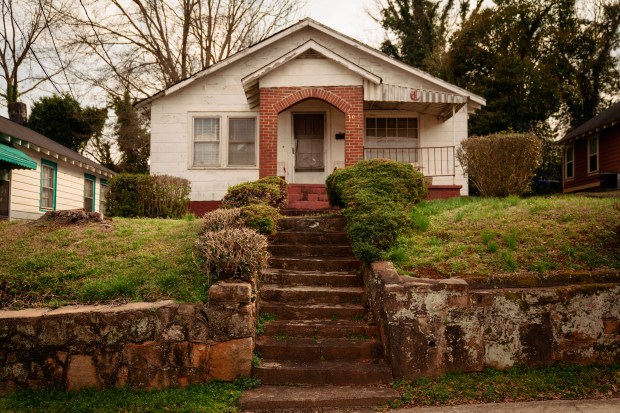
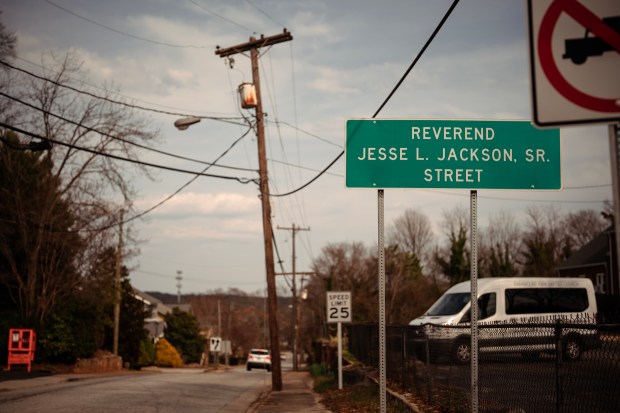
The Rev. Jesse Jackson’s first home on Haynie Street in Greenville, South Carolina, March 1, 2026. (E. Jason Wambsgans/Chicago Tribune)
A recently installed sign near the Rev. Jesse Jackson’s first home on Haynie Street in Greenville, South Carolina, March 1, 2026. (E. Jason Wambsgans/Chicago Tribune)
1 of 21
The Rev. Jesse Jackson's children, from left, Yusef Jackson, Jackie Jackson, Santita Jackson, Jesse Jackson Jr. and Ashley Jackson watch as the procession for their father arrives at the South Carolina State House, March 2, 2026. (E. Jason Wambsgans/Chicago Tribune)
Flags were lowered to half-staff in South Carolina where Rev. Jesse Jackson, a native son and civil rights icon, became only the second Black man in history to lie in repose inside the state capitol.
People from nearby and far away lined up for blocks to gain entry to the statehouse to view Jackson’s flag-draped casket after his family and members of the South Carolina General Assembly requested he be honored in the state of his birth. Read more here.
Carolyn Dunbar, of University Park, is hugged by Ziff Sistrunk as she lays flowers in memory of Rev. Jesse Jackson Sr., outside Rainbow PUSH headquarters in Chicago on Feb. 17, 2026. (Antonio Perez/Chicago Tribune)
Solving problems great and small is how the Rev. Jesse Jackson will be remembered in Chicago and to the world, his friends and neighbors said.
Tributes from across the city and country poured in Tuesday, from across all walks of life. He was remembered for his commitment to civil rights and “generous” personality. His family, meanwhile, called Jackson in a news release a “servant leader” who championed the oppressed, voiceless and overlooked around the world. Read more here.
Minister, civil rights advocate, politician and social justice proponent
Rev. Jesse Jackson embraces one of the jail inmates as he greets them after holiday festivities on Dec. 25, 1989, at 26th and California streets in Chicago. (Chuck Berman/Chicago Tribune)
“His legacy is a profound leadership that aided in moving America forward and aided in addressing the question of racism and discrimination,” said U.S. Rep Maxine Waters about Jackson’s legacy.
“It was Jesse Jackson’s leadership, along with other greats that really created change, and the movement toward opening up America to all.”
As the world mourns his passing, here’s a look at Jackson’s remarkable life. Read more here.
Rev. Jesse Jackson is recognized with family members and Rev. Al Sharpton on Aug. 19, 2024, during the Democratic National Convention at the United Center. (Brian Cassella/Chicago Tribune)
Rev. Jesse Jackson’s family and closest friends offer one last goodbye
Gov. JB Pritzker and Mayor Brandon Johnson ordered public buildings across the city and state to fly flags at half-staff in honor of the Rev. Jesse Jackson, who died at 84 after rising from an upstart Chicago organizer to a national leader of the Civil Rights Movement.
Their announcements joined messages from political leaders across Illinois who were mourning Jackson’s death and nodding to the decades-long movement he championed after the assassination of Dr. Martin Luther King Jr., his mentor.
Johnson, an ally of the Jacksons, wrote a fulsome tribute that nodded to Jackson’s ascent in Chicago, from building up the Kenwood Oakland Community Organization to founding the Rainbow/PUSH Coalition. Read more here.