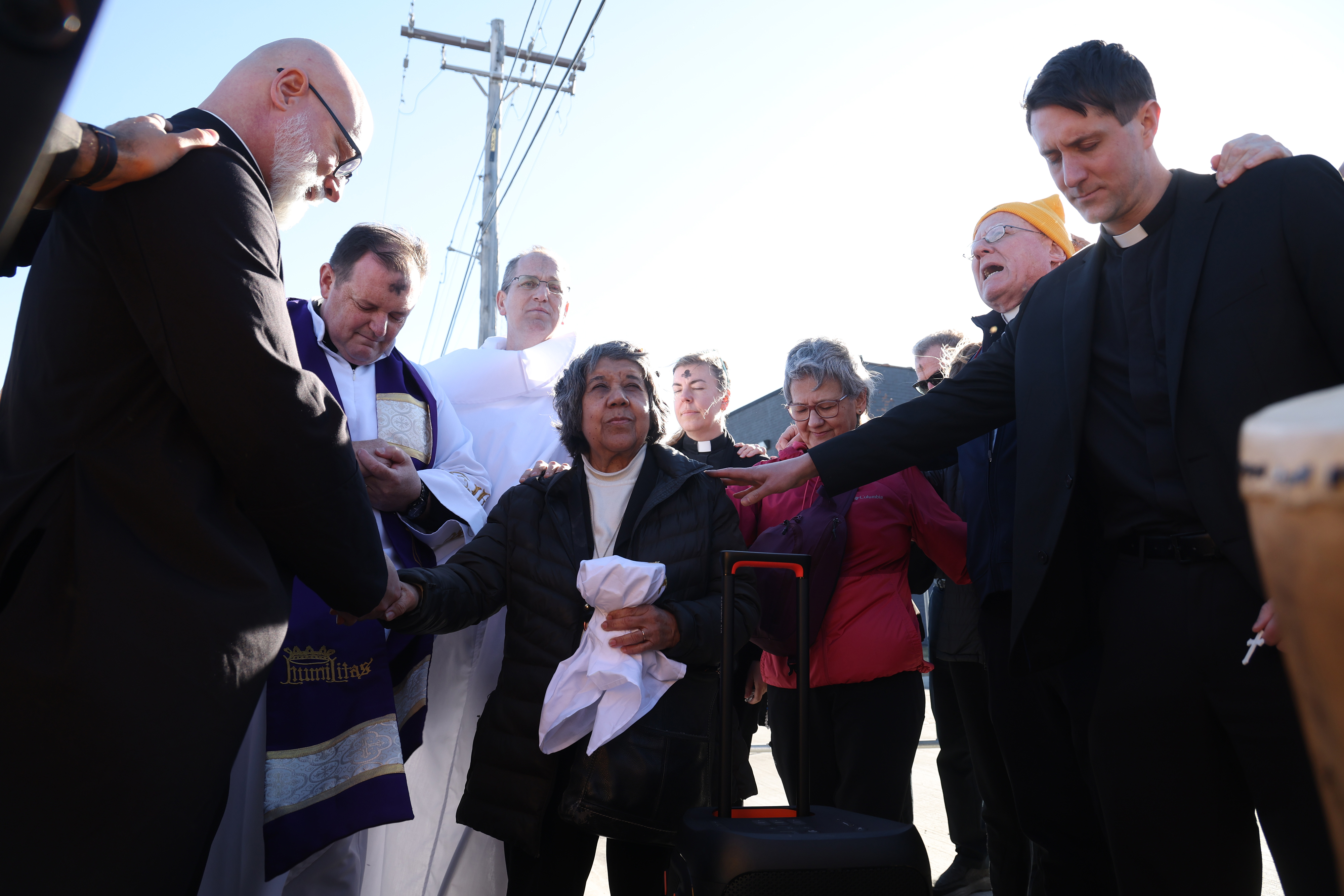
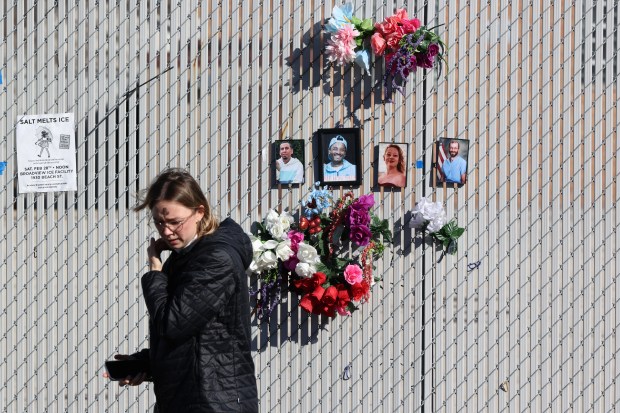
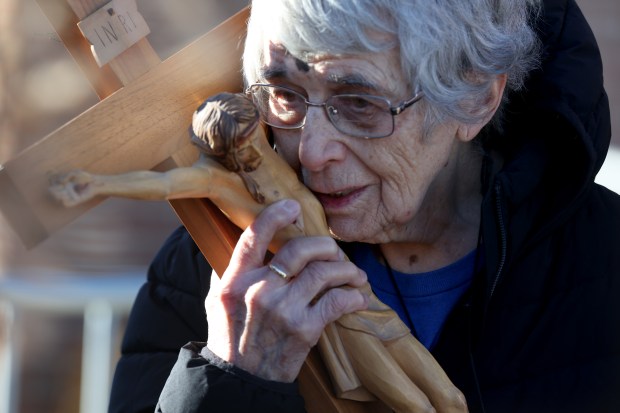
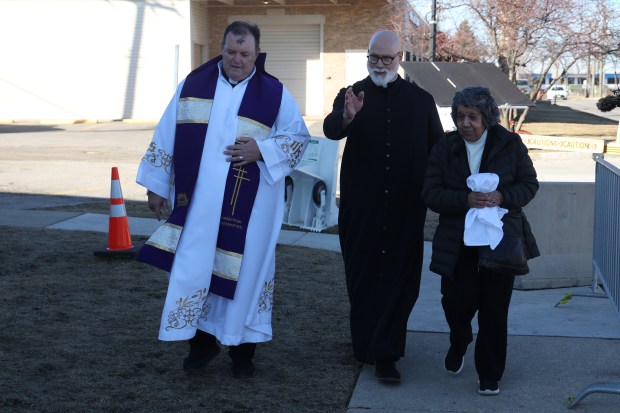
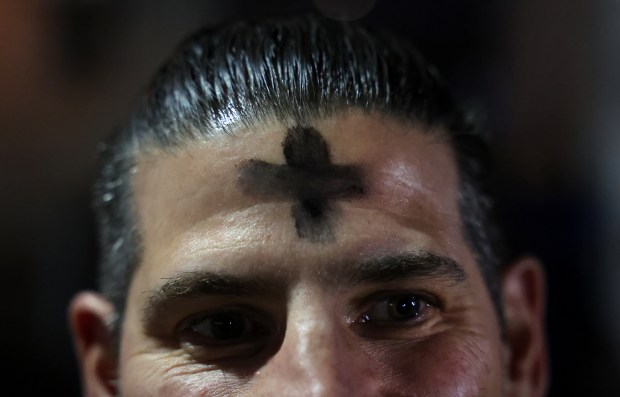

The Rev. Paul Keller walked out of the U.S. Immigration and Customs Enforcement facility in west suburban Broadview Wednesday afternoon with his palms coated in ash.
His hands stood as a testament to a moment months in the making.
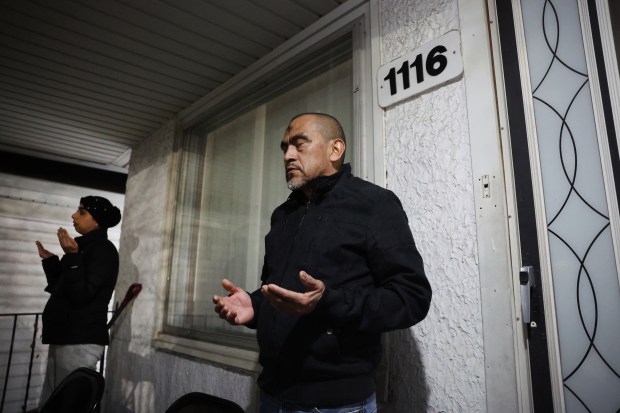
After clergy had repeatedly been denied access to the facility, Keller alongside two other local religious leaders was allowed into the building to pray with and provide religious services to detainees and staff for Ash Wednesday. The access was the result of a recent court order that ruled Roman Catholic clergy members be allowed to minister to detainees at the Broadview facility on the day of prayer, which marks the start of Lent — the most penitential season of the year for Catholics and many other Christians.
“This is not a protest,” Keller, provincial for the Claretian Missionaries, said to reporters outside the facility after four detainees and three staff members received Ash Wednesday services. “This is not a symbolic action.”
For months now, religious leaders have been trying to provide pastoral care at the facility, something they say they’d been granted access to do for years but in the months leading up to and since Operation Midway Blitz — the Trump administration’s immigration crackdown in Chicago last fall and early winter — has been denied. In November, the Coalition for Spiritual and Public Leadership, a Chicago-based Catholic advocacy group, filed a lawsuit against the federal government seeking resumed access.
On Feb. 12, nearly three months into the legal battle, U.S. District Judge Robert Gettleman issued a preliminary injunction allowing the coalition entry to the facility on Ash Wednesday to offer ashes and Holy Communion.
“The court finds that the government has substantially burdened plaintiffs’ exercise of religion,” the order read. Gettleman ruled that allowing pastoral care to migrants and detainees “will improve the condition of those detained at Broadview.”
Reportedly inhumane conditions at the facility prompted the court to step in during the fall. In October, two former detainees filed a class-action lawsuit alleging that a human rights crisis had been unfolding at the facility. A week later, government officials were ordered to provide detainees with enough food, water and bed space, among remedies, after conditions did not “pass constitutional muster.”
Faith leaders Wednesday said the detainees they ministered to had just arrived at the Broadview facility.
“You saw the crying eyes, confusion, uncertainty,” recalled the Rev. Leandro Fossá, pastor for Our Lady of Mount Carmel Catholic Church in Melrose Park. “But also, you could see … they felt the hope of the moment, that they could see that the church was there with them.”
President Donald Trump’s aggressive immigration crackdown has galvanized religious leaders’ opposition across the country. Locally, more than 250 Christian clergy across denominations signed an open letter in October condemning U.S. Immigration and Customs Enforcement’s increasingly aggressive tactics. Shortly after, more than four dozen ministers gathered outside the Broadview facility to pray for detainees.
From attending rallies and protests to offering safe spaces for people to gather, worship and counsel one another, faith leaders have often found themselves on the front lines.
For more than a decade, religious leaders had frequently provided spiritual care to those inside the Broadview facility with the permission of ICE, according to the Coalition for Spiritual and Public Leadership’s initial complaint. The beginnings of the visits date back to 2007, when Sisters Pat Murphy and JoAnn Persch started organizing weekly prayer vigils outside the building.
Though they were initially prohibited from entering, the activist nuns, who both died last year after years spent serving and praying with Chicago-area immigrants and refugees, met with ICE repeatedly to eventually gain access.
They continued their efforts until clergy visits were barred during the COVID-19 pandemic, prompting Persch and Murphy to hold Zoom calls and online prayer sessions instead. After the pandemic, the two resumed praying the rosary just outside the facility’s entrance.


Last November, Persch penned a statement for the Coalition for Spiritual and Public Leadership’s then-pending lawsuit against the Trump administration relaying her and Murphy’s years of pastoral care in Broadview and how losing access was a stark change in course. She recalled that during the crackdown, prayer services were moved a block down from the facility. Then, when federal officials erected a controversial security fence around the building amid persistent protests, Persch said “all prayer on (the facility’s) premises was effectively ended.”
The statement was written the day Persch died, court documents show.
“Today, I am denied my right to express my faith,” she wrote, “and no one from ICE will tell me, or is willing to explain to me, any compelling reason why.”
The coalition in its complaint maintained the only explanation ICE gave to “justify its denial of the Catholic priests’ and sisters’ religious service” was a reference to “safety concerns and the transitory nature” of the Broadview facility.
Defense attorneys, according to subsequent court filings, argued in turn that visitation denials in October and November were “pursuant to a neutral and temporary suspension of all visitors,” which they said was “necessary due to a dramatic influx” of Midway Blitz detainees. With the influx, the facility lacked the personnel required to facilitate visitation safely, they said.
Gettleman last week ruled that with “reasonable notice and communication, addressing legitimate security and safety concerns, allowing plaintiffs to provide pastoral care to migrants and detainees does not pose any undue hardship on the government.”
While the injunction specifically allowed access on Ash Wednesday, it also called on the Department of Homeland Security to confer with the coalition over how religious ministry could continue at the facility going forward. Gettleman set a status hearing in the case for next week.
Patrick Dahlstrom, one of the coalition’s attorneys, told the Tribune Wednesday that “we’re in the process of negotiating with the government now about access after this.” He said they hadn’t gotten very far yet because their focus was on ensuring services for Ash Wednesday.

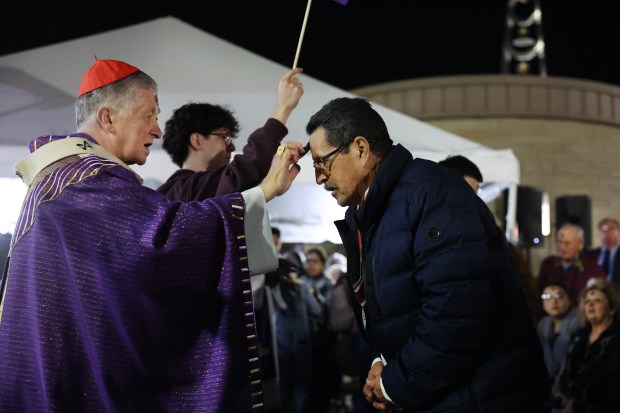
Cardinal Blase Cupich in a statement on detainees and staff receiving ashes called on people to pray “that the human dignity of all persons be respected in our country.”
“Religious freedom is a cornerstone of our democracy, and the right of incarcerated persons to pastoral care is recognized nationwide,” he said. “We are grateful that the courts have acknowledged this reality.”
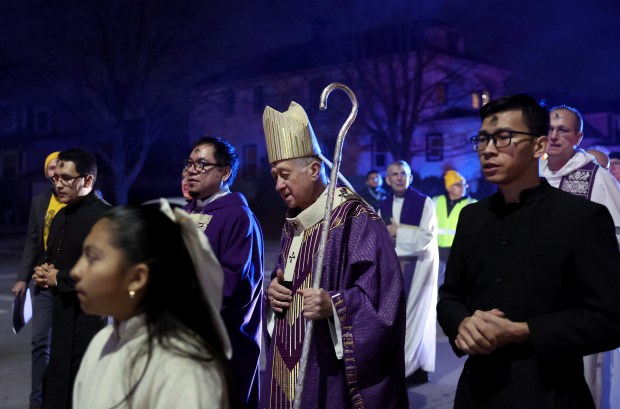
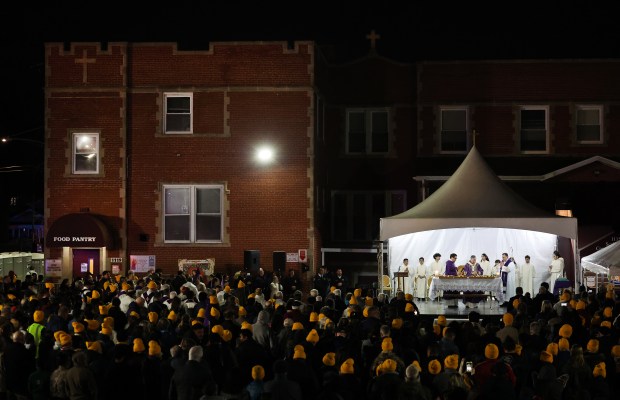
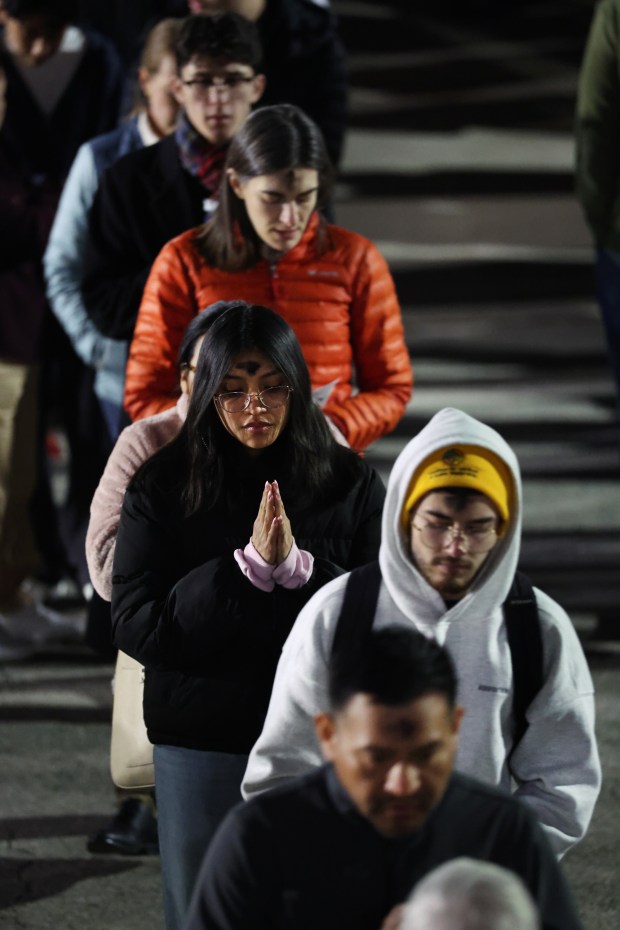
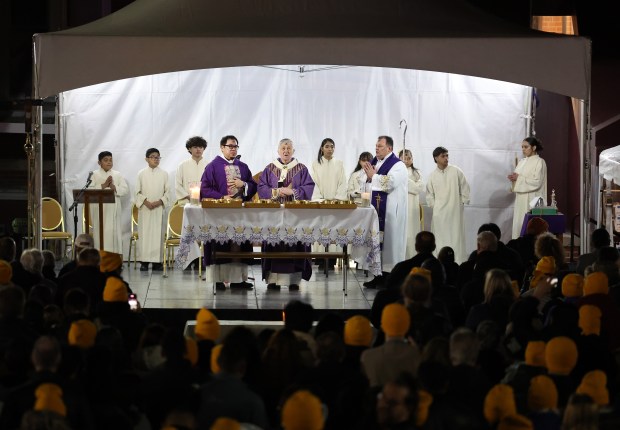
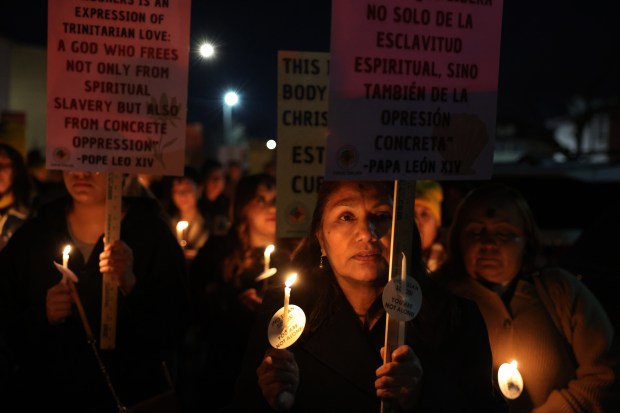
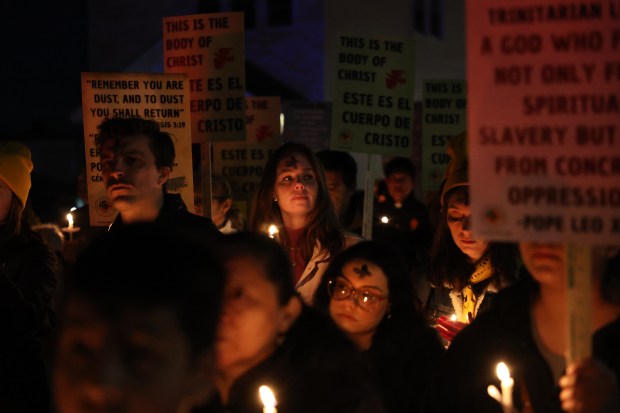
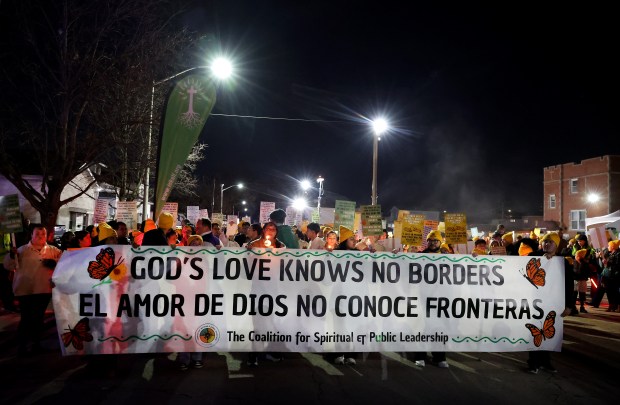
While he didn’t join his fellow clergy members outside the Broadview facility, the head of the Chicago Archdiocese later in the evening presided over an outdoor Ash Wednesday Mass just a few minutes away at Our Lady of Mount Carmel. Hundreds of community members gathered outside of the Melrose Park parish for the Mass, which was followed by a candlelit procession. Both were held in solidarity with immigrant families.
Sofia Gonzalez flocked to the Mass and procession after hearing about the services from her mother. The 26-year-old Wood Dale resident, who was baptized at Our Lady of Mount Carmel, said she felt compelled to attend because “what’s happening here is very significant for a lot of different reasons, beyond just the season of Lent.”

Gonzalez said seeing religious leaders go to Broadview and so many turn out for the solidarity Mass made her proud of her faith and her community.
“It’s a beautiful sight to see,” she said.
When Mass ended and attendees began their procession, Kathleen Burna moved with the crowd. The 61-year-old, who traveled from neighboring Oak Park, said she felt a “responsibility and a call” to be there.
“I just have been profoundly troubled by what’s,” she faltered, her eyes shining with tears. “(By) the cruelty.”
She said the evening’s services were a meaningful way to begin Lent.
Beside her, the crowd crept forward, wrapping around Our Lady of Mount Carmel with Cupich at the front. People didn’t shout or chant. Some recited the rosary in Spanish, while others talked quietly among themselves. Firelight stretched across the line of worshippers as most clutched small candles clad in a paper holder that donned a short message.
“¡No estás solos!” the message read. “You are not alone!”
The Associated Press contributed.