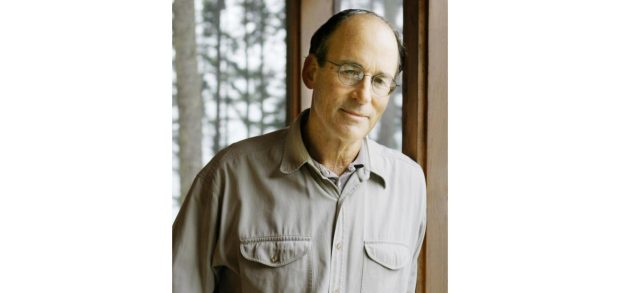
Attorney Warren Lupel, who represented Gary Dotson, a Chicago-area man who went to prison after being convicted of rape and kidnapping but was freed after the woman who accused him of those crimes recanted her testimony, has died.

Dotson eventually was cleared of his conviction altogether after DNA evidence proved his innocence, and Lupel’s representation of Dotson made Lupel a prominent figure locally and nationally as courts and Illinois’ governor weighed Dotson’s fate.
Despite the high-profile case, Lupel was not a criminal defense lawyer or an expert in appealing criminal convictions. Instead, he spent much of his career as a lawyer representing judges and other lawyers before Illinois’ Attorney Registration and Disciplinary Commission, serving in effect as a “lawyer’s lawyer” as he advocated on behalf of clients facing potential discipline and sanctions.
“He was always for representing the underdog,” said Joel Kruger, a law school classmate. “When I say underdog, I mean he represented a lot of lawyers and judges who at one time or another might have been castigated for a mistake or whatever, but he never felt that a person who makes a mistake, that that’s his signature in life.”
Lupel, 83, died Feb. 9 at Northwestern Memorial Hospital in Chicago of heart failure brought on by epileptic seizures, said his daughter, Alison. He had been a Gold Coast resident for the past two years and previously had lived in Evanston from 1976 until 2024.
Born in 1942 in Chicago, Lupel was the son of Frank, a Democratic precinct captain who had immigrated to the U.S. from Romania, and Jeanne, who worked as a secretary and whose parents had immigrated from Ukraine. Lupel grew up first on the West Side before moving to the North Side when he was about 12, his daughter said.
After graduating from Sullivan High School in Rogers Park, Lupel studied first at the University of Illinois’ campus at Navy Pier before transferring to Roosevelt University, where he earned an undergraduate degree in 1964. He then got a law degree in 1968 from the John Marshall Law School.
Lupel’s first job after law school was as an associate for the law firm Block & Solomon. Early in his career, he was appointed to the Chicago Riot Study Committee to investigate riots that had broken out after Martin Luther King Jr.’s assassination.
Lupel initially was a civil litigator, focusing on commercial litigation, before he settled into a niche representing lawyers and judges facing potential discipline.
During the rest of his career, Lupel worked at other law firms, including a 12-year partnership with lawyer Leonard Amari in the 1970s and ’80s, a partnership with lawyer Jeffrey Bunn and a five-year stretch with lawyer Michael Weininger. He and Bunn merged their practice with the firm Katz, Randall & Weinberg in 1989.
“He always put other people first and thought about other people,” Weininger said. “He helped anybody when anybody had a problem with a client or a friend or a friend of a friend. The first thought of somebody would be to call Warren and that was the case for me, too.”
Weininger recalled how the two responded when they were in their mid-60s and the firm where they were partners fell apart.
“We formed a partnership just the two of us — just on a handshake — and it turned out to be the best five years out of 48 years of my practicing law,” he said.
Lupel began representing Dotson because of a personal connection, as Dotson’s mother had worked for a friend of Lupel. In 1985, Dotson’s accuser, Cathleen Crowell Webb, admitted that she had made up the story because she was afraid she was pregnant. At that time, Dotson had served six years of a 25- to 50-year prison sentence.
“Gary said to me he has no animosity, but that he always assumed she was raped and (that) it was mistaken identity,” Lupel told the Tribune’s Art Barnum and Jerry Crimmins in 1985. “He looked shook up when he found out she wasn’t even raped.”
Dotson was freed from a state prison in April 1985, but the judge who presided over the 1979 trial that led to his conviction ordered him back to prison several days later. The ruling became front-page news in cities throughout the nation. The following month, he was freed on bond, and shortly afterward, then-Gov. James Thompson commuted Dotson’s prison sentence, though the governor maintained that Dotson had been rightly convicted of rape in 1979.
Lupel continued working to get Dotson’s rape conviction overturned until withdrawing as his attorney in 1986. Dotson’s conviction finally was overturned in 1989, and he received a full pardon from Gov. George Ryan in 2002.
Lupel retired from his law practice when he was in his mid-70s.
In 2000, Lupel was one of 12 attorneys whom the Illinois State Bar Association named to its initial class of the Academy of Illinois Lawyers — a sort of hall of fame of attorneys. He also served as the Illinois Bar Foundation’s president from 2002 until 2004.
Outside of work, Lupel earned a master’s degree in urban studies from Loyola University Chicago in 1974. He also took time away from his job in 1997 to work with children in Delhi, India, who were living in an orphanage or on the street.
Locally, Lupel spent more than 10 years volunteering at the Chicago Lighthouse social service agency for the visually impaired, and he was a longtime volunteer for Meals on Wheels. He eventually joined his local Meals on Wheels board before becoming board president.
With his daughter, Lupel also tutored youngsters from the Cabrini-Green housing project before it was demolished. Long ago, he also acted in plays put on by the Chicago Park District, his daughter said.
In addition to his daughter, Lupel is survived by his wife of 61 years, Sally; a son, Adam; and three grandchildren.
A memorial service and celebration of life will be held at 2 p.m. Sunday at Weinstein & Piser Funeral Home, 111 Skokie Boulevard, Wilmette.
Goldsborough is a freelance reporter.