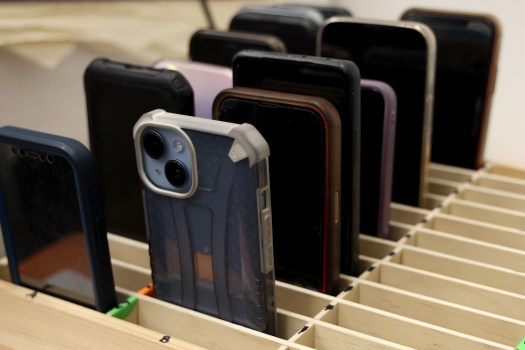

While Gov. JB Pritzker has proposed a statewide ban on cellphones in school classrooms, students in Hinsdale High School District 86 and Hinsdale-Clarendon Hills Elementary District 181 already have restrictions in place.
In District 86, a new policy was implemented with the start of the current school year, said Alex Mayster, the district’s executive director of communication.
“Students and staff are expected to keep cellphones and other personal electronic devices out of sight, thereby out of mind, during instructional periods,” he said. “It is critical that our instructional environment be a place for students to learn, collaborate with peers, and think critically. For that to happen, we as educational leaders want to create a learning environment that avoids distractions, in particular, digital distractions.”
Mayster said the new policy decision was made in collaboration with students and so far has received positive feedback.
Cara Hurley is a clinical psychologist in private practice with two children who attend Central. She said she feels that teens need to participate in making decisions about rules that impact them.
“Learning to put phones aside is an important skill,” she said. “I would love to see schools develop policies in collaboration with students, geared toward helping students learn how to manage their phone use.”
Prior to this school year, there was not a universal rule about cellphones. Rather, teachers were able to set rules for their individual classrooms.
Now, during class, students are expected to put their electronic devices in a cellphone holder, or another location, as directed by the classroom teacher.
“We will continue to encourage students to ‘hang up and hang out’ in non-instructional spaces, such as hallways, a non-academic study hall, and during a student’s lunch period, but students will be allowed to use their phones in these areas at appropriate times,” Mayster said.
He added that appropriate accommodations are made to meet the needs of individual students, if a student has a documented requirement that utilizes a cellphone, such as a diabetes monitor or an Individualized Education Plan.
“We understand that shifts in practice require partnership and communication,” Mayster said. “We are committed to working together — with students, families, and staff — to ensure this transition supports a focused, engaging, and respectful learning environment for all.”
Hurley’s daughter, Caroline, 15, a sophomore, and son, Jonathan, 18, a senior, both offered their views on cellphone use in school.
“I do understand why it’s important to put our phones in a secure location for tests and quizzes to stop possible cheating,” Caroline said. “(But) phones can be used during class for educational purposes.
“When I was able to have my cell phone last year, I could take pictures of things on the board so that I could copy down notes later, if needed, and I could multitask in class as well. I understand that other kids may abuse the privilege. Not everybody would.”
Jonathan said the learning students participate in during classes should result in students not being distracted by their phones.
“In an engaging class, students aren’t going on their phones,” he said.
In District 181, policy states that cellphones and similar electronic devices will be collected by a teacher in all the elementary schools, and kept in a student’s locker in the middle schools, during the regular school day and while attending school-sponsored activities, with limited exceptions.
Students also are strictly prohibited from using cellphones or other electronic devices to take pictures or record school personnel or fellow students without authorization.
At Clarendon Hills Middle School and Hinsdale Middle School, the cellphone disciplinary protocol involves a yearly first warning for which the device is held in the office and returned at the end of the day, said Karen O’Connor, District 181’s communications director. A second occurrence requires a parent to come to pick up the phone.
“Students are sometimes permitted to use their cellphones for specific, approved special projects like digital media or video creations for a class,” O’Connor said.
HMS Principal Cory Burke said that in an era of total digital immersion, the classroom must serve as a sanctuary for focus.
“Our policy isn’t about restriction; it’s about creating the cognitive space necessary for students to trade constant connectivity for deep, meaningful engagement,” she said.
Chuck Fieldman is a freelance reporter for Pioneer Press.