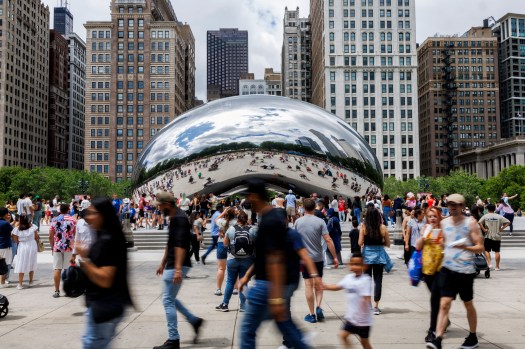
When my wife and I moved from Istanbul to Chicago in August 2018, I was quietly afraid of our first Ramadan here. The thought of being cut off from the rich traditions of Istanbul, where waves of people come together, was the biggest challenge of our first year in a foreign land. For Muslims, Ramadan is more than just a month of worship; it is an expression of purification, self-control and a silent bridge toward those in need. These interactions transform a city of concrete into an embodiment of “compassionate urbanism” that prioritizes the well-being of every individual.
But the true miracle of this month is the fact that it is the “festival of brotherhood,” a month of mending the fabric of society, of reinforcing the feeling of belonging: A city really comes alive in the spaces between its streets, in conversations, in shared bread and in small gestures.
As my wife and I entered Ramadan in May 2019, we were still struggling to get to know this new city and to establish our place here. It is not easy to adjust to a new city, but Allah sent Ramadan to help us at this exact moment. As it turned out, Ramadans in this city of Chicago were just as welcoming and embracing as those in Üsküdar, Istanbul.
It was through our Yemeni neighbor in Hyde Park, Omar Awass, that we were able to join the iftars of the Muslim Students Association (MSA) at the University of Chicago, which introduced us to all the colors of the world. Omar is an associate professor of Arabic and Islamic studies at the American Islamic College in Chicago.
Thanks to our neighbor, we had more than the MSA. Invitations from institutions such as Taleef, AIC, the Turkish-American Cultural Alliance and the Turkish-American Religious Foundation — created with the help of the Turkish government — and the wonderfully diverse groups of theological institutions such as Catholic Theological Union and LSTC that bring people from all over the world together, turned our process of adaptation into a “festival of acquaintance.”
Every evening, my wife and I would eagerly wonder: Whose story shall we hear today, whom shall we meet and which community shall we join? I recorded in my diary that year that we only had iftar at our place twice, and even that, we invited our close friends.
Chicago made us feel at home through that magnificent bridge of empathy created by people listening to each other’s stories. The iftars, followed by tea and coffee meetings and tarawih prayers, brought us together with people from almost every nation.
One must then pose the question: How does religious practice help in urban belonging? In a big city such as Chicago, the loneliness of alienation, one of the biggest tragedies of modern life, can be overcome through the collective spirit of Ramadan. Ramadan means opening doors to and sharing for a month the same table, the same bread and the same destiny with people you don’t know. Through fasting, a Muslim does not only experience hunger but also sees the invisible faces of the city, the unhoused and the needy.
This monthlong discipline gives birth to the notion of “active goodness.” According to modern Islamic thinker Mustafa Islamoğlu, “the passive good is the encourager of the active evil.” Ramadan causes people to become aware of and share with others, leading them toward becoming “actively good.”
Shouldn’t we all be “actively good”? A person who becomes aware of their limitations and the needs of the people around them by becoming “actively good” takes action and affects another person’s life. A person who shares their table, listens to the story of their neighbor and puts the pursuit of mutual help at the core of their lives starts to become aware of the fact that the city they live in, the city of Chicago, is not only a place of residence but a vast “home.” This awareness is the secret mortar of the streets of Chicago, making them a much safer, kinder and livable place.
Fasting for Ramadan is underway in Chicago. In the great month of kindness and benevolence, you are likely to be invited to the table of one of the many civil society organizations, schools or foundations that are beyond my capacity to enumerate here. This is not just an invitation for a meal, but also a “bridge of acquaintance”; do not pass up the opportunity.
Ultimately, we are all human beings, and we are all unique in our own stories. We can be stronger individuals by listening to each other’s stories and building bridges of goodness by breaking down the barriers of prejudice. These bridges are the mortar that will hold together the neighborhoods that make Chicago what it is. This spiritual mortar, which turns our neighborhoods into homes, is, in fact, the most tangible reflection of the “compassionate urbanism” ideal on our streets.
Keep one act of kindness alive, and you may find it quietly reshaping the city around you.
This Ramadan, let’s breathe in the cold wind of Chicago and the warmth of brotherhood rising from the tables.
Yunus Emre Tozal is a civil engineer in Chicago and a master’s of art student at Catholic Theological Union.
Submit a letter, of no more than 400 words, to the editor here or email letters@chicagotribune.com.