
As the Bears waffle between destinations for their new planned stadium, including potentially moving across state lines to Indiana, another Chicago team is ready to break ground next week inside the city it represents.
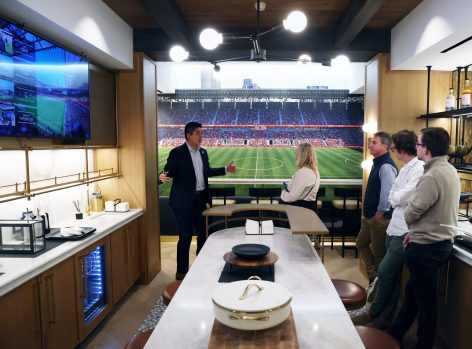
The Chicago Fire, who are building a privately funded $750 million soccer stadium in the South Loop, have opened an experiential marketing center in the Wrigley Building featuring everything from a simulated suite and a video room to a large-scale detailed model of the facility, offering fans an immersive preview of what’s to come.
“We thought it was really important with us coming downtown and creating our own new stadium for the first time, for people to be able to see, touch, feel what the new stadium will be like,” Dave Baldwin, the Fire’s president of business operations, said following a media unveiling of the new marketing center Thursday.
Announced in June, the Fire are building a 22,000-seat, open-air soccer facility at the north end of The 78, a long-fallow megadevelopment planned for 62 acres along the Chicago River south of Roosevelt Road.
Designed by architectural firm Gensler, the red brick stadium will feature a natural grass pitch, 50 luxury suites, intimate seating and a canopied roof to keep fans mostly protected from the elements during the spring-through-fall MLS soccer season.
Groundbreaking is set for March 3, with structural steel rising up this year to meet the scheduled opening by the 2028 season, the team said. Fire owner Joe Mansueto has pledged the $750 million stadium – the most expensive in the MLS – will be privately financed.
“It’s not just an investment in the future of our club, but it’s an investment in the future of our city,” Baldwin said.

Baldwin said creating elaborate marketing centers to sell suites and seats is pretty commonplace for new NFL stadiums, but not so much in the MLS.
The Dear Chicago Experience Center, which is named after an open letter to the city Mansueto penned last year announcing the new stadium, is located in a marketing office on the 14th floor of the Wrigley Building.
The historic Wrigley Building on Michigan Avenue was purchased by Mansueto in 2018 and houses the corporate offices of the Fire, which he bought the following year.
The experience center includes a fully built model of an executive suite, one of three categories of private suites available for purchase. There will be 50 suites at the new stadium, including four field suites with a private speakeasy, access to the players tunnel and seats right on the pitch, which can run upward of $500,000 per season on a long-term commitment.
The elevated sales pitch, which is done by appointment only at the Wrigley Building, also features a video room for virtual tours of the stadium and an expansive bar for entertaining current and future seat owners.
The Fire have already sold 12 of the 50 suites, including two field suites, and are ready to begin recruiting Chicago companies at large in the weeks ahead. The private suites range from the low to mid-six figures annually, and require a deposit to reserve.
The companies that booked the first 12 suites put down a $10,000 deposit each to secure their place at the new stadium, Baldwin said.
The team has also received 15,000 more modest deposits for general and premium seating, meaning nearly 70% of the stadium is essentially sold out – before the shovels even hit the dirt. Fans can reserve a spot in the supporters section for a $19.97 deposit through the team’s website.
“There’s going to be really affordable seats too,” Baldwin said. “Because we’re able to have really luxurious VIP seating that hasn’t been seen in MLS before or in Chicago sports, this level of luxury will allow for us also to offset the rest of the seating and augment that pricing.”
While the Fire is targeting corporate suites first, the experience center will eventually be available to all fans looking to buy season tickets, Baldwin said.
Once it opens, the stadium will host 17 regular season MLS games and 10 to 15 other events per year, including concerts, comedy shows, international soccer matches and combat sports.
Meanwhile, the Fire will continue to play at Soldier Field for the next two seasons, where last year they completed a promising campaign with their first playoff appearance since 2017, winning a wild-card match with Orlando City before being eliminated in a first-round sweep by the Philadelphia Union.

The Fire averaged 23,420 fans per game at Soldier Field last season, setting a club record but leaving the 61,500-seat stadium two-thirds empty for most matches.
The team will play its first home match of the 2026 regular season Saturday afternoon at Soldier Field.
Meanwhile the Bears, who are likewise planning to leave Soldier Field, shifted their focus last week from Arlington Heights to northwest Indiana after lawmakers there approved the issuance of bonds to fund a stadium near Wolf Lake in Hammond.
Either way, the Fire may soon be the only professional “football” game left in town.
“Whatever happens with the other teams in town, we wish them the best of luck, but we’re really focused on getting this stadium built and making it the best stadium experience in Chicago,” Baldwin said.
rchannick@chicagotribune.com