A little-known program aimed at keeping people accused of violence off public transportation has proved difficult to enforce and is disproportionately used to suspend Black riders from the CTA and Metra, a Tribune analysis shows.
The mass transit suspension program was made possible by a 2023 change in state law that allows the CTA, along with commuter rail system Metra and suburban bus agency Pace, to suspend riders accused of violence or threatening behavior on their systems.
In 2024 and 2025, the CTA suspended 40 people via an administrative hearing process, according to the agency’s records. All of the riders had been arrested for alleged crimes such as battery, robbery or making threats to transit workers on the CTA, court records show.
But a review of court records found that at least three of the riders were caught on the CTA during their suspensions, prompting questions about how well the program is enforced.
And of the 40 riders suspended from the CTA, 90% were Black and 10% were Hispanic, according to the agency’s own data. Only 27% of the CTA’s riders are Black, according to data from the CTA’s oversight body, the Regional Transportation Authority.
Metra issued 134 suspensions for incidents in 2024 and 2025. Roughly two-thirds of Metra’s suspensions involved Black riders, though only 13% of Metra riders are Black. Most suspended riders were facing criminal charges, according to agency data.
The racial disparity has raised some eyebrows, including those of state Rep. Kam Buckner, a Chicago Democrat who sponsored the legislation that allowed the transit systems to start suspending riders.
Lawmakers required transit agencies to publicly report demographic data of the people they suspend — including their race, age, ethnicity and whether they are homeless — for a reason, Buckner said.
“We know about overpolicing in certain communities, we know about … the pushback on folks who are unhoused,” he said.
“Data is important for us to figure out whether or not we’re doing the right thing,” Buckner said. Buckner said that as a Black man himself, he was “very sensitive” to the demographic data.
“Even though I don’t love some of the results that you just threw out, I’m glad we have them,” he said. “Because if we didn’t have them, we couldn’t address it.”
The disparity has also prompted criticism from the Law Office of the Cook County Public Defender, whose attorneys represent many of the suspended CTA riders in their criminal court cases.
Matthew Hendrickson, a spokesperson for the public defenders’ office, said it had “concern over how this law is being applied in practice, particularly given the explicit racial bias the data shows.”
“We hope this analysis will lead transit agencies to review their policies and procedures related to these suspensions, including whether the administrative hearing process is being fairly adjudicated,” he said in a statement.
The CTA and Metra have both defended their suspension processes, saying race is not a factor in the decision to issue a suspension.
“CTA pursues suspensions only where the underlying conduct meets the statutory criteria” established by state law, CTA spokesperson Catherine Hosinski said. She said the CTA uses video and eyewitness statements in arrest reports to determine whether an incident meets the criteria for suspension.
“Race is not considered in any CTA decision related to ridership suspension,” Hosinski said.
“The only factor used to determine whether to move to suspend a rider is whether they have committed an act subject to suspension,” Metra spokesperson Michael Gillis said. “Race is not a factor. Most of these charges and suspensions stem from incidents in which the train crews call for assistance from police.”
Denise W. Barreto, former chief equity and engagement officer for the CTA, who left the agency last year, said she didn’t believe Black people were being targeted for transit suspensions.
But, she said, “transit systems reflect the same racial conditioning that we see in every other public system.”
“The reality is reporting behavior is not race neutral, perception of threat is not race neutral, and enforcement patterns are rarely race neutral,” said Barreto, founder of Built for Us All, an organization that works on public infrastructure to support marginalized communities.
Banned riders get on transit anyway
State law allows transit agencies to suspend passengers when their behavior “places transit employees or transit passengers in reasonable apprehension of a threat to their safety or the safety of others,” including assault, battery and sexual assault. Agencies can also pursue suspensions for public indecency.
On the CTA, one rider was suspended after allegedly spitting in the face of a Clark Street bus driver. Another was accused of punching a 65-year-old man in the head at the Damen Green Line platform. A third was accused of pushing a man onto the train tracks at the Washington Blue Line subway station.
“Given the severity of the penalty of losing access to public transit service, CTA aims to ensure the appropriate and careful application of the criteria for suspension,” CTA spokesperson Hosinski said.
Metra’s website lists various examples of behavior that can get people suspended from the commuter rail system, including verbal or physical threats; pushing, hitting, spitting or kicking; public indecency and sexual assault.
“If someone is criminally charged in relation to those situations, we generally also move to suspend them,” Metra’s Gillis said in an email.
The vast majority of people suspended by the CTA and Metra are men. The agencies have mostly steered clear of suspending unhoused people, some of whom seek shelter on transit, where they are sometimes the victims of crimes themselves. Only one suspended CTA rider was unhoused, and just six suspended Metra riders were.
On the CTA, suspensions are most often the result of incidents on the agency’s rail system, particularly the Red Line, according to agency data.
The Metra Electric line — which runs from downtown Chicago through the South Side and the south suburbs — saw the highest number of suspensions on commuter rail.
Pace has not suspended any riders under the new program, agency spokesperson Maggie Daly Skogsbakken said.
On the CTA, most suspensions last six months, though the agency has issued some that last a year or more. Metra says it generally issues suspensions of only 10 days for first-time offenses, with the length of the ban increasing for future offenses. “Serious offenses” can result in longer suspensions even for first-time offenders, the agency says.
The CTA describes the rider suspension program as “one component of CTA’s broader, multi-layered approach to addressing crime,” an issue for which it has faced ongoing scrutiny in recent years.
Though violent crime on the CTA was down last year compared with 2022, it remains elevated above prepandemic levels. Recent high-profile violence on the system, including a horrific November attack in which a young woman was set on fire on the Blue Line, have increased some riders’ worries about safety on the system.
A man, who is now in federal custody in connection with the attack, had prior CTA-related arrests, but they took place before the CTA’s suspension program had started. The man, Lawrence Reed, is also accused of a battery that allegedly took place on the CTA last March, but charges were only filed in that case after the November Blue Line attack.
That case attracted the attention of the Trump administration, which has threatened to withhold $50 million from the transit system if it does not address public safety issues to its satisfaction.
While some transit insiders and riders are skeptical of the Trump administration’s motives — given its history of using funding threats as a political cudgel against blue cities and states — many are simultaneously unsatisfied with public safety on the CTA.
Leaders of the CTA’s bus and rail unions — Keith Hill and Pennie McCoach, respectively — said they had concerns about enforcement of the suspension program. A number of victims of alleged violence on the CTA that led to rider suspensions are CTA workers themselves.
“It’s useless to us,” Hill said.
Court records reviewed by the Tribune show the CTA isn’t always able to keep suspended riders off the system.
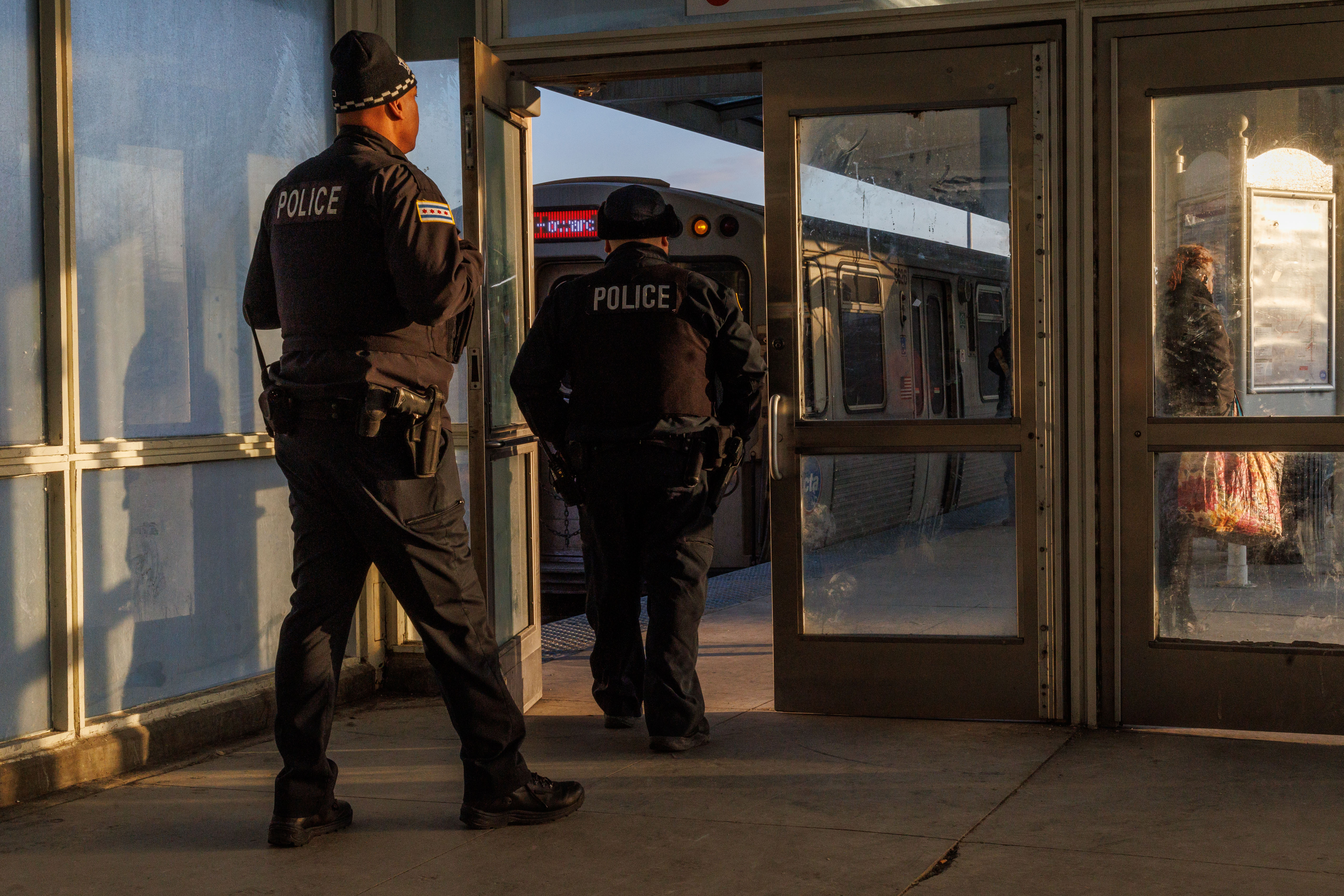
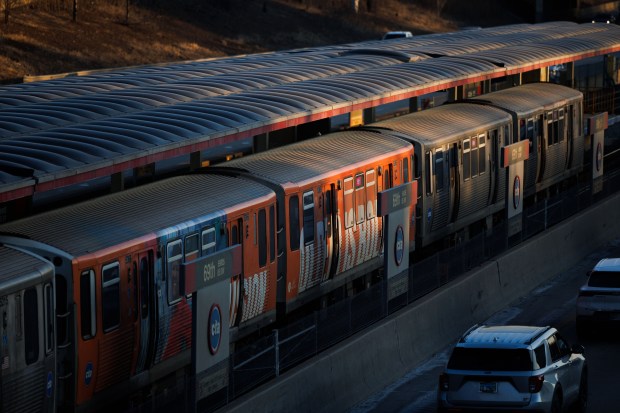
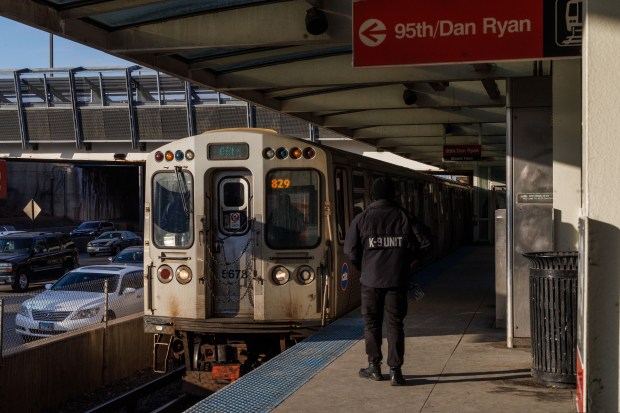
In July, two men were arrested after allegedly punching privately contracted CTA security guards at the 69th Street Red Line station, according to court records. Both have pleaded not guilty to charges in that case. Both received six-month suspensions from the CTA in August after failing to show up for their administrative hearings.
But in October, one of the men was arrested again after a CTA security guard allegedly spotted him on the Red Line with a gun, according to arrest records.
And in January, the other man was arrested again, also on the Red Line, after officers smelled marijuana on a train car near 87th Street and arrested him for cannabis possession.
A third man suspended by the CTA in December 2024 after allegedly battering a CTA employee also apparently made his way back onto the city’s transit system. According to CPD arrest records, he was arrested for drug possession while sitting at a bus stop in Austin in March, at which point he had about three months left on his CTA suspension. He’s pleaded not guilty in both cases.
“CTA is one of the largest public transit systems in America, providing 1 million rides per day, which presents complexities with regard to enforcement of rider suspensions,” CTA spokesperson Hosinski said.
The CTA shares notices about suspended riders with “key CTA personnel, contracted security providers, and local law enforcement,” Hosinski said.
“If a banned individual is identified on the system, personnel may notify the CTA Control Center so police can respond and remove the individual, as appropriate,” she said.
Gillis, the Metra spokesperson, also acknowledged the challenge of enforcing suspensions.
“At this point, we rely on the conductor or officers involved to recognize a rider who has been suspended,” he said.
Gillis said 13 of Metra’s suspended riders have been caught on a train and charged with trespassing. Three suspended riders were caught on the rails twice, he said.
“If the goal of this law is to improve safety on public transportation and encourage better behavior, then we will not count it as a failure if a suspended customer gets on our train and is not recognized but does not again violate the Passenger Code of Conduct,” he said.
Metra does not suspend the Ventra accounts of suspended riders, Gillis said. He said most suspended riders don’t use Ventra and that the agency does not suspend the accounts of those who do because it would need their usernames. “We found early on in this process that people would refuse to provide it or provide a fake one,” he said.
The CTA did not answer a question about whether it suspends riders’ Ventra accounts.
State law requires that riders issued suspension notices be allowed to defend themselves at a hearing and appeal a suspension if one is issued against them.
Metra’s suspension hearings are overseen by an employee in the agency’s labor relations department, Gillis said. At the CTA, suspension hearings are overseen by an outside attorney retained by the agency.
Hosinski said every suspension the CTA has presented at a hearing has been approved. The agency has issued 86 suspension notices in total, half of which have not yet been heard because they “are still within the required due diligence period, which includes confirming the individual’s last known address and executing, or attempting to execute, proper service of notice,” Hosinski said.
People are often suspended by default after failing to show up to their hearings either in person or virtually, CTA records show.
‘A sometimes challenging reality’
Transit agencies around the country take various approaches to rider bans.
Aaron Donovan, a spokesperson for the Metropolitan Transportation Authority in New York, said transit bans are imposed by judges in New York, where state law allows suspensions of up to three years in certain cases. According to the New York State Office of Court Administration, only five cases last year involved transit bans.
The Massachusetts Bay Transportation Authority in Boston has no formal suspension process but can issue no trespass orders to riders. An agency spokesperson did not answer a question about how many orders were issued last year.
The Washington Metropolitan Area Transit Authority in D.C. has suspended 511 riders between the inception of the agency’s suspension program last June and January, spokesperson Jordan Pascale said.
State Rep. Eva-Dina Delgado, a co-sponsor of the Illinois law that allowed rider suspensions, said the CTA’s number of suspensions “does sound a little low” compared with the complaints she gets from constituents about safety issues on the CTA.
“I also just think that it has to do with the beginning of a program and just trying to get it done the right way,” Delgado said.
Metra has conductors on every train as well as its own police force.
The CTA relies on privately contracted security, members of the Chicago Police Department’s public transportation units and an additional set of CPD officers who volunteer to do transit patrols on their days off.
Interim CTA President Nora Leerhsen has spoken publicly about the challenge of keeping public transit safe.
“Our doors are open 24 hours a day to the public, seven days a week. With the exception of hospitals and emergency centers, few other institutions face that operational picture,” she said in January.
“It comes with a massive responsibility and sometimes a challenging reality.”