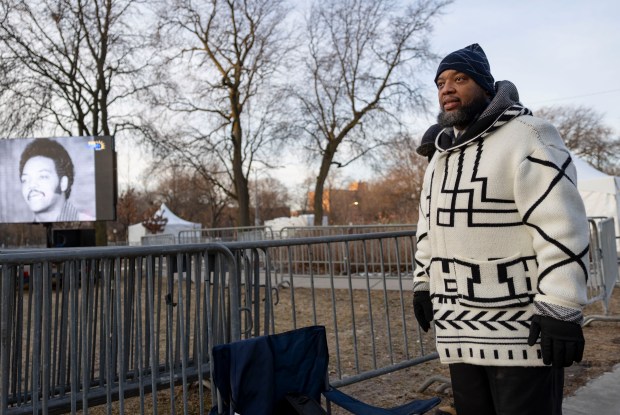

Sunlight had only just started to clear the tops of the buildings lining Drexel Boulevard while Marcus Jones stood early Thursday morning across the street from the Rainbow PUSH Coalition, gloves and a hat protecting him from the bitter cold. He hadn’t intended to be first in line on the first day of public visitation for the Rev. Jesse Jackson, but there he was, alone at the front.
It was more than two hours before the doors opened, and more than an hour before the procession arrived from the funeral home. Jones had left his house in Calumet City in the dark and arrived not long after 7 a.m., and he’d come “to be a part of history,” he said, and to say goodbye to a man who made him feel something — a mix of pride and gratitude and strength.
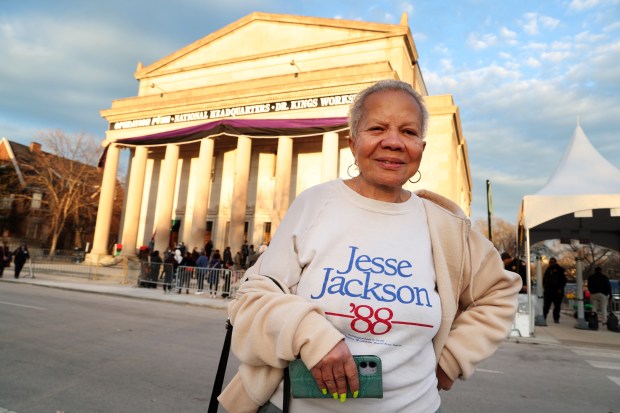
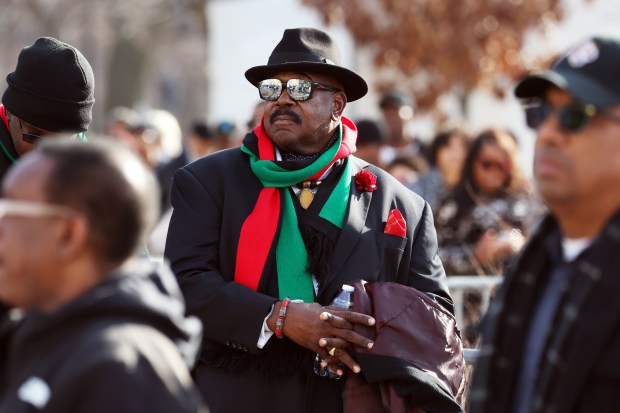
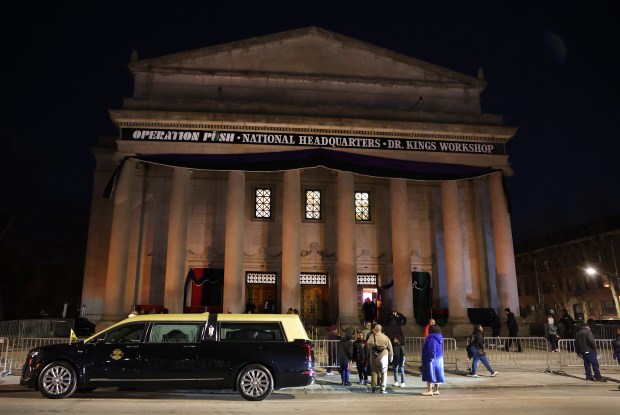
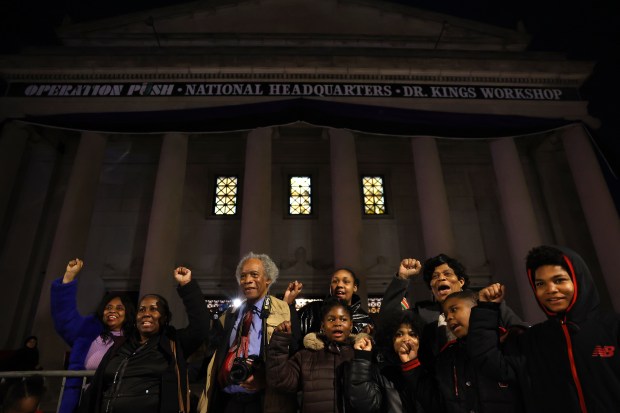
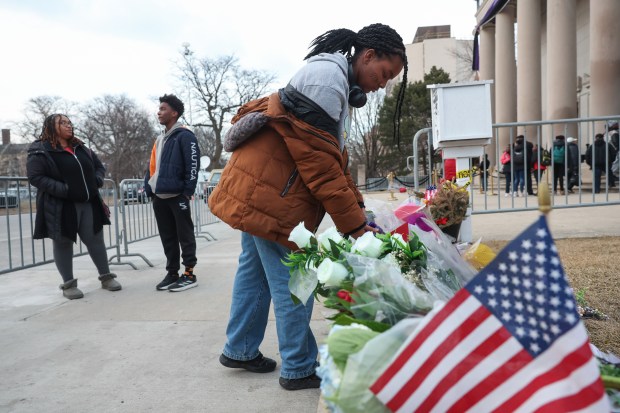
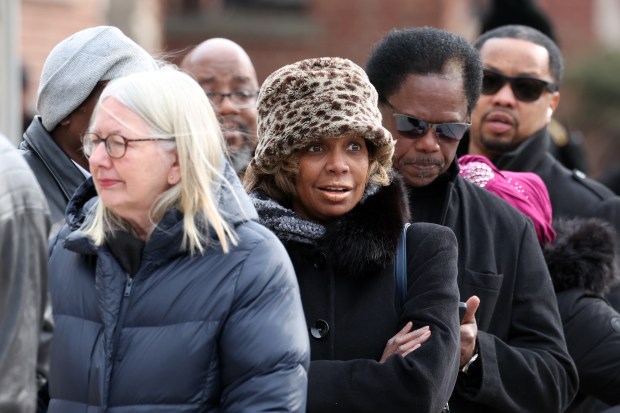
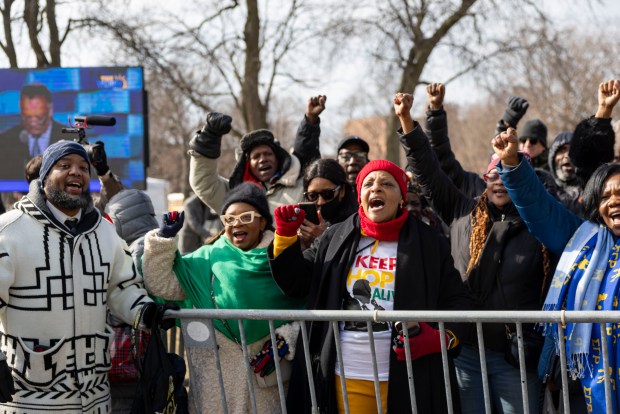
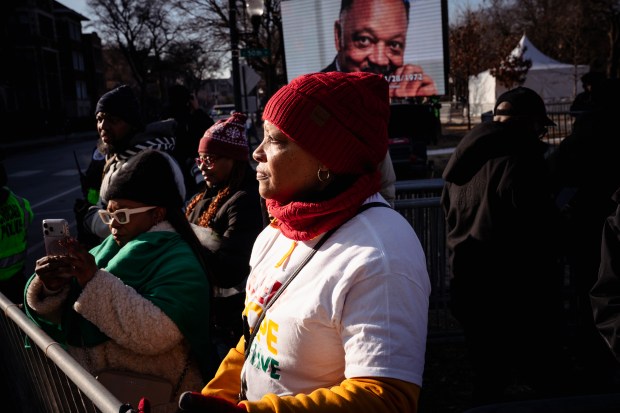
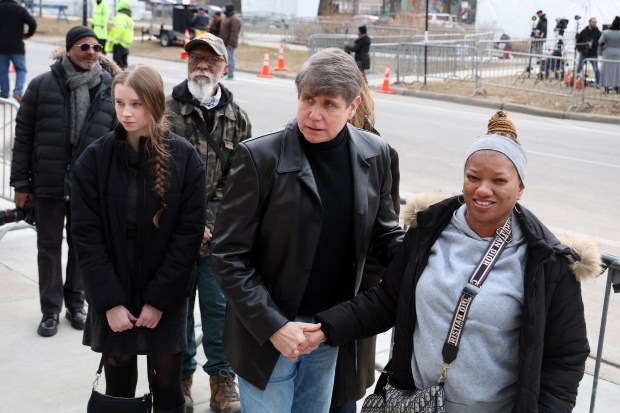
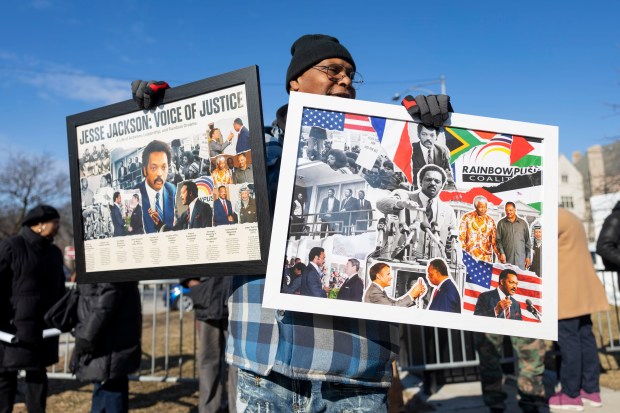
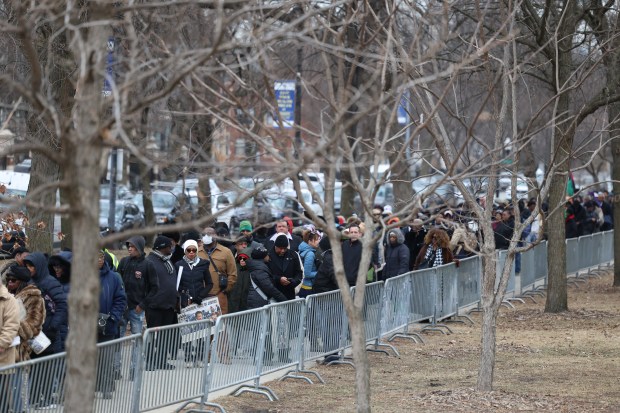
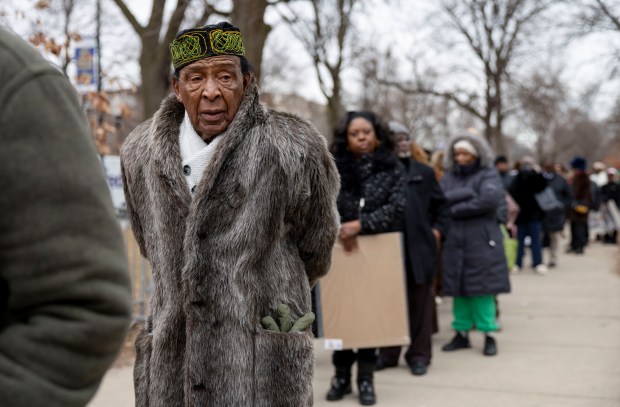
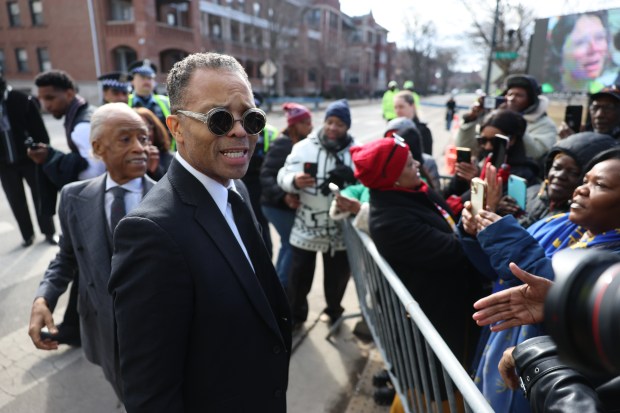
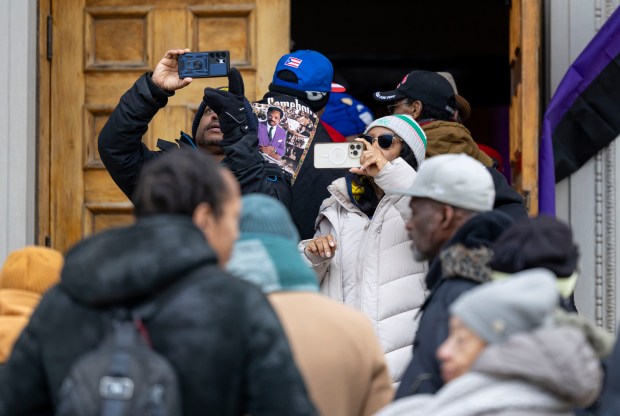
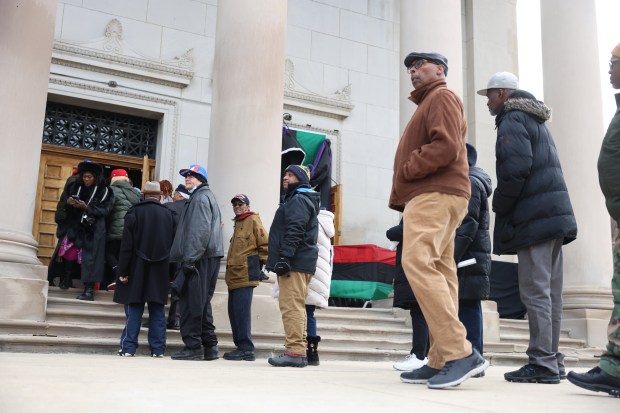
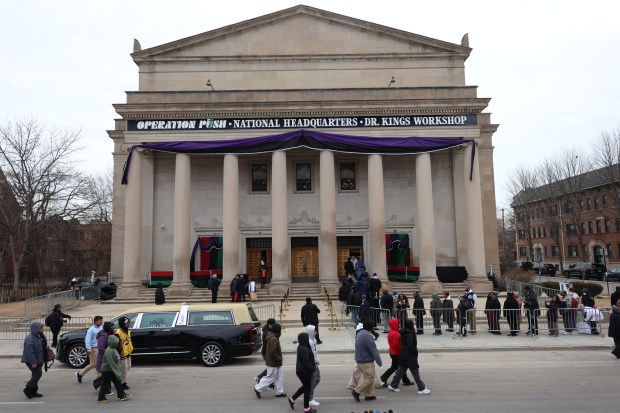
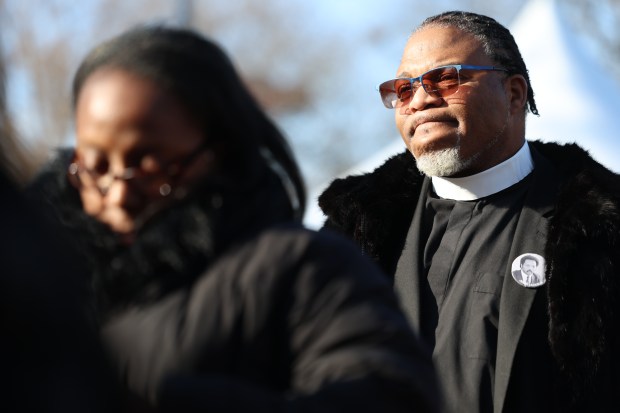
On the first day of more than a week of remembrances for Jackson, who died on Feb. 17 at the age of 84, people came from all over to share one last moment with one of America’s most enduring civil rights leaders. They lined the sidewalks outside the Rainbow PUSH Coalition, which he founded in 1971, from early in the morning on, and formed a steady stream of mourners and celebrators.
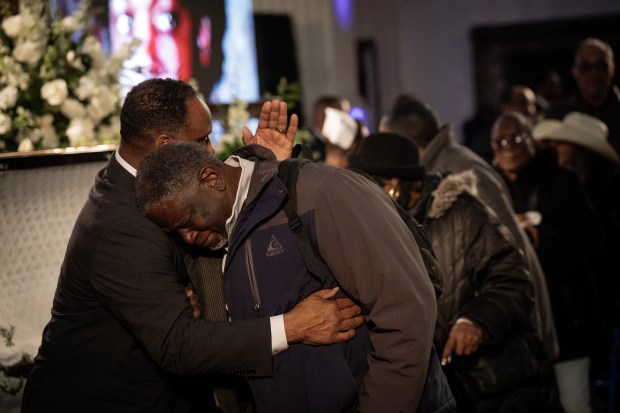
Most everybody came with stories of how Jackson had inspired them. Some walked from nearby homes in the neighborhood. Others traveled great distances. A mom brought her two children from Flint, Michigan. A woman named Pamelashell Hooks, a retired schoolteacher, flew up from Florida. Jerome Morgan, emotional upon the sight of Jackson lying in repose, came from Washington, D.C.

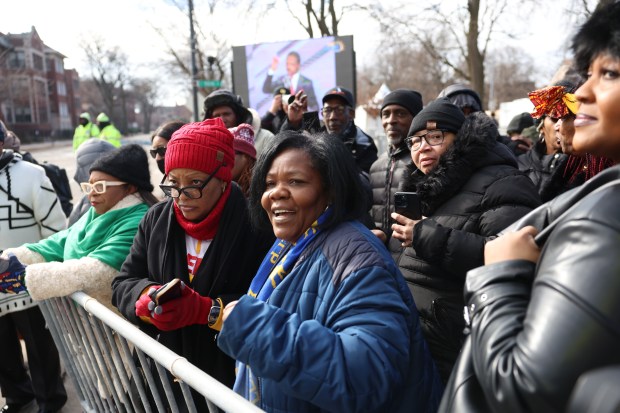
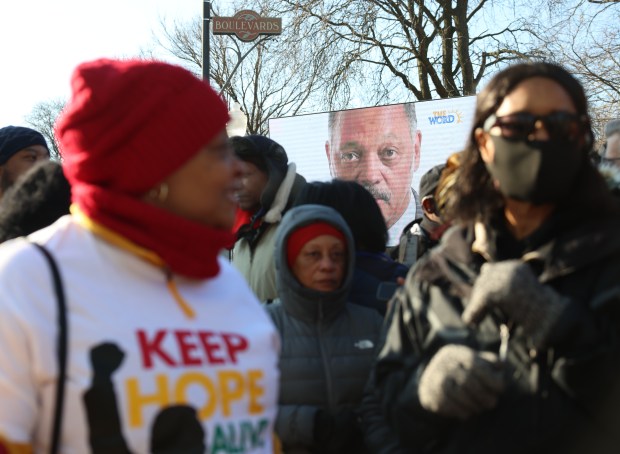
They all waited awhile to say goodbye, and while they waited outside many turned toward a screen that played some of Jackson’s most memorable speeches on a loop. His words echoed through loudspeakers and into the streets of Kenwood, once home to Muhammad Ali and former President Barack Obama, who still owns his house a few blocks away on Greenwood Avenue.
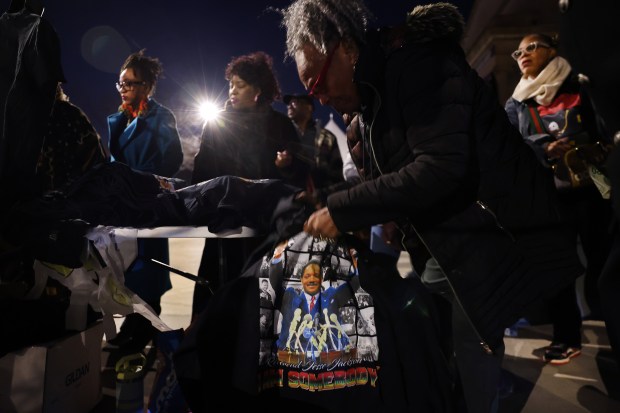
On the screen next to the line, there was Jackson in Los Angeles in 1972 at Wattstax, the benefit concert in memory of the Watts riots of the 1960s, delivering his “I Am Somebody” speech. There he was not long after on “Sesame Street,” delivering it again in a softer tone to an audience of children:
“I may be small, but I am somebody. I may make mistakes, but I am somebody.”
And there he was at the 1988 Democratic National Convention, a presidential candidate, delivering perhaps his most enduring speech in a lifetime of enduring speeches, and one that spoke to why so many people stood in the freezing cold on Thursday to be in his presence one final time. In that speech, Jackson spoke of his roots. Of his meager beginnings in Greenville, S.C.
Of growing up adopted, without the knowledge of his true last name, or family origin.
He spoke of overcoming self-doubt. Of belief. Of understanding where people come from.
“You see me on TV, but you don’t know the me that makes me, me,” he said, on the screen, while the line behind Jones continued to grow. “They wonder, ‘Why does Jesse run?’ because they see me running for the White House. They don’t see the house I’m running from. …
“My mama was not supposed to make it, and I was not supposed to make it. You see, I was born of a teenage mother, who was born of a teenage mother. I understand. I know abandonment, and people being mean to you, and saying you’re nothing and nobody and can never be anything.”
Lamous Holliday, second in line for the visitation behind Jones, could identify with those words. He’d come early because Jackson helped make him feel like somebody, and because he could remember watching some of Jackson’s speeches with his parents on their black-and-white television in their living room on the South Side, in the years after his family arrived from Mississippi.
“I was born in the ’50s,” said Holliday, 67. “So I’ve seen a lot of change,” and to him Jackson helped lead so much of that change in predominately Black neighborhoods in Chicago. Holliday struck up a conversation with the man in line next to him. Alfonce McKinney, 70, grew up in Englewood and said he attended civil rights marches as a child, ones with Jackson and the Rev. Martin Luther King Jr.
And now McKinney, wearing a faded White Sox hat and an expression that conveyed wisdom, described Jackson’s legacy like this: “He was showing us that we could do things that a lot of people didn’t think we were able to do,” he said, referencing advancements in education and career opportunities for Black people.
More than that, McKinney said, Jackson “let you know that you are somebody.”
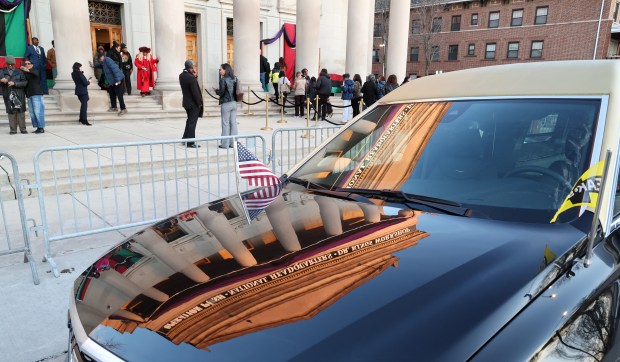
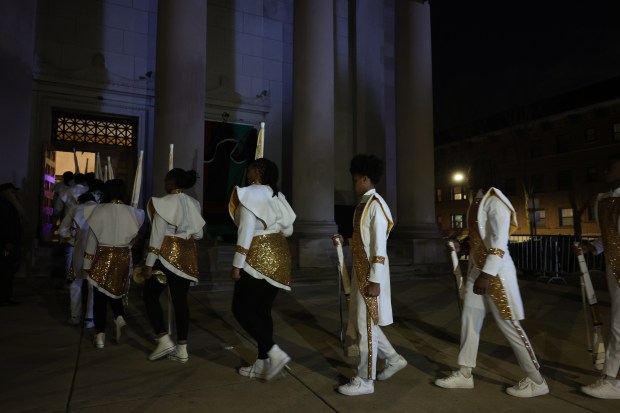
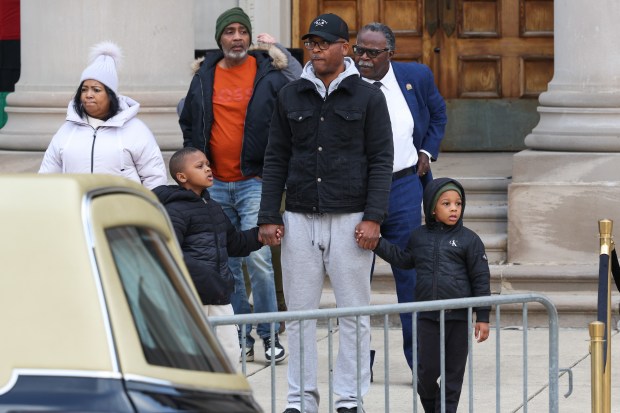
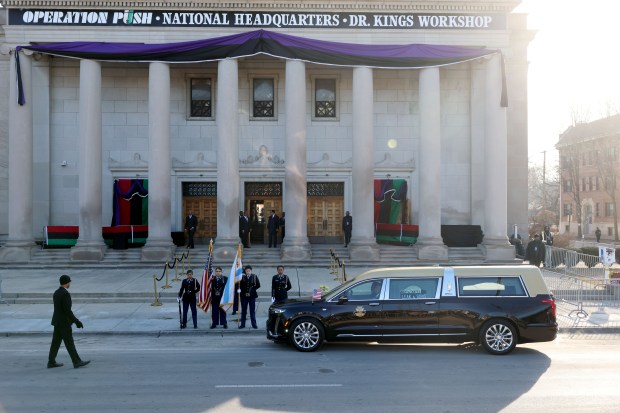
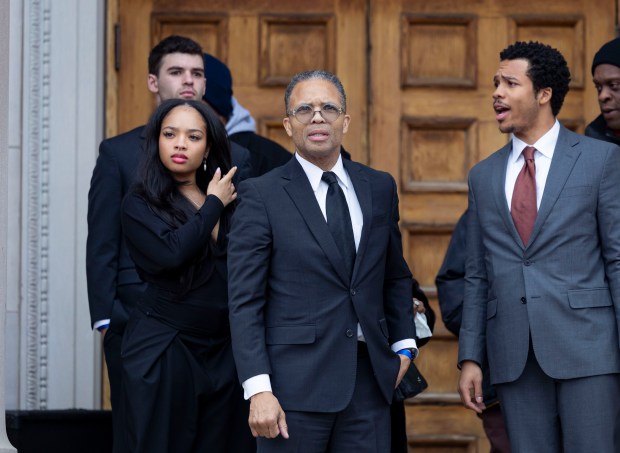
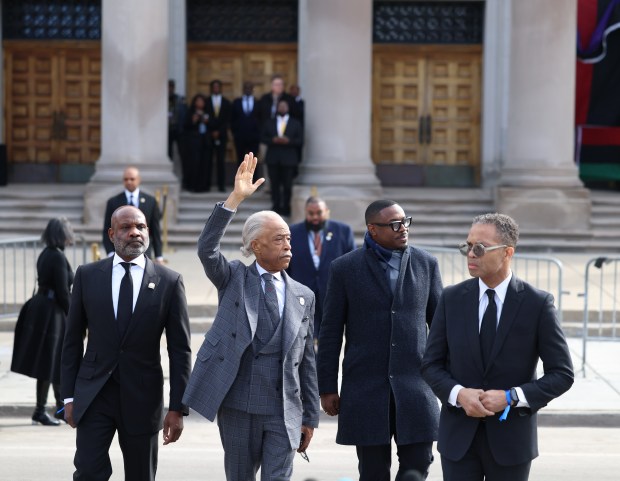
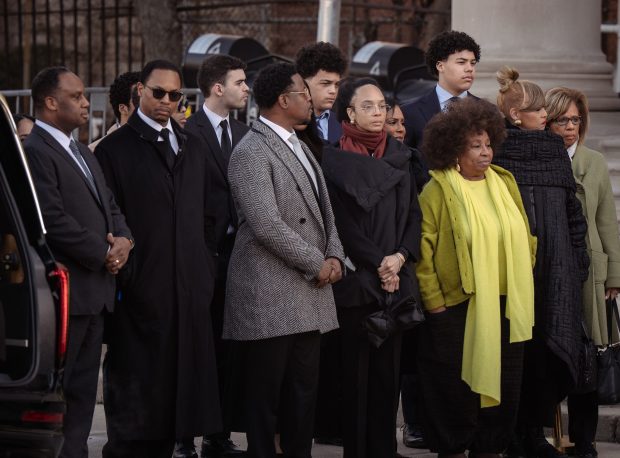
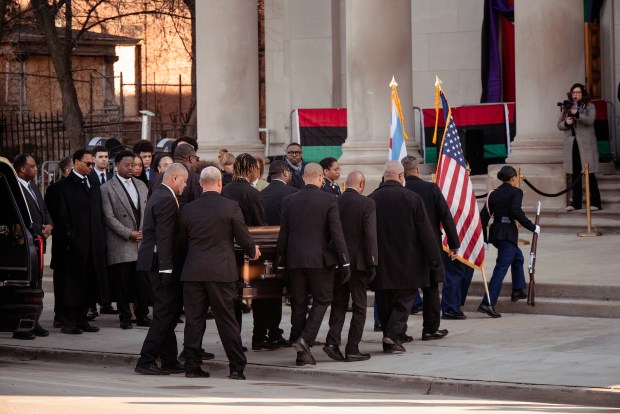
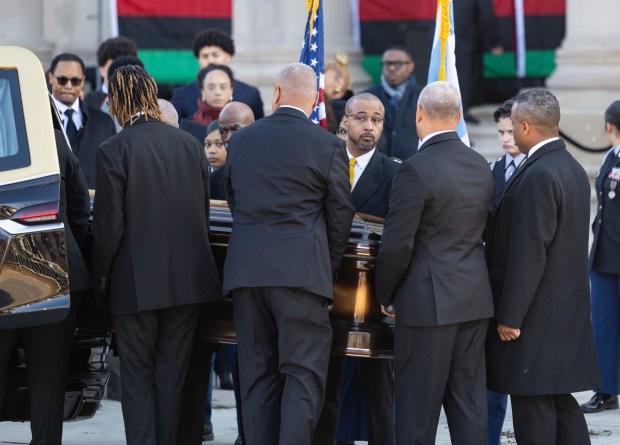
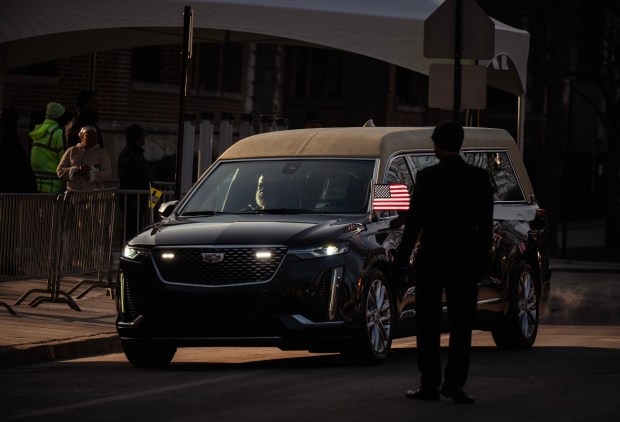
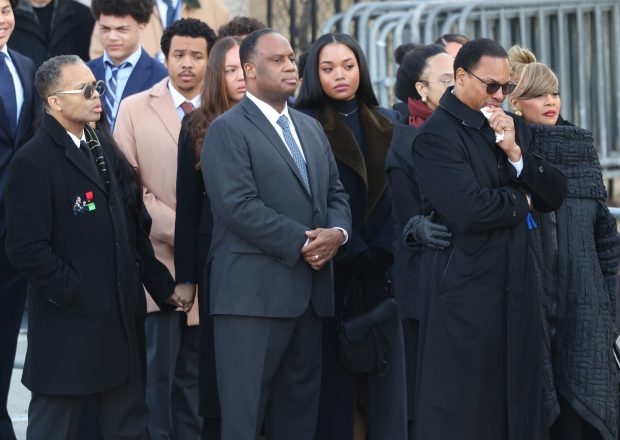
By then, a caravan of black SUVs and Mercedes vans, full of Jackson’s family, had arrived. They led a regal and flag-adorned hearse from Leak & Sons Funeral Homes, an institution on Chicago’s South Side. Jackson’s pallbearers carried him inside, past the tall pillars that adorn the building’s entrance, and they moved his casket to the front of the chapel.
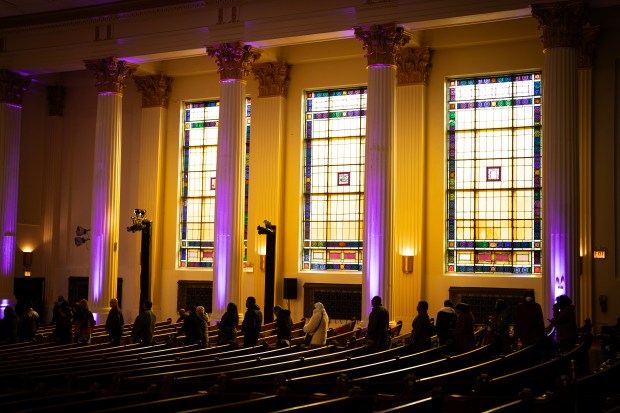
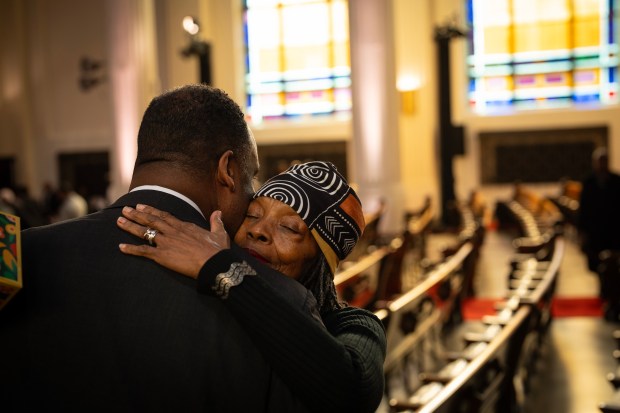
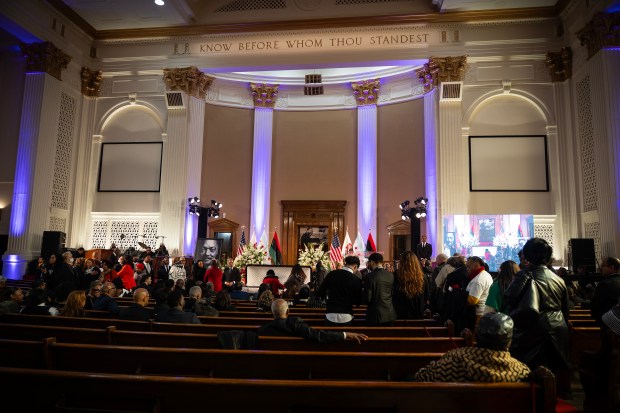
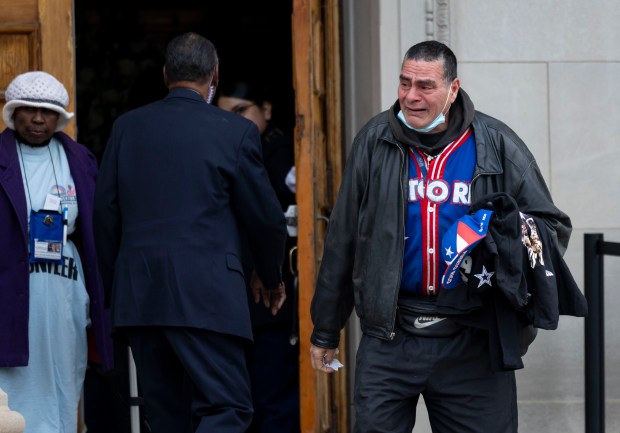
Inside, the line of those who’d come to see Jackson stretched down the center aisle, and mourners walked in to the sound of solemn gospel music and prayer. Florence Streeter, a petite woman with large black-framed glasses, greeted most everybody who came in and offered tissues and a small laminated card, in the shape of a bookmark, with a picture of Jackson in his younger years.
“Look at this outpouring,” Streeter said, and what struck her was the diversity of that outpouring.
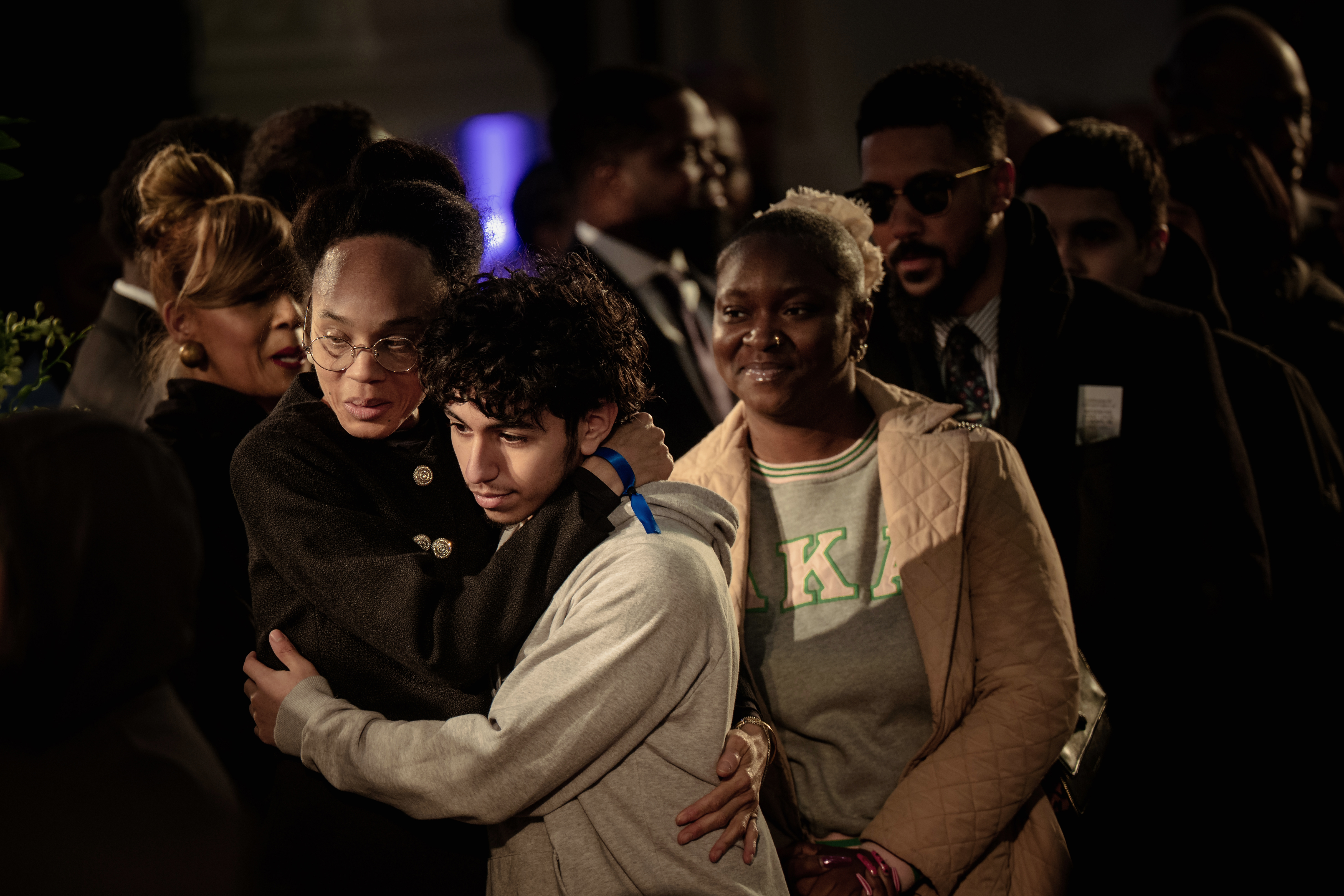
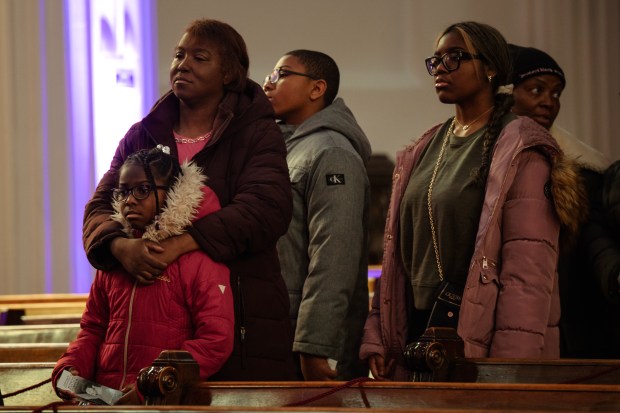
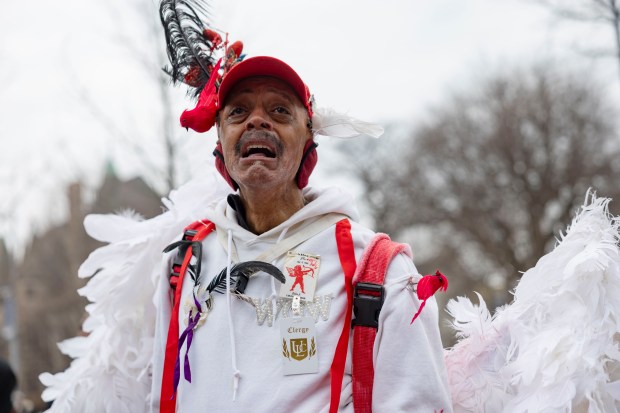
Most who’d come for the first of two days of the public visitation were Black, but people of all races and ages gathered. There was an 85-year-old woman who needed an escort from a police officer to make her way to the line. And women leading young children into the building.
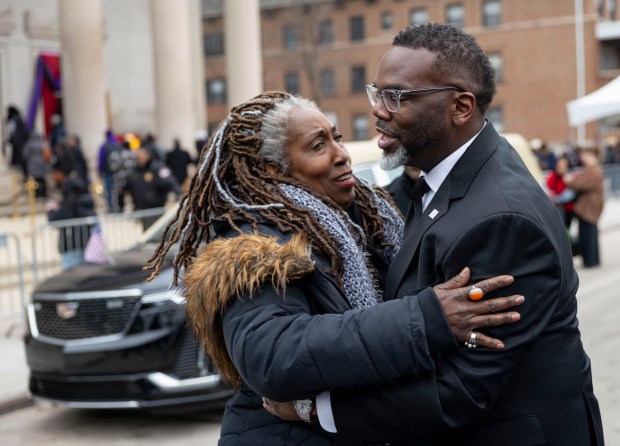
And though several prominent Chicagoans and local leaders came on Thursday — including Chicago Mayor Brandon Johnson and Cook County Board President Toni Preckwinkle — this gathering felt like it was more for regular, everyday people. Jackson will lie in state next week in Columbia, at the South Carolina state capitol.

His family has planned a service in Washington, D.C. President Donald Trump and every former living president, along with other world leaders, have been invited to attend his larger funeral service next week in Chicago. But Thursday and Friday, the second day of Jackson’s public visitation, are for people who’d known Jackson only through his speeches or his marches.
People who’d learned to believe or to fight in part because of him. People, like Streeter, who’d gone onto YouTube in recent days and watched some of those moments over again. Streeter, who didn’t give her age but said she’s “in my 60s,” recently found herself watching Jackson’s 1988 convention speech. And then she watched it again.
“It brought tears to my eyes,” she said.
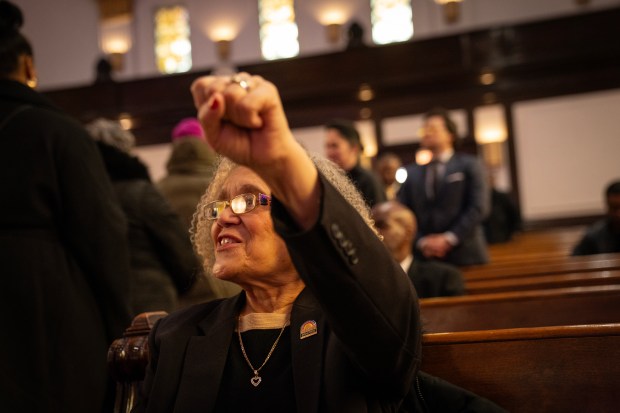
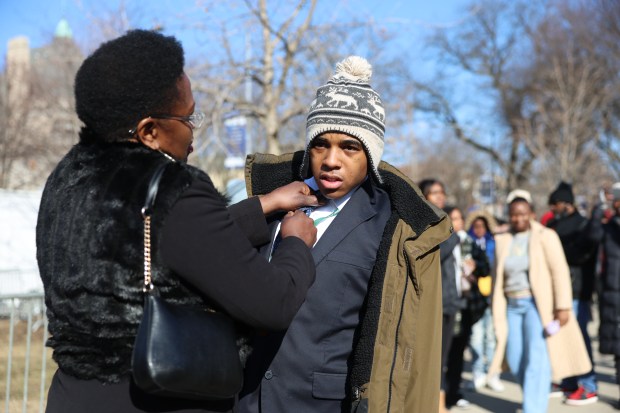
While she stood at the entrance of the chapel, those who passed by represented a cross section. There were those with canes and walkers, who came of age in Jackson’s time, and those who benefited from his legacy. There were people who’d dressed up in ties and suits and formal dresses, and ones who came in far less fancy attire.
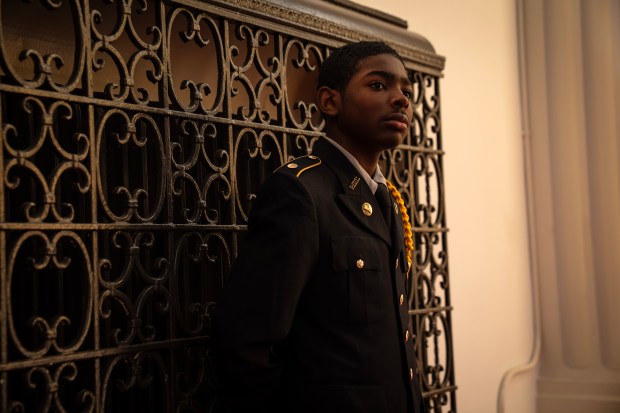
About 70 of them were high school students from Epic Academy, deep on the South Side off of East 83rd Street. Kyla Matthews, the school’s principal, led those students onto three buses and then into line, and after about an hour’s wait they’d made their way inside.
“It’s one thing to learn about him in the textbook,” Matthews said of Jackson. “It’s one thing to Google him. But to be in this moment with his family — his family and the rest of the city — I think it’s important for children to live in the moment.
“So that’s why we’re here today.”
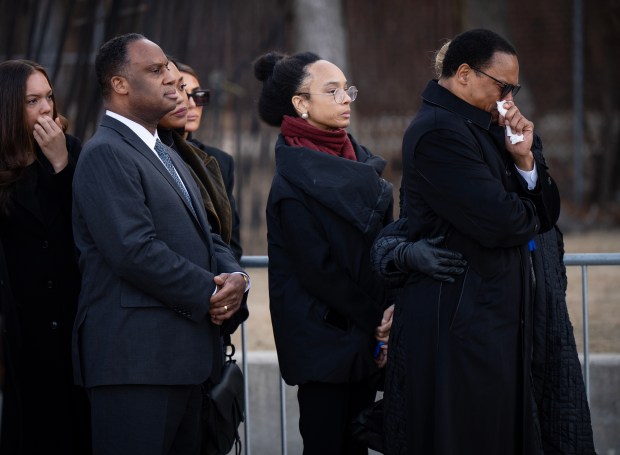
While Matthews and her students made their way toward Jackson’s casket, his family waited nearby in a receiving line. His daughters, Santita and Jackie, greeted everyone with a hug. They couldn’t have known most of the people they embraced, but in a way most all of them had known their father. He’d made them feel something, and like they could be somebody.