

This week as the Rev. Jesse Jackson is laid to rest, I share reflections from south suburbanites on the personal experiences they had with Jackson and their thoughts on the legacy he left the world.
Joi Patterson
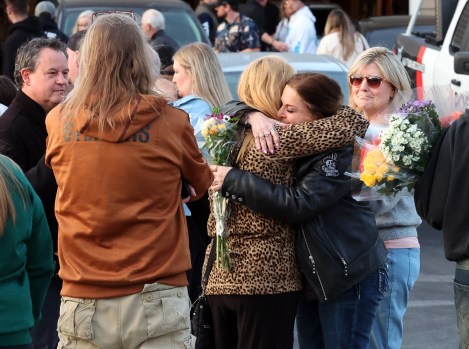
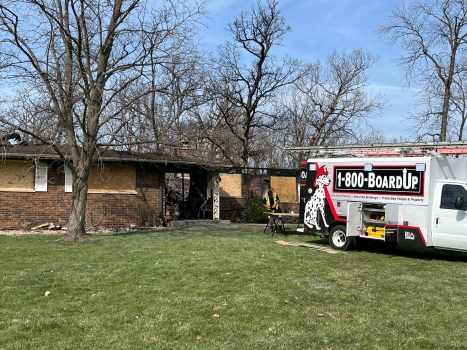
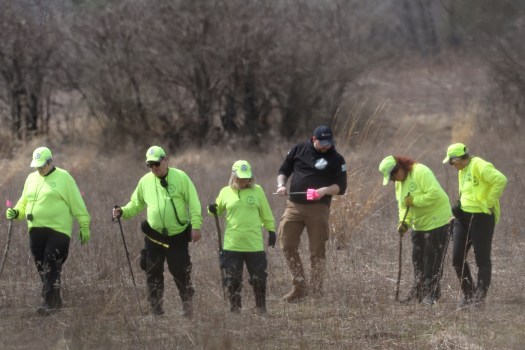
Joi Patterson, chief of institutional engagement and excellence at Governors State University, first met Jackson following an unspeakable tragedy — the highly publicized murder of the parents of her friend and colleague, Chicago State University professor and former CLTV host Garrard McClendon.

In the days after McClendon’s parents were killed and their bodies left in a forest preserve the weekend of their 54th anniversary, she visited McClendon’s home. Jackson was there. After all the cameras were gone, Jackson had come to comfort and counsel McClendon.
“He talked to Garrard and his brother,” said Patterson. “He spoke in that moment of forgiveness.”
Jackson reinforced what McClendon had already done — forgive, while remaining committed to wanting justice for his loved ones. McClendon has said he needed to forgive in order to move on with his life. McClendon later produced the documentary “Forgiving Cain,” which shares his story of forgiveness and that of other families who lost loved ones to murder and examines gun violence and what needs to be done to end it.
Patterson said in first meeting Jackson, she observed firsthand his commitment to healing and restorative justice.
“I have seen and interacted with him many times since then,” she said. “He really embodied the things that he said. I saw him as someone who never separated justice from humanity. He listened very deeply and spoke boldly. He would give you reminders of what you were here for and be very intentional about it.”
Lori Carlton-Jordan and Calvin Jordan
Rich Township Supervisor Calvin Jordan and his wife, Lori Carlton-Jordan, a human results consultant, co-own Hazel Crest-based Property Care Management. They often hosted Jackson at their Olympia Fields home.

He would ask the couple to bring people from the south suburbs together to discuss any causes they were pursuing or challenges they were facing, and he’d provide advice. Among that advice, was to start with prayer, Carlton-Jordan said.
Jackson supported a mentoring program from her home state of Arkansas in which high school students participate in annual college tours. The past few years while in Chicago, they would visit the Rainbow Coalition offices, where they had the opportunity to meet Jackson and he would provide encouraging words, Carlton-Jordan said.
She said one of her fondest memories is when her son was a sixth grader at Infant Jesus of Prague Catholic school. He was disappointed in how Black History Month was observed at the school, and suggested they have Jackson come speak. A teacher said we’d love to do that, but “We don’t know him like that,” Carlton-Jordan shared. The teacher thought getting him to the school was impossible.
“He comes to my house all the time,” the boy told the teacher, and then went on to ask his dad to ask Jackson to speak at the school, Carlton-Jordan said, chuckling at the memory.
Jordan reached out and Jackson came to speak. It was a highlight for everybody, students, teachers and the principal, she said.
“They were so enlightened by him. He took time to talk with the children. They took pictures,” she said.
“His legacy to me has been his way of teaching, teaching us not only about faith but how we can stand up for ourselves and be a part of what we want to be,” she said. “He leaves behind more than a legacy. He leaves behind a responsibility for us to keep pushing, keep organizing and keep believing that justice is worth the fight.”
Jordan said among his fondest memories was watching Jackson interact with senior citizens on Thanksgiving at Rainbow PUSH Coalition’s headquarters.
“He was literally serving people,” he said. “This was maybe five years ago. He said I work with the people and I’m going to serve the people.”
He says the work Jackson did advocating for economic equality and opening up business and career opportunities is a major part of his legacy that has made a difference for many.
U.S. Rep. Robin Kelly
U. S. Rep. Robin Kelly received an unexpected surprise from Jackson after she first decided to pursue public office.

“When I first ran for state representative, I walked into a church,” she said. “I didn’t know he was going to be there. He was there to support my candidacy.”
They left the church and Jackson went with her to Lincoln Mall.
“Everybody was rushing toward him,” she said. “That stays with me, how he helped me.”
After Kelly lost her husband, Jackson was there for her again.
“He came to the services and the burial,” she said. “That touched my heart.”
For Kelly, Jackson’s run for U.S. president and the Rainbow Coalition he was able to create are among the greatest parts of his legacy.
“He wasn’t just a figure in the U.S.,” she stressed. “He was an international figure. He left his mark on the world.”
Aubrey Jackson
Flossmoor resident and nuclear engineer Aubrey Jackson, who is not related to Jackson, said he never personally met him. But he did hear him speak at Operation PUSH meetings.

“All of the events, they were meant to inspire people, to make sure people understood their power,” he said.
He said for him an important part of Jackson’s legacy is his run for president and how he helped pave the path for former President Barack Obama. He referenced how Jackson successfully pushed the Democratic Party to award delegates based on the proportion of votes a candidate received, halting its winner-take-all rules in primaries.
“Among his greatest contributions was helping people understand that it doesn’t matter what people call you, you are somebody,” Aubrey Jackson said. “You can aspire to be whatever you want to be.”
My experience
I first met Jackson as a young rookie reporter. I was working for the Michigan Chronicle newspaper, a Black-owned paper. Jackson was speaking at an event I covered and I had a one-on-one interview with him. I was nervous even though I didn’t show it. But the manner of this civil rights giant quickly put me at ease.
I owe a debt to him for my journalism career. He pushed media organizations to diversify their newsrooms and better reflect the communities they cover. As a result, I have had the opportunity to use my journalism skills working for not only the Michigan Chronicle, where I learned much from wonderful mentors, but also to work for mainstream newspapers in California, Arizona and Illinois.
For me, among the most important parts of his legacy is his work and commitment to remove voting barriers, encourage people to recognize their power as voters, combat voter apathy and remind African Americans of the great sacrifices others have made so they can vote. He reiterated the lessons I had learned from my parents and grandparents on the importance of voting.
I take great pride in the fact that one of the last things my granddaddy did on the day that he died was vote. That was during one of Jackson’s runs for president. My grandfather worked his own farm outside of Birmingham, Alabama, where during his roughly 80 years he faced and combatted racism.
I have no doubt that this descendant of slaves took great pride in casting his vote for Jackson with the hopes that he would become the first Black U.S. president. I’m glad my granddaddy lived long enough to have that opportunity, and I thank Jackson for that and all he gave to this world.
And as a perpetual optimist myself, during these trying times, I hold in my spirit Jackson’s impassioned message to “Keep hope alive.”
Francine Knowles at Fknowles.writer@gmail.com is a freelance columnist for the Daily Southtown.