Lake Forest Open Lands Association (LFOLA) will restore a rare ravine-bluff ecosystem along Lake Michigan after securing a $5.75 million federal grant, aiming to stabilize eroding bluffs, protect wildlife, improve water quality, and expand public access.
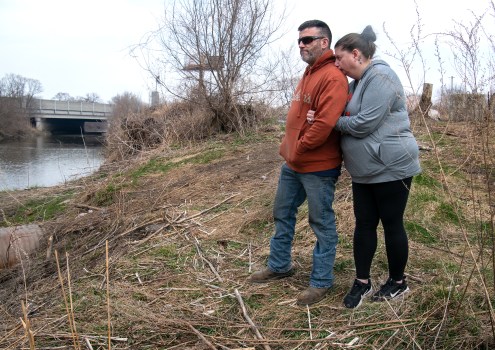
A stretch of bluff near LFOLA’s Greene Nature Preserve has steadily eroded over the years, leaving a wide swath of bare land. LFOLA has long sought to restore the area and finalized the federal grant from the National Oceanic and Atmospheric Administration (NOAA) last year to fund the next phase of the project and recently executed a $5.75 million grant agreement as part of the process.
Decades of urbanization and shoreline modification have contributed to vegetation loss, habitat degradation, and bluff instability, LFOLA President and CEO Ryan London said.
“This project represents a major investment in reviving one of the rarest, most fragile ecosystems along Lake Michigan, our ravine bluff corridors, and in protecting water quality, wildlife habitat, and public access along our Illinois shoreline,” London said. “This isn’t a one-time fix. It’s a long-term commitment to coastal resilience. And this project ensures that one of Illinois’s most fragile coastal ecosystems can thrive for generations while protecting water quality, wildlife, and public access along Lake Michigan.”
London noted that Lake Michigan fluctuated from near-record lows in 2014 to near-record highs in 2020, causing roughly 30 feet of bluff erosion.
“We are going to be building that back up,” he said.
An intention of the project is the restoration and stabilization of 61 acres of ravine and shoreline habitats. It aims to enhance habitat for more than 100 bird species, nearly 50 rare plant species, and three threatened Great Lakes fish species. Additional goals include protecting water quality for residents across the North Shore, expanding public access, and supporting conservation education and workforce training programs.
The restoration will rely on natural materials and strategically placed stone for erosion control. Construction is scheduled to begin in March, with most work expected to be completed by the end of next year, though full restoration will continue for more than three years.
LFOLA worked with the Illinois Department of Natural Resources (IDNR) to finalize the project design and ensure it was shovel-ready.
“The holistic, nature-based approach of the Lake Forest Open Lands restoration project will build the resilience of the ravine and bluff ecosystems to risks associated with extreme weather events, increased stormwater inputs, extreme lake level fluctuations, and impacts of the region’s changing climate patterns,” IDNR spokesman Brandon Damm wrote in a statement.
This marks the third phase of restoration and public access improvements at the site over the past decade. London said the project could serve as a model for similar efforts across the Great Lakes, showing how nature-based solutions can address erosion and stability while moving beyond traditional engineering methods that rely solely on concrete and steel.
“This project represents what can happen when you have local, state, and federal coordination with agencies paired with on-the-ground expertise in science,” London said. “We believe and know the deep value of a project like this is going to be lasting for generations.”
Daniel I. Dorfman is a freelance reporter for Pioneer Press.