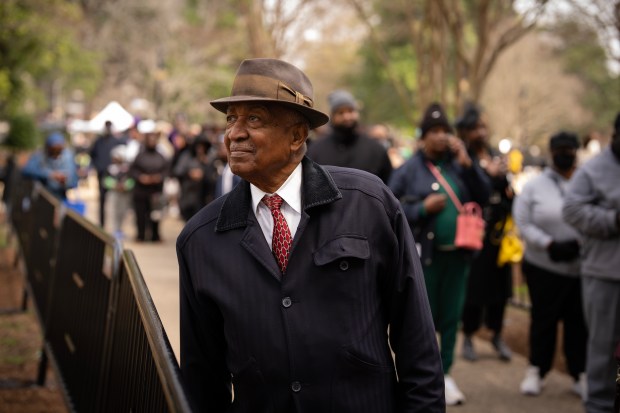
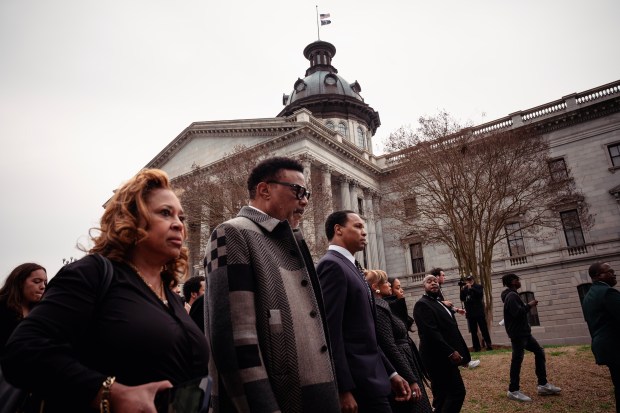
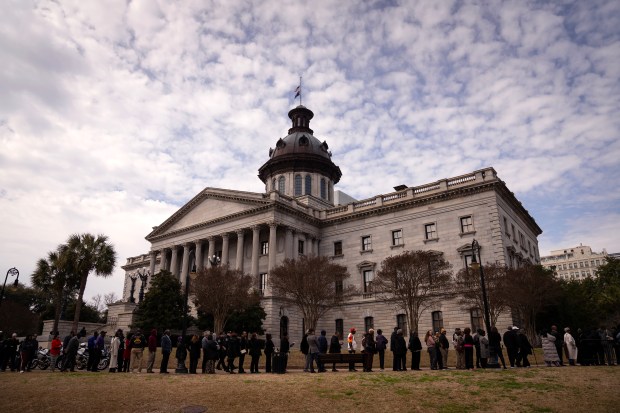
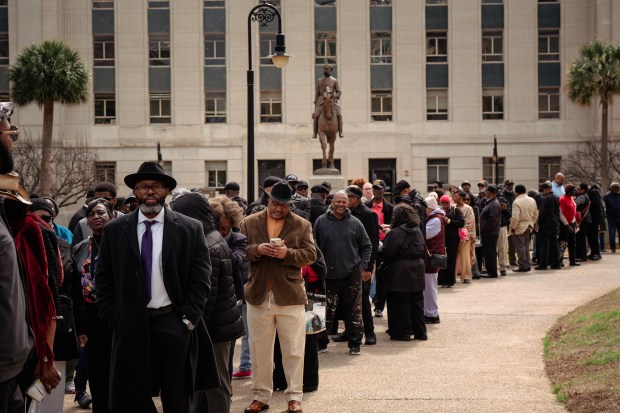
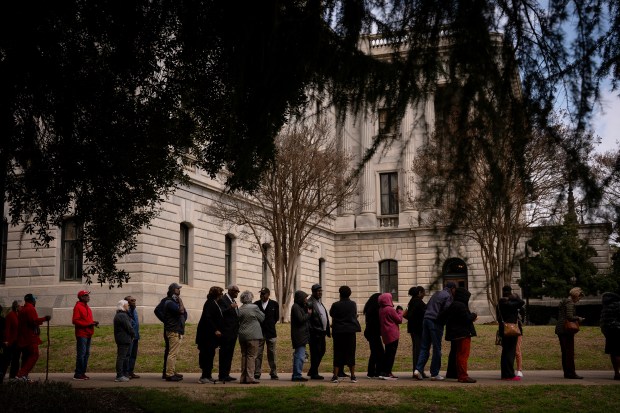
COLUMBIA, S.C. — Robin Washington, 66, took three buses to get to the statehouse Monday, after hours of waiting, to be the third person to walk up the steps to see civil rights icon the Rev. Jesse Jackson lying in state. She said folks asked her why she would go so far to stand in line on an overcast day hovering near 60 degrees, which locals labeled chilly.
“He paved the way for all of us and it wasn’t just about color. He walked for us. I got up to go for him,” she said. “This is his due.”
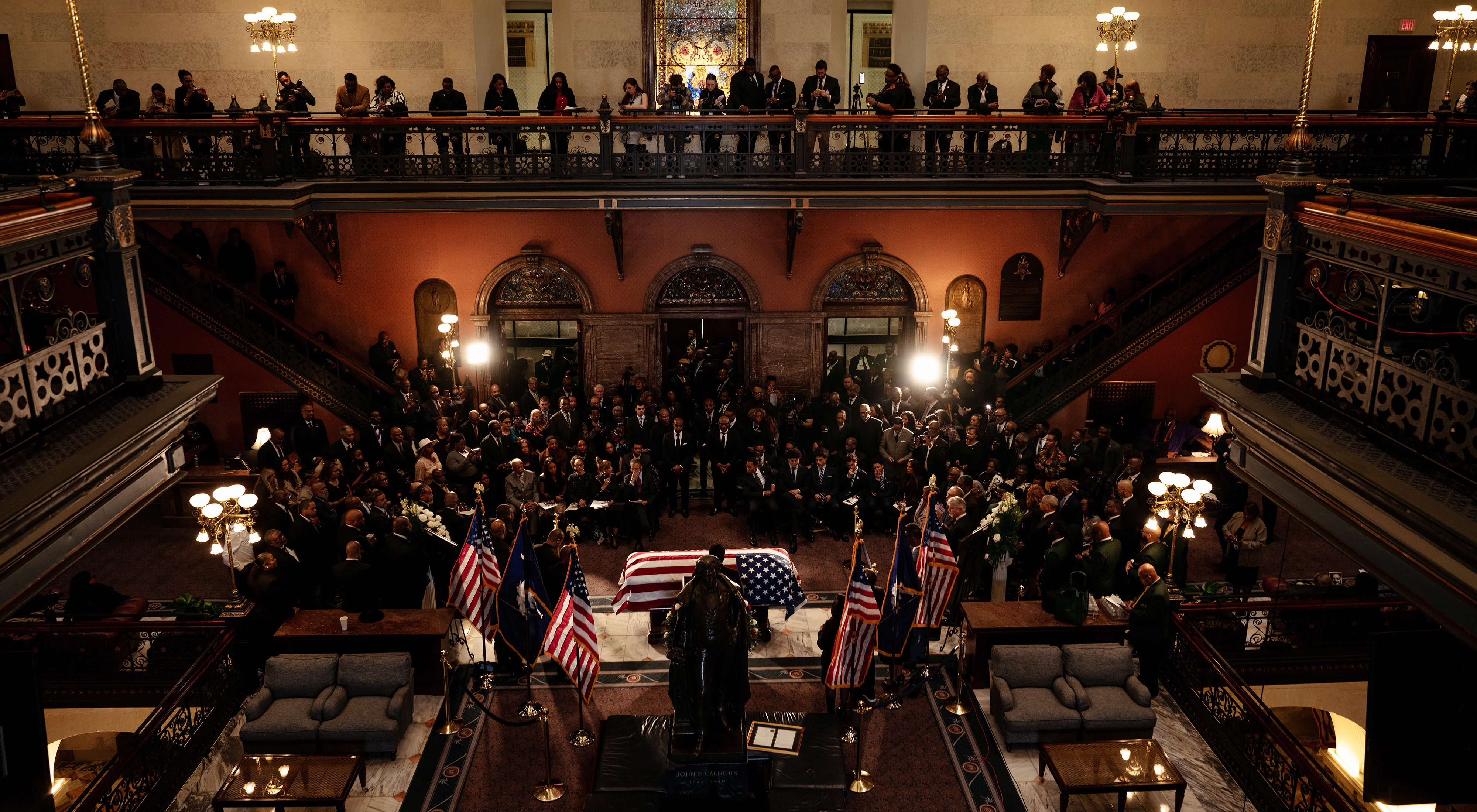
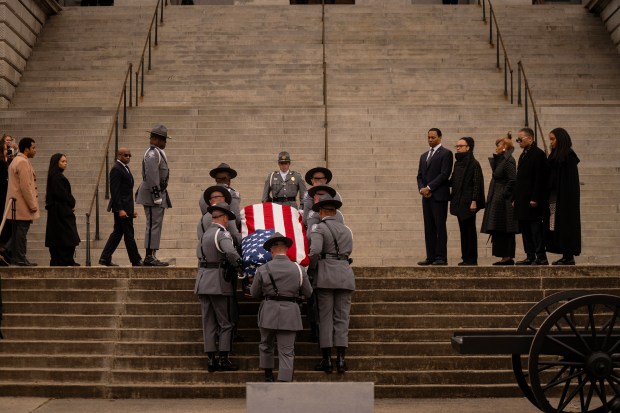
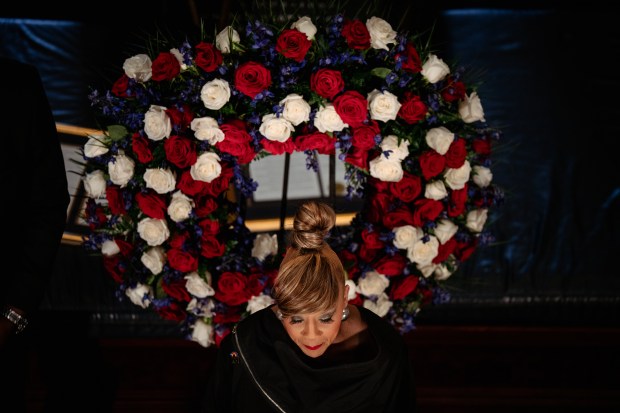
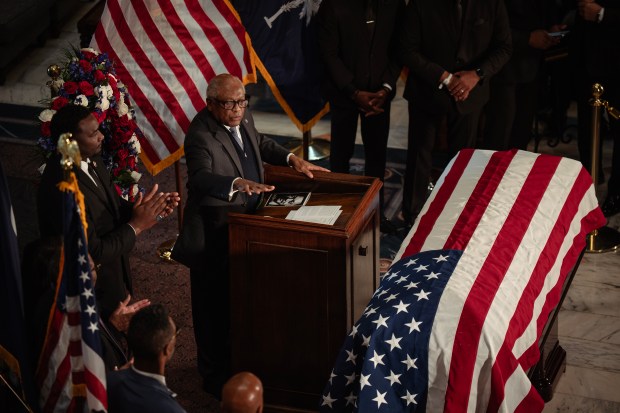
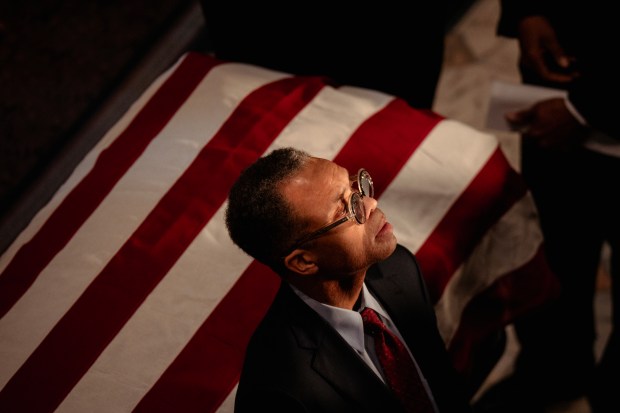
Flags were lowered to half-staff in South Carolina Monday where Jackson, a native son and civil rights icon, became only the second Black man in history to lie in repose inside the state capitol. Jackson died in Chicago on Feb. 17 at 84.
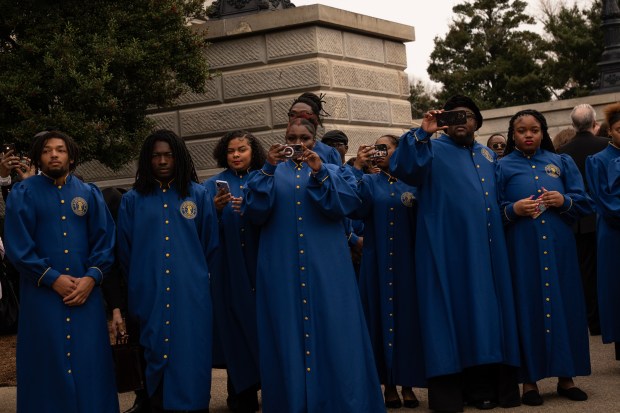
People from nearby and far away lined up for blocks to gain entry to the statehouse to view Jackson’s flag-draped casket after his family and members of the South Carolina General Assembly requested he be honored in the state of his birth.
It was just over an hour from Greenville, where Jackson was born and his mother lived years after he’d moved onto the world stage as a civil and human rights activist and eventually two-time presidential candidate. A memorial tribute followed Monday afternoon at Brookland Baptist Church in West Columbia, South Carolina. Both events were open to the public. As the crowd waited, they reflected on Jackson’s life’s work.
Linda McAulay traveled from Decatur, Georgia, to be the first person in line for the visitation on Monday morning. She said she’d been staying up late into the wee hours watching events surrounding the Jackson family on YouTube. The poise and dignity of Jackson’s children brought her to South Carolina’s Capitol.

“You really don’t know what a person does until they leave here — his children are amazing,” she said.
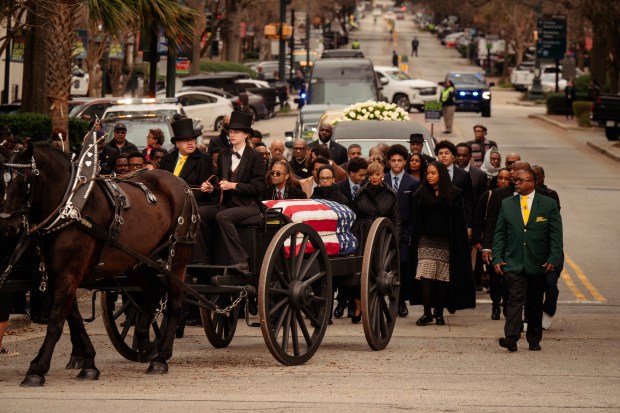
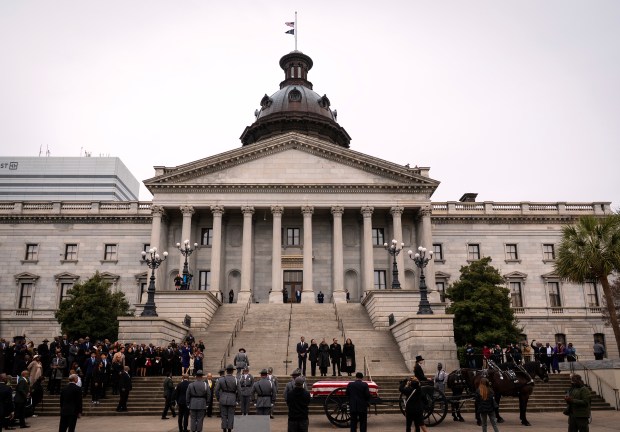
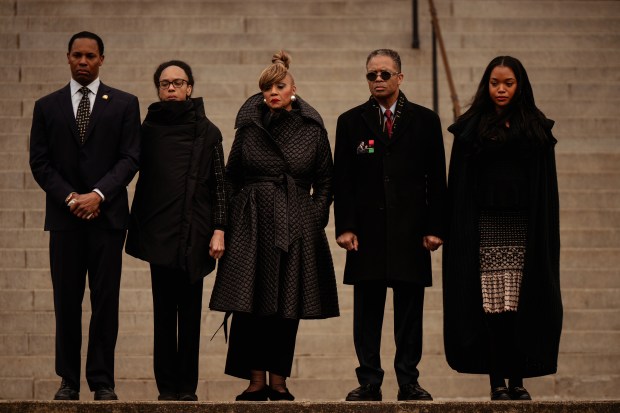
Her words were spoken just before the horse-drawn carriage with an American flag-draped casket made its way onto Capitol grounds, with all Jackson’s children (minus Jonathan) walking behind it.
It was a solemn and poignant moment, with many people running with their cellphones to capture the scene. As the casket was moved inside, the lines to enter the statehouse grew longer.
Kgosie Matthews, a resident of Johannesburg, South Africa, and former assistant to the Rev. Jackson from 1985 to 1989, traveled to the U.S. to attend the memorials. He traveled in the caravan of family and longtime friends from Chicago to Columbia, S.C., that brought Jackson’s body to the statehouse. Matthews said the trip was symbolic because it felt like a continuation of being on the road with him. “I came with him many times to South Carolina, we stayed in his mother’s house, she’d prepare a big feast for us, and we spent time in Greenville. For me, it’s that continuation of that relationship with him, a continuation of the journey.”
Jackie Dupree traveled from Sumter, S.C., to say goodbye to the Rev. Jackson. She took her 8-year-old grandson, Mason Burson, out of his school in Columbia to experience the moment. “He keeps asking questions about why and I say because, ‘This was a good man and meant well.’ A graduate of Allen University, an HBCU in Columbia, she remembers Jackson’s 1988 presidential run. She said she held up his signs in Greenville during his run for office.
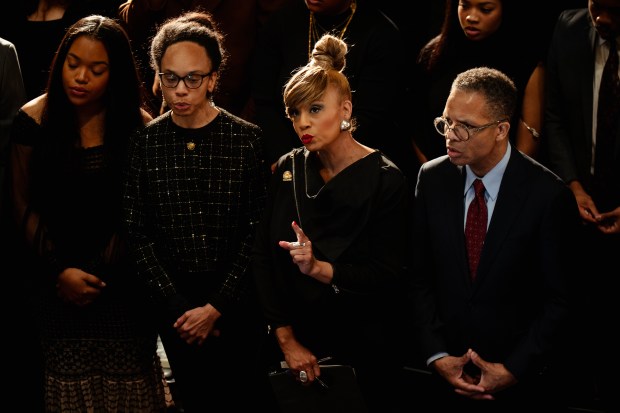
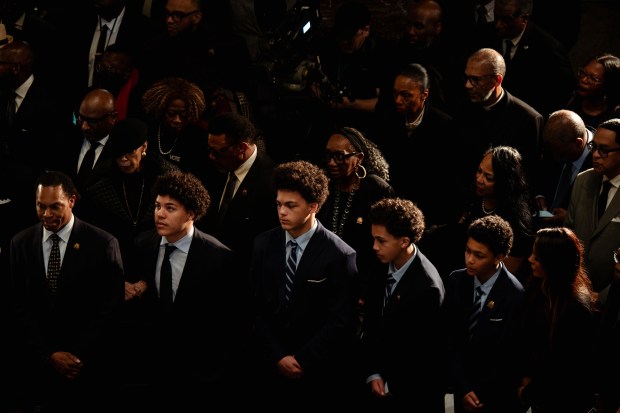
The gratitude expressed for Jackson was plentiful throughout the day. During the private memorial, Fellowship Missionary Baptist Church senior pastor, the Rev. Reginald Sharpe Jr. gave thanks to God for granting the Rev. Jackson 84 years.
“His attitude was affable. His brilliance was a blessing. His demeanor was dynamic. His essence was ecumenical. His faith was fortifying,” Sharpe said. “May we not just build a monument of memories, but carry on the momentum of his movement and it will ignite a fire in all of us to keep hope alive,” he said.
U.S. Rep. James Clyburn, who represents South Carolina’s 6th District and is a member of Jackson’s fraternity Omega Psi Phi, thanked him for throwing “touchdown passes” — from the rights of a library, the right to vote, the right to an education and passes on global diplomacy. Knox White, Greenville’s mayor, said the state became the place it is today with the Rev. Jackson’s work, citing the city is now home to a BMW plant and a Boeing facility. “He freed us all,” he said.


The Rev. Jackson’s daughter Santita closed out the ceremony, thanking South Carolina for this moment, mentioning, ‘maybe integrity’s not dead in the United States.’
“This king, this son of South Carolina, will live forever and ever as long as we call his name and as long as we not just remember but resemble. Do the work.”
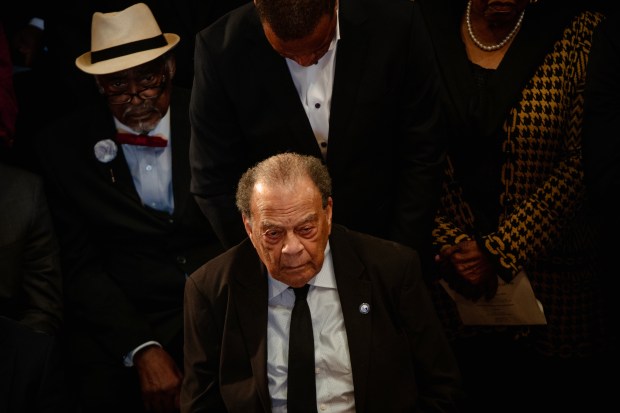
Days before his 94th birthday, ambassador and activist Andrew Young spoke about the Rev. Jackson. The former Atlanta mayor recalled meeting him in Selma in the ‘60s, where they worked to build support for the Voting Rights Act. On the legacy he leaves behind, Young said it’s much broader than we imagine. “This road will continue … what we have to do is what Jesse always did and what we did in Georgia — mobilize and turn out and vote.”
Peggy Baxter, a retired clinical social worker and pediatric hospital administrator, and attorney Davida Mathis, both of Greenville, said they worked with the Rev. Jackson in the early 2000s to push Greenville County, S.C., to recognize Martin Luther King Jr. Day as a paid holiday. According to Mathis, the fight took 2½ years to accomplish, but with the Rev. Jackson on their side, they found success.
South Carolina was the last state in the union to make the holiday a paid day off for state workers in 2000, and Greenville County was the last county in the state to do so, officially adopting it in 2005. Back then, Jackson flew to Greenville to organize marches and lead a sleep-in to reach their goal.
Jackson provided the leadership and strategy to guide them and the local Operation PUSH chapter through the process. “We were willing, but we didn’t have the knowledge that he had,” Mathis said.
Though he spent the vast majority of his adult life in Chicago, Jackson was raised in Greenville during the height of segregation. His mother, Helen Burns, was a beautician, and his father, Noah Robinson, was a worker whose job entailed grading the quality of cotton. Jackson’s mother would later marry civil worker Charles Henry Jackson, the man whose surname the Rev. Jackson took upon adoption in his teens.
Walking around his native hometown on Sunday, one can see how his love of community coalesced among the hills and valleys that surrounded his childhood home at 20 Haynie St. While the home looks untouched through the years, the street now bears his name.

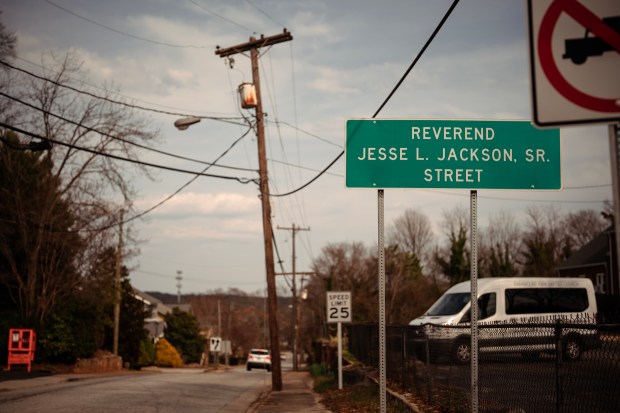


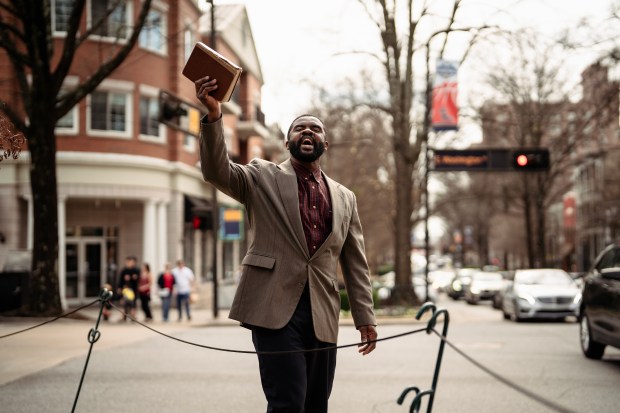


Walking distance from the intersection at U.S. Hwy. 29 and S.C. Hwy. 20, now “Reverend Jesse L. Jackson, Sr. Street,” is the Claussen Bakery Building, an old factory building surrounded by newer facades. A marker stands next to the structure, reminding passersby that in 1967, the Rev. Jackson brought the Rev. Martin Luther King Jr. there to support the almost two dozen Black employees who went on strike against discriminatory hiring and promotion practices at the bakery. Placed in 2017, the marker bears Jackson’s name in the struggle for fair wages and better working conditions for Black workers.
In David Masciotra’s book, “I Am Somebody,” the Rev. Jesse Jackson expressed how his mother influenced his path. “If I have ever shown desire to help those who most need it — if I’ve ever been successful in that mission, it is because of my mother,” he said.
At Sterling High School in Greenville, Jackson was an honor student, class president and an athlete. Lucinda Jones-Martin, a 1969 graduate of Sterling High School and a 1973 graduate of North Carolina Agricultural & Technical College in Greensboro (Jackson’s alma mater), said all Jesse Louis Jackson did was play ball.
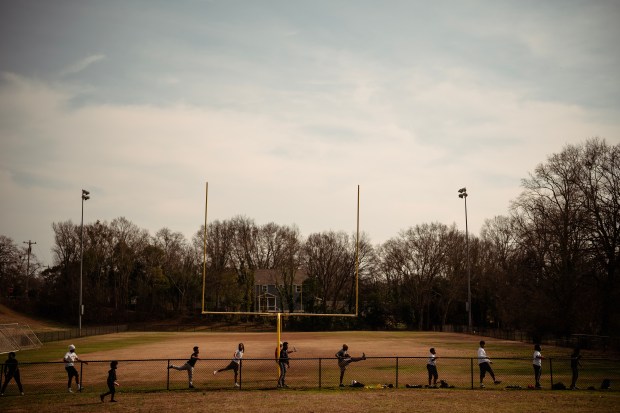
The Sterling Community Center sits where the high school used to, up a hill from a football field where over a dozen Black middle and high school students who are part of a mentorship/STEM program ran drills with their coaches the Sunday prior to Jackson lying in state at the State House.
Jackson received a football scholarship from the University of Illinois at Urbana-Champaign. While home for the holiday break in 1959, Jackson had to prepare for a speech, but the “colored” library didn’t have enough books to do so, so a librarian sent him to the white library. Police were called. Books weren’t acquired. Jackson cried at the injustice. Jackson would later transfer to North Carolina Agricultural & Technical College the following year, playing football and participating in student government.

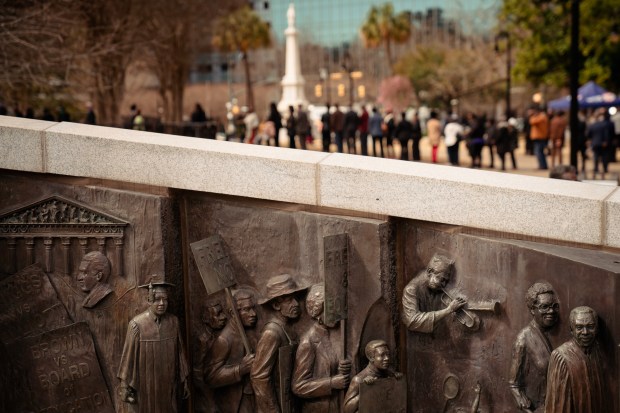
In the summer of 1960, Jackson participated in a sit-in at the whites-only Greenville County Public Library and was subsequently arrested as one of the Greenville Eight for disorderly conduct. “They called us ignorant, but arrested us for trying to use the library,” Jackson said of the irony in an N’Digo interview. The library became integrated as a result of public demonstrations by the Black community.
At Greenville’s Long Branch Baptist Church, the Rev. Sean Dogan came out of the pulpit Sunday, smiling, remembering how at 8 years old, he heard Jackson speak at a Pleasant Valley church during his 1984 presidential campaign. When Dogan became the pastor at Long Branch in the late ’90s, Jackson would return home to visit his mother and sometimes come to the sanctuary, sit in the back and listen.
His presence was known, yet it was the seeds the Rev. Jackson planted in 2000 that are still nurturing children’s futures. Dogan said the Rev. Jackson provided the initial seed money — $5,000 — for college scholarships for the congregation’s children.
The fund has since grown and now supports college freshmen through their junior year, each year, with a monthly stipend. “It’s those seeds that he planted here at his home base that has now sprouted into something wonderful,” Dogan added.