
Aurora Mayor John Laesch’s promised campaign ethics reform package heads to a final City Council vote next Tuesday, but several aldermen have expressed concerns with it.
The currently-proposed regulations would prevent those who are doing business with the city, or looking to, from donating more than $1,500 per year to candidates running for city office. It would also expand economic interest disclosures required of candidates and elected officials.
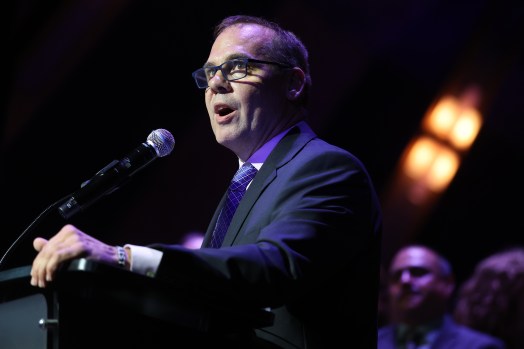
“The intention of this ordinance is to prevent people from influencing the outcome of city contracts by making political campaign donations,” Laesch said at a meeting of the Aurora City Council’s Committee of the Whole on Tuesday. “I use the words ‘buying access’ — that’s effectively what it is.”
Campaign financing ethics reform was part of Laesch’s platform when he was running against former Mayor Richard Irvin. During the most recent campaign and in a previous unsuccessful run for mayor, Laesch claimed Irvin prioritized government contracts or incentives to those who donated to his campaign, which Irvin consistently denied.
The reform package was discussed at length on Tuesday by the Committee of the Whole, which sets the agenda for the following week’s City Council meeting. Some aldermen took issue with the entire proposal while others had more specific concerns, mainly around how the changes could make it harder for new candidates to run for local office.
Out of the 12 City Council members, seven raised at least some issue with the proposal — Carl Franco, 5th Ward; Patty Smith, 8th Ward; Shweta Baid, 10th Ward; Jonathan Nunez, 4th Ward; Daniel Barreiro, 1st Ward; Ted Mesiacos, 3rd Ward; and Mike Saville, 6th Ward. The only aldermen who spoke in favor of the proposed regulations were Keith Larson, at-large, and Edward Bugg, 9th Ward.
Specifically, the campaign ethics reform package would limit those doing business or looking to do business with the city from making over $1,500 in contributions to city candidates or elected officials per year. Counting towards the cap would be donations made by the business itself as well as any made by parent companies or subsidiaries, and in some cases donations made by employees themselves.
Those who do not follow the rules would be barred from doing business with the city for up to four years. Candidates may also face fines, Aurora Chief of Staff Shannon Cameron said on Tuesday, but those could be avoided by simply giving the business back any money it donated over the cap.
These restrictions, which set similar limits on lobbyists, would be enforced through the DuPage County Ethics Commission, according to Cameron. Laesch said that, like the process works now, someone would need to make a complaint to that board, which would then investigate.
Expanded economic interest disclosures would also be required of those in a city elected office, and those running for a city elected office, under the proposed code changes.
These fillings would ask not only a person’s occupation but also if their employer has ever done work for or received any financial assistance from the city of Aurora, all real estate they own within the city or nearby, any organizations or businesses they own, any city-funded or affiliated organizations they are involved with, and any gifts they’ve received from those doing business with the city or looking to.
The filings would only need to be turned in once per year, down from the four times per year that is currently required, and they would continue to be available for the public to view online.
The proposed restrictions and reporting requirements would apply to anyone who has begun circulating petitions or has started receiving donations. Once a person becomes “covered” by the proposed rules, they would then have 15 days to submit their disclosure statements to the city.
Franco called the proposal an “anti-capitalist” piece of legislation that didn’t show respect for the city’s business community. It is an insult to all the aldermen, he said, to think that having more campaign dollars would make them corrupt.
“To me, this whole thing looks like an attempt to control who is going to be eligible to become elected, and I think that’s wrong,” Franco said. “I’m dead set against it.”
Smith similarly pushed back against the restrictions and reporting requirements because she said they would too closely control local elections. She questioned why Aurora needs stricter guidelines than most other places in the state.
“I’m going to say to my colleagues, if you are not insulted by this information that’s being put in front of us, then you need to take a better look at it,” Smith said. “We are all being told that we are untrustworthy, that we are unethical and that we need more regulations than anybody else in the state.”
Chicago has similar restrictions on campaign contributions from those doing business with the city, as do other major cities in Illinois, Bugg said.
Franco and Baid also questioned why the proposed ordinance limits contributions from businesses but not from political parties. Several times, Franco referenced when the Illinois Democratic Party helped Laesch by targeting Irvin in last year’s mayoral election.
Baid had a number of questions about the proposal, many around how and why the regulations differ from or go beyond what the state already requires. Laesch said, both at the meeting Tuesday and in the past, that the state regulations do not go far enough.
Nunez said he can’t see himself supporting the proposed reform package because it “doesn’t do what people are saying it does.” The regulations seem like they are “preventing the boogeyman from coming,” he said, but the public should do the research to understand existing state regulations even if they are complicated.
He also spoke about how complicated it is to run for office already without these additional requirements, and he had many questions about them. Barreiro said that few aldermen ever get any donations that would reach these caps, and these proposed changes would only prevent people from wanting to run for local office.
If the goal is to address the perception of campaign donors getting special treatment, then the regulations should be focused specifically on the mayoral seat, since that position both requires large amounts of money to campaign and oversees city staff, according to Barreiro. It is city staff who decide what goes before the City Council for approval, he said.
While he agrees with the idea of limiting campaign donations from those doing business with the city, the current proposal goes “way beyond that” by including the additional disclosure requirements, Barreiro said.
“You’re just adding additional roadblocks and barriers to people wanting to do something good for their community,” he said.
Similar concerns were raised by Saville and by Mesiacos, who said the proposal was potentially “cumbersome” for those who decide to run for office last minute, like he originally did.
But Bugg disagreed, saying the proposed regulations won’t make things more difficult for candidates or elected officials. Already they need to report campaign contributions even if they are below set limits, he said.
He also pointed out, as did Laesch, that the proposal does not limit contributions from businesses in general, only those doing business or looking to do business with the city. Mostly it would be the business being held responsible here, Bugg said, as they would be barred from doing business with the city.
Bugg also stressed the importance of the donation limit. Even if a campaign donation wouldn’t influence him to vote in favor of something, it would still look bad, he said.
People are mistrustful of government at all levels right now, according to Larson. When he was knocking on doors for his campaign last year, he also asked people to sign a petition that would have put a referendum question on the ballot asking the City Council to put in place restrictions like these, and nearly everyone across the political spectrum was in favor of it.
Larson was referencing a non-binding referendum question that was thrown out by the Aurora Electoral Board in January 2025 for not reaching the minimum number of signatures.
rsmith@chicagotribune.com