

The Chicago Fire hosted a groundbreaking event Tuesday afternoon for their privately funded $750 million soccer stadium on a vacant former rail yard in the South Loop, staking their turf in the city’s competitive sports landscape.
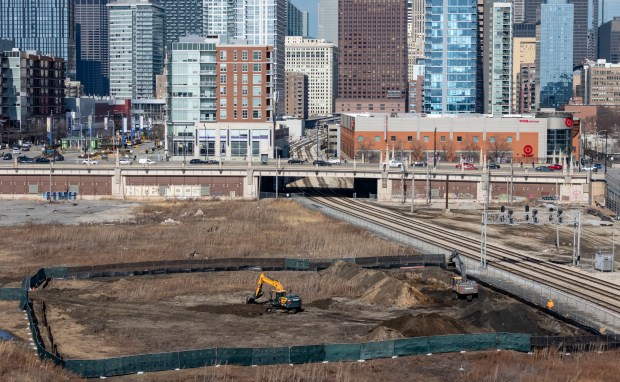
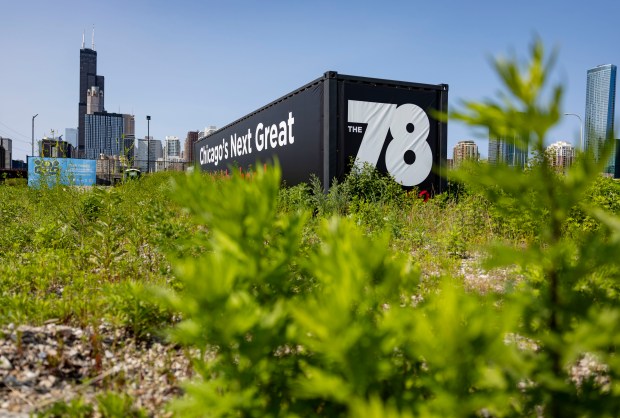
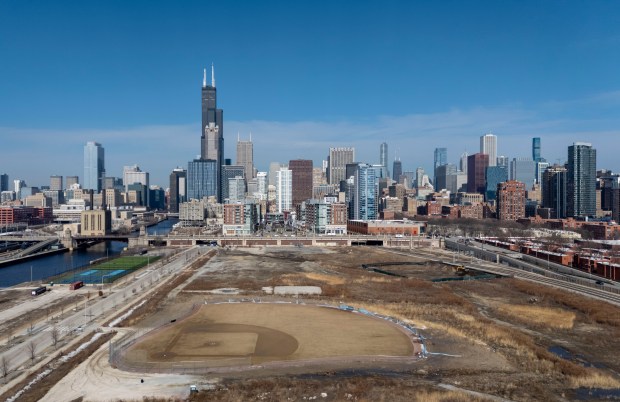
If all goes well, the hardscrabble terrain will not only sprout Chicago’s first new pro sports stadium in three decades, but also a new neighborhood as part of The 78, a long-fallow, mixed-used megadevelopment that has struggled for years to get off the ground.
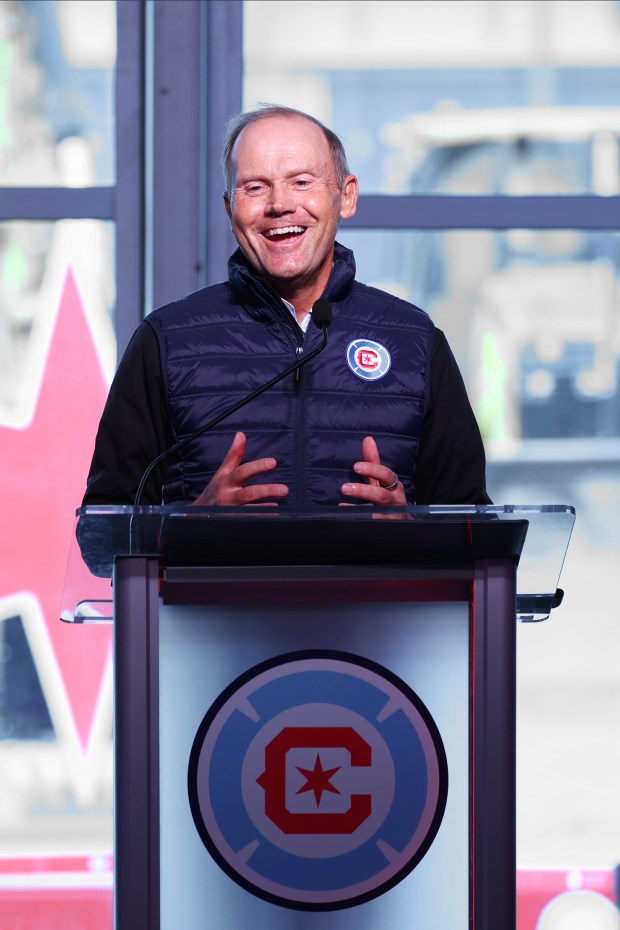
“There are few things that unite a city like a professional sports team,” said Fire owner Joe Mansueto, the founder and executive chairman of Chicago-based investment research firm Morningstar, who bought the team in 2019. “We look forward to getting this stadium up, bringing Chicago together, jump-starting a whole new neighborhood in Chicago.”
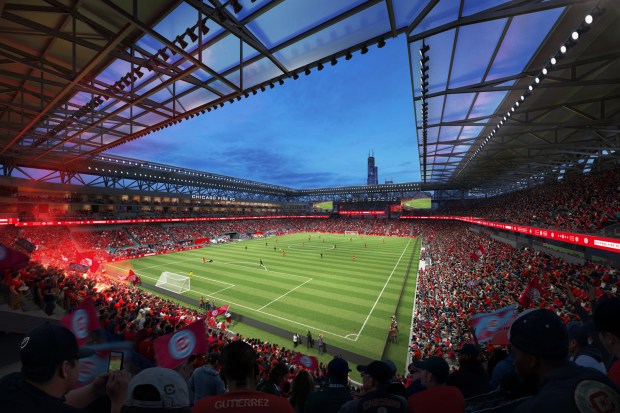
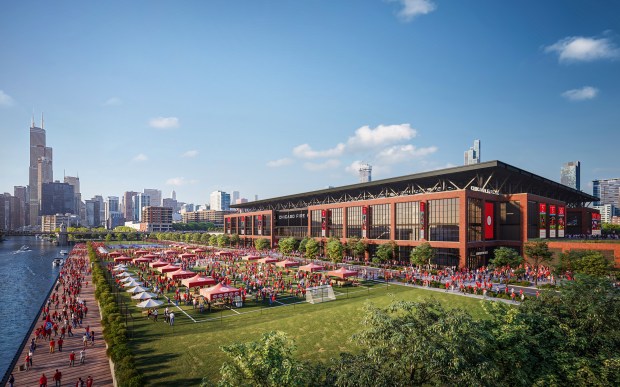
Announced in June, the Fire are building a 22,000-seat, open-air soccer facility – the most expensive in the MLS – which is slated to open by the 2028 season. Designed by architectural firm Gensler, the red brick stadium will feature a natural grass pitch, 50 luxury suites, intimate seating and a canopied roof, among other amenities.
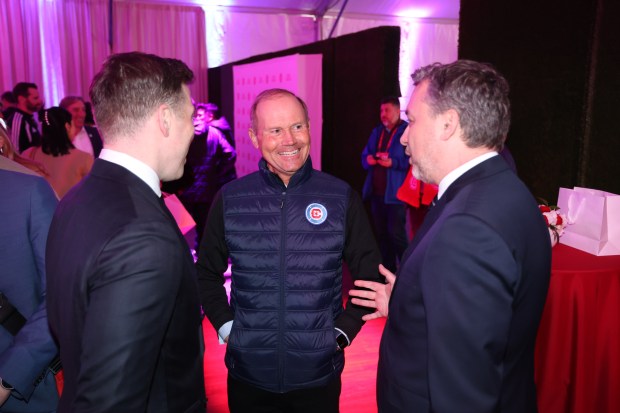
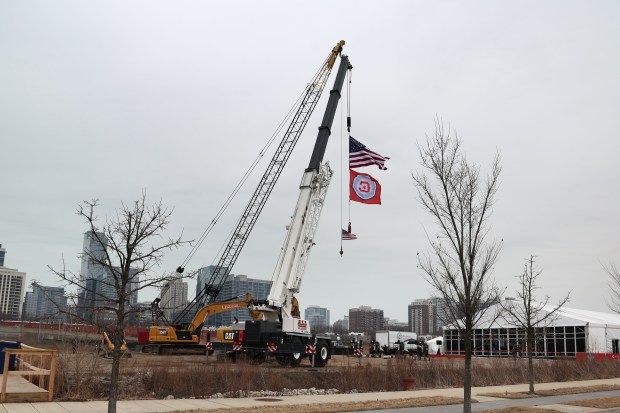
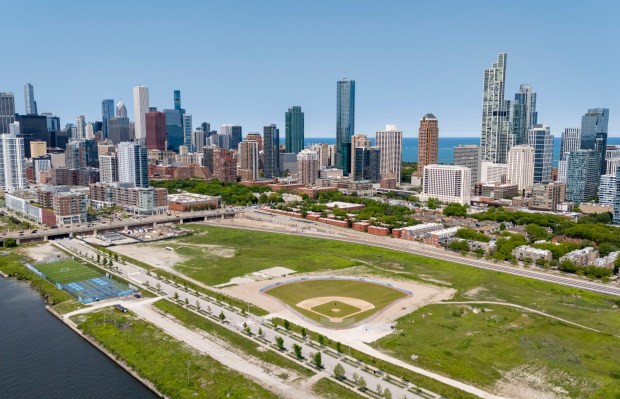
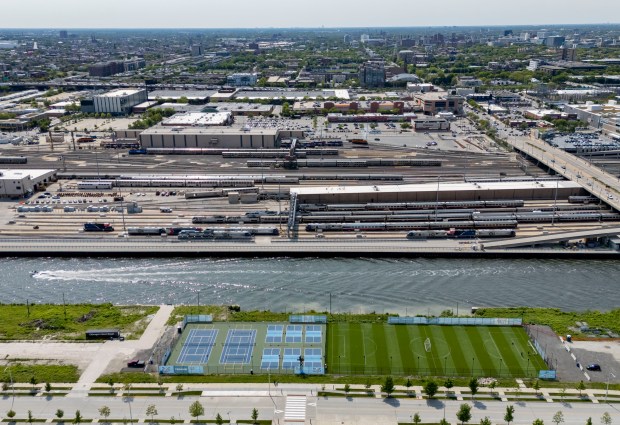
The Fire stadium will be located at the north end of The 78, a planned $8 billion mixed-use community on an undeveloped 62-acre site along the Chicago River south of Roosevelt Road. On Tuesday, a large tent filled with hundreds of business leaders, politicos, team officials, players and fans marked the spot.
“We’ve been working on this project for a couple of years now,” Mansueto told the crowd. “And it’s amazing to me to go from renderings on paper to reality, to go to actually taking a shovel into the dirt and say this is really happening.”
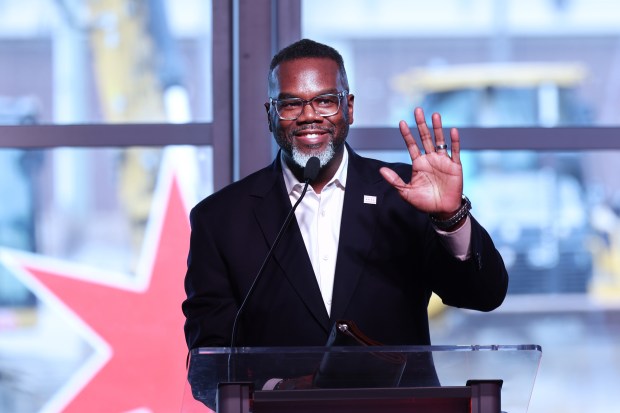
Mayor Brandon Johnson called the groundbreaking Tuesday a “transformational day” for the city of Chicago. At the very least, it may transform more Chicagoans into soccer fans, as the sport gains traction across the U.S., bolstered by the World Cup coming to 13 MLS cities in June.
Chicago did not make the cut – this time.
MLS Commissioner Don Garber, who has been at the helm of the league for most of its 30-year history, oversaw its expansion to 30 teams, signed a 10-year, $2.5 billion partnership with Apple TV+ in 2023 and is opening new soccer stadiums in New York, Miami and Chicago.
Having a new soccer stadium is crucial to the sport’s evolution, Garber said at the event Tuesday.
“What league can be viable without having homes that are cathedrals for the sport?” Garber posed.
The Fire have been something of an itinerant franchise for much of their nearly three-decade history.
Founded as an early Major League Soccer expansion team, the Fire began playing at Soldier Field, winning the league championship during their inaugural season in 1998.
In 2006, the Fire moved into a newly built, $98 million stadium in Bridgeview, then known as Toyota Park, with a lease that ran through 2036. The 20,000-seat venue, which was rebranded as SeatGeek Stadium in 2018, was the Fire’s home for 14 seasons.

When Mansueto bought the Fire for about $325 million in 2019, he negotiated a $65.5 million lease buyout with Bridgeview, allowing a move back to Soldier Field.
The Fire averaged 23,420 fans per game at Soldier Field last season, making the playoffs and setting a club attendance record, but leaving the 61,500-seat stadium two-thirds empty for most matches. They were also booted out of their home stadium for several matches last year – including the playoffs – due to scheduling conflicts.
The team will call Soldier Field home for two more seasons, opening 2026 play there last week. After that, the Fire will be able to call their own shots at the new stadium beginning in 2028.
“Today is a huge step forward for our club, gigantic step forward in having our own stadium, and it’s a whole mindset shift as we move from a tenant to an owner,” Mansueto said. “We’ll be able to control our own schedule.”
The new Fire stadium is also a huge step forward for The 78.
The vacant swath of land bordered by Roosevelt Road, Clark Street and a half-mile stretch of riverfront south of downtown Chicago has been a field of dreams for developer Related Midwest since acquiring it in 2016. The ambitious plan from the outset was to create a sprawling residential, retail and commercial development that would become the city’s 78th neighborhood.

Over the years, The 78 has been in the running for everything from Amazon’s second headquarters to a Chicago casino, but time and again, Related was unable to land that elusive anchor tenant to catalyze the megadevelopment. In 2024, the White Sox proposed a new publicly funded ballpark at The 78, but Springfield lawmakers balked at the idea of contributing a reported $1 billion to build it. That’s when Mansueto and the Fire stepped up.
“We saved the best for last,” an exuberant Curt Bailey, president of Related Midwest, said Tuesday. “This is the best thing that could happen on the site.”
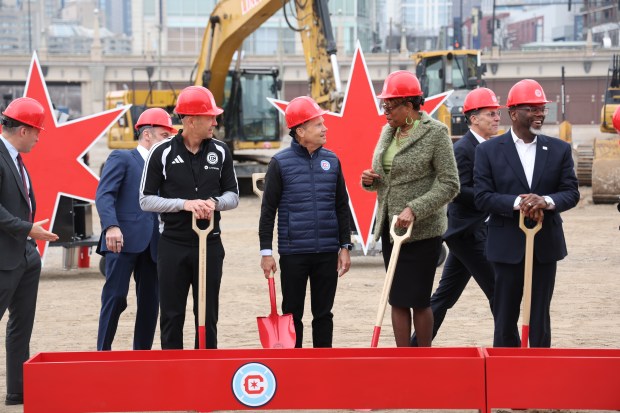
After nearly an hour of speeches, teams of dignitaries donned red hard hats and filed outside on a cold and gray March afternoon, grabbing shovels for the ceremonial groundbreaking.
Each photo op was capped off by explosive pyrotechnics yielding plumes of red and white smoke, which drifted toward the river and train tracks to the west across the backdrop of the Chicago skyline.
Turning the soil was an emotional moment 10 years in the making for Bailey and his development team.
“It’s obviously been a really long journey time-wise, but also the amount of things that we’ve looked at to do on this project,” Bailey said. “To see this actually happen is really special and moving, and will be a game changer for our company, obviously, but really for the city of Chicago. It’s a big day.”
rchannick@chicagotribune.com