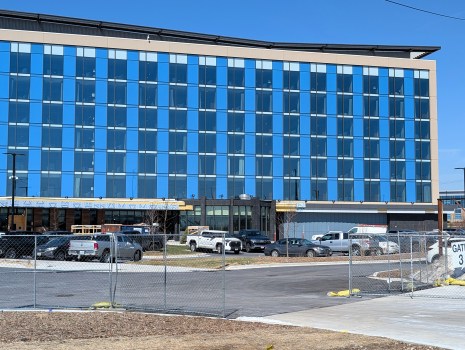


As plans for development are expected along Route 64 in St. Charles, the City Council is discussing what kind of projects it wants to see, but appears unlikely to institute a zoning moratorium for the area anytime soon, despite some talk of such a policy.
At the city’s Committee of the Whole meeting on Monday, St. Charles Ald. Jayme Muenz started off a discussion about development along Route 64, suggesting that the city may want to consider temporarily limiting what’s approved for the area until the city has determined what kind of developments they’d like to see there.
“The eastern corridor represents a significant gateway into St. Charles, and several development opportunities that are emerging … will shape this area for decades,” Muenz said.
One proposed project along Route 64 that’s recently gotten some attention, for example, is a redevelopment plan to turn the former Pheasant Run Resort site into commercial space for things like restaurants and retail spaces.
A city memo about the idea of a moratorium notes that recent zoning and land use proposals in the area along Route 64 have “raised questions” from the council about whether they align with the city’s future plans, and that council members have requested a review of the city’s vision for the area. As part of their discussion about the area, the city also discussed whether it wants to pause specific commercial uses in the area.
Muenz suggested that, before projects along the thoroughfare move forward, the city should ensure that its plans accurately reflect “the community’s vision.”
And one way the city could do that is a zoning moratorium, which essentially enacts a temporary pause on accepting or approving certain zoning applications in a particular area.
Muenz emphasized that such a plan would be temporary, and touted the idea as a way to “(create) space for thoughtful review and (remove) the pressure of any pending development proposals.”
Doing so could allow the city to assess “whether the current zoning categories and permitted uses really support the city’s and … residents’ long-term visions,” according to Muenz, particularly as St. Charles looks to review its comprehensive and strategic plans in the near future.
St. Charles’ strategic plan spans from 2023-2027, with updates planned for the coming fiscal year, according to City Administrator Heather McGuire.
And its comprehensive plan — which is intended to establish a “long-range vision” for the city, define its goals and provide guidance for programs and policies for future growth in the city — was adopted in 2013, with updates to one sub-area made in 2020. Updates to the comprehensive plan are planned for the 2027-2028 year, McGuire said at Monday’s meeting.
But these plans mean that the city will, in the coming years, be evaluating its priorities and how it wants the city to be in the years ahead.
“I think that, without a pause, we risk receiving applications that may meet our current zoning requirements but conflict with the future character of the community,” Muenz said in her pitch for a moratorium.
Muenz pointed to similar actions taken by nearby communities, like a recent moratorium in Aurora in connection with data centers, and said the city could limit the pause to certain commercial uses, like car washes, banks and drive-thru fast food restaurants, citing the effects certain types of businesses have on traffic and their economic impact. She pointed out that these kinds of businesses don’t generate a lot of job growth, for example.
During the course of the council’s discussion, the city’s aldermen debated the idea, and, though they largely agreed on a need for the city to update its plans and goals for development, expressed some hesitation about whether a moratorium was the right course of action for the area.
Ald. Ron Silkaitis, for example, said he agreed with the need to revise the city’s comprehensive plan, but asked why they would institute a moratorium on just the east side of the city.
Muenz noted that the moratorium she’s suggesting would be for only a specific portion of the city that’s seeing considerable economic development due to some properties becoming available recently.
Silkaitis, however, noted that a pause could affect those developments that have already had plans presented to the city, saying he had a problem with this because developers had already invested time and money into their respective projects.
Silkaitis also noted that he considers the city’s comprehensive plan to be a “guide” for what the city would like to be built, and that, absent a moratorium, the council can still vote for or against developments when they’re proposed by a developer.
Ald. Bob Gehm said there are 57 properties within the city that could be developed or are under consideration for development, a number of which are currently vacant. He suggested that the council should look at the whole city with regards to the comprehensive plan and future development, reiterating Silkaitis’ point that the council can say yes or no to particular proposals as they come forward.
Ald. Vicki Spellman said she was “supportive” of Muenz’s ideas, but suggested that the city might be able to proceed with updating its comprehensive plan and enacting a moratorium at the same time. She pointed to car washes specifically as one type of business the city might want to consider limiting temporarily.
Ald. David Pietryla, on the other hand, said he was not in support of the moratorium, but does want the city to update its comprehensive plan.
Pietryla also asked if Muenz was hoping the city would look at rezoning the area in question, or instead focusing on special uses of the land.
Muenz said she would want to focus on special uses, noting that the property there is “ripe for redevelopment,” and that what ends up there is “going to be there for decades.” She also pointed to, for example, car washes as something that cannot be easily repurposed into a different type of business, indicating that the city needs to be “careful” about what types of businesses they allow in that area and what can be done with certain types of buildings.
“We have most of our traffic coming into our downtown, our historic city, through that corridor,” Muenz said. “What do we want that to look like for our visitors?”
Ald. Bryan Wirball also spoke unfavorably about the idea of a moratorium.
“I think a moratorium will send a message that St. Charles is closed for business and development,” Wirball said at Monday’s meeting.
Wirball said that the city needs to be “flexible with the market,” and said that those looking to do business and develop in the city “know the market.” He also, like other council members, noted that the city can vote against a special use or development if it doesn’t fit with what the city wants for the area.
And Ald. Steve Weber said the city needs to update its comprehensive plan, citing the ways the COVID-19 pandemic has changed what consumers want. But he said he was unsupportive of a moratorium, indicating that he has “faith” in the City Council to “make the right decisions” when developments come up.
Muenz reiterated that the moratorium idea would only be for certain land uses the city feels are not appropriate, not all buildings, and could be made to only apply to a specific portion of Route 64.
However, Ald. Ryan Bongard, who chaired the meeting, indicated that —while there was support for updates to the comprehensive plan — there did not appear to be “enough momentum” from the council on pursuing the moratorium. Going forward, he encouraged the council to share with city staff any particular developments or properties that they feel strongly about how they’re developed.
mmorrow@chicagotribune.com