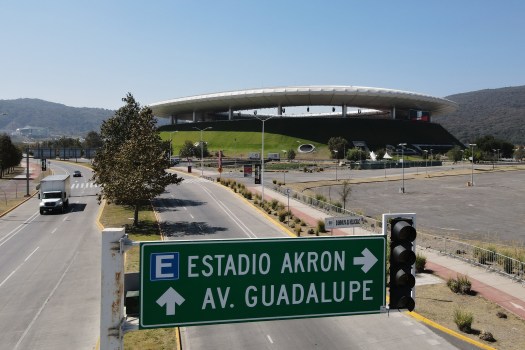

I read the editorial “Mayor, call FIFA to snag World Cup if Guadalajara cartel problems prove insurmountable” (Feb. 24), which raises the possibility of relocating four FIFA World Cup 2026 matches currently scheduled to be held in Guadalajara, citing security concerns. I love that Chicagoans are embracing soccer, and I respect how much sports are an essential part of the city’s essence; however, in this case I have to say, not so fast, my friends!
On Feb. 22, Mexican Armed Forces carried out a successful operation in Jalisco that hit at the core one of the region’s most dangerous criminal organizations. In the immediate aftermath, isolated acts of violence followed the death of a high‑ranking criminal leader and the arrest of more than 70 members of this criminal group. Since then, the situation has stabilized, airports are fully operating and daily life has resumed across the affected areas.
The decisive action of the Mexican government is positive for families on both sides of the border who suffer the devastating consequences of the activities of these transnational criminals. This encouraging result is a testament to the heroism of Mexican forces, particularly of those who lost their lives in the line of duty, and reaffirms the effectiveness of ongoing cooperation between Mexico and the United States, including the intelligence‑sharing that supported the operation. This is exactly what works when combating an international violent threat to our communities: collaboration.
Mexico is fully prepared to host an exceptional tournament, one that will allow fans from around the world to celebrate the unifying power of soccer, as FIFA President Gianni Infantino recently stated. As always, Mexicans will rise to the occasion with efficiency, creativity and fun, to make sure all attendees feel safe and successfully enjoy every match of the 2026 World Cup.
The ties between Chicago and Mexico run deep culturally, economically and, of course, through a shared passion for soccer. Today, more than ever, this trilateral World Cup offers an opportunity not only to celebrate sports, but also to recognize the strength of friendship and collaboration between our two nations.
— Reyna Torres Mendivil, consul general of Mexico, Chicago, and dean, Chicago Consular Corps
Conversation with cabbie
I applaud Andy Shaw’s recent opinion piece (“Mexico, like Chicago, is more than just its worst headlines,” Feb. 28). My family visits Mexico yearly. We love the people, the culture and the beaches. We enjoy seeing the sights. One time while taking a taxi ride to Zihuatanejo, Mexico, the friendly cabdriver asked me where I was from.
“Chicago,” I replied. “Beautiful city,” he said. “Have you ever been there?” I asked. He turned his head and responded, “No, too dangerous.”
— Jim Wunderlich, Libertyville
Mexico a friendly place
I entirely agree with Andy Shaw’s piece about Mexico. My wife, dog and I flew into Puerto Vallarta recently on our way to our home in Sayulita. We had a smooth trip through the airport and on the highway to Sayulita and are enjoying Sayulita where there has been no violence.
Shaw is correct that the cartels are an issue in Mexico, but this latest outbreak was not directed at civilians or tourists. It rarely is. I have not seen a report of a tourist being injured related to it.
My wife and I founded a tuition-free preschool in Sayulita and live here more than half of the year. We also have traveled throughout Mexico. We have never experienced or witnessed any violence. People walk freely in Sayulita all hours of the night and day.
Mexico is a beautiful country with warm, wonderful people; fabulous culture; and delicious food.
Isn’t it time that the U.S. stop bullying a country we attacked and whose land we stole (in the Mexican-American War) and whose cartels get guns from us, cartels that sell the majority of their drugs to us?
We have traveled extensively around the world. Mexico is one of the friendliest countries on the globe.
— Lawrence Casazza, Glen Ellyn
Regulate robotaxis
The rise of robotaxis promises to reshape our streets, our safety and our communities. But if there’s one lesson we should have learned from the last transportation revolution, it’s this: When we let tech companies set the rules, the public pays the price.
Uber didn’t just change how we travel. It flooded streets with drivers, bypassed taxi regulations, undercut public transit and reshaped traffic patterns with limited oversight. The result: congestion, regulatory confusion, and many drivers and passengers left vulnerable.
We cannot afford to make the same mistake with robotaxis.
Autonomous vehicles are being deployed in cities across the country, and they’re being tested in Chicago. And while Silicon Valley tech giants promise convenience and innovation, they rarely talk about who bears the cost when something goes wrong. And make no mistake — things will go wrong.
Robotaxis still struggle with complex real-world situations: navigating unpredictable pedestrians, interpreting construction zones and reacting to erratic human drivers. Cities need proactive safety standards before these cars hit the streets. This means mandatory testing, transparent reporting of crashes and “near misses,” and substantial penalties for noncompliance.
When an autonomous vehicle causes a crash, who pays? Current ride-share insurance minimums already leave many victims undercompensated and confused. With robotaxis, the uncertainty only increases — liability could be shifted between the software company, the vehicle manufacturer or some other corporate entity, leaving injured people caught in the middle.
If these crashes are treated as product liability cases, victims will face longer, more expensive battles against well-funded corporations just to recover basic medical expenses. Lawmakers should act now to require strong insurance minimums and clearly assign responsibility, treating autonomous vehicle crashes as standard motor vehicle claims handled through ordinary auto insurance — not complex product litigation.
We can’t sit idly by and let tech companies dictate the terms. The decisions made today will determine whether autonomous vehicles improve public safety — or undermine it.
Public officials, regulators and community advocates must demand that these companies come into our cities on our terms, not theirs. Because once robotaxis take over the roadways, we won’t get a second chance to set the rules.
— Bryant Greening, attorney and co-founder, LegalRideshare LLC
Submit a letter, of no more than 400 words, to the editor here or email letters@chicagotribune.com.